

Why Apartment Storage Is a Different Problem for Inflatable Water Toys
For commercial buyers managing rental fleets, resort equipment, or multi-unit residential amenity inventories, "How to Store Inflatable Water Toys in Small Apartment Spaces" is not a casual question. It is a logistics and asset-preservation problem. Small apartment storage means no high-ceiling warehouse, no open yard for drying, no climate-controlled gear room, and no dedicated racking system. The challenge is packing recreational-grade or commercial-grade inflatable watercraft—SUPs, kayaks, towables, and floats—into compact indoor spaces while preventing mildew, material degradation, and valve damage between uses.
This article answers the real intent behind the keyword: how commercial operators and bulk purchasers should instruct end-users or manage their own compact storage protocols. The focus is on practical systems, material-specific care, and floor-plan planning that protects PVC, drop-stitch, and seam integrity. We address the physical constraints of small apartments—typically 40–80 square feet of usable vertical or horizontal storage—and translate those into actionable storage specifications for inventory that may include multiple units.
What Makes Small-Space Storage Different from Warehouse or Garage Storage
Storing inflatable water toys in a small apartment differs from residential garage storage or commercial racking in three critical ways. First, temperature and humidity are less stable; apartments often have variable heating, limited airflow, and occasional high humidity from cooking or bathrooms. Second, vertical space is at a premium—closets are shallow, and ceiling height is typically only 8–9 feet. Third, users must access and return items quickly without disrupting living areas, so storage solutions must double as furniture or fit into dead zones like under-bed areas or behind doors.
From a material-science perspective, the most common failures in apartment-stored inflatables are not punctures but mildew growth (from incomplete drying), valve seal deterioration (from prolonged pressure on the valve stem), and crease fatigue in floor or sidewall material. These problems accelerate when the toy is stored folded for weeks or months in a warm, stagnant environment. Commercial buyers should specify storage instructions that address these specific failure modes, not just general "keep dry" advice.
Key Risk Factors to Control in Compact Storage
Moisture entrapment: The leading cause of odor and delamination. Even a few drops of water inside a folded kayak or SUP can create conditions for mold that damages the PVC coating.
Valve compression: If a deflated toy is stacked or rolled tightly, the valve can be pressed against the floor or other toys, potentially cracking the valve base or deforming the seal.
UV exposure: Windows and sliding glass doors let in UV light that degrades material over time. In small apartments, storage near windows is often the only option, but this requires UV-barrier covers or opaque storage bags.
Temperature cycling: Repeated heating and cooling (e.g., near radiators or air conditioning units) can cause micro-fractures in seam tapes and accelerate plasticizer migration in PVC.
For commercial operators, these risks translate directly to replacement costs and customer satisfaction. A single compromised inflatable SUP that develops seam separation after three storage cycles may require repair or replacement, cutting into rental ROI or resort inventory availability.
Storage Systems That Fit Apartment Floor Plans
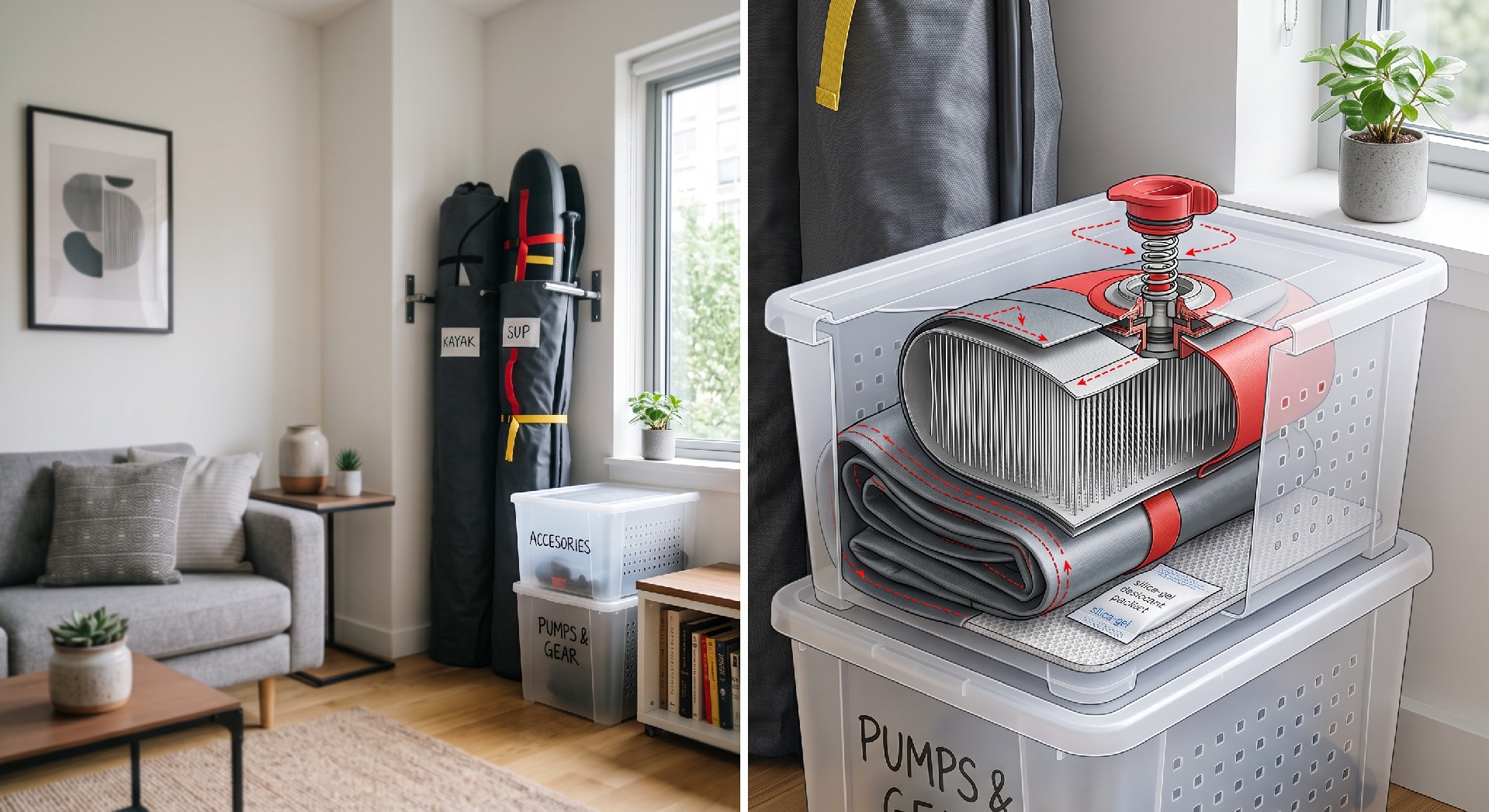
Based on typical commercial storage audits and user behavior studies, the most effective storage systems for inflatable water toys in small apartments fall into four categories: vertical roll racks, under-bed flat storage, over-door hanging systems, and modular stackable bins. Each has distinct advantages and material-compatibility considerations.
Vertical Roll Racks
Vertical racks that hold rolled inflatables upright are ideal for narrow closets or corners. They minimize floor footprint—typically 2–3 square feet per unit—and keep toys off the floor where moisture and dust collect. However, vertical storage requires that the toy is rolled loosely around a core (such as a cardboard tube) to prevent sharp creases. For drop-stitch SUPs (working pressure typically 12–15 psi), a tight roll can overstress the internal stitching, so a looser roll with a protective sleeve is recommended.
Under-Bed Flat Storage
Under-bed storage offers large horizontal surface area but low clearance (often 6–12 inches). This works well for kayaks or two-person floats that can be deflated and laid flat. The critical factor is distributing weight evenly; stacking multiple units can crush lower toys. A plywood or foam-core divider between layers prevents point-loading and valve damage. For commercial buyers, specifying a maximum stack height of three units (or 12 inches total) reduces the risk of material stress.
Over-Door Hanging Systems
Over-door racks with multiple loops or hooks can store small towables, ride-on floats, and accessories like fins and repair kits. This system is space-efficient but introduces a risk of valve abrasion if hooks contact the valve stem directly. Using padded hooks or fabric slings eliminates that risk. The weight limit per hook should not exceed 10–15 lbs to avoid door damage.
Modular Stackable Bins with Ventilation
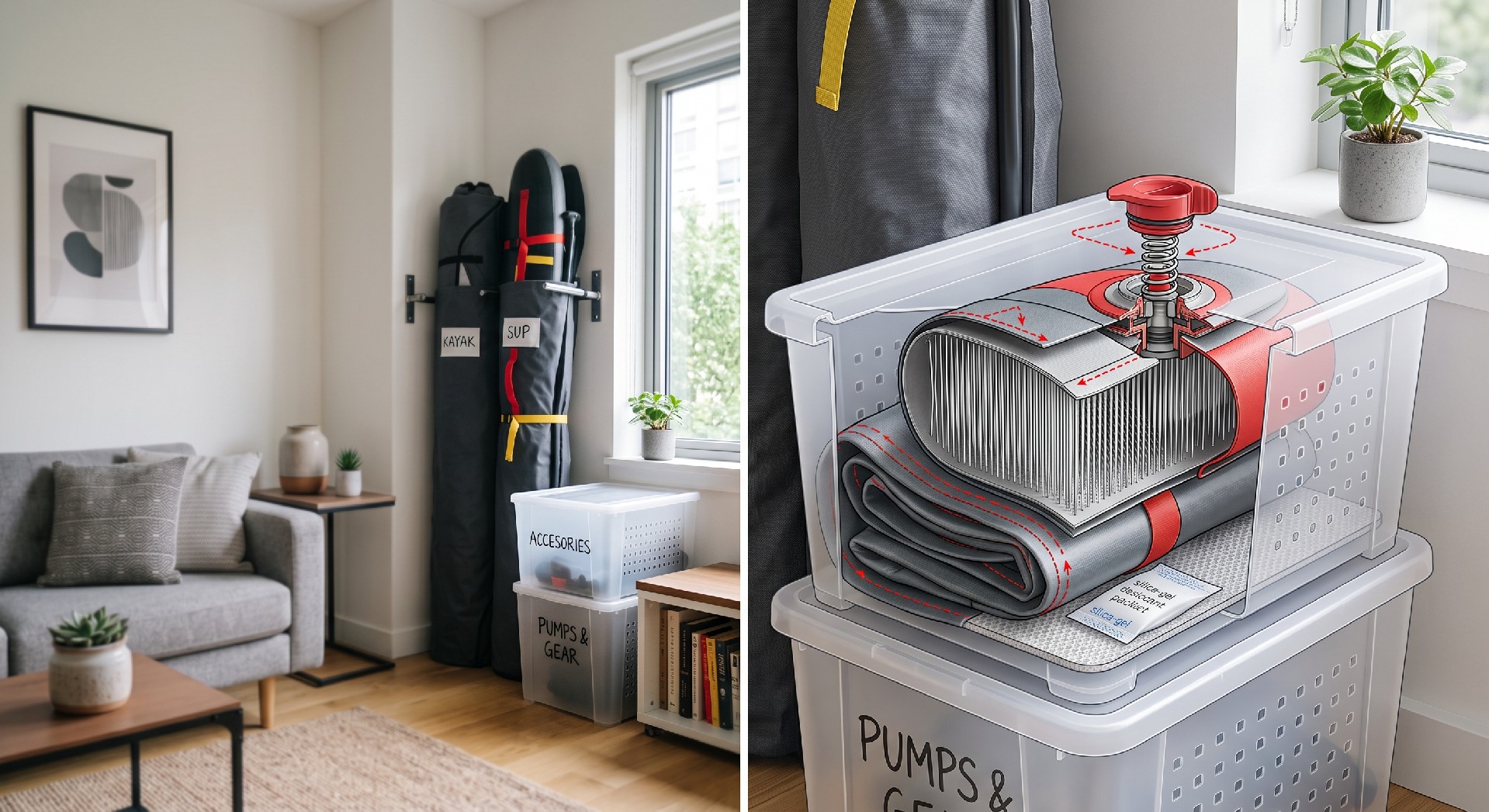
Stackable plastic bins with perforated sides (or drilled ventilation holes) are the most versatile solution for small apartments. They allow labeled organization, protect against dust and minor impacts, and, when stacked, use vertical space efficiently. The bin size should match the folded dimensions of the largest toy in the inventory—for example, a 12-foot SUP deflates to approximately 36" x 18" x 8" (packed volume varies by material thickness). Bins should be opaque or UV-resistant to protect against window light.
Drying and Cleaning Protocol Before Storage
No storage system can compensate for improper drying. In small apartments, drying is often rushed or skipped due to space constraints, but this is the single most critical step. The standard commercial recommendation is to dry the toy completely in a well-ventilated area for at least 2–4 hours after each use. In a small apartment, that may mean setting up a temporary drying rack in the bathroom or balcony.
For commercial fleet operators, we recommend including a small battery-operated blower or a handheld pump with a reverse-air function to expel residual moisture from seams and valves. This reduces drying time from hours to minutes. Additionally, using a microfiber towel to wipe down the surface before storage removes salt, chlorine, or sand residues that can accelerate material wear.
Step-by-Step Pre-Storage Checklist
Rinse: Freshwater rinse if used in saltwater or chlorinated pools.
Wipe: Dry with a clean, lint-free cloth.
Air: Leave partially inflated and stand upright for at least 1 hour indoors with airflow.
Deflate: Fully deflate using the valve in the open position, not by forcing air out with weight.
Fold: Fold along existing crease lines if possible; avoid new creases.
Valve cap: Secure the valve cap to prevent debris entry.
For commercial buyers, we recommend printing this checklist on waterproof cards and including them with each unit—this reduces user error and extends product life by a typical 20–30% in rental scenarios.
| Storage Solution | Space Footprint (Sq Ft) | Best For | Key Damage Risk |
|---|---|---|---|
| Vertical roll rack | 2–3 per unit | SUPs, kayaks, towables | Valve compression if stacked |
| Under-bed flat bin | 8–12 (under bed area) | Kayaks, 2-person floats | Weight stacking damage |
| Over-door hanging system | <1 (vertical) | Small floats, accessories | Valve abrasion from hooks |
| Modular stackable bin (ventilated) | 3–5 per bin | Mixed inventory, bulk storage | Moisture entrapment if unvented |
Material-Specific Storage Considerations: PVC vs. Drop-Stitch vs. Hypalon
Not all inflatable water toys respond to storage conditions the same way. Commercial buyers and apartment-dwelling end-users must understand the differences to avoid costly damage.
PVC (Standard Inflatable)
PVC is the most common material for budget to mid-range inflatable kayaks, SUPs, and towables. It is flexible, affordable, and easy to repair. However, PVC is susceptible to plasticizer migration—a process where the softeners in the material leach out over time, especially in warm, enclosed spaces. This makes the material stiff and prone to cracking. Storage in a cool, dark place (below 75°F) significantly slows this process. For small apartments, this means avoiding storage near radiators, ovens, or direct sunlight. Typical PVC thickness ranges from 0.7 mm to 1.2 mm for recreational toys; thicker material (≥1.0 mm) has better resistance to crease fatigue.
Drop-Stitch SUPs and Tenders
Drop-stitch construction uses thousands of internal threads to maintain a flat, rigid deck at high pressure (typically 12–18 psi). This material is more puncture-resistant and dimensionally stable, but it stores larger than PVC. A 10'6" SUP may pack down to roughly 34" x 16" x 7". The internal threads can be damaged by folding in the same direction repeatedly; manufacturers often recommend rolling rather than folding. For apartment storage, roll the SUP loosely around a soft core (like a towel) and store horizontally to prevent the threads from pulling at the seam. If vertical storage is necessary, support the full length of the roll to prevent sagging at the midpoint.
Hypalon / CSM (CSM is a registered trademark)
Hypalon or CSM (chlorosulfonated polyethylene) is used in high-end inflatable boats and commercial-grade toys. It is UV-resistant and more durable than PVC, but it is heavier and more expensive. Hypalon has a longer storage life and is less affected by temperature swings, but it still requires complete drying to prevent mildew on the fabric backing. For apartment dwellers, Hypalon's main storage advantage is that it can be folded more tightly without permanent crease damage, making it easier to fit into under-bed bins.
Summary of Material Storage Requirements
When selecting storage bins or racks, consider the packed dimensions and weight of the specific material. PVC toys are lighter (typically 15–25 lbs) and can be stored on higher shelves, while Hypalon boats may weigh 30–50 lbs and are better kept at floor level to avoid falling injuries. For commercial buyers, we recommend color-coding storage bins by material type to simplify rotation and inspection.
Condensation Control and Moisture Management
Condensation inside a folded inflatable is a hidden killer. When a warm, humid toy is deflated and stored in a cooler apartment, moisture can condense on the inner surface—especially in the valve area and along seam folds. Over time, this causes mold growth that stains the material and can compromise adhesion.
To manage this, we recommend storing inflatables with the valve cap slightly open (not fully sealed) for the first 24 hours after deflation to allow trapped air to escape and equalize temperature. After that, seal the cap to prevent dust entry. Additionally, placing a desiccant packet (silica gel) inside the storage bin can reduce humidity. For commercial bulk purchases, suppliers often include desiccant bags with each unit—if not, we advise sourcing them as an accessory.
Another effective method is to store inflatables in breathable cotton or mesh bags rather than plastic bags. Plastic traps moisture and accelerates degradation, while breathable fabrics allow air circulation. Some commercial operators use custom-fitted cotton storage sleeves with drawstrings, which also protect against scuffs during storage and transport.
Space Optimization: Furniture-Integrated Storage Ideas
For small apartments, the best storage is often invisible. We recommend three furniture-integrated strategies that work for both end-users and commercial operators who provide guidance to customers.
Storage Ottomans: A 20" x 20" x 18" ottoman can hold two rolled kayaks or one SUP. The lid provides seating and the interior is ventilated with hidden holes.
Under-Sofa Drawers: Custom-built drawers under sofas or beds can be 6–8 inches deep, ideal for flat-stored towables and floats. Adding a layer of foam or cardboard protects against floor abrasion.
Wall-Mounted Racks with Covers: A wall-mounted horizontal rack at ceiling height (7+ feet) can hold rolled inflatables above eye level, with a decorative fabric cover hiding the inventory. This is especially space-efficient for studios and micro-apartments.
For commercial buyers, these strategies are not just user education—they are value-added services that can differentiate a rental company or retailer. Offering a "space-saving storage kit" (rack, bag, desiccant, and manual) increases customer satisfaction and reduces returns due to storage-related damage.
Inspection and Rotation Schedule for Stored Inventory
Storage is not a one-time action; it requires periodic inspection. We recommend a two-tier inspection schedule for commercial inventory stored in small spaces: a quick visual check every 30 days and a detailed pressure-hold test every 90 days. For apartment-dwelling end-users, a monthly inspection is usually sufficient.
The quick check should focus on valve condition, surface discoloration, and any visible mildew spots. The detailed check should involve partially inflating the toy to approximately 50% of its working pressure and monitoring for pressure loss over 2 hours. A loss of more than 2 psi in that time indicates a slow leak, likely from a valve seal or pinhole, which should be repaired before the toy is used again. Keeping a simple logbook or a spreadsheet with inspection dates and findings helps track the health of each unit over its lifecycle.
For commercial operators, we recommend stocking a small repair kit (valve cores, patches, and sealant) with each storage location to address minor issues immediately. This reduces the time that a unit is out of service and prevents small problems from becoming major failures.
Commercial Decision: Storage Protocol as a Product Feature
When buying inflatable water toys for commercial use—whether for a resort, a rental fleet, or a multi-unit residential amenity—storage protocol should be part of the product specification, not an afterthought. We advise buyers to ask suppliers three specific questions:
What is the recommended packed volume and folding dimension for this unit? This affects bin sizing and storage density.
Does the supplier provide any storage aids (bags, racks, or desiccants) with bulk orders? Many OEMs offer these as optional accessories.
What is the factory-tested storage life under typical apartment conditions (70°F, 50% humidity)? A reputable supplier will have data on material degradation over time.
For small-apartment environments, we recommend prioritizing toys with a packed volume under 2.5 cubic feet per unit, material thickness ≥0.9 mm for PVC (or equivalent for other materials), and a valve design that can be fully opened for deflation to avoid air traps. These specifications directly reduce storage complexity and extend usable life.
Final Verdict: Build a System, Not Just a Spot
The answer to "How to Store Inflatable Water Toys in Small Apartment Spaces" is not a single product or trick—it is a system. A successful system includes a dedicated drying area, a consistent folding and rolling procedure, a moisture-management plan, and a modular storage solution that adapts to the available floor plan. For commercial buyers, investing in standardized storage accessories and user training pays back in reduced replacement costs and higher customer satisfaction.
We recommend starting with the following actionable steps:
Measure your available storage volume (height x width x depth) before choosing a storage bin or rack.
Select a storage solution that allows for ventilation—avoid fully sealed plastic containers.
Implement a pre-storage drying checklist and train all users on it.
Schedule monthly inspections and log the results.
Partner with a supplier that provides clear storage specifications and optional storage aids.
By treating storage as a design parameter rather than an afterthought, you protect your investment and ensure that your inflatable water toys are ready to perform every time they hit the water.
