

Why Deflating and Folding Large Swimming Rings Is a Commercial Priority
For commercial buyers—importers, rental operators, and resort procurement teams—the ability to efficiently deflate and fold large swimming rings directly impacts shipping costs, storage density, and on-ground labor. A 2.5 m diameter ring that is improperly deflated can occupy over 5 m³ of warehouse space; the same ring, when correctly folded, can be reduced to less than 0.3 m³. This guide provides a practical, technically grounded method for deflating and folding commercial-grade large swimming rings to minimize luggage or freight volume without damaging the product.
Understanding the Product: How Large Swimming Rings Are Built
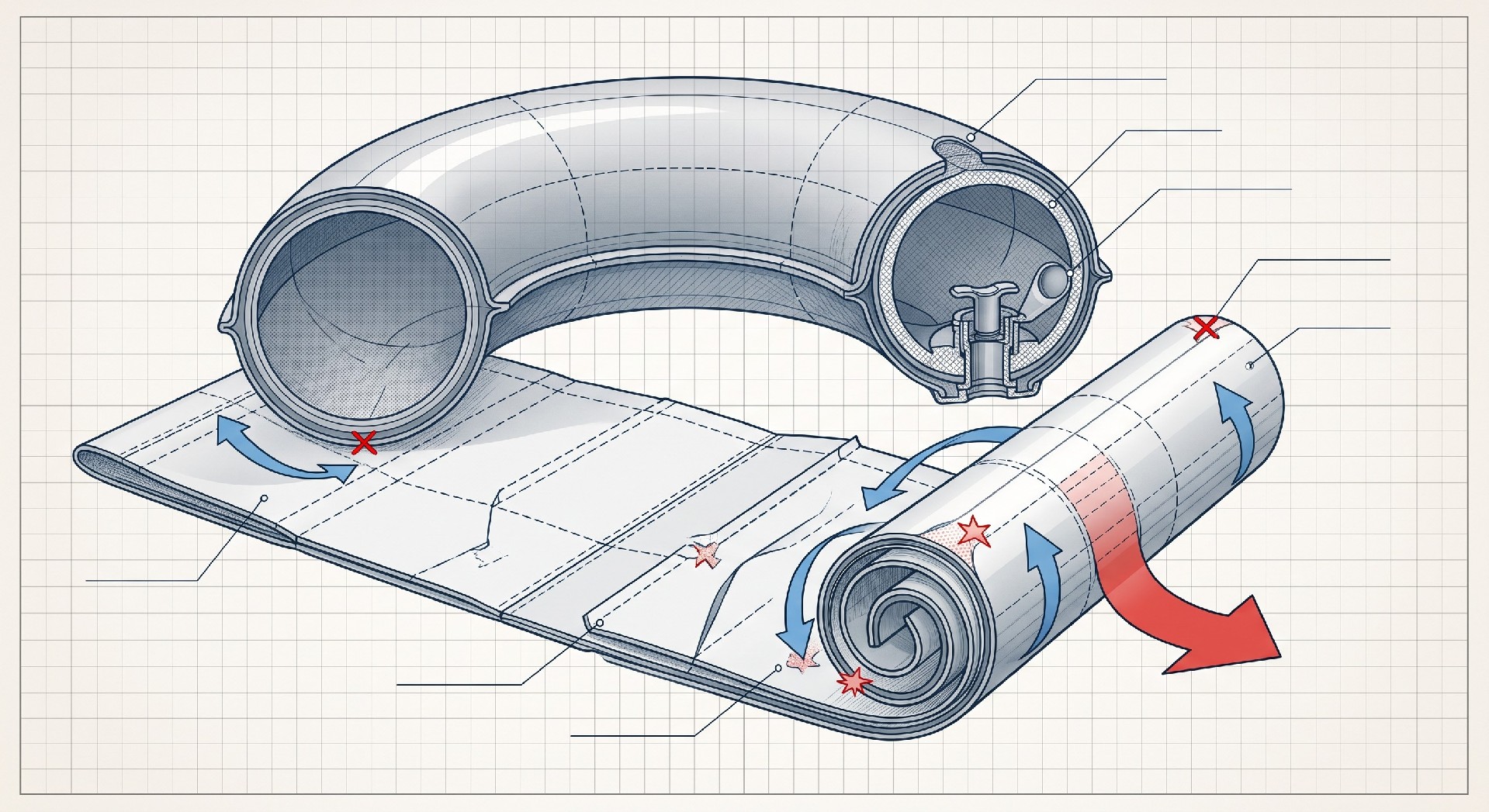
Commercial large swimming rings differ from consumer pool toys in several material and construction choices. They typically use 0.4 mm to 0.55 mm gauge PVC or reinforced vinyl, with welded high-frequency seams rather than glued joints. Many models include two or three air chambers, a bottom fabric layer for abrasion resistance, and oversized valves (often Boston or twist-pin types) with a diameter of 25 mm to 35 mm. The ring geometry—toroidal, often with an inner diameter of 1.2 m to 1.8 m for a rider and an outer diameter of 2.4 m to 3.0 m—means that the structure has a large cross-sectional tube of 0.4 m to 0.6 m in diameter. This large tube volume is the primary packaging challenge, not the weight.
A Step-by-Step Commercial Deflation and Folding Method
The following procedure is designed for commercial settings where speed, consistency, and product longevity are equally important. It applies to rings intended for tow-behind use, floating loungers, and watersport platforms, with an emphasis on reducing packed volume for air, sea, or truck freight.
Step 1: Open All Air Chambers Simultaneously
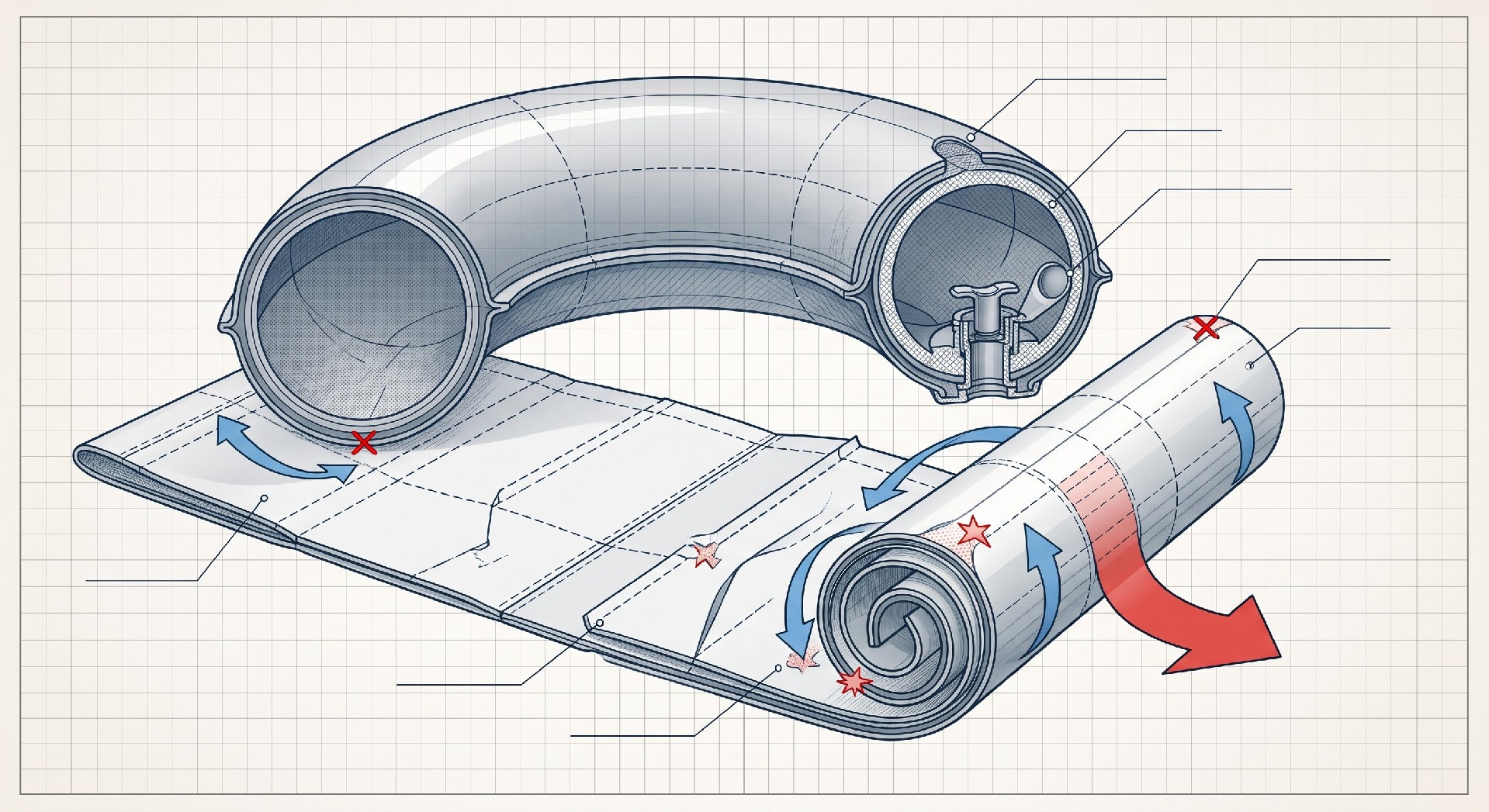
Most commercial large swimming rings have a main chamber and one or two auxiliary chambers, often situated in the inner ring or the bottom panel. Open every valve cap and press the valve stem inward to release air. Do not deflate one chamber completely before opening the next—this can cause stress on internal baffles. Open all valves first, then begin rolling. A typical commercial ring with a working pressure of 0.7 psi to 0.9 psi will take 2 to 3 minutes to passively deflate; for faster processing, use a low-pressure, high-volume deflation pump with a suction rating of at least 150 CFM.
Step 2: Fold the Ring into a Half-Circle
With the ring flat on a clean, dry surface, stand at the top of the circle. Fold the ring in half by bringing the top edge down to the bottom edge, creating a half-moon shape. Ensure the valves are facing outward and accessible for any secondary deflation. This preliminary fold reduces the circumference by half and positions the tube sections so that air pockets can be squeezed toward the valve openings.
Step 3: Roll from the Valve End to Force Air Out
Starting at the end opposite the main valve, roll the half-circle tightly toward the valve side. Use your knees and body weight to apply even pressure across the tube diameter—do not use sharp objects or kneel on seam lines. As you roll, air will be pushed out of the open valves. For double-chamber rings, alternate rolling direction slightly to push air from each chamber. A commercial-grade ring should be rolled with a consistent 20 cm to 25 cm roll diameter per revolution; irregular rolling can cause localized stress on welded seams.
Step 4: Fold the Rolled Tube into a Compact Rectangle
Once the air is mostly evacuated, the rolled tube forms a long cylindrical shape, typically 2.0 m to 2.5 m in length for a 2.5 m ring. Fold this cylinder in thirds or fourths, depending on your storage container or luggage. For sea freight, folding into a 0.8 m x 0.6 m x 0.3 m block is typical. Secure the folded block with compression straps—not string or wire—to maintain the pack shape during transit. For repeated rental operations, consider using a vacuum-sealing bag to remove residual air after folding; this can reduce volume by an additional 15% to 20%.
Commercial Decisions for Deflation and Folding
In a B2B context, the method above is only half the story. The remaining considerations involve labor cost, packaging volume, and product durability. The table below summarises the key commercial and technical tradeoffs that a procurement or operations manager must evaluate when specifying a deflation and folding process for large swimming rings.
| Commercial Factor | Typical Target | Why It Matters | Buyer Check |
|---|---|---|---|
| Packed volume per ring | 0.25 - 0.35 m³ for 2.5 m ring | Determines container capacity and freight cost per unit | Verify with a sample folded unit from the supplier |
| Folding labor time | 3 - 5 minutes per ring for trained staff | Directly impacts rental turnaround and warehouse throughput | Measure and benchmark against your current process |
| Valve accessibility | Valves must face outward during rolling | Prevents stem damage and ensures complete deflation | Inspect valve position on folded samples |
| Seam stress risk | High when folding at<10°C or on seam lines | Causes premature seam cracking and leaks | Test fold a sample in cold conditions before bulk order |
| Compression method | Use adjustable straps, not wire or string | Avoids point-load damage and maintains pack shape | Specify strap type in the packing SOP |
| Tolerance for trapped air | <5% residual air by volume | Reduces pack size consistency and shipping efficiency | Weigh and measure folded samples against target |
Preventing Damage: Seams, Valves, and Material Fatigue
The most common commercial failure when folding large swimming rings is seam stress. High-frequency welded seams are strong under tension but can crack when folded at acute angles, particularly in cold temperatures (below 10°C). To mitigate this, always fold the ring at room temperature (20°C to 25°C) and never fold directly over a seam line—allow the seam to lie flat within a roll section. Valves are the second most vulnerable component; a twisted or pinched valve stem during rolling can lead to slow leaks. A typical commercial target for valve cycle life is 5,000 to 10,000 inflation/deflation cycles, but this is heavily dependent on handling protocol. If you are deflating and folding rings daily in a rental fleet, inspect each valve after folding for any sign of misalignment. Many commercial buyers specify a 0.5 mm to 1.0 mm offset tolerance for valve positioning during OEM production to ensure that valves do not end up in high-stress fold areas.
Packaging Volume and Freight Economics
For a 2.5 m large swimming ring with a 0.5 m tube diameter, the fully inflated volume is approximately 2.45 m³. After correct deflation and folding using the above method, the packed volume for a single ring is typically 0.25 m³ to 0.35 m³. That is a volume reduction of over 85%. In container shipping, this can translate into a difference of dozens of units per 40-foot container. For instance, a 40-foot high-cube container has an internal volume of about 76 m³. At 0.3 m³ per packed ring, you can fit approximately 250 units (with packaging considerations); if packed at 0.6 m³ per ring, that number drops to 127 units. For a commercial buyer, the folding protocol directly influences landed cost per unit. When negotiating with a supplier, always request a 'packed dimension' sample—not just a 'deflated dimension'—to verify the actual folded block size that their factory achieves.
Checklist: Deflation and Folding for Commercial Shipment
The following checklist is designed for warehouse staff, rental operators, and quality control personnel to verify that each large swimming ring is deflated and folded consistently. Use it as a standard operating procedure (SOP) for every unit received or shipped.
Open all valve caps and press stems to release full pressure before folding.
Verify that the folding surface is clean and free of sharp debris.
Fold into a half-circle, then roll from the non-valve side toward the valves.
Apply even, body-weight pressure during rolling—avoid step-kneeling on seams.
For multi-chamber rings, ensure both chambers are fully evacuated; a trapped air pocket of 1 psi can increase packed volume by up to 10%.
Fold the rolled cylinder into a maximum rectangle of 0.9 m x 0.7 m x 0.3 m for a standard 2.5 m ring (supplier-dependent).
Secure the folded block with compression straps, not wire or sharp ties.
If using vacuum bags, apply suction only to the valve opening; do not use a vacuum on the fabric itself.
Weigh and measure the folded package for shipping documentation; record deviations from the target pack size.
When to Replace vs. Modify Your Folding Protocol
If you notice a pattern of seam failures, valve damage, or increasing packing volume over time, it may not be a handling issue but rather a material or construction issue. PVC that has been exposed to UV for more than 500 hours (typical commercial exposure) becomes stiffer and less forgiving to folding. In such cases, consider specifying a TPU-coated fabric or a PVC formulation with a lower Shore hardness (e.g., 65A vs 70A) for future procurement—these materials are more flexible at lower temperatures and have better fold fatigue resistance. For rings that are folded and unfolded daily in rental environments, a switch from a 2-chamber to a single-chamber design may reduce weight and valve inspection points, but increases risk if a puncture occurs. The decision should be based on your specific operational failure data, not on generic advice.
In summary, deflating and folding large swimming rings is a simple mechanical process, but doing it correctly at a commercial scale requires consistent training, verified packing targets, and an understanding of material limits. The method outlined above—open all valves, fold half-circle, roll toward valves, and compress into a rectangular block—is the industry standard for maximizing freight density and minimizing product damage. For buyers, the real value is in the commercial protocol: a well-defined SOP reduces labor time, ensures predictable shipping volumes, and extends the service life of the ring.
