

Defining the Risk: Why Backyard Pool Safety is Different for Grandparents
When grandparents host grandchildren in a backyard pool, the safety equation shifts. It moves from general pool supervision to a scenario involving potential mobility limitations, delayed response times, and multiple children of varying swimming abilities. Unlike a commercial or public pool, a residential backyard pool often lacks lifeguards, clear depth markings, and standardized rescue equipment. For grandparents, the core intent is not about product selection but about establishing robust, foolproof operational safety protocols that compensate for physical and environmental variables. This article provides a practical, commercially-focused safety framework for grandparents, drawing on best practices from the aquatics and risk-management industries. Our goal is to help you host with confidence by addressing entry systems, supervision rules, emergency preparedness, and equipment checks.
Access and Egress: Safe Entry and Exit Points
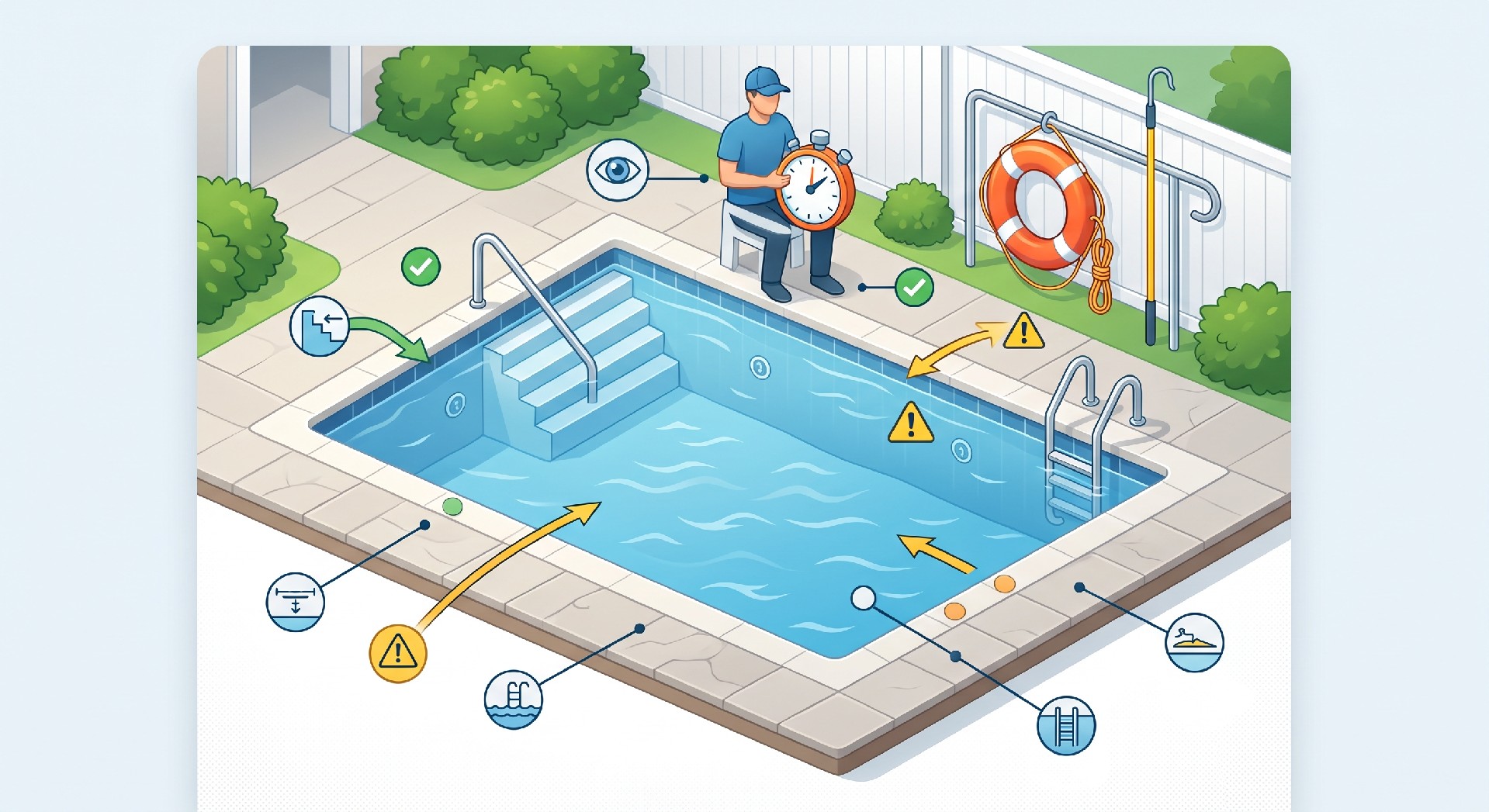
The first line of defense in backyard pool safety is controlling how swimmers get in and out of the water. For grandparents, this area is paramount due to potential joint issues or balance concerns. The primary risk is a fall during entry or exit, which could lead to injury for the grandparent or a panicking child. The specification of your pool's entry system—whether it's a ladder, stairs, or zero-depth entry—directly impacts safety. A ladder, for example, should have a robust, corrosion-resistant construction, with rails that extend at least 36 inches above the pool deck and a slip-resistant coating on the steps. For stairs, consider a handrail on both sides to provide support for both the grandparent and the child. The landing area at the top of the stairs must be clear of debris and have a non-slip surface. A typical commercial target for a pool ladder's weight capacity is 300 lbs, but for a grandparent hosting children, stability is more critical than sheer load. A wobbly ladder is a hazard. For in-ground pools, an auto-latching safety cover is often specified for when the pool is not in use, and a fence with a self-closing, self-latching gate is mandatory in most jurisdictions. The commercial consideration here is not a one-time purchase but a routine inspection: check the tightness of all bolts and the integrity of the stair treads before every pool session.
Supervision Protocols: The 'Water Watcher' System
Supervision is the most critical safety component, and it becomes complicated with grandparents. The primary rule is: never leave a child unattended in or near the water. However, with grandchildren, it's easy to get distracted. We recommend implementing a formal 'Water Watcher' system. This is a designated adult whose sole responsibility is to watch the pool for a defined period. This is not a passive activity; the Water Watcher should be within arm's reach of non-swimmers and maintain visual contact with all swimmers. For grandparents, we advise using a simple, waterproof sign or a lanyard with a timer that gets passed to the next adult. The timer should be set for 15-minute intervals to ensure the watcher stays alert and switches off to avoid fatigue. A commercial-grade lifeguard whistle is a useful tool to get everyone's attention in an emergency. The identification and management of 'high-risk' periods are key. These include the first ten minutes of pool time when children are most excited, and the final ten minutes when fatigue sets in. The Water Watcher should be a capable swimmer. A commercial safety checklist for a swimming class, often includes a 'number count' to track swimmers, and we recommend a similar practice: count the children in the pool every 5 minutes and immediately before everyone gets out.
Emergency Preparedness: The Golden Minute
An emergency in a backyard pool is a high-stress event. For grandparents, being prepared is the difference between a manageable incident and a tragedy. The physical layout of a rescue must be pre-planned. A reaching pole is a critical piece of equipment, as it allows a person on the deck to assist a swimmer in distress without entering the water. This can prevent a potential hip injury from the grandparent trying to lift a child or slipping on the pool deck. Commercial specifications for a reaching pole typically range from 12 to 16 feet in length and are often made of aluminum or fiberglass. A shepherd's hook at the end is the industry standard. A throwing ring or buoy with a line is also vital. Ensure these are placed in a highly visible, easily accessible location. The phone should be at the poolside with emergency numbers pre-programmed. CPR certification is highly recommended for any adult supervising children in a pool, especially for grandparents. A quick refresher course is a worthwhile investment. A well-stocked first-aid kit, including waterproof bandages and antiseptic, is essential. A commercial tip from the rental industry: run a monthly 'emergency drill' with your family to practice retrieving the reaching pole, calling emergency services, and simulating a rescue. This reduces panic in a real situation.
| Safety Zone | Recommended Equipment | Inspection/Maintenance | Commercial Red Flag |
|---|---|---|---|
| Pool Entry (Ladder/Stairs) | Corrosion-resistant ladder, handrails, slip-resistant treads | Check bolts and treads for wear before each use | Wobbly ladder or missing screws |
| Supervision | Water Watcher lanyard/timer, signaling whistle | Ensure watcher is not distracted, rotate every 15-20 mins | Supervisor is on a phone or absent |
| Emergency Access | Reaching pole (12-16 ft), throwing ring with line | Check pole is not damaged and ring is buoyant | Equipment is stored away or out of reach |
| Pool Deck & Surroundings | Non-slip coating, clear walkways, safety cover | Inspect for debris and slippery spots daily | Slippery deck or stacked toys near the edge |
Pool Equipment and Environment: A Safe Swimming Space
Beyond supervision and emergency gear, the condition of the pool itself and its surrounding area is crucial. This is where a product focus merges with safety. The water's clarity is a safety feature: you must be able to see the bottom of the pool clearly. Cloudy water obscures a swimmer in trouble. For home pools, maintaining a free chlorine level between 1-3 ppm and a pH between 7.2-7.8 is not just about sanitation but about visibility and swimmer comfort. For an above-ground pool, the pump and filter system must be in good working order to ensure proper circulation and chemical distribution. The pool deck is a major risk area for slips and falls. Use a slip-resistant coating on concrete or wood decking. Keep all toys and floats out of the pool area when not in use to prevent trips. The internal pool environment includes the pool liner. Check regularly for tears or sharp spots that could injure a child. For an inflatable pool, the 'pool or containment' product class, the wall height and floor thickness are key safety parameters. Water volume in a typical consumer inflatable pool can range from 500 to 2,000 gallons; ensure the ground is level and clear of sharp objects to prevent puncture. A hard-walled steel frame pool is a more robust alternative, but can increase the potential for injury if a child falls against it. The commercial environment often uses 'crash padding' or foam edge protectors. For grandparents, we recommend pool noodles attached to the top rail of above-ground pools to soften an impact and provide a visual cue of the pool's edge, especially for children. While not for all pools, a pool alarm that detects water disturbance or gate opening adds an extra layer of security.
Safety Rules for Grandchildren: Communication is Key
Before anyone enters the water, hold a brief safety talk. Establish the 'walk, don't run' rule around the pool deck. Define the deep end and shallow end clearly. Teach them to always ask permission before entering the water. A commercial approach to teaching kids about pool safety is the 'Reach or Throw, Don't Go' rule: if someone is struggling, they should not enter the water to rescue them, but should use a pole or ring to help them. Discuss the dangers of diving into shallow water. Setting these rules at the beginning of the day creates a safe culture and clarifies expectations.
Your Safety Decision Checklist for Hosting Grandchildren
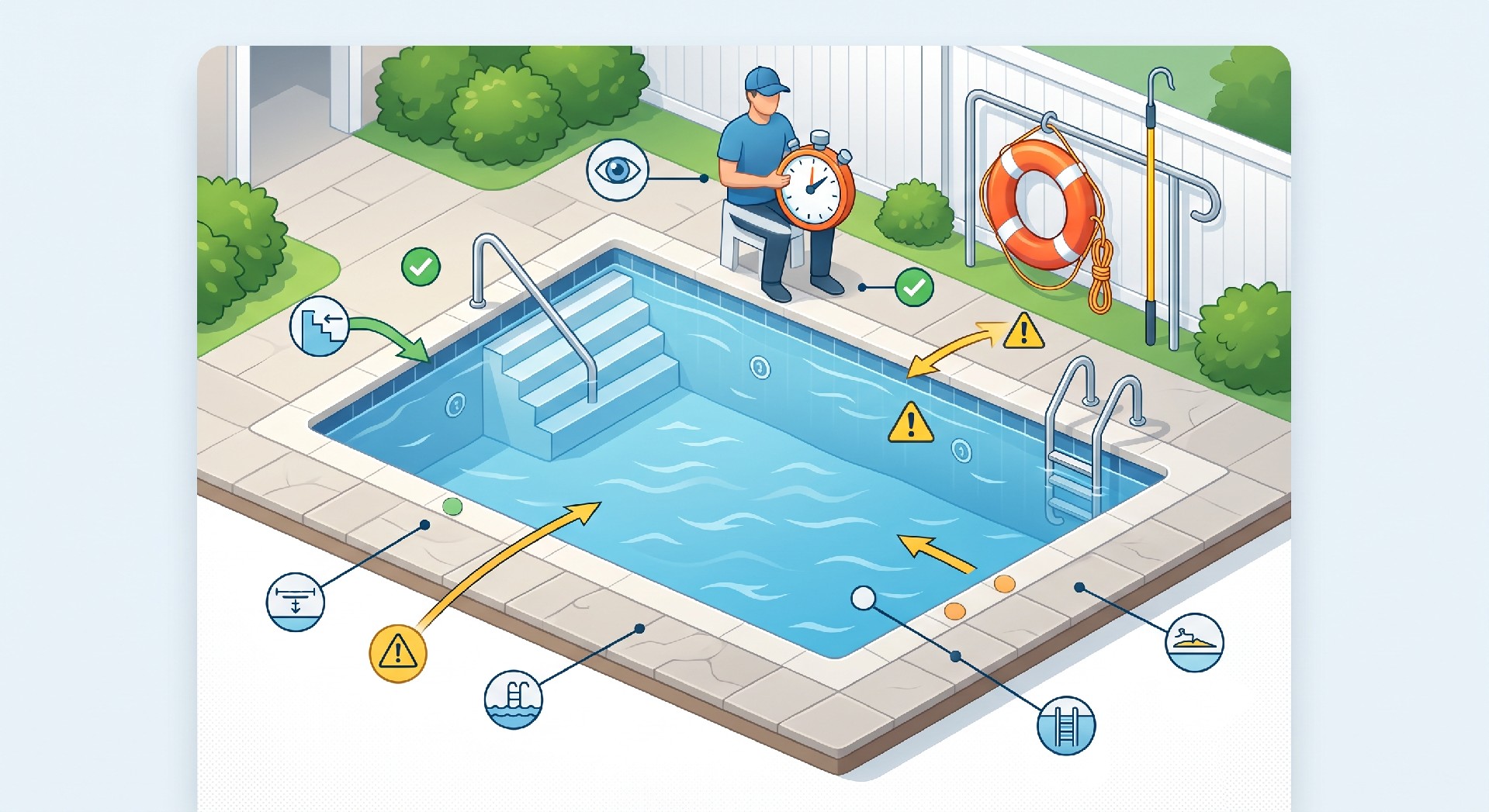
Safety in a backyard pool is not about expensive equipment; it is about diligent planning, consistent enforcement of rules, and clear emergency protocols. For grandparents, the emphasis is on creating a barrier-free and safe environment that supports mobility and prevents falls. This means prioritizing stable entry systems, formal supervision, and constant environmental awareness. To ensure the highest level of safety, here is a simple, actionable checklist you can run through before each pool session:
Entry System: Inspect ladders or stairs for stability and ensure handrails are secure.
Water Clarity: You must be able to clearly see the bottom of the pool in the deep end.
Emergency Equipment: Reaching pole, throwing ring, and first-aid kit are in place and accessible.
Communication: The 'Water Watcher' is designated and has the timer/whistle.
Rules: Set the ground rules with grandchildren before anyone enters the water.
Checklist: Confirm the phone is at hand and CPR skills are fresh in your mind.
This practical guide provides the framework for a safe and enjoyable pool experience. By focusing on these key areas, grandparents can host their grandchildren with the peace of mind that comes from being thoroughly prepared.
