

What Waterproof Accessories Make Swimming Rings More Practical for Commercial Use?
For commercial pool operators, resort activity coordinators, and rental fleet managers, outdoor swimming rings are a guest-favorite item. However, the real operational challenge isn't the ring itself—it's how to keep guests' personal items safe and dry while they use them. The dominant search intent behind "Best Waterproof Accessories to Combine with Outdoor Swimming Rings" is a product selection guide for practical, durable add-ons that enhance the guest experience and reduce lost-item complaints. This article focuses on the three most commercially viable accessory categories: dry bags, waterproof phone cases, and floating speakers, and provides a decision framework for choosing the right ones for your operation.
Understanding the Commercial Scenario: Why Accessories Matter
In a commercial setting, whether it's a resort pool, a water park, or a rental concession on a lake, guests arrive with valuables: keys, wallets, smartphones, and medication. The swimming ring itself is a platform for fun, but it lacks integrated storage. Accessories are not an afterthought; they are a critical component of guest satisfaction and operational efficiency. A guest who loses a phone in the water is more likely to leave a negative review than one who had a secure, floating dry bag attached to their ring. For the operator, investing in the right accessories reduces liability, streamlines rental returns, and can even be a profitable upsell opportunity.
When selecting accessories, commercial buyers must evaluate beyond the retail packaging. The key decision factors are durability under frequent use, ease of attachment and detachment, buoyancy to prevent loss, and UV resistance for outdoor environments. The following sections break down each accessory type, providing technical specifications and commercial considerations.
1. Dry Bags: The Primary Storage Solution
Dry bags are the most versatile and practical accessory for swimming rings. They come in various sizes, materials, and closure types. For commercial use, the ideal dry bag should be compact, highly waterproof, and feature a secure attachment point. The most common materials are PVC and TPU (Thermoplastic Polyurethane). PVC dry bags are generally more affordable and offer good durability, but they can become brittle in prolonged sun exposure. TPU bags are more flexible, more resistant to UV degradation, and often considered a premium option for commercial fleets. The closure system is critical: a roll-top closure with a buckle is the industry standard for a reason. It provides a triple-layered seal that, when properly rolled, is virtually waterproof. Cheap zip-lock or drawstring closures are not suitable for commercial environments due to their high failure rate.
For swimming ring applications, a small 2 to 5-litre dry bag is typically sufficient for a guest's essentials. The bag should also be brightly colored—neon yellow, orange, or pink—to be easily spotted in the water or on the pool deck. This not only helps guests locate their belongings but also aids staff in identifying lost items. A key commercial consideration is the attachment mechanism. Look for dry bags with a sturdy D-ring or a webbing loop that can be securely clipped to the swimming ring's handles or to a separate carabiner.
2. Waterproof Phone Cases: The Must-Have for Modern Guests
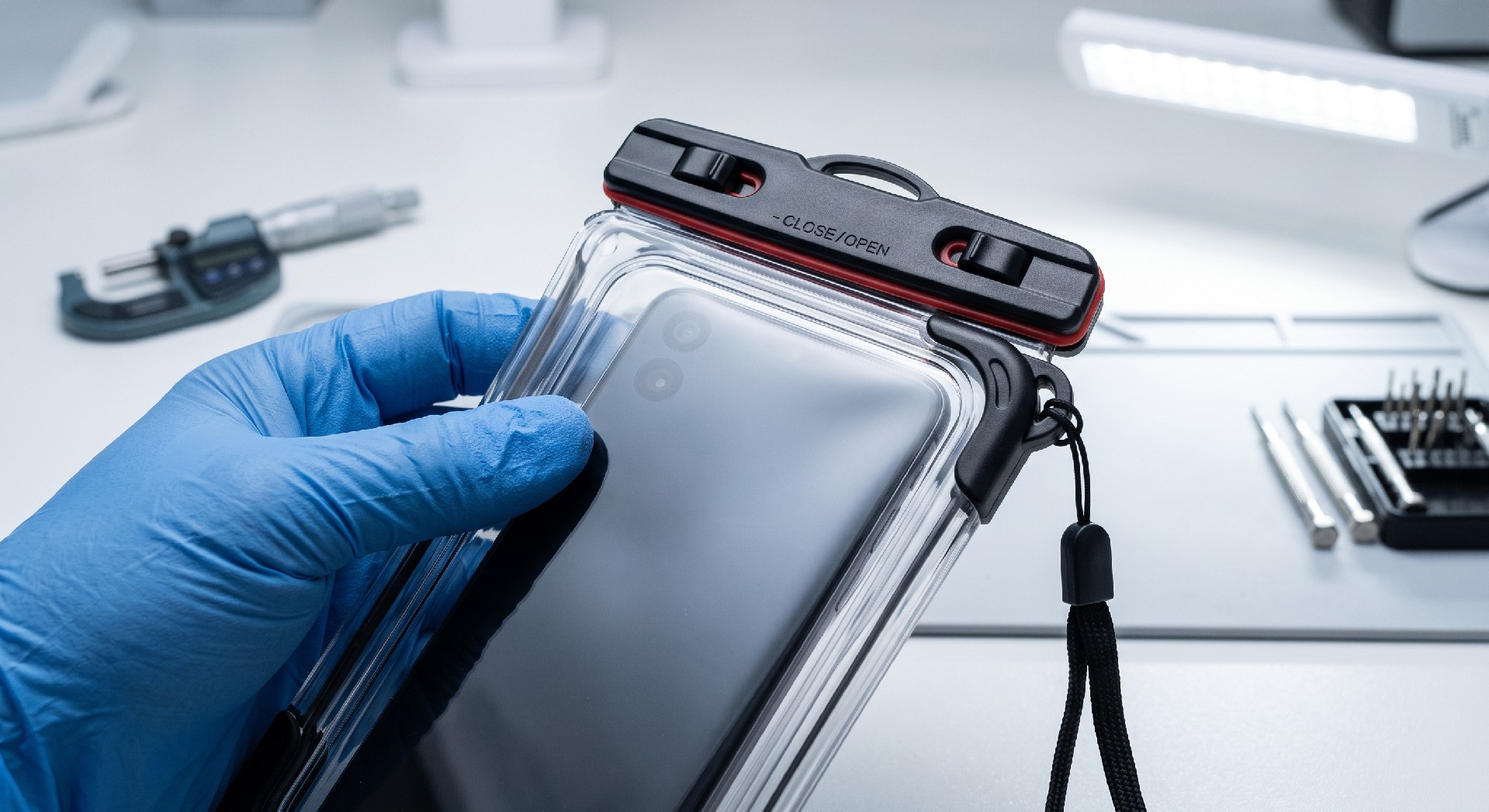
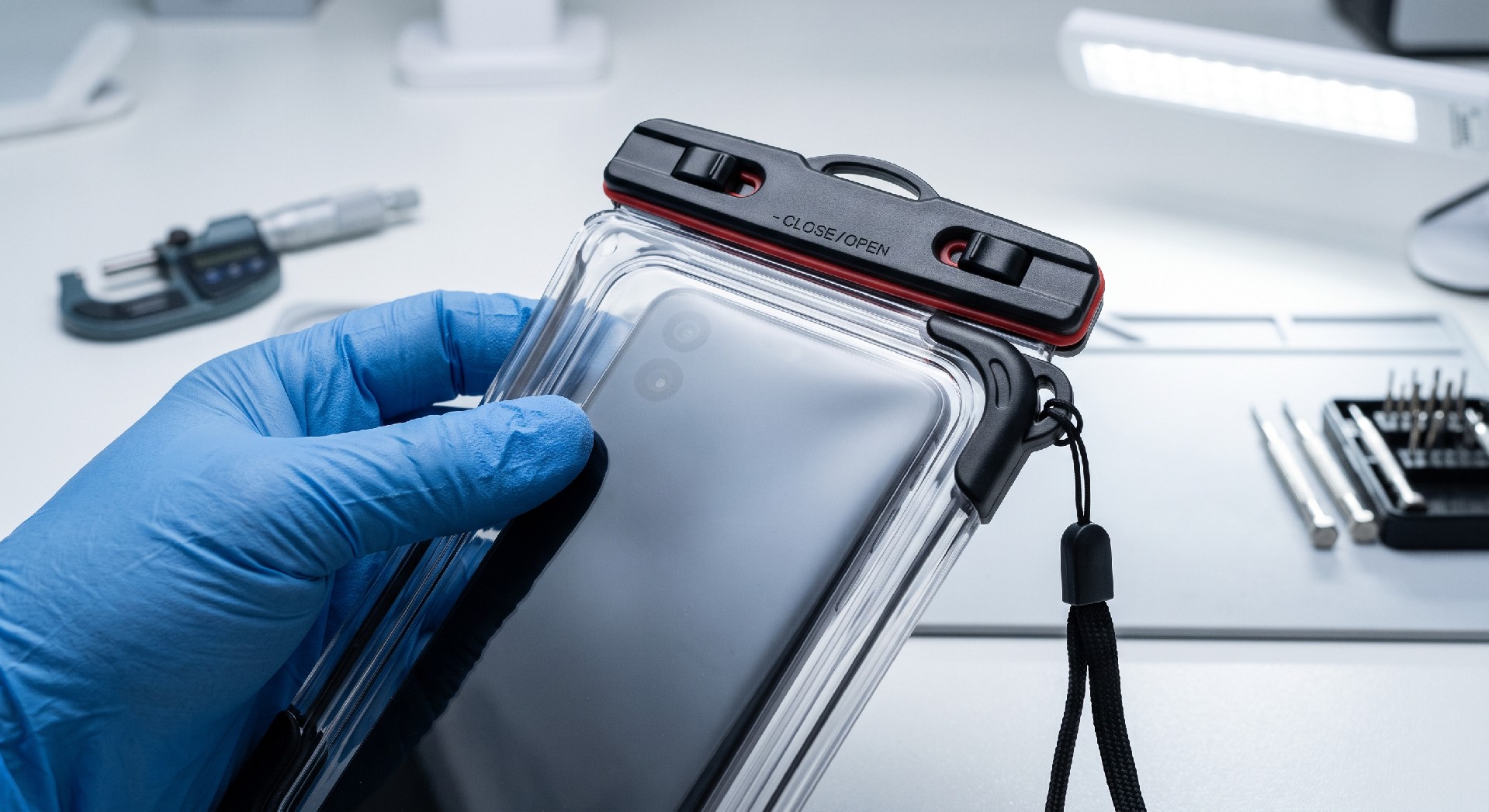
In 2026, the smartphone is a near-ubiquitous accessory for any recreational activity. Waterproof phone cases are no longer a niche item; they are an expected amenity. The primary function is, of course, to protect the device from water damage, but in a commercial pool context, they also serve a secondary purpose: they keep the phone physically attached to the swimming ring. The best cases for this application are hard-shell, clear cases with a secure lanyard or wrist strap. These cases are designed to be touched and used while submerged, with a clear membrane over the screen that allows for touchscreen functionality. The IPX8 rating is the typical commercial standard, indicating the case can withstand submersion beyond 1 meter for extended periods. Buyers should verify that the case is tested for the expected depth of use, which for a swimming ring is typically less than 1 meter.
From a commercial standpoint, you have a choice: stock a universal case that fits the most common phone sizes, or offer a selection. A universal case that can accommodate a phone up to 6.5 inches with a slim case is often the most cost-effective and lowest-maintenance option. However, these cases can have a loose fit, which might compromise the seal. A more premium approach is to stock cases designed for specific phone models, but this requires a larger inventory and more complex staff training. The lanyard is another critical feature. It should be at least 30cm long to allow for easy phone use while attached to the ring, and its attachment point should be reinforced to withstand the stress of regular tugging. A lanyard that is too short restricts the user, while one that is too long can become a tangle hazard. A typical commercial range for lanyard length is 30 to 45 cm.
3. Floating Speakers: The Experience Enhancer
Floating Bluetooth speakers are a popular accessory for creating a social atmosphere around pool activities. These are essentially waterproof, buoyant speakers designed to float on the water's surface. They pair with a guest's phone and provide music directly on the water. From a commercial perspective, they represent an opportunity for a premium upsell. A high-quality floating speaker, such as those that are IP67 rated (dust-tight and waterproof for up to 1 meter for 30 minutes), can command a higher rental fee. The key technical features for commercial consideration are battery life, wireless range, and acoustic performance in an open, outdoor environment. A battery life of at least 8-10 hours is a typical commercial target to cover a full day of use. The wireless range, typically around 30-50 feet, is sufficient for a pool or a small lake. The speaker should also be easy to clean and sanitize, as it will be handled by multiple guests.
Beyond the basic functionality, the design of the speaker's mounting system is crucial. Many floating speakers feature a flat bottom or a built-in loop. For attachment to a swimming ring, a loop or a carabiner clip is ideal. An alternative to a dedicated floating speaker is a waterproof, floating Bluetooth speaker designed to be strapped to a stand-up paddleboard, but these are often larger and less convenient for a small swimming ring. A more compact, cylindrical design that can be easily attached to the ring's handle or a dry bag is often more practical.
| Accessory Type | Commercial Target Specification | Why It Matters | Buyer Check |
|---|---|---|---|
| Dry Bag | TPU material, 3L to 5L capacity, roll-top closure, bright color, D-ring. | Flexible, UV-resistant, waterproof, visible in water, secure attachment. | Confirm TPU grade and UV resistance. Test the roll-top closure for watertightness. |
| Phone Case | Hard-shell, IPX8 waterproof rating, 30-45 cm lanyard, reinforced attachment point. | Protects phone from submersion, prevents loss, easy to use. | Verify IP rating is for submersion. Test lanyard durability with a pull test. |
| Floating Speaker | IP67 rating, 8-10 hours battery life, Bluetooth 5.0, compact with attachment loop. | Reliable in wet/dusty environments, lasts a full day, strong connection, easy to attach. | Check battery life under typical volume. Confirm attachment loop is corrosion-resistant. |
| Attachment System | Stainless steel or composite carabiner, reinforced D-ring on ring. | Prevents corrosion, secures accessories, easy to clip and unclip. | Assess carabiner material. Verify D-ring is welded or reinforced into the ring's structure. |
Commercial Decision Matrix: Matching Accessories to Your Operation
When planning your accessory inventory, consider your operational model. A high-volume, budget-conscious rental concession will prioritize durability, ease of cleaning, and low replacement cost. A luxury resort will prioritize premium materials, branding opportunities, and an enhanced guest experience. The table below provides a detailed decision framework for each accessory type, highlighting the decision factors, target specifications, operational impact, and buyer checks.
Attachment and Integration: The System Approach
How these accessories attach to the swimming ring determines their practicality. Swimming rings typically have one or two grab handles. A single grab handle is common on smaller, child-sized rings. Larger adult rings may have two handles molded into the PVC, located 180 degrees apart. The accessory's attachment point must be compatible with these handles. A carabiner is the most versatile and secure attachment method. It can be clipped to a handle, a D-ring on a dry bag, or a loop on a phone case. The carabiner itself should be made from marine-grade stainless steel or a robust plastic composite. Aluminum carabiners can corrode in a chlorinated pool environment. When attaching multiple accessories, consider the user's convenience and safety. Attaching a dry bag and a phone case to the same handle can create an awkward cluster. A better approach is to have a dedicated attachment point, such as a small D-ring embedded in the ring's seam, but this is a specific product design feature.
For commercial buyers, a modular system is an option. This involves selecting a swimming ring that has multiple, reinforced D-rings or attachment points. This allows guests to securely attach their chosen accessories without obstructing the handles. The integration of accessories should not compromise the swimming ring's safety or buoyancy. Overloading a small swimming ring with heavy dry bags or speakers can affect its stability. A typical payload limit for a large adult swimming ring is in the range of 100-150 kg, but this includes the user. Accessories should be light, ideally under 1 kg total. The dry bag's buoyancy is also a factor. A dry bag with an air pocket will float, which is beneficial if the bag is accidentally dropped in the water. A water-filled dry bag will sink, which is a failure mode to avoid.
Operational Workflow and Staff Training
Introducing accessories introduces new operational workflows. Staff need to be trained on how to inspect, clean, and prepare each accessory for rental. For a phone case, inspection involves checking the seal for dirt or debris, ensuring the lanyard is not frayed, and verifying the case closes securely. For a dry bag, it's about checking the roll-top seal and ensuring the buckle is functional. A simple checklist for staff can significantly reduce failure rates. The cleaning protocol is also important. All accessories must be sanitized between guests. A simple dip in a mild, pool-safe disinfectant solution and a water rinse is typically sufficient for hard-shell cases and dry bags. Floating speakers, being electronic, require more careful cleaning, typically with a damp cloth and disinfectant wipes.
The rental or purchase process itself should be streamlined. For a high-turnover scenario, guests might check out a dry bag and phone case as part of a package. The accessories need to be easily identifiable, perhaps with a color-coded system or an inventory number. When it comes to return, the accessories are inspected, cleaned, and restocked. A well-designed workflow minimizes downtime between rentals. In a rental scenario, the ROI of these accessories is directly linked to their durability. A cheap phone case that fails in the water will result in a costly guest compensation claim, far exceeding the savings on the case itself. Therefore, for commercial use, it is often more economical to buy a higher-grade accessory that will last a season or more.
Final Recommendation: A Buyer's Action Plan
For a commercial operator looking to integrate waterproof accessories with outdoor swimming rings, the optimal strategy is to evaluate each accessory class against your specific operational context.
For Dry Bags: Prioritize TPU material for enhanced UV resistance and flexibility. Choose a small size (2-5 liters) with a roll-top closure. Verify the bag has a robust attachment loop. Bright colors are essential for visibility.
For Phone Cases: Select a hard-shell universal case with an IPX8 rating. The lanyard should be at least 30cm long with a reinforced attachment point. Consider offering it as a standard rental add-on.
For Floating Speakers: This is your premium upsell. Choose a model with an IP67 rating, a minimum 8-hour battery life, and a reliable mounting loop. Ensure it is easy to clean.
When choosing a supplier, look for those who can provide detailed technical specifications and test reports. Do not rely solely on marketing claims. Inquire about the material composition (e.g., is the TPU phthalate-free?), the specific IP rating test conditions, and the cycle life of moving parts like buckles and zippers. Ask for sample units for operational testing before committing to a bulk order. Validate the attachment compatibility with your specific swimming ring model.
Ultimately, the best accessory is the one that enhances the guest experience while adding minimal friction to your operations. It's not about having the most expensive items, but the most appropriate and reliable ones for your conditions. Buy for durability, train your staff on proper handling and inspection, and you will see a return through higher guest satisfaction and fewer operational headaches.
