

Why Rod Holder Placement Affects More Than Convenience
For commercial fleet operators, outfitters, and resort buyers, the location of fishing rod holders on a PVC inflatable kayak directly influences paddling efficiency, drift stability, and gear retention. Poor placement creates drag, hinders casting arcs, and can even compromise the kayak's center of gravity. This guide focuses on the engineering and operational logic behind positioning rod holders on inflatable fishing platforms, moving beyond basic accessory attachment to discuss load distribution, tube geometry, and user ergonomics. We will cover the key placement zones, the tradeoffs between tracking and accessibility, and how to specify holder configurations that maximize both angler satisfaction and equipment longevity.
Understanding the PVC Inflatable Kayak as a Mounting Platform
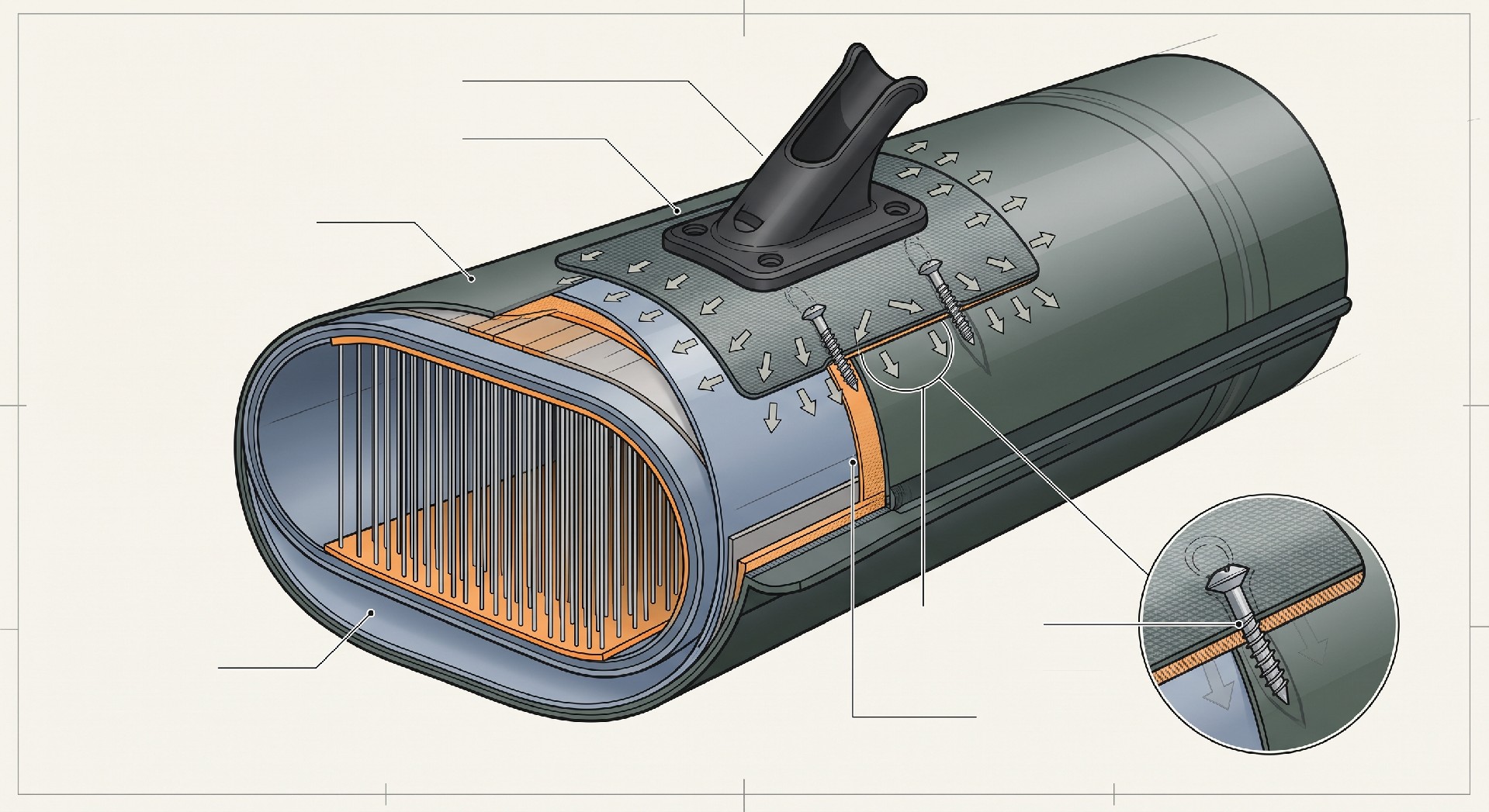
Before deciding on rod holder placement, it is essential to understand the structural anatomy of a PVC inflatable kayak. The primary structure consists of inflatable tubes (side chambers) and a floor, typically made from 0.7mm to 1.2mm PVC fabric with a drop-stitch or welded construction. Unlike hard-shell kayaks, inflatable kayaks have a lower stiffness-to-weight ratio and a flexible surface that cannot support heavy point loads without reinforcement. OEM specifications often define the tube diameter (commonly 25 to 35 cm), chamber pressure (typically 3.0 to 5.0 PSI for recreational models), and fabric denier (1000 to 1500 denier for commercial-grade PVC). These parameters dictate the allowable load on accessory mounts. Rod holders are usually attached via D-rings, built-in mounting pads, or universal accessory tracks. Commercial buyers should verify the pull-strength rating of D-rings, commonly specified between 200 and 400 pounds, but this is a static rating; dynamic loads from a hooked fish or a snagged line can multiply forces significantly.
Critical Structural Limitations
The primary limitation is the flexibility of the side tube. A rod holder mounted on the side tube without a rigid backing plate will cause the tube to flex under load, altering the rod angle and potentially damaging the fabric around the mounting point. For commercial fleets, this flex can lead to premature wear and early seam failure. A secondary consideration is the floor structure. Kayaks with a drop-stitch floor provide a more rigid base for mounting, but the floor is often lower than the side tube, affecting the rod's clearance from the water.
Primary Placement Zones and Their Impact on Performance
There are three primary placement zones for rod holders on an inflatable kayak: the stern/foredeck area, the side tube flush mounts, and the crossbar or center console. Each zone offers distinct advantages and disadvantages for stability, accessibility, and paddle clearance.
Stern and Foredeck Zones
Placing rod holders on the stern deck (behind the paddler) or the foredeck (in front) is ideal for trolling or hands-free fishing. This position keeps rods out of the paddling stroke and reduces interference with casting. However, for inflatable kayaks, the foredeck must be carefully evaluated. Many PVC kayaks have a low deck profile; if the rod is placed too far forward, the rod tip may dip into the water during forward motion, especially when the kayak is under load. A stern placement is generally safer for drift fishing but makes it harder to reach the rod quickly. For commercial outfits, a stern mount is often the standard for trolling lines, with a secondary rod holder on the foredeck for bait rods. The practical challenge is securing the holder to the deck surface, which may not have the same reinforced fabric as the side tubes. Buyers should look for kayaks with reinforced deck pads or consider adhesive-mounted bases with a large surface area to distribute the load.
Side Tube Flush Mounts
Flush-mounted rod holders on the side tubes are the most common configuration in dedicated fishing inflatables. They are positioned on the top surface of the tube, angled backward or outward. The optimal angle is typically between 30 and 45 degrees from vertical, allowing the rod to rest out of the way while providing a clear arc for fighting a fish. The critical specification here is the holder's base width; a wider base (e.g., 10 cm diameter) reduces pressure on the PVC material. Buyers should also check the angle adjustment range; fixed angles are cheaper but less versatile. A key commercial decision is whether to use two holders per side or one. Two holders per side allow for multiple lines but increase the weight on the tube, which can affect the kayak's lean and tracking. Operators often prefer a 2+1 configuration (two on one side, one on the other) for serious anglers, but this may require a custom order from the OEM. One must also consider the paddle stroke; holders placed too far forward on the side tube will be hit by the paddle blade, causing fatigue and noise. A placement at the paddler's hip or just behind is generally considered the safe zone.
Crossbar or Center Console Mounts
Some premium PVC fishing kayaks include a rigid crossbar or a small center console, often made of reinforced aluminum or high-density PVC. This is the best location for a rod holder because it is directly in front of the paddler, easy to access, and does not affect the kayak's lateral stability. However, this configuration is rare in entry-level models and is typically found in kayaks designed for stand-up fishing or those with a higher price point. For commercial buyers, the crossbar is a strong selling point for guided fishing trips where frequent rod changes are needed.
| Placement Zone | Typical Angle | Stability Impact | Best Use Case |
|---|---|---|---|
| Stern Deck | Vertical to 15° | Low (minimal lateral leverage) | Trolling, long drifts |
| Side Tube (Hip Position) | 30° - 45° from vertical | Moderate (weight bias possible) | Active fishing, casting |
| Side Tube (Forward Position) | 45° - 60° from vertical | High (paddle interference) | Not recommended for paddling |
| Center Crossbar | 0° - 30° (adjustable) | Low (central weight) | Guide operations, stand-up fishing |
| Foredeck | 10° - 20° | Moderate (tip dip risk) | Reserve rod storage only |
Stability and Drift: The Hidden Variables
Rod holder placement is not just about convenience; it directly affects the kayak's stability and drift pattern. A kayak with two rod holders on the same side, both loaded with heavy rods and reels, will have a significant weight bias. This bias causes the kayak to list, increasing drag on the lower side and making the kayak track poorly. To compensate, some operators add a water bag or ballast on the opposite side, but this adds complexity. A more effective solution is to spec a kayak with a symmetrical holder layout. Furthermore, the position of the rods relative to the kayak's center of lateral resistance affects how the kayak drifts in a current or wind. A rod held vertically creates a small sail effect, turning the kayak slightly into the wind. A rod held horizontally acts as a tiny outrigger, slightly increasing primary stability. These effects are small but noticeable over a full day of fishing. For drift fishing, many commercial operators prefer a flush-mount setup at a 45-degree angle, which keeps the rod relatively flat and reduces wind interference.
Material and Accessory Compatibility
When specifying rod holders for a PVC fleet, pay close attention to the material of the holder itself. Stainless steel is the premium choice but adds weight and cost. Anodized aluminum is lighter and offers decent corrosion resistance. The most common choice for commercial fleets is heavy-duty plastic or nylon, which is lightweight, corrosion-free, and offers sufficient strength for typical fishing loads. However, the UV resistance of plastic holders varies significantly; cheap plastics will become brittle in a season of sun exposure. OEM buyers can specify UV-stabilized plastics, sometimes reinforced with glass fiber. The interface between the holder and the kayak is another critical point. For D-ring attachments, ensure the straps are long enough to accommodate the holder's base and that the D-ring itself is heat-welded or sewn with a protective patch. For track-mounted systems, the track should be made of anodized aluminum to prevent galvanic corrosion between the track and the holder.
Commercial Considerations for Fleet Operators
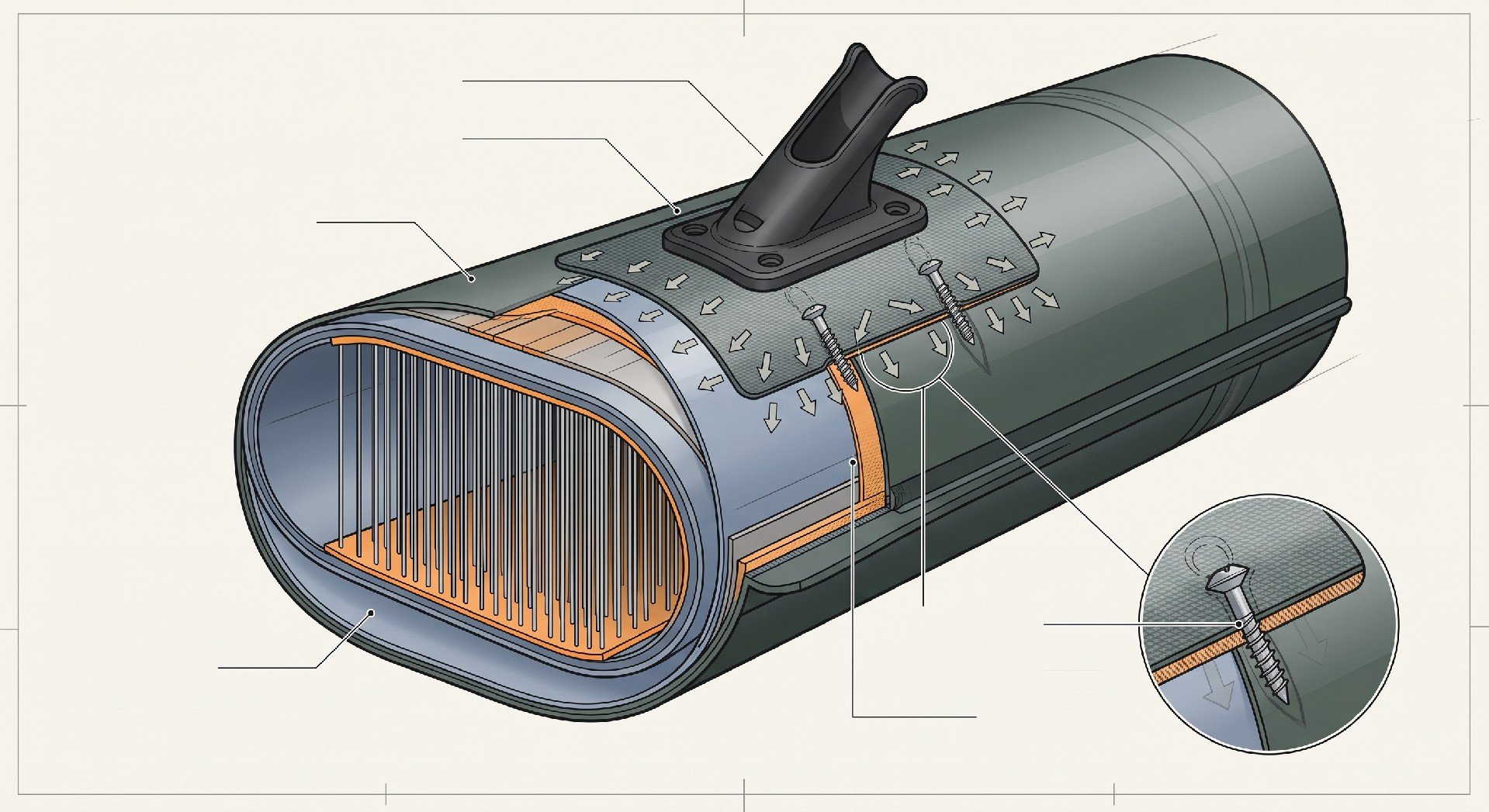
For rental fleet and resort buyers, the biggest concern is not the performance of a single kayak but the durability and maintenance costs of the entire fleet. The number one failure point for rod holder mounts is the adhesive used to secure the mounting pad or the D-ring. In humid and salty environments, adhesive bonds can fail. Therefore, a heat-welded or RF-welded (radio frequency) mounting point is superior to an adhesive-only attachment. Operators should ask suppliers for the shear and peel strength of the welded mount, which is often measured in Newtons per millimeter. Another commercial issue is the theft or loss of rod holders. For a fleet, removable holders are not advisable as they get lost. Fixed holders are preferable. When ordering, consider the spare parts ratio; it is common to order 10% extra holders to cover breakage and to use the same holder model across the entire fleet to simplify inventory.
Specification Checklist for OEM Buyers
When contracting an OEM manufacturer for a custom batch of inflatable fishing kayaks, the following elements should be included in the product specification sheet regarding rod holders. First, define the base width and the number of mounting bolts or rivets required. Second, specify the holder's angle and whether it has a gimbal pin for fighting big fish. Third, require salt-spray testing (e.g., 48 hours of ASTM B117) for all metal components. Fourth, specify the welding method for the mounting patches. Fifth, request a sample approval where the rod holder is tested with a typical rod and a 5-pound drag force to observe the fabric flex and holder stability. Sixth, discuss the layout placement with the factory engineer, providing a diagram of the preferred placement zone based on the kayak's tube diameter. A well-documented design brief ensures the factory can confirm the mold and drilling locations before production. The lead time for custom mounting patches is typically 2 to 3 weeks longer than a standard kayak order.
Buyer Recommendation: Choosing the Right Configuration
For most commercial applications, we recommend a flush-mount system on the side tubes, positioned just behind the paddler's hips, with a 30-degree backward angle. This setup works for 80% of anglers and is easy to manufacture. For guided fishing operations, we recommend adding a center crossbar with a rod holder for the guide to store a backup rod. For kayak rental operations, we recommend a single rod holder per kayak (centered on the stern deck) to minimize maintenance and ensure that every rental kayak has a designated fishing spot without clutter. Avoid placing rod holders on the foredeck of standard inflatable kayaks with a low rocker, as the rod tips will likely drag in the water. As a final commercial decision, operators should weigh the cost of adding a fourth rod holder to the kayak against the potential revenue; additional holders increase the upfront cost and the repair risk but can make the kayak more attractive to advanced anglers. The typical cost delta between a two-holder setup and a four-holder setup on an OEM order is approximately 5-7% of the total unit cost.
