

Why Seating Comfort Determines Your Paddling Endurance
For paddlers spending four, six, or eight hours on the water, the seating setup in an inflatable kayak is not a secondary comfort feature—it is a critical factor in paddling efficiency, physical endurance, and the avoidance of overuse injuries. Unlike rigid hull kayaks where the seat is structurally integrated, inflatable kayaks offer a variety of seating configurations, from molded foam bases and inflatable cushions to adjustable drop-stitch frames and strap-back systems. This guide focuses specifically on what is the best seating setup for long hours in an inflatable kayak by examining seat architecture, load support, lateral stability, and customizable adjustments. Our goal is to help commercial fleet operators, rental outfitters, and individual touring buyers make an informed purchase decision based on their specific duration and paddling style.
Many first-time buyers underestimate the impact of inadequate lumbar support and poor seat-to-hull connection. A seat that shifts during power strokes, lacks sufficient padding, or fails to secure the paddler's hips can turn a promising expedition into a painful ordeal. We'll examine how seat design interacts with the kayak's floor drop-stitch technology, inflation pressure, and the paddler's anthropometry. The selections are not one-size-fits-all; what works for a lightweight recreational paddler on calm water may be wholly inadequate for a heavily laden touring kayak tracking through mild chop.
Seat Architecture and Connection Systems
Inflatable vs. Foam vs. Hybrid Seats
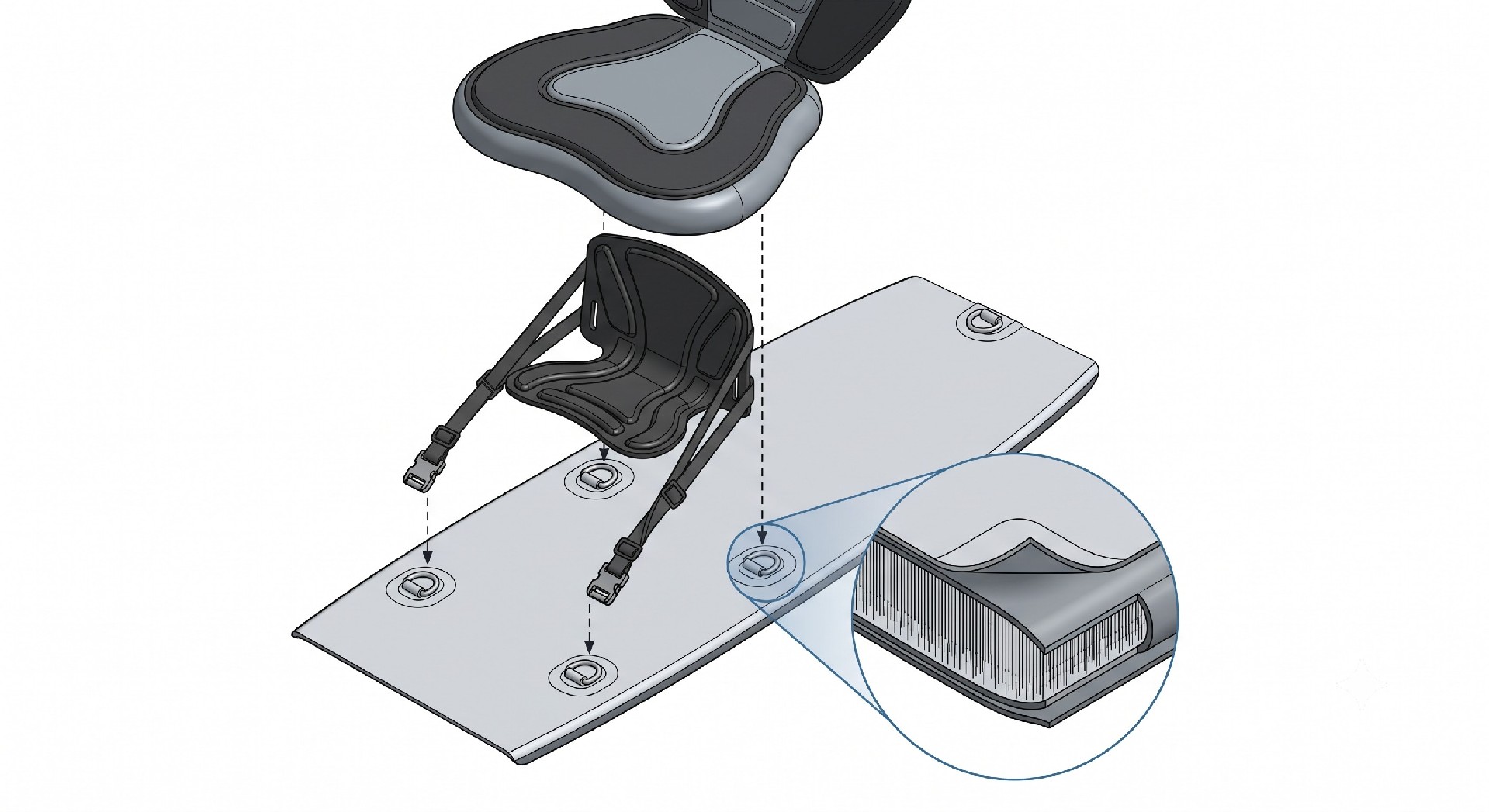
The market offers three primary seat types for long-duration paddling. Inflatable seats are lightweight and pack down small but often require careful pressure management to avoid bottoming out. They can also flex with the kayak floor, which may reduce confidence in rough water. Foam seats, typically made from high-density EVA foam, provide consistent shape and excellent shock absorption but add bulk to packed dimensions. Hybrid designs combine a foam base with an inflatable backrest or a drop-stitch floor insert that integrates the seat into the hull structure.
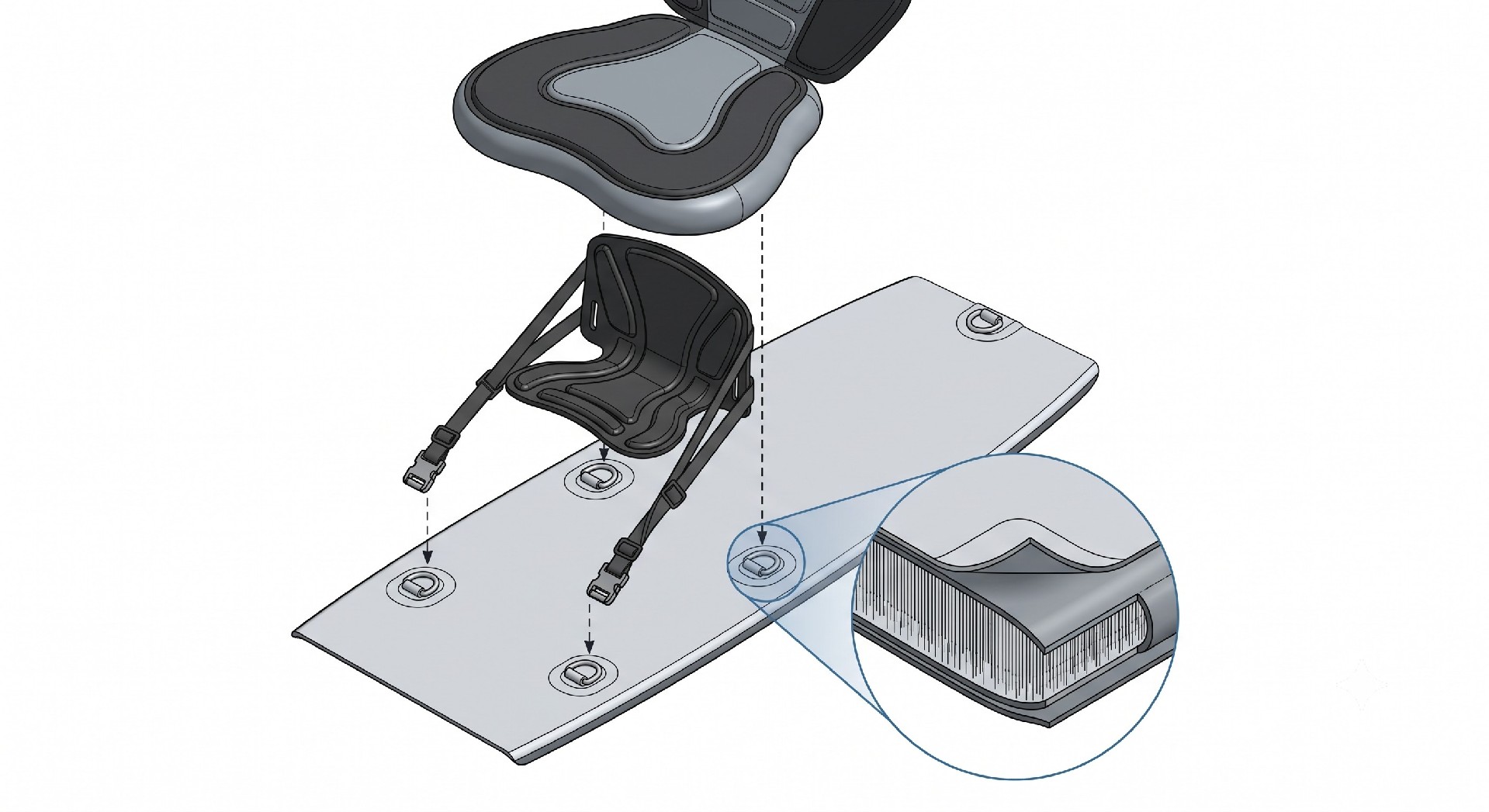
In terms of lateral support, the seat base should create a bucket effect that prevents the paddler's hips from sliding sideways during active edging. For long hours, a seat with contoured side bolsters is superior to a flat, pancake-style base. The connection to the hull matters equally: strap-based systems attached to D-rings are adjustable and allow for re-positioning but can stretch or slip over time. Seat tracks or hook-and-loop (Velcro) systems offer more secure positioning but less fine-tuning capability. A best-in-class approach often uses a combination of heavy-duty straps with cam buckles for tension retention and a non-slip backing to anchor the seat to the floor's texture.
Backrest Support and Dynamic Movement
Backrest design is arguably the most debated aspect of inflatable kayak seating. For extended use, the backrest must support the lower lumbar curve without restricting torso rotation. A backrest that is too high impedes paddler rotation; one that is too low offers no support. The ideal setup features a backrest that reaches approximately the midpoint of the shoulder blades and is height-adjustable via lash straps. Inflatable backrests provide some shock absorption when the kayak hits standing waves, but they can also lose air over the course of a long session, subtly decreasing support. A foam-backed or padded textile backrest with a rigid structural insert—often a PE board—offers reliable, consistent support. A common design tradeoff exists between support and packability; commercial operators with high return rates often lean towards a removable PE-board system, which allows for easy replacement and better recovery of seating support.
Seat Position and Leg Angle for Power Transfer
Seat position relative to the foot braces is a critical, yet overlooked, variable for long paddling sessions. The kayaker's knees should be slightly bent, with the heels resting comfortably on the floor or foot pegs. For an inflatable kayak, the seat is often positioned further back relative to the length to maximize stability, but this can result in a cramped leg angle. When evaluating what is the best seating setup for long hours in an inflatable kayak, ensure the seat base can be shifted fore-and-aft by at least four to six inches. This range accommodates different leg lengths and paddling styles, enabling the user to find the optimal point where the power from the core is effectively transferred through the paddle, rather than being absorbed by hip flexors. It is common for touring-specific designs to incorporate adjustable footrests that connect to the seat position, creating a unified ergonomic system. The typical commercial range for seat track movement is between 12 and 18 inches, allowing for significant flexibility in paddler positioning.
Hull Interaction: Deflection and Floor Rigidity
Seating comfort does not exist in a vacuum; it is heavily influenced by the kayak floor's rigidity. Drop-stitch technology, which creates a flat, high-pressure floor, significantly enhances the seating experience by providing a stable platform. When the floor flexes under the paddler's weight, it changes the hip angle and places constant stress on the lower back. A higher working pressure, typically targeting 10-12 PSI for drop-stitch floors, reduces floor deflection to a minimum, allowing the seat to function as a stable foundation. Conversely, a softer floor (often found in lower-cost kayaks with low-pressure tubes) will cause the seat to sag and shift, diminishing the effectiveness of even the best seat design. The floor stiffness also dictates how well the seat's lateral supports function. A rigid floor ensures the bucket effect of the seat remains intact, while a sagging floor allows the seat to splay open, reducing hip hold and causing the paddler to work harder to maintain balance. If you are sourcing for a fleet, prioritize a drop-stitch floor with a deflection specification of less than 1/4-inch under a 250-pound load to ensure long-duration comfort and efficient paddling.
| Seat Feature | Best For (Duration/Use) | Performance Tradeoff | Buyer Priority Check |
|---|---|---|---|
| Inflatable Base + Straps | Flat water tours under 4 hours | Lightweight and packable; less lateral support; can lose pressure | Verify inflation retention and ease of readjustment |
| Foam + PE-Board Backrest | Multi-day expeditions and touring over 6 hours | Provides excellent lumbar and lateral support; adds weight and pack volume | Check compression set and UV resistance of the foam |
| Integrated Drop-Stitch Floor Seat | Commercial rentals and demanding conditions | Maximizes stability and power transfer; higher cost; less modular | Deflection under load must be below 1/4 inch at target PSI |
| Mesh Ventilation Panels | Hot climates and long sessions | Prevents sweat accumulation and chafing; may reduce overall foam volume | Confirm airflow rating; inspect for durability over time |
| Quick-Release Adjustment Straps | All durations requiring mid-trip tuning | Allows on-the-water micro-adjustments; potential for wear on components | Test the reliability of buckles under repeated tension in field conditions |
Ventilation and Moisture Management
For sessions exceeding three hours, moisture accumulation and overheating become significant comfort issues. Many inflatable kayak seats are constructed from PVC or coated nylon, which are waterproof and easy to clean but do not breathe. Look for seating setups that incorporate mesh paneling or air-channel grooves on the seat base and backrest. These features allow for airflow between the paddler's clothing and the seat material, reducing sweat accumulation and the consequent chafing. In commercial rentals, seats with rapid-drying, mesh-covered foam are often preferred because they can be quickly wiped down and aired out between trips. Without proper ventilation, the seat can become a breeding ground for mildew, and the paddler's comfort deteriorates rapidly, leading to what is often termed 'seat burnout'—physical and mental fatigue related to discomfort. When evaluating the seating setup, press on the foam or inflatable core; it should compress moderately but return to shape quickly, providing both support and airflow. This feature is often overlooked in product brochures, yet it is a decisive factor in fatigue management on multi-day expeditions.
Adjustability on the Fly
The best seating setup for long hours in an inflatable kayak is one that can be adjusted mid-trip. Over the course of several hours, paddlers often experience shifting pressure points and fatigue. A seating system that allows for incremental adjustments to the backrest angle and seat tension without requiring a full exit from the kayak is extremely valuable. This typically involves a strap system with quick-release buckles placed within easy reach. In a fleet context, train paddlers on how to micro-adjust their seat during the first hour on the water. Adjustments as simple as releasing an inch of tension from the backrest strap to relieve lumbar pressure can dramatically extend paddle time. Manufacturers that provide these on-the-water controls demonstrate a clear understanding of ergonomic principles applied to inflatable kayak design.
Buyer Checklist: Evaluating Your Supplier and Design
For commercial buyers and OEM partners, the following checklist ensures you are procuring a seating system that meets long-duration requirements. The most reliable way to assess a system is to conduct a standardized test with paddlers of varied weights and heights over a simulation of a full paddling day. Document their feedback and measure the seat's performance through controlled tests for deflection, strap slippage, and material fatigue. When possible, order a sample unit and perform a static water test with instruments to measure floor deflection and seat shifting. This data-centric approach provides concrete evidence of the seating system's quality, which is essential when committing to large quantities.
Require deflection measurements: For a 250-pound static load, the seat base should deflect no more than 0.5 inches. This ensures floor stability.
Check backrest materials: Request the material data sheet for the backrest foam or padding. It should have a compression set of less than 10% at 70°C to maintain shape in warm climates.
Assess strap durability: Inspect the seat attachment straps for UV resistance and tear strength. Metal cam buckles are preferred over plastic for their reliability under repeated tension.
Verify anchoring points: D-ring pull strength must be confirmed; a typical commercial target is 500kg for primary structural D-rings to ensure seating anchors do not detach under stress.
Test packability: If you are sourcing for expeditions, assess whether the seat can be removed and packed to a flat configuration that maximizes storage space without creasing the foam or inflatable structure.
Request a sample for a 4-hour paddling test: This is the most direct and effective way to evaluate seating comfort. Observe for signs of pressure points, slipping, or material fatigue that only become evident after extended use.
Final Decision: Matching Seat Setup to Your Duration and Use Case
Selecting the best seating setup is about matching the technology to the mission. For flat-water touring sessions under four hours, an inflatable seat with a supportive foam backrest and adjustable straps may suffice, provided the floor is rigid. For multi-day expeditions or commercial rentals where paddlers are on the water for six to eight hours, prioritize a hybrid foam and PE-board backrest, an adjustable seat track, and a drop-stitch floor with a recommended working pressure of 12 PSI. For intense coastal paddling or surf, consider seats with rigid plastic base plates that integrate into the floor structure to prevent any lateral movement during edging.
Ultimately, the best solution combines a stable, high-pressure floor with a well-designed, multi-adjustable seating system that provides both lumbar and lateral support. When you source your next fleet of inflatable kayaks, treat the seating configuration with the same rigor as you would the hull material or the valve system. Request detailed specifications on the seat and floor connection, evaluate the materials, and insist on a sample test that simulates the paddling duration your users will face. This approach ensures not only happier paddlers but also longer equipment life and lower maintenance costs related to worn-out seat connections.
