

Why Headwinds Change the Paddling Equation for Inflatable Kayaks
When you are paddling an inflatable kayak directly into a sustained headwind, the boat behaves differently than a hard-shell equivalent. The combination of a lightweight hull, higher windage, and a softer keel line can quickly turn a manageable paddle into an exhausting, inefficient grind. For commercial operators—whether guiding groups, running rental fleets, or conducting survey work—this is not just about fatigue. Inefficient paddling in wind directly reduces range, increases turnaround time, and raises the risk of a trip being cut short.
This guide focuses on the specific adjustments needed to paddle an inflatable kayak efficiently in strong headwinds. It is written for technical operators and fleet managers who need practical, evidence-based techniques to maintain forward progress when the wind is working against you.
Understanding the Inflatable Kayak's Vulnerability in Wind
Before adjusting your stroke, it is essential to understand why an inflatable kayak is more affected by headwinds than a rigid boat. The primary factors are:
Increased Windage: The inflated tubes sit proud of the water, presenting a larger surface area for the wind to push against. This is the main force working to slow your forward momentum or push you off course.
Light Hull Weight: A typical commercial inflatable kayak weighs considerably less than a polyethylene or composite kayak of similar size. While this is an advantage for transport and storage, it means the boat has less inertia to carry it through wind-induced chop.
Reduced Keel Effectiveness: Inflatable kayaks rely on inflated floor sections or drop-stitch floors for rigidity. In strong winds, the wind pushes the bow sideways more easily than it would on a hard-shell with a deep, tracking keel. This is often called being 'weather-cocked'—the bow turning into the wind—which must be constantly corrected for.
Hull Deflection: Even when properly inflated to its recommended working pressure, an inflatable kayak's hull will flex under wave loading. This can lead to a less efficient transfer of power from your paddle stroke to forward motion.
Understanding these limitations is the first step to mitigating them. The goal is not to fight the wind, but to use technique and boat setup to minimize its impact.
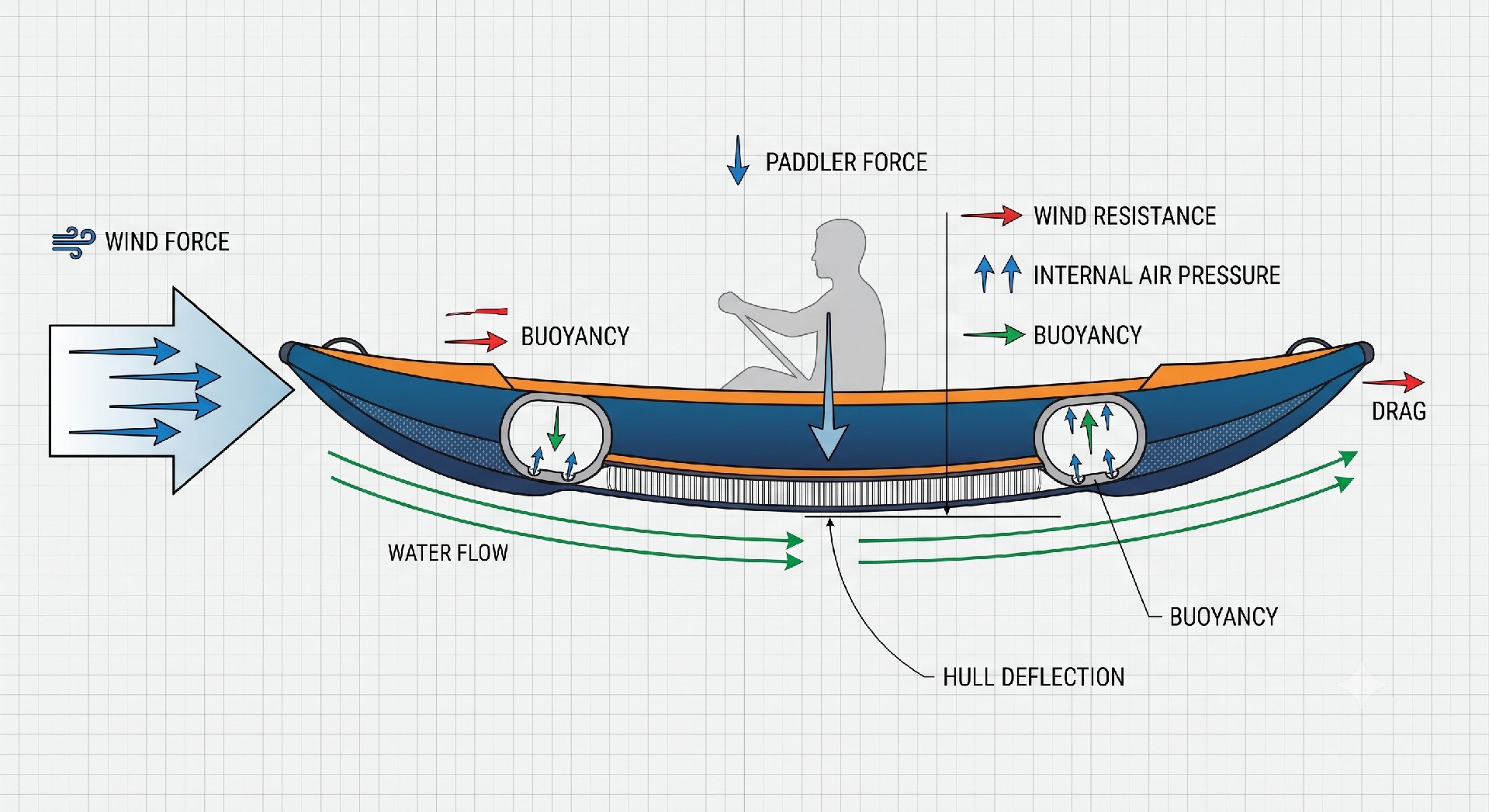
Strategic Positioning and Boat Trim
How you distribute weight in the kayak has a direct effect on how it handles headwinds. This is often overlooked by paddlers focused solely on their stroke technique.
Trimming the Bow Down
To paddle an inflatable kayak efficiently in strong headwinds, you need to keep the bow as low in the water as possible. A bow that rides high will catch more wind and be pushed back. Trim the boat by shifting weight forward. If you are alone, sit slightly further forward in the cockpit than you normally would. If you are carrying gear, position the heavier items ahead of your seating area to help the bow cut through the waves.
Managing Side Winds
True headwinds are rare; they are often quartering headwinds. This requires constant edging to maintain course. Instead of a static position, use a subtle tilt of the kayak on its side—edging—to use the hull's shape to carve into the wind. On a solo kayak, edging toward the wind will help the boat track straighter without constant sweeping strokes.
The High-Cadence, Low-Angle Paddling Technique
The most common mistake is to revert to a slow, powerful, high-angle 'power stroke' in a headwind. While this feels like you are pushing hard, it often results in a deeper paddle blade, increased hull yaw, and wasted energy. A more efficient technique is to increase your stroke cadence and focus on a clean, low-angle catch and recovery.
Shortening the Stroke Length
A long, deep stroke has a high vertical component of force, which pushes the bow sideways in an inflatable boat. In a headwind, shorten your stroke so that you take the paddle out before it passes your hip. This reduces the amount of turning force on the hull and allows for a quicker, more consistent recovery.
Increasing Cadence
Aim for a higher cadence of 70 to 90 strokes per minute, depending on the severity of the wind and your fitness level. This might feel less powerful, but it maintains momentum more effectively. Think of it like a gear shift on a bicycle; you wouldn't climb a steep hill in a high gear. Inflatable kayaks respond better to a rapid, lighter application of power to keep them moving through the chop without losing grip on the water.
Paddle Selection and Blade Angle
The choice of paddle can significantly impact your ability to paddle an inflatable kayak efficiently in strong headwinds. For commercial fleets, the standard low-angle touring paddle is often the best option.
Blade Size: A smaller blade is harder to push against the wind but requires less force, allowing for a higher cadence. A larger 'power' blade can cause excessive yaw and fatigue over time.
Blade Angle: Pay attention to the water entry. The blade should enter the water cleanly at the catch point near your toes. A common error is to slap the blade on the water, which creates resistance and slows the boat down. Focus on a smooth, vertical entry before applying power.
Feathering: If your paddle is adjustable, a slight feather (where one blade is rotated 45-75 degrees relative to the other) reduces the resistance of the top blade against the wind as it travels forward. For some paddlers, this is a significant efficiency gain; for others, it can be disorienting. Fleet managers should choose a fixed angle that suits their core team.
Core Stability and Torso Rotation
One of the biggest energy drains is paddling with your arms. An efficient forward stroke uses your torso to generate power, your arms to connect the paddle to that power, and your lower body to anchor your position.
Engaging Core Muscles
To paddle an inflatable kayak in a headwind, you must brace your core against the boat and rotate your torso. As you reach forward, keep your shoulders square and your core tight. Rotate your torso forward, plant the blade, and use your abdominal muscles to pull the boat past the blade. This technique transfers power through the larger muscle groups of your back and core, reducing arm fatigue.
Leg Drive and Kayak Anchoring
Use your legs to maintain a solid connection to the kayak. Your knees should be in contact with the underside of the deck or the side tubes. During the forward stroke, drive your leg on the same side as your stroke forward into the foot brace. This stabilizes the boat, giving you a solid platform to generate rotational force.
| Condition Variable | Technique Adjustment | Equipment/Fleet Action | Expected Outcome |
|---|---|---|---|
| Sustained headwind > 15 knots | Increase stroke cadence to 80+ strokes/min. Shorten stroke length. Focus on torso rotation. | Check kayak pressure. Consider using a rudder or tracking fin. | Reduced bow yaw. Maintained forward speed with lower fatigue. |
| Quartering headwind (wind from the side-front) | Apply subtle edging towards the wind. Paddle slightly more on the windward side. | Position heavier gear forward to trim the bow down. | Straighter tracking, reduced need for corrective sweep strokes. |
| Short, steep chop | Time forward strokes to accelerate down the back of a wave. Use a high brace to stabilize during gusts. | Ensure the kayak has a rigid inflatable floor (drop-stitch) to minimize hull flex. | Better wave penetration and smoother hull motion. |
| Gusting winds (unpredictable) | Pause stroke and brace paddle on the water during the peak of a gust. Wait for gust to pass before resuming power. | Brief paddlers on the high-brace technique. Use a towline to connect group members for safety. | Increased boat stability and reduction in capsize risk. |
Reading the Wind and Waves
To paddle efficiently, you must also read the conditions. The wind's effect is not constant; it ebbs and flows with the gust.
Paddling Through a Gust
When a gust hits, do not fight it with a hard stroke. Instead, pause your stroke slightly and brace your paddle on the water to stabilize the boat. Wait for the gust to pass, then resume your forward paddling stroke. This is known as a 'high brace' and is a critical survival skill for wind management.
Using the Waves
Headwinds create short, steep chop. Paddling directly into each wave takes enormous effort. Instead, look for the troughs between the waves. Try to time your forward strokes so that you are accelerating down the back of a wave. This small adjustment can make a noticeable difference in maintaining forward speed.
Equipment Considerations for Commercial Fleets
For B2B buyers and rental operators, efficient paddling in wind is not just a skill; it is a specification and maintenance issue.
Track System: A kayak with a removable or rudder system will handle wind far better than one without. For a fleet operating in exposed coastal areas, a rudder is a worthwhile investment. It reduces the workload on the paddler by allowing them to make small course corrections with their feet rather than a strong sweeping stroke.
Inflatable Keel: Some inflatable kayaks feature an optional inflatable keel or 'speed rod.' This adds a rigid spine to the bottom of the boat, tracking straighter and reducing the weather-cocking effect. This is a feature worth specifying when buying for wind-exposed locations.
Pressure Maintenance: Before a headwind paddle, check your pressure. A kayak that is only 85% inflated will flex more, reducing its ability to track and cut through waves. Always inflate to the recommended working pressure (supplier-dependent) before launching in windy conditions.
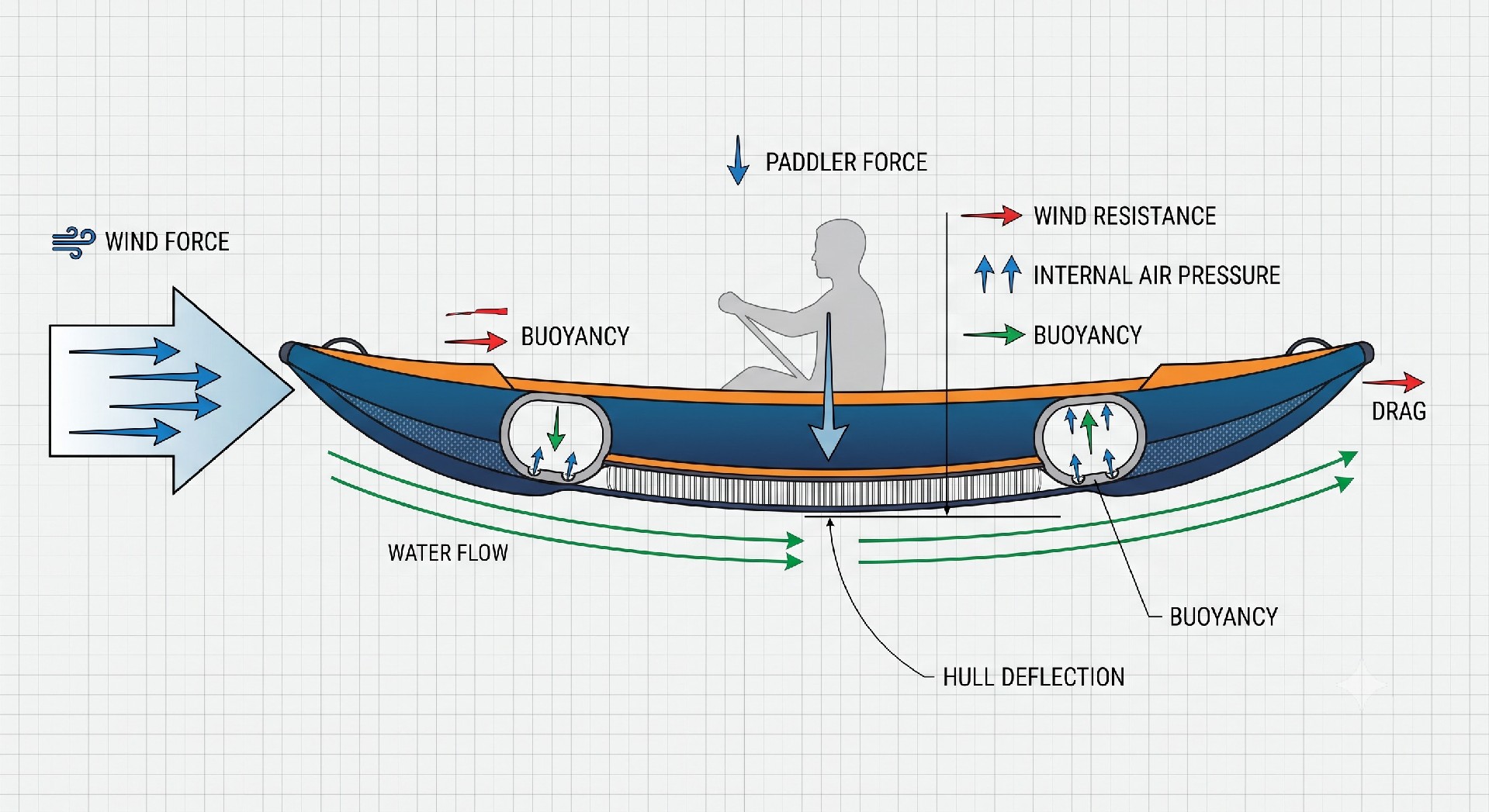
Decision Framework for Operators and Fleet Managers
When planning a trip or managing a fleet, you must factor in the wind forecast. It is not just about the physical capability of the paddler.
What to do before a headwind paddle
Check the forecast: Know the wind speed and direction. Be realistic about whether the trip can be completed safely and on time.
Plan a sheltered route: Use islands, shorelines, and coves to break up the fetch of the wind. If possible, plan a route that cuts diagonally across the wind, using the shore as a windbreak.
Brief the crew: Reinforce the techniques discussed above—focus on high cadence, low-angle strokes, and proper torso rotation.
Consider a tow system: For long-distance excursions in wind, a simple towline can be a valuable safety and efficiency tool for groups. A towed kayak takes less energy to move than one paddled solo, allowing for rest breaks.
When to make the call
A professional decision is not just about technique; it is about managing risk. For commercial trips, if the wind forecast exceeds 25 knots, consider canceling or altering the trip. The efficiency of paddling an inflatable kayak dramatically drops off in sustained winds above 25 knots, turning a recreational paddle into a survival challenge.
By combining the right equipment, proper boat setup, and an adaptive paddling technique, you can significantly mitigate the impact of strong headwinds. The key is to work with the wind, not against it, by maximizing your kayak's tracking efficiency and your own core strength.
