

Introduction: The High-Stakes Economics of Hypothermia Prevention
For B2B procurement specialists, outfitting commercial expeditions, or managing rental fleets, the question isn't just about comfort—it is about risk management and asset longevity. In the harsh reality of a freezing wilderness night, a sleeping bag system is a critical piece of life-support equipment. Data indicates that the ground can drain up to 50% of body heat through conduction, making the sleeping pad as vital as the bag itself . This guide provides a technical deep-dive into the specifications, materials, and total cost of ownership (TCO) that define premium, wholesale inflatable equipment, ensuring your clients return safely and your assets deliver maximum ROI.
Understanding the Thermal Architecture: Beyond Simple Insulation
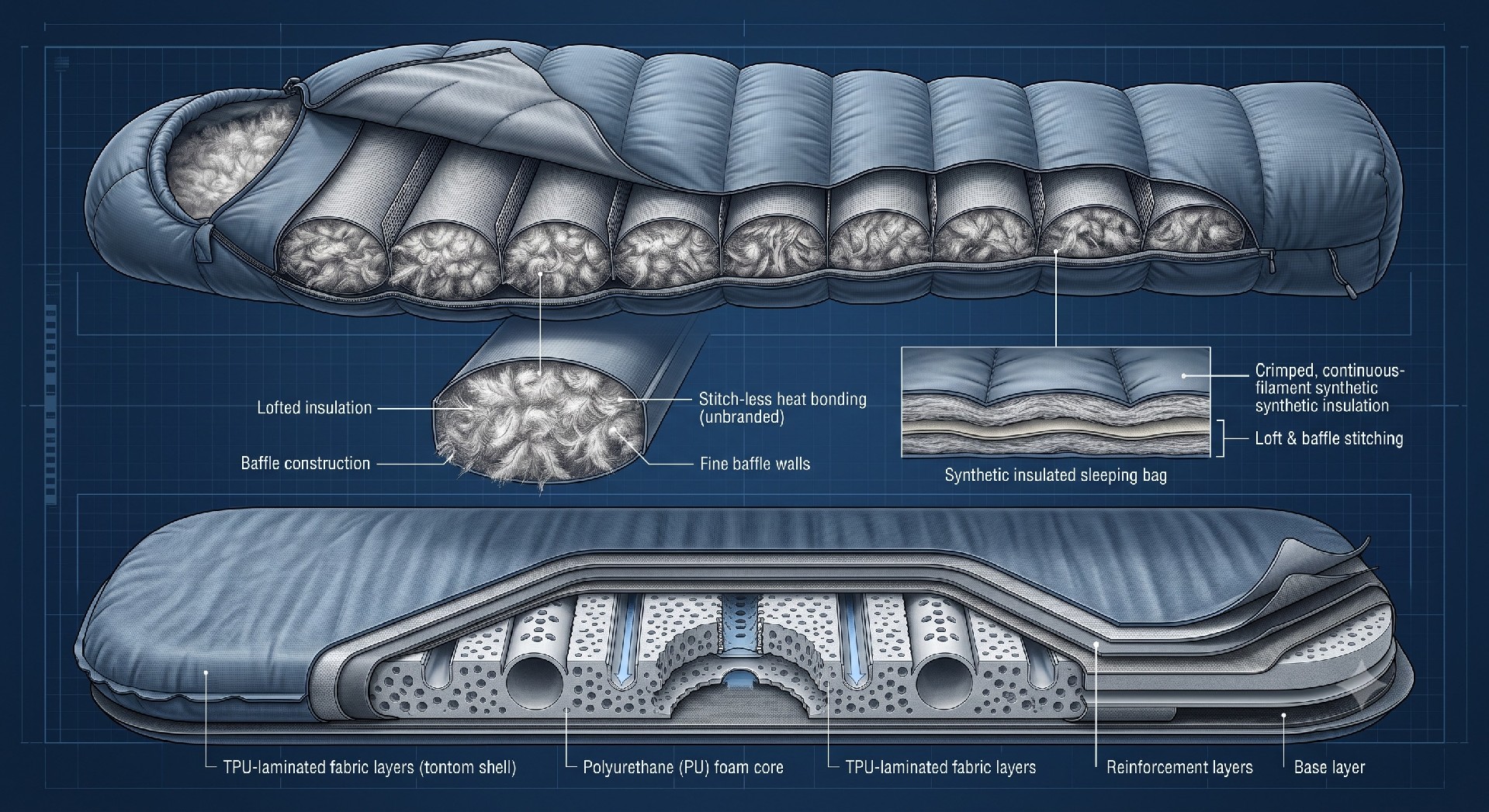
To specify the right equipment, buyers must understand the distinction between the sleeping bag's insulation and the sleeping pad's barrier function. The bag traps heat, but the pad prevents conductive heat loss to the frozen ground. For B2B buyers, evaluating the thermal efficiency of a system requires analyzing these components independently and as a unit.
Insulation Materials: Down vs. Synthetic
The choice between down and synthetic insulation involves a trade-off between weight, compressibility, and performance when wet.
Down Insulation (Goose Down): Offers the highest warmth-to-weight ratio and compressibility, making it ideal for backpacking expeditions where pack weight is critical. Look for high fill power (e.g., 850+), which indicates the loft and insulating capacity per ounce of down . However, down loses its thermal properties when wet and requires a water-resistant shell fabric, such as StormShield™, to mitigate this risk .
Synthetic Insulation (e.g., PrimaLoft, Thermoball): Retains warmth even when damp and dries quickly, making it more suitable for wet, humid, or maritime environments. While generally heavier and less compressible than premium down, it provides a more consistent performance in adverse conditions and is often a more cost-effective option for high-rotation rental fleets .
The Critical Role of the Sleeping Pad
A high-quality sleeping bag is useless without a proper insulating layer beneath it. The primary metric for a sleeping pad is its R-Value, which measures its resistance to heat flow. For winter camping in freezing conditions, a sleeping pad with an R-Value of at least 5.0 is recommended .
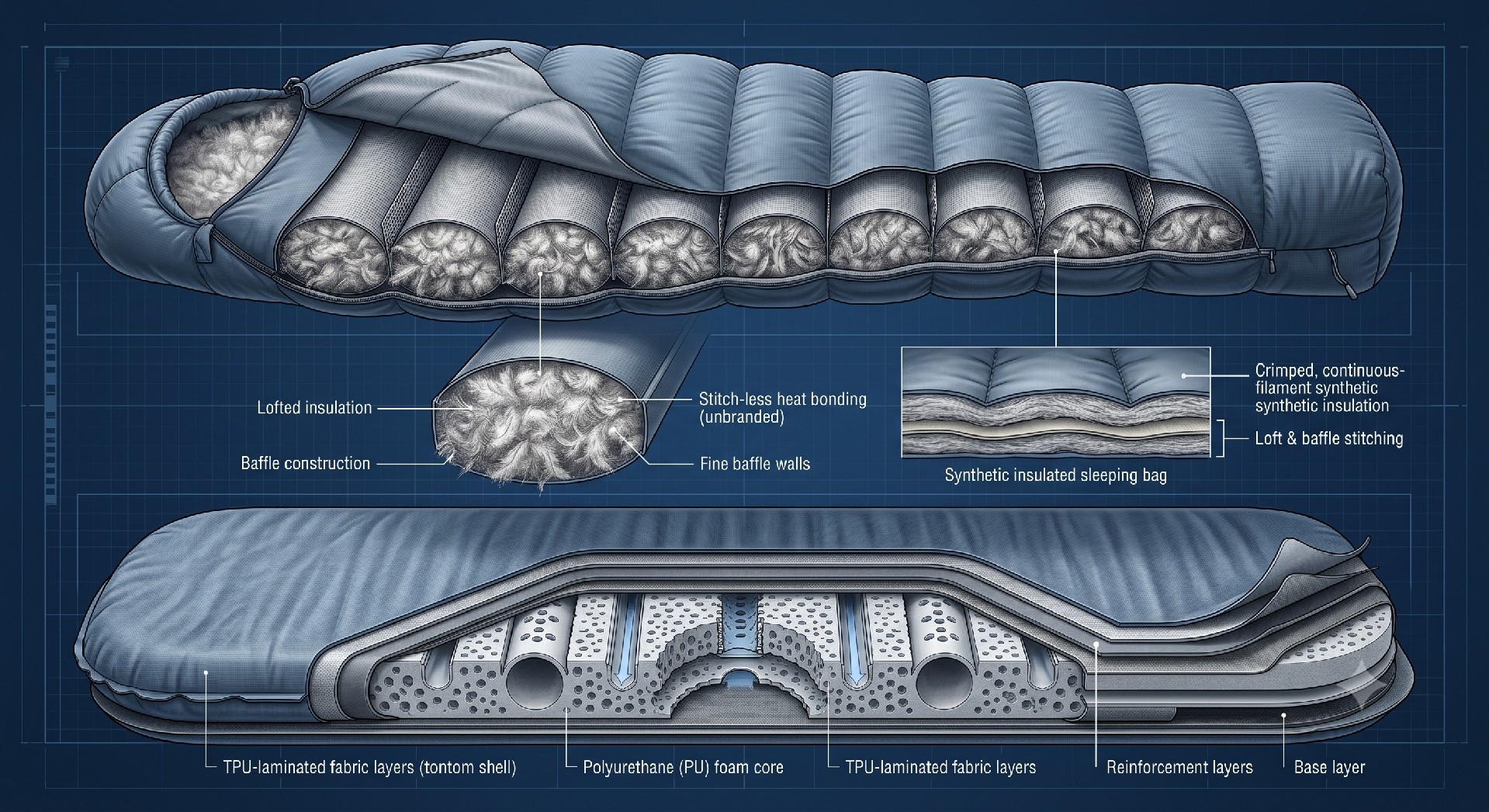
Commercial-grade pads often utilize advanced construction methods to achieve high R-Values without excessive bulk. Technologies include horizontal-channel foam cores and perforated foam designs, which reduce weight and storage volume by up to 30% compared to solid foam mats . For example, high-end models achieve R-Values of 7.5 or even 15.5, providing a significant buffer against extreme cold .
Technical Specifications Matrix
This table outlines the key performance metrics B2B buyers should demand from suppliers. These specifications ensure compliance with industry standards and define the system's operational capability.
| Key Parameter | Technical Specification for B2B Sourcing |
|---|---|
| Sleeping Bag Insulation | 850+ Fill Power Goose Down (Premium) / PrimaLoft Synthetic (Damp Conditions) |
| Sleeping Bag Shell | StormShield™ or equivalent water-resistant, breathable nylon |
| Sleeping Pad R-Value | ≥ 5.0 for Winter Use; Commercial Grade (e.g., R-Value 7.5) |
| Sleeping Pad Material | 190T TPU-Coated Taffeta / 30D Stretch Fabric with TPU Lamination |
| Sleeping Pad Thickness | 3 inches (7.6 cm) to 6 inches (15.2 cm) for comfort and insulation |
| Packed Size (Pad) | e.g., 27.2' x Φ5.9' (Ultralight) to 31.9' x Φ7.1' (Premium) |
| Industry Standards | CE Certified, REACH Compliant, ISO 6185 (applicable principles) |
Material Science and Manufacturing Compliance
For outdoor equipment destined for harsh environments, material selection and manufacturing standards are paramount. B2B buyers must verify that gear meets stringent international safety and quality regulations.
Fabric and Coating Technology
High-denier fabrics (e.g., 190T, 150D Oxford, 30D stretch fabric) with TPU (Thermoplastic Polyurethane) lamination are the industry standard for durable, airtight sleeping pads . TPU lamination provides excellent abrasion resistance, flexibility in cold temperatures, and superior adhesion for welded seams. For sleeping bags, the shell fabric often incorporates water-resistant and breathable coatings to protect the insulation while allowing internal moisture from sweat to escape, preventing condensation and maintaining loft.
Regulatory Compliance (CE, REACH)
B2B sourcing must prioritize suppliers who adhere to global safety standards.
CE Certification: Indicates that the product meets EU health, safety, and environmental protection standards. This is a non-negotiable requirement for selling in European markets and demonstrates a commitment to quality and safety in manufacturing processes .
REACH Compliance: Ensures that the materials used do not contain hazardous substances, protecting both the end-user and the environment.
ISO 6185: While primarily for inflatable boats, its principles of seam strength and material durability under stress are relevant for high-pressure sleeping pads.
Emergency and Strategic Deployment Tactics
Even with top-tier gear, operational tactics play a crucial role in safety and performance. A well-defined protocol for end-users can significantly reduce the risk of cold-weather injuries and enhance the perceived value of your rental or sold equipment.
Pre-Sleep Protocol
Preparing the body for sleep is a critical step that is often overlooked.
Fueling the Furnace: Consuming a high-calorie snack (e.g., 200-300 calories) before bed provides the metabolic fuel your body needs to generate heat throughout the night .
Hydration: Drinking warm, non-caffeinated fluids helps maintain core temperature. Use insulated water bottles or thermoses to prevent freezing .
Dry Layering: Changing into clean, dry base layers (merino wool or synthetic) is non-negotiable. Moisture conducts heat away from the body 25 times faster than dry air, making dry clothing a primary defense against hypothermia .
Ground Insulation Strategy
As noted, the ground is a major heat sink. A comprehensive insulation strategy involves more than just a sleeping pad.
Layering Mats: In extreme conditions, combining a closed-cell foam pad (which is lightweight and durable) with a high-R-value inflatable pad can provide a formidable barrier against the cold. The foam pad also offers puncture protection for the inflatable pad .
Site Selection: Choosing a campsite on a slight rise rather than in a valley where cold air settles can make a noticeable difference. Natural windbreaks, such as rock formations or dense trees, further reduce convective heat loss .
Conclusion: A Strategic Investment in Safety and Performance
For the discerning B2B buyer, sourcing sleeping bag systems is a strategic investment in client safety, asset durability, and brand reputation. By prioritizing data-driven specifications—such as R-Value, fill power, denier count, and regulatory compliance—you can offer equipment that performs reliably in freezing conditions. Understanding the science of heat retention and implementing robust operational protocols for end-users will maximize the value and lifespan of your investment, ensuring that every wilderness experience is safe, comfortable, and profitable.
