

The Overnight Tent Moisture Problem: Costs and Causes
Waking up to condensation dripping from the ceiling or pooling on the floor is a familiar problem for outdoor enthusiasts and a significant operational bottleneck for commercial tent operators. For rental fleets, glamping resorts, and event organizers, moisture accumulation inside a tent overnight represents more than just a comfort issue—it is a source of equipment degradation, reputational damage, and lost revenue. Understanding the physical drivers of condensation is the first step in learning how to stop moisture accumulation inside your tent overnight. This guide will provide a technical and commercial framework to diagnose and mitigate the problem effectively.
Condensation occurs when warm, moist air inside the tent meets a cold surface, such as the tent fabric or flysheet, which is at or below the dew point. The primary water source is human respiration and perspiration. A single adult can release up to 1-2 liters of moisture overnight. While this is a natural process, it can be controlled through a combination of ventilation management, site selection, and equipment specification. For commercial buyers, a tent that consistently accumulates moisture will have a shorter service life, require more intensive cleaning and drying, and lead to negative guest experiences. This article will focus on practical, proven solutions to this pervasive challenge.
Ventilation: The Primary Control Mechanism
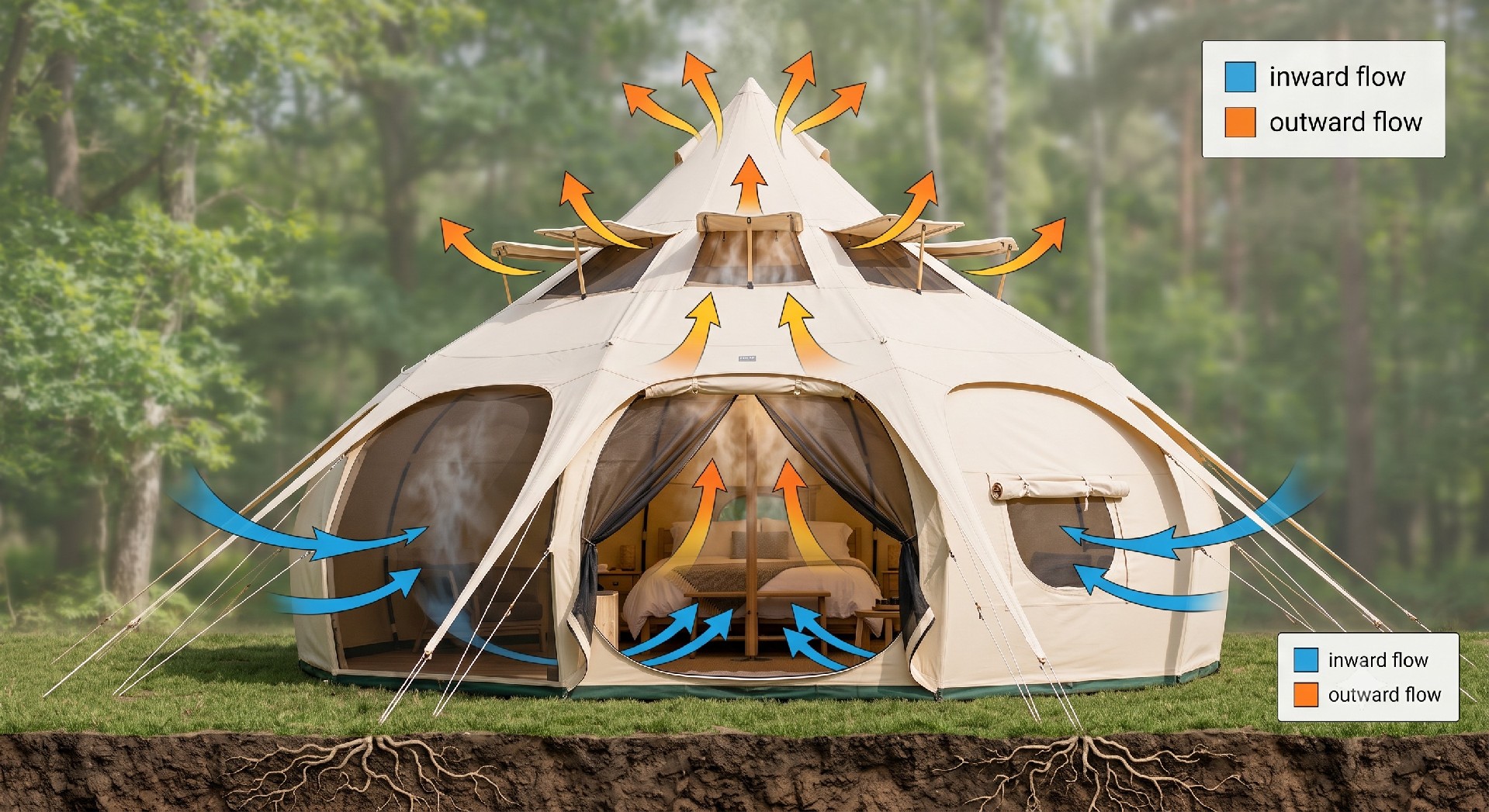
Ventilation is the most critical factor in managing tent moisture. The goal is to exchange the warm, moist interior air with the cooler, drier exterior air. Commercial tents vary widely in their design, but effective moisture control hinges on the same principles.
Airflow Dynamics
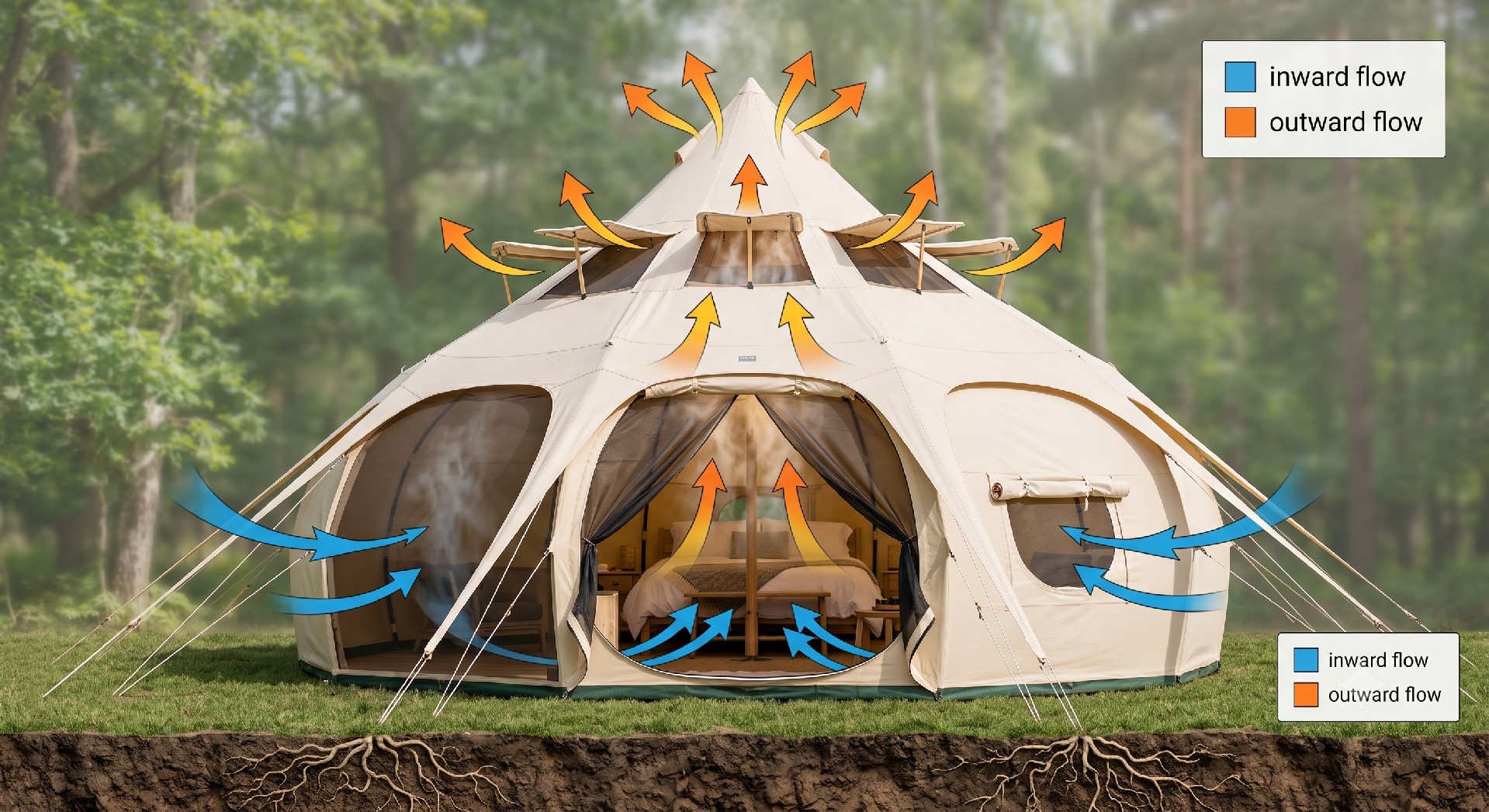
Natural ventilation relies on the stack effect, where warm air rises and exits through high vents, drawing cooler air in through lower openings. A continuous airflow path is essential. In a tent with a flysheet, the gap between the inner tent and the fly is a crucial ventilation channel. This design allows moisture-laden air to escape through mesh panels at the top of the inner tent and then out through vents in the flysheet.
High-Vent Opening: Ensure all top vents are fully open and not blocked by tie-backs or fabric folds. Many tents feature adjustable panels with poles to keep them propped open, even in rain.
Low-Vent Opening: Open the lower section of the inner tent door, even slightly, to create an inflow path. On many modern tents, the floor is a bathtub style, so no air rises up through the ground. The air must enter through the door or lower mesh screens.
Cross-Ventilation: If conditions allow, open the door on one side and a window on the other, or raise the lower edge of the flysheet on both sides to promote a horizontal breeze. This can be particularly effective in reducing moisture when the wind is dry.
Site Selection and Setup: Proactive Measures
How and where you pitch a tent has a direct impact on overnight moisture. A well-selected site can significantly reduce the workload on the ventilation system.
Avoiding Natural Moisture Traps
Do not pitch a tent in a low-lying area or at the bottom of a slope. Cold air settles in these areas, increasing the likelihood of condensation forming on the exterior of the flysheet, which can also lead to interior moisture. For commercial setups, a site survey is essential. Operators should consider:
Aspect: A site exposed to a prevailing, dry wind is ideal for ventilation.
Shade: Tents pitched in direct sunlight will be warmer during the day. While this sounds beneficial, it can lead to more dramatic temperature drops at night, increasing the chance of condensation.
Proximity to Water: Lakes, rivers, and even dew-laden grass are sources of ambient humidity. While you cannot always avoid them, understanding their influence helps set expectations and emphasize ventilation.
Groundsheet Management
Moisture can also rise from the ground. For commercial operators, using a purpose-built footprint or tarp under the tent is non-negotiable. This barrier protects the tent floor from abrasion and ground moisture. For glamping or event tents, raising the floor on a platform can also help keep the interior environment drier and warmer. If no raised floor is used, ensure the groundsheet is tucked fully under the inner tent and is not exposed to the elements, as rain running off the fly can pool around the edges.
| Moisture Control Method | Application & Setup | Effectiveness | Commercial Consideration |
|---|---|---|---|
| High-Vent Stack Effect | Open top vents and lower door mesh | High in cold, calm conditions | Essential for all single-wall and most double-wall tents. |
| Cross-Ventilation | Open doors/windows on opposite sides | Moderate-High, wind-dependent | Best for sites with predictable, dry winds. May not be practical in rain. |
| Site Selection (High Ground) | Pitch on elevated, well-drained areas | Moderate | Reduces exposure to cold air pooling and ground moisture. |
| Flysheet Gap | Set fly poles to create a gap at the bottom | Low-Moderate | Improves airflow but can compromise weatherproofing in driving rain. |
| Ground Tarp/Footprint | Place a purpose-made groundsheet under the tent | Low | Protects the tent floor from moisture and abrasion; a must for longevity. |
| Drying Protocol | Dry completely before storage in a dedicated area | Critical for lifespan | Most important step for mold prevention; requires planning and resources. |
Material and Specification Considerations
When purchasing commercial tents, certain material and design features directly affect moisture management. A proactive approach to specification can prevent a common failure mode.
Fabric Technology: Breathability vs. Waterproofing
There is a fundamental tradeoff between a tent's ability to breathe (allow water vapor to pass through) and its ability to be waterproof. High-end, breathable fabrics like Gore-Tex are used in some mountaineering tents but are not typical for large commercial structures due to cost and durability concerns. Most commercial tents are made of coated nylon or polyester.
For these materials, moisture management relies entirely on the ventilation design. Buyers should look for:
Large Mesh Panels: High-coverage mesh on the inner tent is critical. It allows for maximum airflow while keeping insects out. Look for tents where the door and opposite wall feature large, open mesh areas.
Flysheet Vents: The fly should have adjustable vent covers that can be opened wide. Some commercial tents feature permanently vented ridge designs.
Flysheet Length: A flysheet that extends close to the ground can restrict airflow. A design that allows for air to circulate underneath is often more effective in reducing moisture.
Condensation Control Mechanisms
Some tents include interior liners designed to absorb or channel condensation. These are generally more common in high-end expedition tents or specialized modular structures. For bulk commercial inventory, this feature is less common, and ventilation and setup protocol remain the primary control methods. Commercial operators should consider using a water-absorbent fabric panel, like a towel, placed near the highest point of the tent to passively absorb moisture, provided it is frequently changed and dried.
Operational Best Practices
Your operating procedures are as important as your equipment. Standardizing a routine can drastically reduce moisture problems and extend the life of your tents.
Pitching and Drying Protocols
Pitch with the Wind: Align the tent's main opening towards the prevailing wind to maximize airflow.
Pitch Early: Pitching a tent early in the day allows the interior to dry out from any previous condensation before the evening. This is a best practice for commercial setups where the tent may have been packed slightly damp.
Leave a Gap: For self-standing tents, leave a small gap at the bottom of the fly or door to encourage airflow, especially if you are expecting a clear, cold night with no rain.
Post-Event Care
The single most effective way to prevent long-term moisture damage is to never store a tent damp. Mold and mildew will quickly degrade fabrics, coatings, and seam tape. Commercial operators must budget time and space for proper drying. After an event, the tent should be pitched in a well-ventilated area and left to dry completely before packing. If this is not possible, use a dedicated drying space, like a large warehouse with fans and dehumidifiers. A comprehensive drying protocol can significantly extend the service life of a commercial tent fleet.
Solving Moisture with the Right Specification
The decision on how to address moisture accumulation ultimately comes down to a simple evaluation of operational requirements and site-specific constraints. For a commercial operator, the goal is to find a solution that is cost-effective and sustainable over the lifecycle of the equipment.
If you are operating in a high-humidity, low-wind environment, investing in a tent with a full-coverage fly and massive mesh panels is non-negotiable. For a site with reliable, dry breezes, a simpler design may suffice. In all cases, operator education on pitching, site selection, and post-use drying is the most important factor. A moisture management strategy should be part of your standard operating procedures, with clear checklists for pre-event site surveys, pitching, and post-event packing. By understanding the science behind condensation and implementing a targeted combination of ventilation, site selection, and material choices, you can effectively learn how to stop moisture accumulation inside your tent overnight and ensure your commercial operation remains efficient and your guests, comfortable.
