

Addressing the Core Safety Concern for B2B Buyers
For B2B procurers, rental fleet managers, and hospitality buyers, the safety of inflatable baby pools is non-negotiable. The question, 'Is tap water safe for inflatable baby pools?' is a critical procurement and operational query. While tap water is generally safe for initial filling, it presents significant challenges for maintaining a hygienic environment for infants. The primary risk is not the tap water itself, but the rapid bacterial growth and contamination that can occur in untreated standing water. This is particularly concerning as babies, often not fully potty-trained, can introduce germs from fecal matter and other contaminants into the pool. Studies indicate that recreational water illnesses (RWIs) like Cryptosporidium, E. coli, and Shigella can easily spread through contaminated pool water. This blog post serves as the definitive B2B guide, exploring the materials, safety protocols, technical specifications, and Total Cost of Ownership (TCO) considerations essential for maximizing both safety and profitability in your outdoor water equipment ventures.
Water Prep Best Practices for Commercial Fleets
The commercial operation of inflatable baby pools demands rigorous water preparation, daily maintenance, and strict disinfection protocols, particularly after fecal incidents. For B2B scenarios involving children from multiple households, the risk of germ transmission is heightened.
The Recommended Water Prep Protocol
Initial Fill: Use standard, treated tap water. While municipal water contains disinfectants, these are insufficient to maintain water quality in a small, filter-less pool. Ensure the pool is set up on a level, stable surface to prevent structural stress and uneven water distribution.
Pre-Swim Hygiene: Enforce a mandatory pre-swim cleansing soap shower or bath for all children to reduce initial contamination from dirt and skin oils.
Daily Maintenance: For small, non-filtered inflatable pools, the CDC mandates that they must be emptied, cleaned, and allowed to air dry at least daily. This is the most effective method to prevent germ growth. For larger pools that cannot be emptied daily, they must be equipped with filters and appropriate disinfection systems.
Post-Incident Disinfection: If a child has a diarrheal incident in the pool, immediate action is critical. Remove all children, drain the pool, and put on disposable gloves to remove any solid waste. Clean and disinfect the pool surfaces with a soapy water solution, rinse, and allow to air dry completely. For diarrhea incidents, leave the pool in direct sunlight for at least four hours after it is completely dry. A bleach solution (½ cup of household bleach per 1 gallon of room-temperature water) can be applied to disinfect surfaces effectively.
The data is clear: untreated tap water in a small, stagnant pool is a breeding ground for pathogens. The cost and liability of a single RWI outbreak far outweigh the effort of implementing these simple, data-backed procedures.
Technical Specifications: Building for Durability and Safety
The longevity and safety of your inflatable equipment depend directly on the quality of materials and manufacturing. Here are the key specifications a professional B2B buyer should demand.
| Key Parameter | Technical Specification | Commercial Benefit |
|---|---|---|
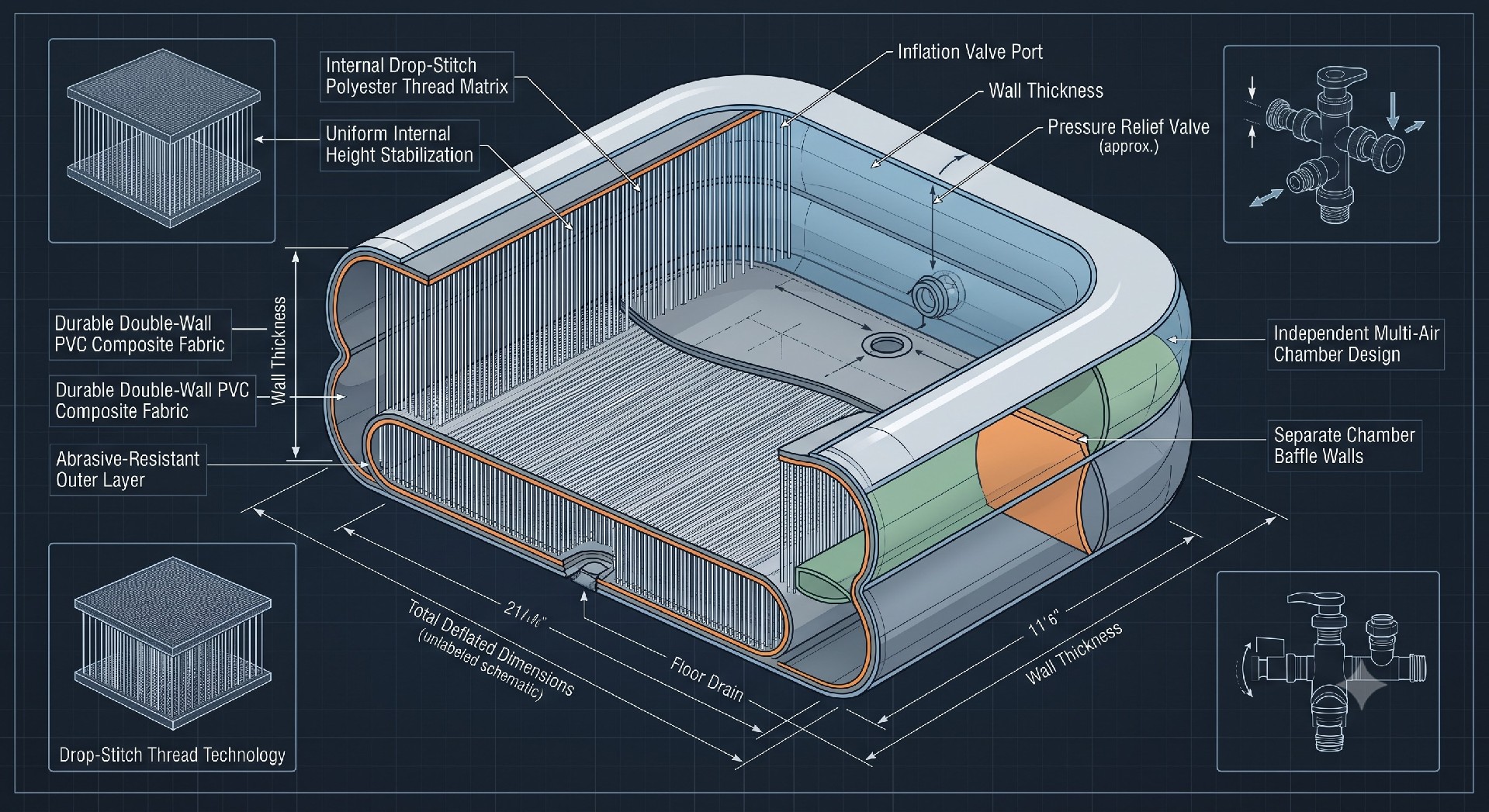
| Material Composition | 0.9mm / 1100D Reinforced PVC (or Hypalon for premium) | High puncture and tear resistance, UV stability |
| Construction Method | Heat-welded seams (vs. glued) | Superior seam integrity, higher burst strength, longer lifespan |
| Air Chambers | Multi-chamber design (e.g., 3 separate rings) | Enhanced safety; if one chamber fails, pool retains shape, allowing safe exit |
| Load Capacity | e.g., Up to 100 kg / 220 lbs | Supports multiple infants or toddlers simultaneously |
| Regulatory Compliance | CE, EN71, REACH | Ensures product safety, legal market access, and liability protection |
| Inflation/Deflation | High-flow valves for rapid setup (e.g., 2 min) and teardown (e.g., 1 min) | Accelerates turnaround times, crucial for high-volume rental operations |
When sourcing products, ensure they meet critical safety and manufacturing standards. Look for compliance with CE certification (indicating conformity with health, safety, and environmental protection standards for products sold within the European Economic Area) and EN71 (the European standard for toy safety). For more complex inflatable structures, adherence to ISO 6185 (the standard for inflatable boats, which includes design and safety requirements) is a strong indicator of quality. Additionally, ensure all materials meet REACH compliance to ensure they are free from hazardous chemicals.
Commercial Application Scenarios and ROI
Understanding the operational requirements and technical specifications of inflatable baby pools allows you to optimize their deployment across various B2B verticals.
Hotel & Glamping Resorts: Offering branded, premium-quality baby pools with a UV-resistant, commercial-grade 1100D PVC construction provides an immediate upgrade to the guest experience. The enhanced durability ensures they withstand frequent use and UV exposure.
Commercial Daycare Centers & Schools: For high-throughput rental environments, the emphasis must be on rapid deflation and efficient dry-stacking for storage, alongside a strict water change policy. The CDC discourages the use of these pools for large groups of children from different households due to the elevated risk of spreading RWIs.
Rental Fleets: Offering inflatable baby pools can be a low-cost, high-margin add-on for family-oriented rentals. The investment is minimal, but the expectations for cleanliness and safety are paramount. A fleet of pools can generate revenue while requiring relatively straightforward maintenance, providing a strong ROI if protocols are followed.
[IMAGE_2]
Conclusion: Sourcing the Right Equipment and Implementing Safe Protocols
The question, 'Is tap water safe for inflatable baby pools?' shifts from the water source to water management. While tap water is the standard fill source, it is not safe for extended use without proper daily maintenance and cleaning. For B2B buyers, the focus must be on three core pillars: sourcing durable, compliant equipment with superior specifications (like high-denier PVC and robust seams); implementing the data-backed water prep and disinfection protocols; and enforcing strict operational procedures that prioritize safety. By doing so, you mitigate risk, enhance your brand reputation, and secure a positive return on investment by delivering a safe, fun experience for the end-user.
