

Introduction: The Procurement Challenge of Autumn Camping Warmth
For B2B buyers, outdoor equipment rental fleet managers, and hospitality procurement specialists, the transition from summer to autumn camping represents a critical inflection point in operational planning and capital expenditure. Unlike the relatively stable conditions of summer, autumn camping introduces significant temperature volatility, increased moisture exposure, and the requirement for equipment that delivers guaranteed thermal performance across a wide spectrum of environmental conditions. Selecting the appropriate warmth rating for autumn camping equipment is not merely a matter of comfort—it directly impacts customer satisfaction, equipment utilization rates, maintenance cycles, and ultimately, the total cost of ownership (TCO) of your inventory. This B2B sourcing guide cuts through marketing claims to deliver the technical specifications, industry standards, and commercial metrics necessary to make data-driven procurement decisions for autumn camping warmth ratings.
Deconstructing Warmth Ratings: From EN 13537 to ISO 23537 Standards
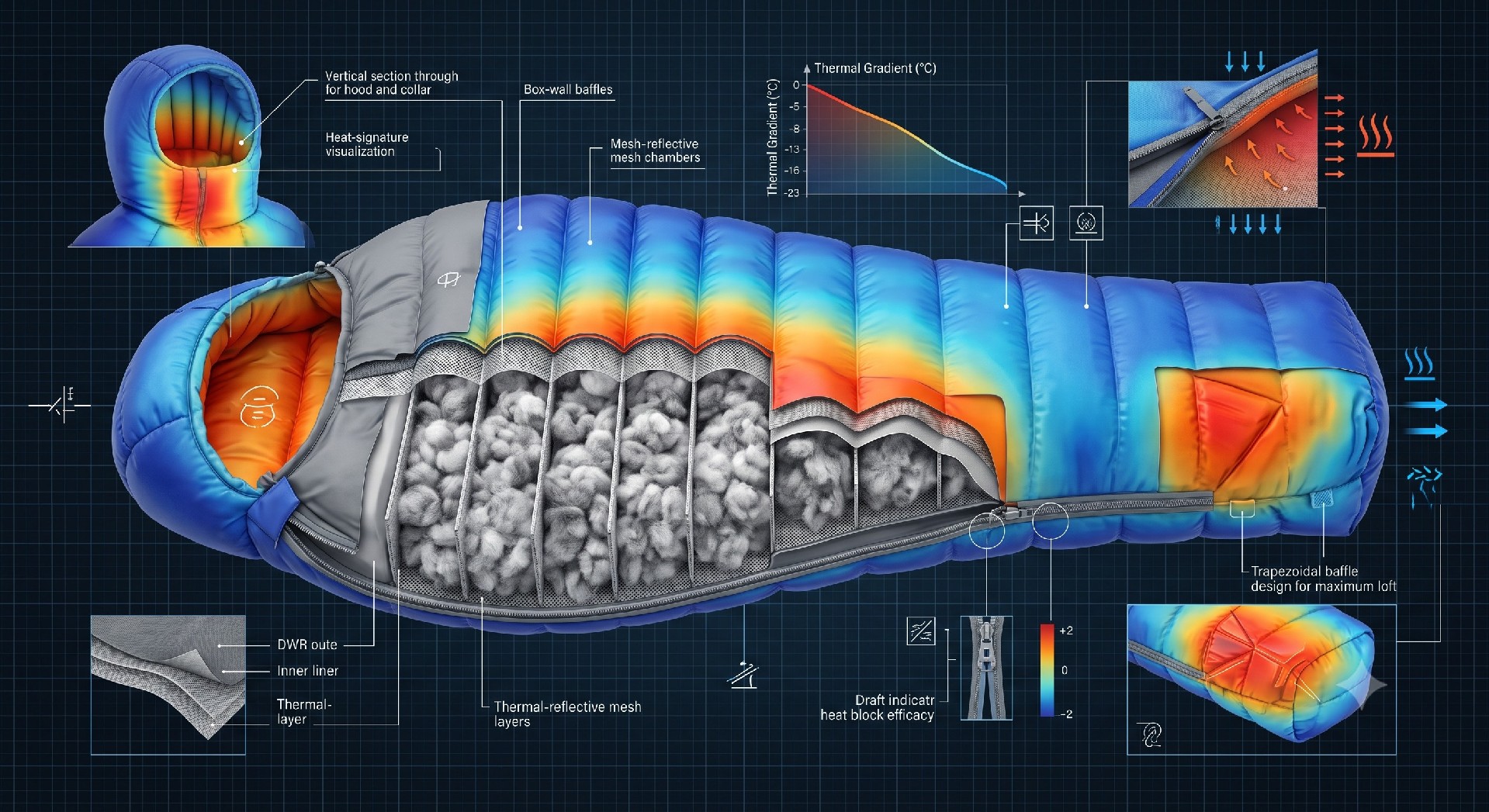
The foundation of any professional procurement strategy for autumn camping warmth ratings lies in understanding the standardized testing protocols that govern the industry. The European Norm EN 13537, now superseded by ISO 23537, established the framework for objectively measuring sleeping bag thermal performance using a heated mannequin dressed in a base layer, tights, long socks, and hat, placed on a closed-cell foam mat inside a temperature-controlled chamber . This methodology produces three distinct metrics that B2B buyers must analyze:
The Tripartite Rating System
Comfort Rating: The temperature at which a standard 60kg female can sleep comfortably through the night in a relaxed posture. This represents the conservative benchmark for customer-facing equipment specifications.
Limit Rating: The temperature at which a standard 70kg male can sleep for eight hours without waking, typically curled in a fetal position to conserve heat.
Extreme Rating: A survival metric indicating the temperature at which a standard female can remain for six hours without risk of hypothermia—a figure that should never be used for planning comfortable camping experiences.
For commercial applications, the Comfort Rating must be the primary specification when evaluating autumn camping warmth ratings, with the Limit Rating serving as a secondary indicator of performance margins.
Autumn Camping Temperature Reality: Data-Driven Environmental Analysis
The fundamental error in procurement for autumn camping equipment is misaligning product specifications with actual environmental conditions. Field data reveals that autumn camping temperatures exhibit dramatic diurnal variation, with daytime highs reaching 65–75°F (18–24°C) while nighttime lows plummet to 30–40°F (-1°C to 4°C) . This temperature swing creates unique challenges that cannot be addressed through single-season sleeping bags designed for summer applications. Outdoor industry experts recommend equipment rated to at least 0°C (32°F) for autumn camping, with a minimum R-value of 4 for sleeping pads to prevent the significant heat loss that occurs through ground conduction .
Professional procurement strategies must account for the following factors that impact actual warmth requirements:
Altitude Effects: Temperature drops approximately 3°F per 1,000 feet of elevation gain, requiring upward adjustments in warmth ratings for alpine autumn camping scenarios .
Humidity and Moisture: Wet conditions can reduce effective warmth by 15-20°F, particularly significant in autumn environments where precipitation is common .
Individual Metabolic Variation: "Cold sleepers" require equipment rated 10-15°F warmer than the forecasted low temperature, while "warm sleepers" may be comfortable with slightly less insulation .
Technical Specifications Matrix: Benchmarking Autumn Camping Warmth Equipment
| Key Parameter | Technical Specification |
|---|---|
| ISO 23537 Comfort Rating | 0°C to 5°C for standard autumn conditions |
| ISO 23537 Limit Rating | -5°C to -1°C for marginal performance |
| Recommended Bag Rating for Autumn | 20°F (-7°C) or lower rated bag |
| Sleeping Pad Minimum R-Value | R-value of 4.0 or higher |
| Synthetic Insulation Density | 250 gsm minimum for commercial durability |
| Compliance Standards | ISO 23537, EN 13537 for warmth; REACH compliance for materials |
The table above presents the essential technical parameters that procurement professionals must verify when evaluating autumn camping warmth equipment. Beyond the surface-level temperature ratings, critical specifications include insulation type—synthetic materials such as hollowfibre offering superior performance in damp conditions compared to down insulation, which loses thermal efficiency when wet . Fill weight, measured in grams per square meter (gsm), provides a more objective indicator of insulation capacity than subjective season ratings. Industry standards mandate that equipment intended for commercial use in autumn conditions must meet minimum thermal resistance values, with ISO 23537 compliance being the minimum acceptable certification for professional applications.
Beyond the Sleeping Bag: The Integrated Warmth System
Professional procurement for autumn camping warmth ratings requires recognition that sleeping bag insulation functions as only one component of an integrated thermal system. Industry research indicates that up to 50% of body heat loss occurs through ground conduction, making sleeping pad selection equally critical to the warmth equation . For commercial autumn camping operations, procurement specifications should mandate:
Sleeping Pad R-Value: A minimum R-value of 4.0 for three-season autumn camping conditions, with R-values exceeding 5.0 recommended for higher-altitude or extended shoulder-season operations .
Sleeping Bag Liners: Silk or fleece liners can effectively increase warmth by 10-15°F, providing a cost-effective solution for marginal temperature conditions .
Layering Strategy: A moisture-wicking base layer, insulating mid-layer (fleece or synthetic), and windproof outer layer create a modular system that adapts to changing conditions, essential for commercial rental fleets serving diverse customer profiles .
Commercial Application Scenarios: Matching Ratings to Use Cases
Different commercial applications demand different approaches to autumn camping warmth ratings. For high-volume rental operations, versatility becomes paramount—equipment must accommodate sleepers with varying thermal preferences across diverse autumn conditions. Research indicates that a 20°F (-7°C) rated bag provides optimal versatility for most September and October conditions, with sleeping bag liners available for customers who require additional warmth . For glamping resorts and premium outdoor hospitality operations, the focus shifts to individual comfort and the elimination of cold-weather complaints, often justifying the procurement of bags rated 10-15°F warmer than the minimum expected temperature. Fleet managers must consider the total cost of ownership equation, balancing initial procurement costs against the extended equipment lifespan achieved through proper specification for intended use conditions .
Material Science and Durability Considerations
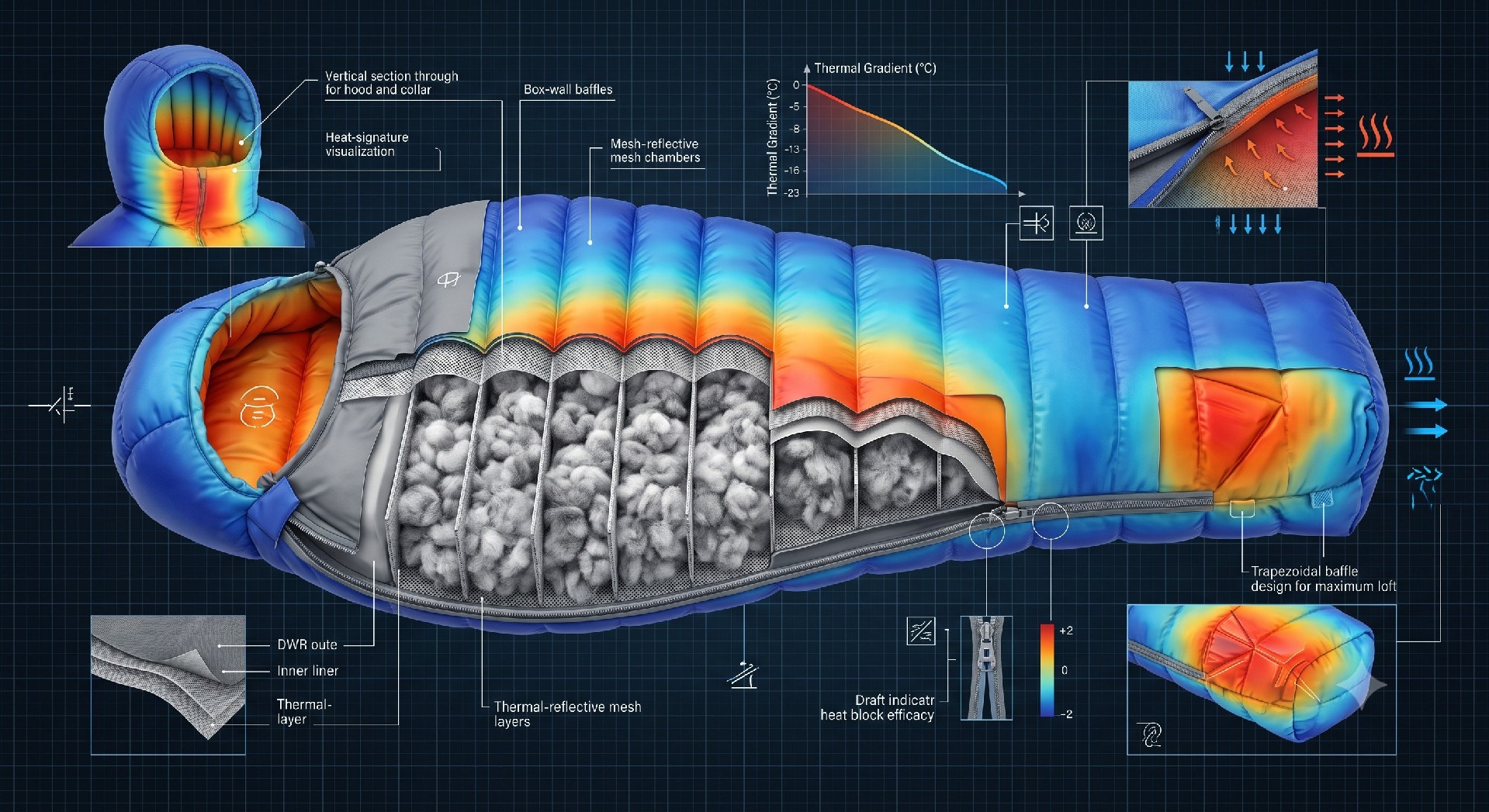
The correlation between material construction and thermal performance is often overlooked in procurement decisions. High-quality synthetic insulation with multi-layer construction maintains loft and thermal efficiency even in the damp conditions characteristic of autumn camping, where condensation and precipitation can compromise lower-grade materials. For commercial applications, the thermal resistance of insulation must be evaluated alongside durability metrics—equipment that loses loft and warmth capacity after repeated use creates hidden costs that erode profitability. Procurement specifications should require detailed material documentation, including denier counts, insulation density (gsm), and seam construction methodology. Double-stitched, baffled construction with differential cut provides superior warmth retention compared to simpler quilting techniques, particularly important for equipment subjected to the rigors of commercial rental cycles.
Conclusion: Data-Driven Procurement for Optimal Autumn Performance
The selection of appropriate warmth ratings for autumn camping equipment demands a sophisticated, data-driven approach that considers standardized testing metrics, environmental realities, and commercial application requirements. B2B buyers must move beyond simplistic season ratings to analyze comfort and limit temperatures certified under ISO 23537, while recognizing the critical role of integrated warmth systems incorporating sleeping pads, liners, and proper layering strategies. Industry data confirms that autumn camping equipment rated to 0°C (32°F) represents the minimum viable specification for professional operations, with 20°F (-7°C) rated bags offering the optimal balance of versatility and customer comfort for most commercial applications. By aligning procurement specifications with scientific performance metrics and operational realities, B2B buyers can maximize customer satisfaction, optimize equipment utilization, and achieve superior return on investment in their autumn camping inventory.
