

Introduction: The High-Stakes Reality of Windy Camping
For outdoor professionals, rental fleet managers, and serious enthusiasts, high winds present the ultimate test of equipment reliability. A snapped tent pole isn't just an inconvenience; it's a safety hazard, a financial loss, and a logistical nightmare. In B2B and commercial contexts, the ability to pitch a tent in high winds without breaking poles is a critical operational competency. While traditional fiberglass and aluminum poles have a well-documented history of failure under stress , modern solutions—particularly advanced inflatable beam technologies—offer superior resilience, provided they are pitched correctly and built to exacting standards. This guide delves into the engineering, materials, and techniques required to secure a structure in extreme weather, leveraging data-driven insights and industry certifications.
Understanding the Failure Points: Why Poles Break
Before exploring solutions, it's essential to understand why traditional pole systems fail. Breakage is rarely a random event; it follows predictable physical principles.
Material Stress and Manufacturing Defects
The most common cause of pole failure is improper assembly. When pole sections are not fully engaged at the ferrule (the metal insert connecting segments), the stress is concentrated at an incorrect point, leading to splintering or snapping under load . This is exacerbated by high winds, where the tent fabric acts as a sail, transferring immense bending force to the pole structure. Furthermore, shock cord (the elastic that connects pole segments) can lose tension over time, causing sections to slip and create weak points. Similarly, damaging the pole ends by allowing sections to snap back together during pack-down creates microscopic nicks that grow into critical failure points under tension .
Wind Dynamics and Structural Load
Weather experts note that wind speeds exceeding 30 mph can cause significant damage to inadequately pitched tents . The primary risk factor is often the pitch itself. A tent that is not taut allows fabric to flap, creating dynamic loads that overwhelm the pole's tensile and compressive strength. The tent's aerodynamic profile is non-existent until fully pitched, making the setup phase particularly dangerous . This is why understanding how to pitch a tent in high winds without breaking the poles begins with strategic site selection and orientation, positioning the strongest part of the tent into the wind .
The Technical Solution: Inflatable Beams vs. Pole Structures
Inflatable tents (Air Tents) have emerged as a compelling alternative for extreme conditions, shifting the structural paradigm from rigid poles to pressurized air columns. This shift significantly alters the risk profile for breakage.
Drop-Stitch Cores and PSI Performance
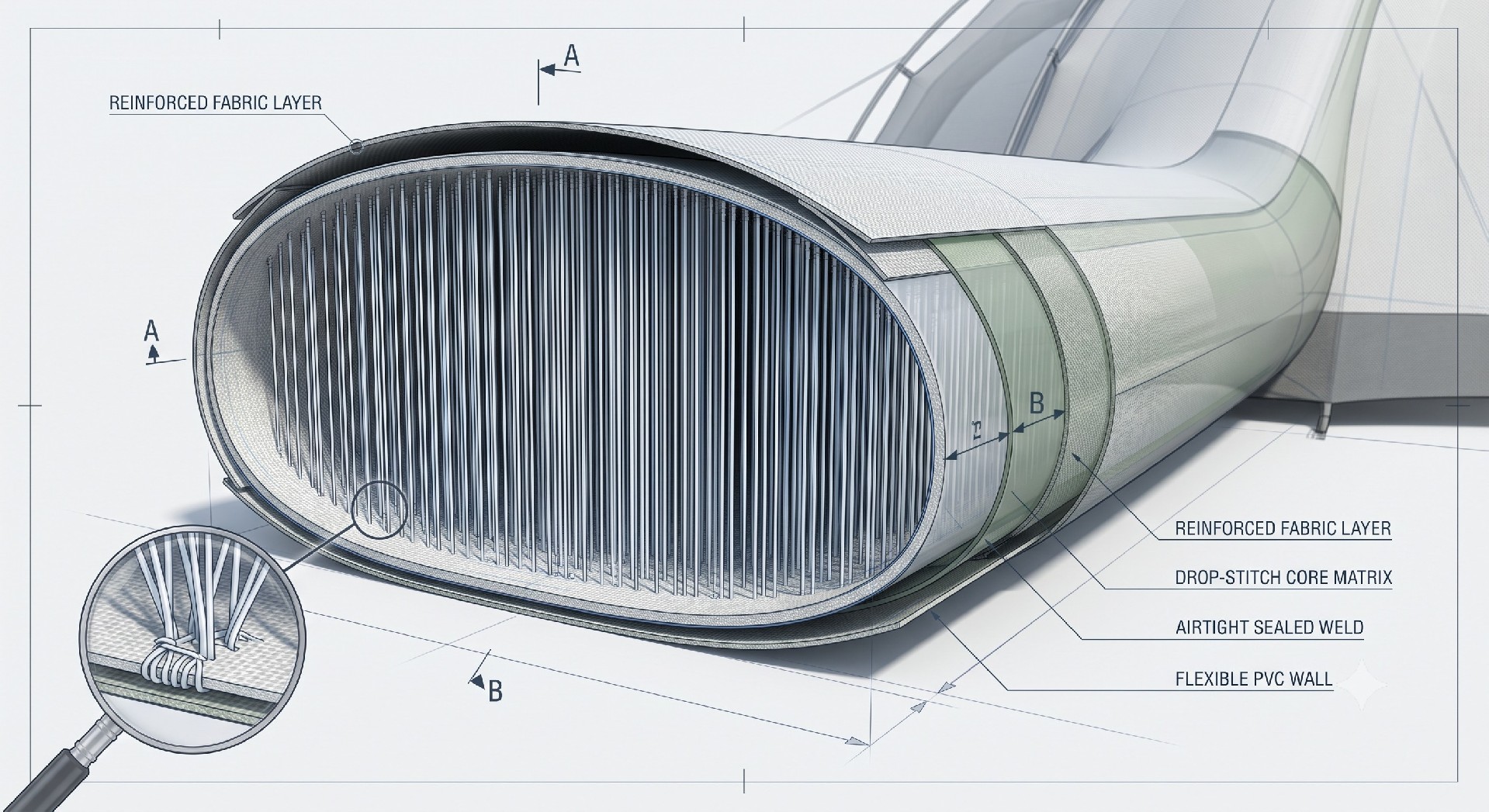
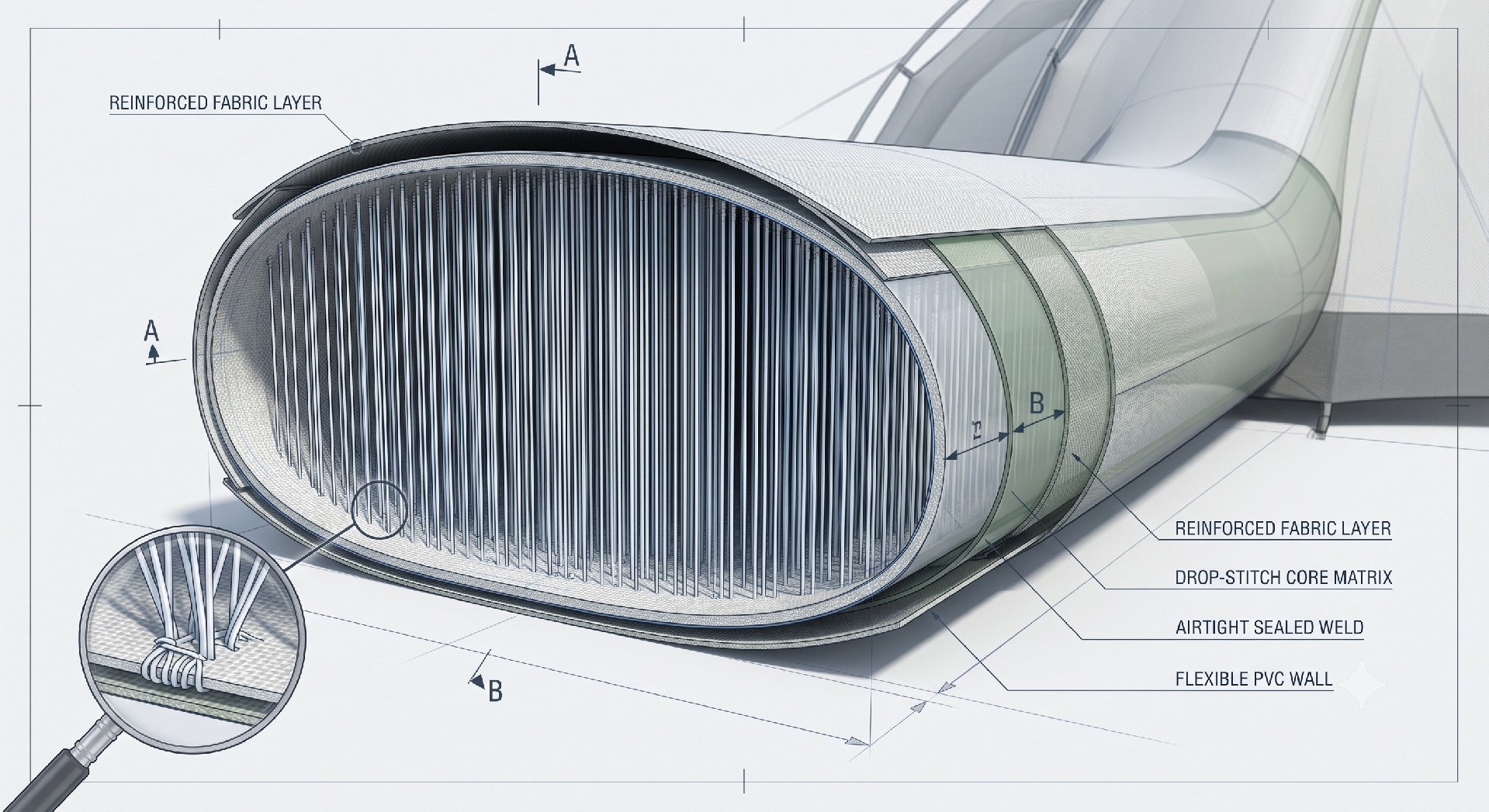
Unlike simple air mattresses, high-end commercial inflatable tents utilize drop-stitch technology. This involves thousands of polyester threads connecting the inner walls of the air beam. When inflated to high pressures (typically 6 PSI to 10+ PSI depending on the design), these threads maintain a flat, rigid panel shape, creating a structure with immense strength-to-weight ratio . The beams can flex under wind gusts, absorbing and dissipating energy that would otherwise fracture a rigid pole . This flexibility is the key advantage: an aluminum pole snaps when its yield strength is exceeded, while an air beam flexes, compresses, and rebounds.
Material Science: PVC/Hypalon Thickness and Denier Count
The structural integrity of inflatable beams is defined by the materials used. High-quality commercial tents use thick, reinforced PVC or Hypalon. For example, a beam made with 0.9mm / 1100D PVC or higher offers significantly better puncture resistance and UV durability than consumer-grade materials . The denier count of the fabric and the thickness of the PVC coating are critical specifications that determine abrasion resistance and the ability to withstand internal pressure. Multi-chamber designs are also a hallmark of professional gear; if one chamber is compromised, the others retain pressure, preventing catastrophic collapse .
Step-by-Step Protocol: How to Pitch a Tent in High Winds
Whether using a traditional pole tent or an inflatable system, the pitch protocol dictates survival in high winds.
Site Selection and Orientation
Find Shelter: Utilize natural windbreaks like dense shrubbery or rock formations, but avoid pitching under dead or overhanging branches that could fall .
Orientation: Pitch the aerodynamic and strongest part of the tent into the wind. For wedge or tunnel tents, point the narrow, low-profile end into the wind to reduce drag . For domes, ensure doors are not facing the wind to prevent the tent from inflating like a sail.
High Ground: Pitch on high ground to avoid water runoff, but ensure the area is level .
The Pitching Protocol for Pole Tents
Peg the Foundation: Before inserting poles, secure the groundsheet at the rear corners. This prevents the tent from being blown away during assembly and provides a stable base .
Assemble Poles Correctly: Ensure all joints are fully engaged. Do not snap poles together by stretching the shock cord; assemble them gently to avoid damaging the ends .
Push, Don't Pull: Feed poles through sleeves by pushing them. Pulling can separate sections that are not fully engaged .
Anchor Immediately: As soon as the poles are in place, anchor the tent immediately. A tent with 45 kg (100 lbs) of gear inside can still be dragged by modest winds if not staked .
The Pitching Protocol for Inflatable Tents
Peg the Corners: As with pole tents, securing the corners before inflation stabilizes the system .
Inflate Gradually: Inflate the beams to the manufacturer's recommended PSI—usually around 6-8 PSI for most family tents. Over-inflation can strain the seams, while under-inflation reduces structural rigidity .
Lift and Shape: After partially inflating the main beams, lift the tent to help the beams find their correct shape before completing inflation .
Staking and Guying: The Final Defense
Staking is not optional; it is the primary defense against wind. Use all stake-out points and guy lines provided.
Angle and Tension
Pegs should be driven into the ground at a 45-degree angle with the hook facing away from the tent . For high winds, double-pegging or using deadman anchors (burying stakes) may be necessary in soft ground. Guy lines should be taut but not over-tensioned. They should support the pole structure and tent shape, not distort it . Align guylines with the seams for maximum force transfer . Over-tightening can distort the shape of an inflatable tent, compromising stability, or over-stress the poles of a traditional tent, causing breakage.
Bracing Loops
Many professional tents feature bracing loops (webbing loops stitched into the seams above ground level). Utilizing these loops with guy lines provides additional lateral stability, crucial for withstanding broadside winds .
| Key Parameter | Technical Specification | Commercial Impact |
|---|---|---|
| Material Thickness | 0.9mm / 1100D Reinforced PVC | Higher tear strength, extended lifespan in commercial rental fleets. |
| Drop-Stitch Core | Polyester threads connecting inner walls | Maintains rigid shape under pressure (PSI), preventing deformation and failure. |
| Maximum Payload | Varies; e.g., 400 kg / 880 lbs | Indicates structural integrity and capacity for gear and people in extreme weather. |
| Inflation Pressure (PSI) | 6-10 PSI (depending on design) | Critical for rigidity; under-inflation leads to flex and collapse, over-inflation risks seam failure. |
| Seam Technology | Heat-Welded (High-Frequency Welding) | Superior to glued seams; ensures air-tightness and resists separation under stress. |
| Industry Standards | CE, EN71, ISO 6185, REACH | Compliance guarantees material safety, structural reliability, and UV/Puncture resistance. |
Commercial Application and ROI
For B2B buyers, the decision between traditional pole tents and high-end inflatable systems is a Total Cost of Ownership (TCO) calculation.
The Cost of Pole Failure
While pole tents are often cheaper upfront, the lifespan of poles is finite. Repeated stress and UV exposure weaken the aluminum or fiberglass, increasing the risk of catastrophic failure in harsh environments . A single snapped pole in a remote location can ruin a client's experience, damage the tent flysheet, and incur costly replacement and logistics fees.
The Economic Value of Reliability
Inflatable tents offer higher upfront costs but provide lower maintenance overhead. As one user noted, after a fierce storm, the inflatable tent had not moved, with guy ropes still taut, keeping perfect shape . The flexible beams withstand strong winds with ease, reducing the risk of damage claims. Furthermore, the speed of setup (pitching in minutes) allows for faster turnaround on rental fleets, increasing throughput . The materials used (thick PVC/Hypalon) ensure UV durability and puncture resistance, meaning the asset lasts longer in high-usage scenarios .
Conclusion: Data-Driven Decision Making
Pitching a tent in high winds without breaking the poles is less about luck and more about adhering to rigorous engineering principles and disciplined setup protocols. The data is clear: traditional poles are vulnerable to snapping due to material fatigue, improper assembly, and excessive dynamic loads. In contrast, inflatable tent technology, with its drop-stitch cores, multi-chamber safety, and high-denier, UV-resistant fabrics, offers a superior solution for commercial and extreme applications.
For B2B buyers, compliance with standards like CE, REACH, and ISO 6185 is non-negotiable, serving as a benchmark for the material thickness and seam integrity required for longevity . By prioritizing materials with high payload capacity, robust weld engineering, and utilizing proper pitch techniques, businesses can drastically reduce operational downtime, improve safety, and maximize ROI on their outdoor equipment investments. The ultimate key to success is investing in quality and training teams in the protocols that turn survival into a guarantee.
