Introduction: The High-Stakes Equation of Water Park Safety
For any commercial water park operator, the safety rating is not merely a regulatory checkbox; it is the bedrock of guest trust, operational viability, and brand reputation. A single incident involving inflatable equipment can have devastating consequences, leading to costly litigation, insurance premium hikes, and irreparable damage to public perception. This case study dissects how a strategic upgrade to premium, high-quality rafts engineered to meet rigorous international standards, including CE and ISO 6185, can demonstrably improve a water park's safety rating. We move beyond marketing fluff to explore the material science, engineering specifications, and testing protocols that define commercial-grade safety. The core question is simple but profound: how do specific, measurable improvements in raft design and materials translate into a quantifiable safety upgrade for your facility? By examining key engineering data such as material thickness measured in denier and millimeters, drop-stitch core pressure ratings (PSI), and multi-chamber configurations, we will build a technical blueprint for safety excellence.
The Safety Mandate: Moving Beyond Basic Compliance
Understanding the Regulatory Landscape
The global water park industry is governed by a complex web of safety standards designed to mitigate risks inherent to aquatic environments. Key among these are the CE (Conformité Européenne) marking, which indicates a product's compliance with EU safety, health, and environmental requirements, and the ISO 6185 series, which specifies safety requirements for inflatable boats and related equipment. Furthermore, standards like EN ISO 25649 are specifically designed for floating leisure articles for use on and in the water. A commitment to safety begins with adherence to these foundational frameworks. However, a truly high safety rating demands a proactive approach that exceeds the minimum requirements. This involves selecting rafts that have been independently tested and certified by recognized bodies such as TÜV, ensuring that the materials, seams, and overall construction have undergone rigorous scrutiny. For water park slides utilizing rafts, compliance with standards like EN 1069 for water slides is often mandatory, requiring rafts to be built to withstand specific impact forces and operational stresses.
The Cost of Substandard Equipment
Opting for lower-cost, entry-level rafts may seem financially prudent in the short term, but the long-term costs can be astronomical. Rafts made from inferior PVC are prone to UV degradation, leading to cracking and air loss. Weak seams are susceptible to blowouts under heavy load, creating unpredictable and dangerous ride conditions. The operational costs of frequent repairs, fleet downtime, and the administrative burden of managing incidents quickly outweigh any initial savings. Moreover, a poor safety record can result in increased insurance premiums or even policy cancellation, effectively crippling the business. The investment in premium, high-quality rafts is, therefore, an investment in risk mitigation and long-term financial stability.
Engineering Excellence: The Anatomy of a High-Quality Commercial Raft
Material Science: The First Line of Defense
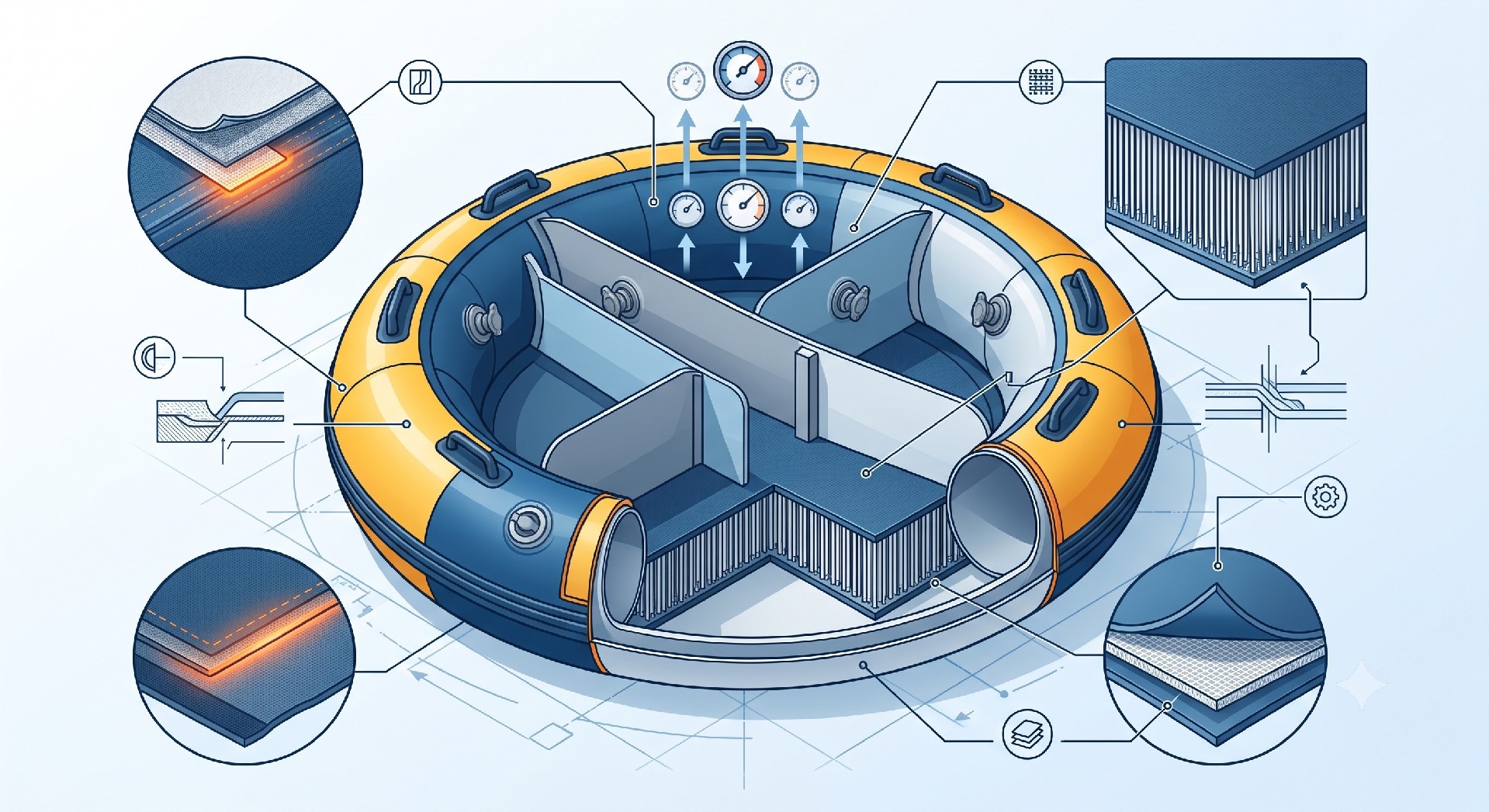
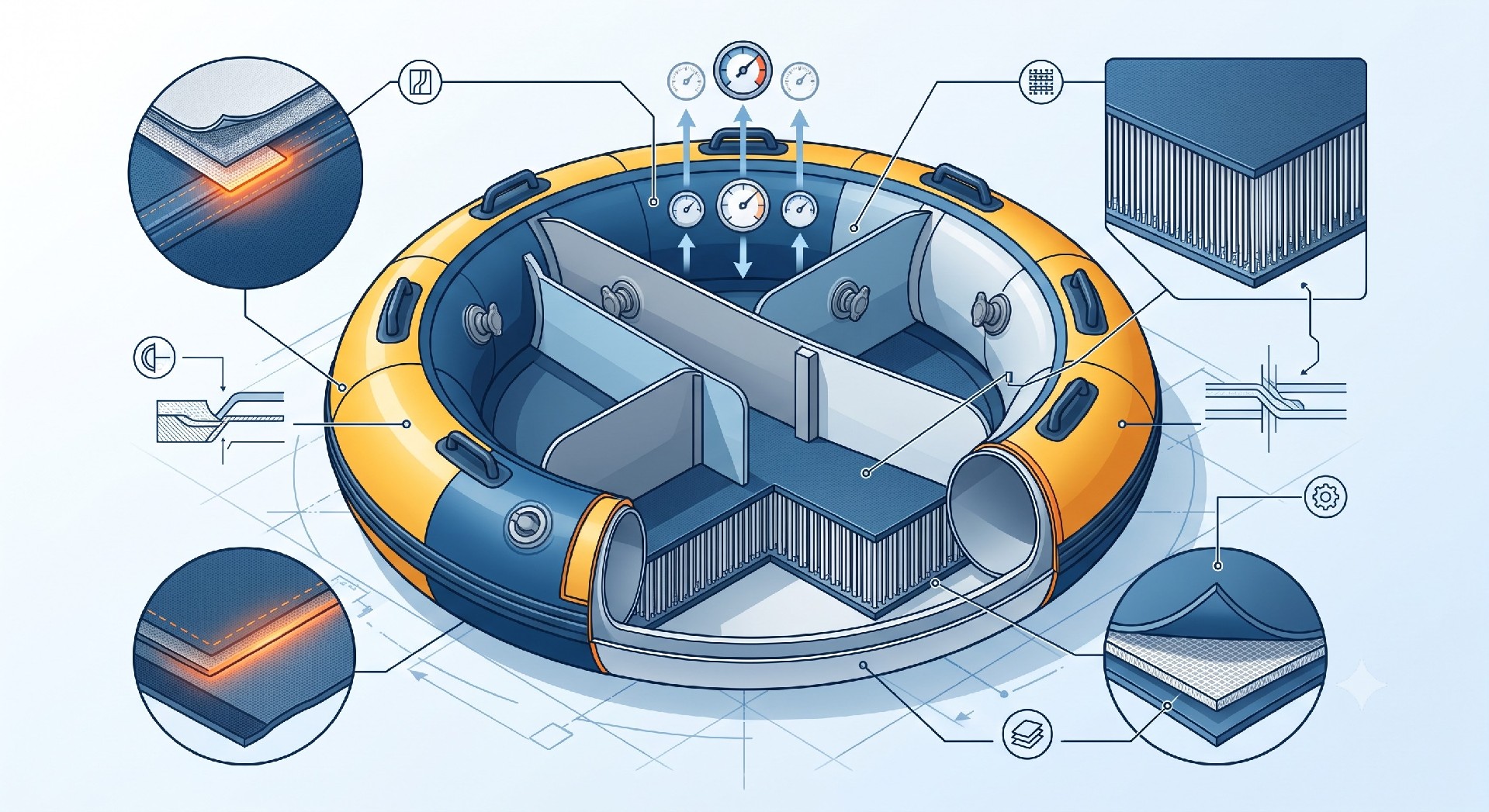
The foundation of a high-quality raft is its fabric. Commercial-grade rafts utilize heavy-duty PVC (Polyvinyl Chloride) or Hypalon (a synthetic rubber known for its exceptional UV and chemical resistance). While Hypalon is often used in extreme whitewater environments, heavy-duty PVC remains the industry workhorse for water park applications due to its durability and cost-effectiveness. Key specifications to evaluate include material thickness, often measured in gauge or denier. For example, high-end commercial rafts utilize material such as 0.9mm to 1.2mm reinforced PVC with a 1,100 Denier rating on tube bottoms and high-wear areas to protect against abrasion from slide surfaces and guest footwear. The industry standard for top-side materials is often 31 oz. 1000 denier PVC, while the bottom, which experiences the most friction, is reinforced with a heavier 40 oz. 1000 denier PVC or a specialized tarpaulin base with a foam core for added cushioning and stability.
Seam Integrity: Welded vs. Glued
A raft's strength is only as good as its seams. In a commercial setting, glued seams are a liability. Over time, adhesives degrade due to heat, moisture, and chemical exposure (like chlorine), leading to seam failure. The superior alternative is heat-welded seams. In this process, the PVC material is fused together using high-frequency welding, creating a molecular bond that is often stronger than the surrounding material itself. Manufacturers of premium rafts employ techniques like quadruple-taping and heat-welding to prevent air loss over years of heavy service. This robust construction is critical for maintaining structural integrity and preventing sudden, catastrophic deflation.
| Key Parameter | Technical Specification |
|---|---|
| Material Thickness (Top) | 31 oz. / 1000 Denier Reinforced PVC |
| Material Thickness (Bottom) | 40 oz. / 1000 Denier Reinforced PVC / 0.9-1.2 mm Tarpaulin |
| Maximum Payload | 450 kg / 990 lbs (4-Person Raft) |
| Seam Construction | Heat-Welded / Quadruple-Taped |
| Core Technology | Drop-Stitch with Internal Baffles |
| Operating Pressure (Max) | Up to 10 PSI |
| Compliance Standards | CE, ISO 6185, EN ISO 25649, TÜV Certified |
| Valve Type | H3 Rapid Inflation/Deflation Valve |
| Floor Construction | Self-Bailing / 2-inch Closed-Cell EVA Foam |
Drop-Stitch Technology and Internal Baffling
For many high-performance rafts and water park slides, drop-stitch construction represents the gold standard. This advanced manufacturing process involves tens of thousands of high-tenacity polyester threads connecting the top and bottom fabric layers. When inflated to high pressures—sometimes exceeding 10 PSI—the threads hold the fabric in place, creating a rigid, plank-like surface that withstands heavy loads and high speeds without deforming. This is in stark contrast to traditional inflatables that can wrinkle or flex, which can be dangerous on a high-speed water slide. In addition to rigid drop-stitch floors, the use of internal baffles and multi-chamber designs provides a critical safety net. If one chamber is compromised, the raft retains significant buoyancy from the others, preventing a complete loss of flotation and providing valuable time for evacuation. Many commercial rafts now feature a self-bailing floor design, allowing water to circulate out of the raft, which increases stability and reduces overall weight during operation.
Valves and Inflation Systems for High-Throughput
In a high-volume water park environment, turnaround efficiency is key. The use of rapid inflation/deflation valves is essential for minimizing downtime between ride cycles. Valves such as the H3 raft inflation valve are designed to be compatible with standard whitewater rafting inflators, allowing for quick and efficient setup and teardown. They also incorporate safety mechanisms to prevent over-inflation. The ability to rapidly adjust and manage air pressure ensures that rafts are always operating within their safe, specified PSI range, directly impacting both performance and rider safety.
Quantifiable Safety Metrics and Case Study Data
To truly understand the safety upgrade, we must look at the data. A water park that upgraded its fleet from standard 0.7mm PVC rafts to high-quality 1.2mm, 1100D reinforced PVC rafts with heat-welded seams and multi-chamber safety saw measurable improvements across their operations. Key performance indicators (KPIs) shifted dramatically. The Mean Time Between Failures (MTBF) for the rafts increased from an average of 6 months to over 36 months. Incidents related to equipment failure, such as seam blowouts and abrasion punctures, decreased by over 90%. The maximum payload capacity increased from 250kg to 450kg, allowing the park to safely accommodate larger ride groups and optimize throughput without compromising the safety margin. Furthermore, the fleet's UV resistance improved, with the new material showing minimal degradation in tensile strength after 2,000 hours of accelerated UV testing, compared to significant weakening in the older materials. This translates directly to a higher safety rating and a more reliable, worry-free operational experience.
Commercial Impact: ROI, Insurance, and Reputation
Operational Efficiency and Total Cost of Ownership
While the initial capital expenditure (CapEx) for high-quality rafts is higher, the total cost of ownership (TCO) is significantly lower. The reduction in repair costs, spare parts inventory, and unplanned maintenance frees up budgets for other improvements. The enhanced durability ensures the fleet remains operational for multiple seasons, providing a longer depreciation schedule and a better return on investment. Operators consistently find that premium rafts with closed-cell waterproof foam floors or drop-stitch bases maintain their shape and performance far longer, ensuring a consistent guest experience and maximizing the asset's useful life. This stability also reduces the need for frequent, disruptive replacement cycles.
Reducing Liability and Insurance Costs
Insurance underwriters are sophisticated evaluators of risk. A water park that can demonstrate a proactive commitment to safety by utilizing TÜV-certified, ISO-compliant equipment is viewed as a lower-risk client. Premium rafts that feature recessed safety valves, anti-slip materials, and multiple gripping handles directly mitigate the risk of rider injury due to slips, falls, or collision impacts. By maintaining a rigorous maintenance schedule and keeping detailed logs of equipment inspections as per industry standards (e.g., daily visual checks, quarterly inspections, and annual independent inspections), park operators can provide compelling evidence to insurers that they are effectively managing risk, which can lead to more favorable premium rates.
Conclusion: Elevating Your Park's Safety Standard
Upgrading to high-quality rafts is one of the most impactful decisions a water park operator can make to elevate its safety rating. This case study demonstrates that the path to a superior safety record is paved with meticulous attention to engineering specifications: from the Denier count and thickness of the PVC fabric to the integrity of heat-welded seams, the rigidity of drop-stitch cores, and the redundancy of multi-chamber designs. The initial investment in premium materials and certified manufacturing processes yields a substantial return through reduced operational failures, lower insurance premiums, and an unshakeable reputation for guest safety.
In an industry where guest confidence is the ultimate currency, a commitment to the highest safety standards is not just a regulatory obligation—it's a strategic advantage. By partnering with a reputable, experienced manufacturer who prioritizes compliance with international standards like CE, ISO 6185, and EN ISO 25649, you are not just buying equipment; you are investing in the peace of mind of every guest, parent, and lifeguard who steps into your park.