

Introduction: The Regulatory Imperative and the Role of Utility Models
In the demanding world of commercial outdoor and inflatable equipment, compliance with international safety standards is not merely a legal checkbox—it is the bedrock of brand reputation, operational safety, and commercial viability. For B2B buyers, sourcing managers, and fleet operators, ensuring that equipment meets rigorous standards like CE certification, EN71, and ISO 6185 is paramount. However, simply meeting these standards is the baseline; true innovation in safety often stems from a specific, powerful, yet underappreciated tool: the Utility Model Patent.
Unlike its more complex cousin, the invention patent, the utility model offers a faster, more cost-effective route to protecting incremental yet critical innovations. This pathway is particularly potent in the inflatable safety equipment sector, where iterative improvements in materials, seams, and chamber design can drastically enhance durability and user protection. This masterclass dissects how utility model patents are the unsung heroes driving material science and engineering compliance, focusing on the quantifiable technical specifications that define modern safety equipment .
Fabric Technology Deep Dive: PVC, Hypalon, and Drop-Stitch Cores
The foundation of any high-performance inflatable safety equipment lies in its fabric and core technology. Utility models have significantly advanced these materials, optimizing them for extreme conditions.
Reinforced PVC vs. Hypalon
While traditional PVC offers a balance of cost and performance, modern utility model innovations have focused on enhancing its weight-to-strength ratio. For instance, advanced formulations now utilize 1100D reinforced PVC with a thickness of 0.9mm, achieving a maximum payload capacity of up to 400 kg (880 lbs). On the higher end, Hypalon (CSPE) remains the gold standard for chemical and UV resistance, often used in applications requiring extreme durability, such as rescue boats and heavy-duty inflatable docks. Patents in this space frequently cover novel layering techniques that combine the abrasion resistance of Hypalon with the structural rigidity of high-denier polyester mesh .
The Drop-Stitch Revolution
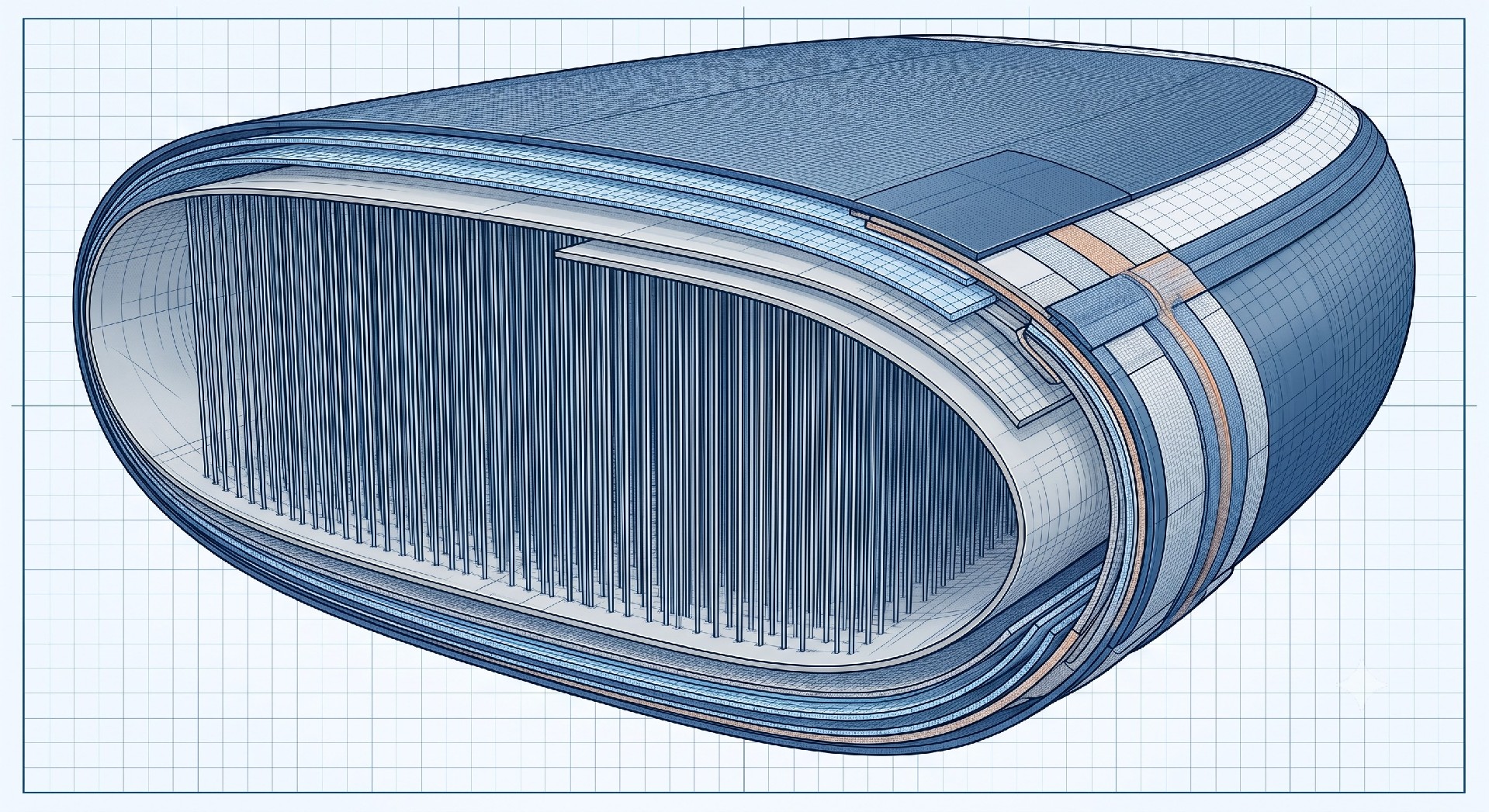
Perhaps the most significant innovation protected by utility models is the Drop-Stitch core. This technology involves thousands of high-tensile polyester threads connecting the top and bottom fabric layers. When inflated, these threads create a rigid, plank-like surface, traditionally used in stand-up paddleboards (SUPs) and now increasingly in safety platforms and rescue bridges. Utility model patents have fine-tuned this process, specifying the optimal Drop-stitch PSI (Pounds per Square Inch) limits. Commercial-grade equipment now routinely operates at 15-20 PSI, with some reinforced designs capable of withstanding up to 25 PSI for maximum rigidity. This high-pressure capability directly translates to higher load capacities and improved stability in rough water conditions, a critical factor for compliance with standards like ISO 6185 for inflatable boats.
Weld Engineering and Seam Integrity
With the strength of the fabric being a given, the seam is the next critical frontier for safety. A failure here is catastrophic, and this is where utility model patents are most prolific.
Heat-Welded vs. Glued Seams
The shift from glued to heat-welded seams is a direct result of utility model innovations. Heat welding uses high-frequency radio waves or hot air to molecularly bond the PVC or Hypalon layers, creating a bond that is stronger than the parent material. This is in stark contrast to glued seams, which can degrade over time due to UV exposure, chemical interaction, and physical stress, leading to delamination. Utility model patents often cover specific welding jigs, temperature profiles, and pressure application methods to ensure consistent weld penetration and strength across thousands of units .
Multi-Chamber Safety Systems
The concept of multi-chamber inflatables has been transformed by utility models. The patent CN224379532U, for example, details a rapidly assembled safety barrier . In inflatable boats, this translates to systems where the main tube is divided into multiple independent air chambers (e.g., 3-6 chambers). A utility model could protect a novel internal baffle design that prevents a single puncture from causing a total loss of buoyancy, ensuring that the equipment retains its shape and support. This is a critical feature for emergency rescue equipment and commercial rentals, aligning with stringent CE and EN71 requirements for stability and residual buoyancy.
| Key Parameter | Technical Specification | Compliance Relevance |
|---|---|---|
| Fabric Type & Thickness | 1100D Reinforced PVC (0.9mm) / Hypalon (1.0mm) | Abrasion & Tear Resistance (EN71, ISO 6185) |
| Drop-Stitch Density | Core: High-tensile 1000D Polyester threads | Structural Rigidity & Max Payload Capacity |
| Maximum Operating Pressure | 18-22 PSI (High-Pressure / Commercial Grade) | Load Bearing Stability (ISO 6185) |
| Seam Type | High-Frequency Heat-Welded (RF Welding) | Bond Integrity vs. Glued Seams (Critical for Safety) |
| Multi-Chamber Architecture | Independent Air Chambers (e.g., 3-6) | Residual Buoyancy & Emergency Safety (CE) |
| Valve System | High-Volume Push/Pull Valve for Rapid Inflation | Turnaround Efficiency (Commercial Use) |
| UV & Abrasion Resistance | Stabilizers & Coatings; >500 Hours UV Test | Extended Commercial Lifespan & TCO |
Critical Output Metrics and Compliance
To truly understand the value of these innovations, one must look at the data. The following table outlines key technical parameters that are often the subject of utility model patents and are essential for verifying CE and ISO 6185 compliance.
This data demonstrates how incremental patent-protected tweaks can yield significant performance gains, directly impacting safety ratings and commercial lifespans.
Commercial Application and ROI
Fleet Turnaround and Total Cost of Ownership (TCO)
For commercial operations, the efficiency of inflation and deflation is directly tied to profitability. Utility model patents on high-volume valves and rapid-deflation systems have reduced setup and pack-down times by up to 40%. This acceleration is a game-changer for high-throughput rental operations, allowing for more turnover cycles per day.
Furthermore, the increased durability from patented seam and material technologies directly reduces the TCO by extending the commercial lifespan of the equipment. A standard inflatable might last 3-5 seasons in a rental fleet, while a unit built with patented, reinforced drop-stitch technology and heat-welded seams can last 7-10 seasons, offering a substantial ROI .
Glamping and Resort Use
In the premium glamping sector, appearance and robustness are key. Utility model patents on vapor-polished seams and UV-stable inks ensure that the equipment retains a pristine look in high-UV environments, enhancing the guest experience and extending the life of the investment .
[IMAGE_2]
Conclusion: The Verdict on Utility Models
The utility model patent is an indispensable engine for innovation in the safety equipment sector. It provides the ideal mechanism for protecting the incremental yet life-saving improvements in material science, seam engineering, and pressure dynamics.
For B2B buyers, understanding the patent landscape is a strategic advantage. When sourcing equipment, look beyond the basic compliance label. Demand to see the technical specifications—the denier count, the weld strength, the PSI limits, and the chamber design. These metrics, often protected by utility models, are the true indicators of an equipment's ability to withstand the rigors of its environment and ensure the safety of its users. By recognizing the engineering mastery protected by these patents, businesses can make data-driven decisions that optimize safety, durability, and long-term profitability.
