

The Commercial Imperative for Sustainable Materials
In the competitive B2B water park and inflatable equipment sector, operational efficiency and guest safety are paramount. However, a powerful third pillar has emerged: environmental sustainability. For procurement managers, resort owners, and rental fleet operators, the choice of material—specifically eco-friendly PVC—is no longer a niche concern but a strategic business decision. This definitive guide provides a comprehensive analysis of eco-friendly PVC, moving beyond marketing claims to deliver the technical specifications, commercial data, and compliance frameworks required for intelligent sourcing.
Industry leaders are recognizing that sustainable practices drive tangible ROI. Investing in high-durability, UV-resistant materials can extend product lifespan by 30% to 50%, directly reducing capital expenditure on replacements and lowering the total cost of ownership (TCO) . Furthermore, meeting stringent environmental regulations, such as the EU's Extended Producer Responsibility (EPR) packaging standards, is essential for market access and brand reputation .
Fabric Technology Deep Dive: Beyond Standard PVC
The term 'eco-friendly PVC' encompasses a range of advanced material technologies. It is crucial to understand the specific technical parameters that differentiate commercial-grade, sustainable materials from traditional options.
Material Composition and Reinforcements
Standard PVC often relies on virgin fossil-fuel-based polymers. Eco-friendly alternatives typically incorporate:
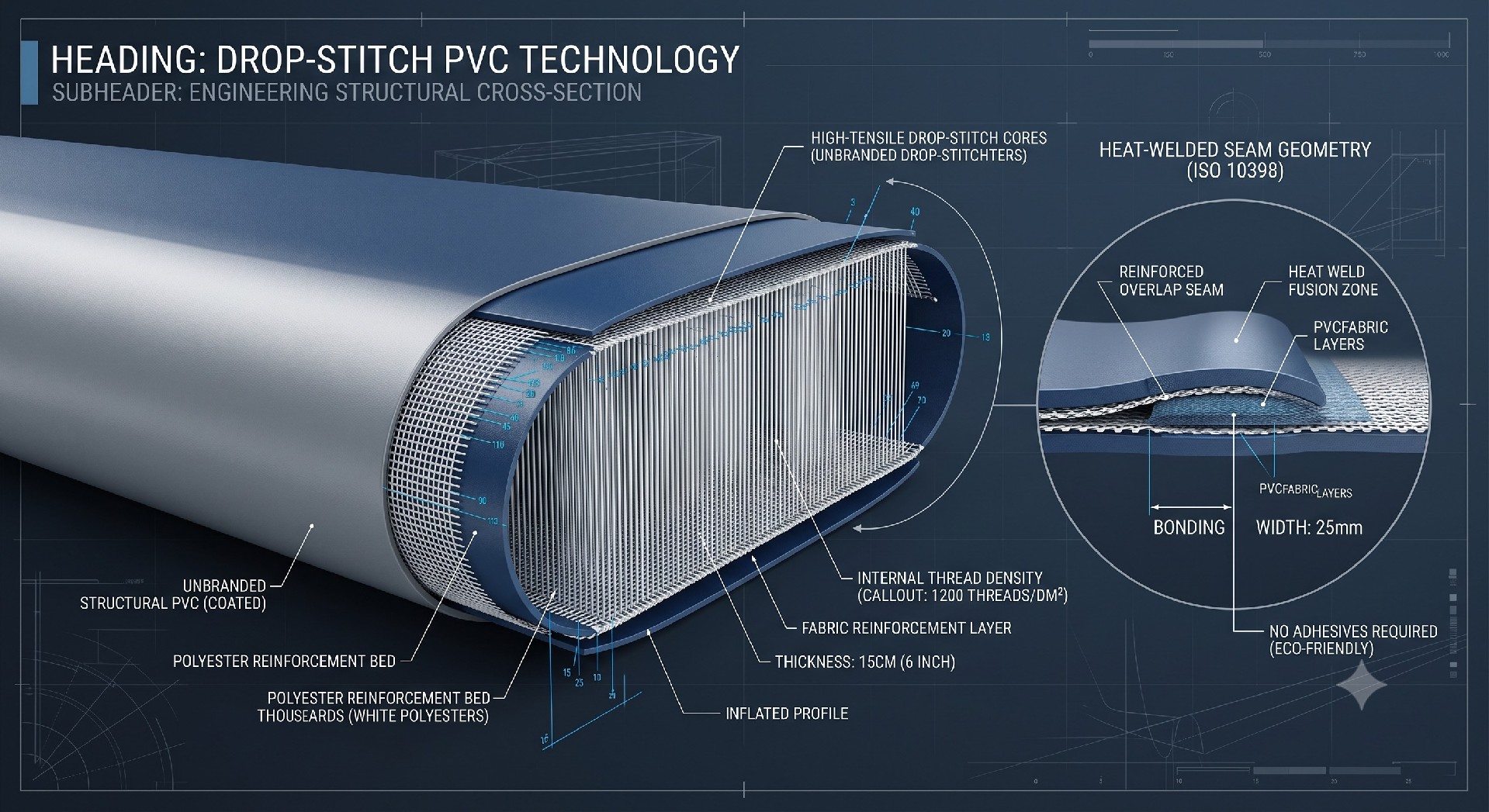
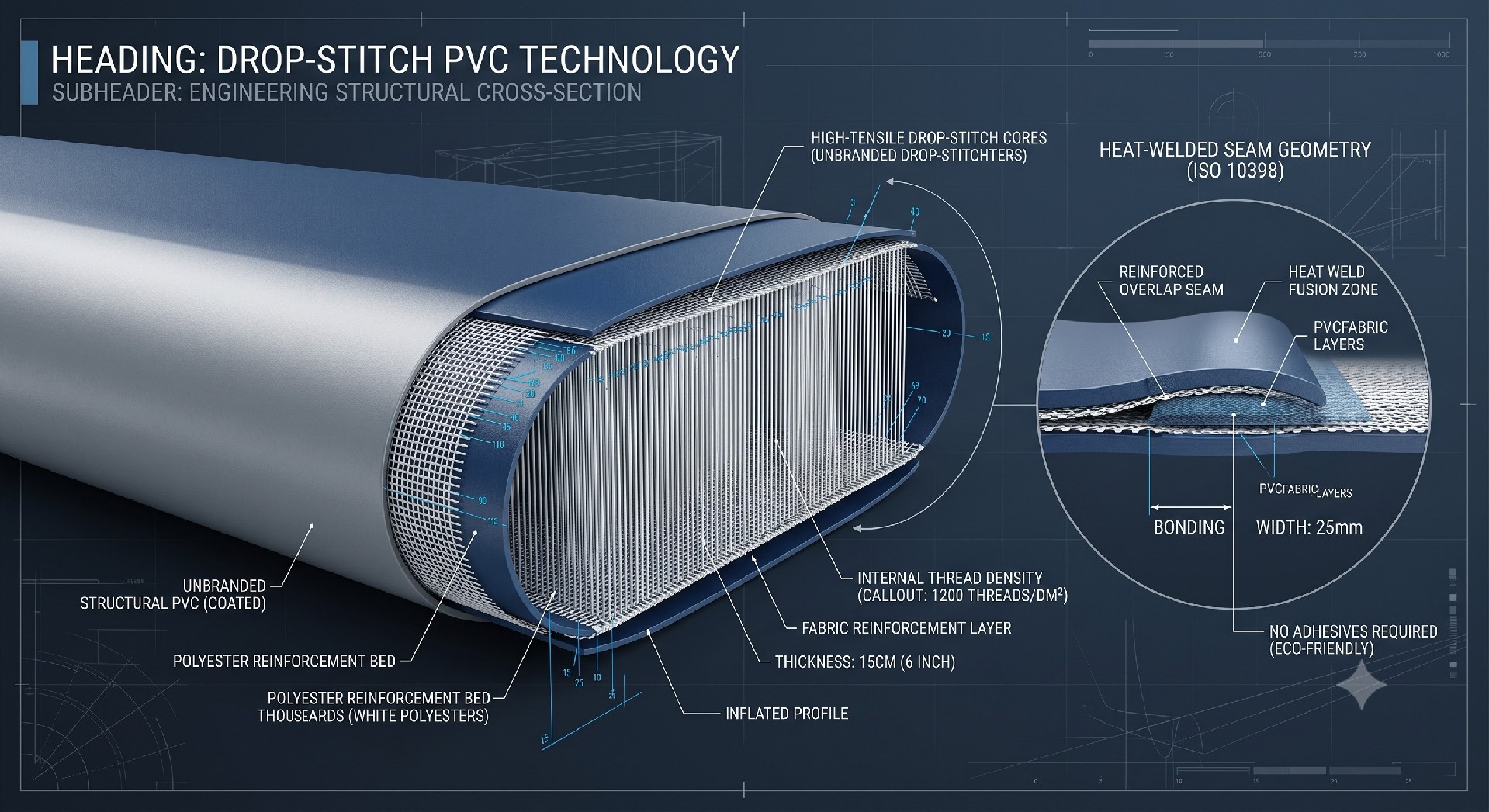
Reinforced Denier Fabrics: High-quality PVC is often laminated to a high-denier polyester scrim (e.g., 1100D), providing exceptional tensile strength and puncture resistance. This construction allows for a thinner, lighter PVC layer without compromising durability, effectively using less material per unit .
Non-Toxic Plasticizers: Instead of traditional phthalates, eco-friendly PVC uses safer, non-toxic plasticizers. This is critical for compliance with regulations like REACH and for ensuring child safety .
UV-Resistant Coatings: Advanced additives are chemically integrated into the PVC to resist degradation from UV radiation. This prevents the material from becoming brittle, cracking, or fading, ensuring a long service life even in high-sun environments .
Advanced Drop-Stitch Core Engineering
For high-performance structures like floating platforms and aqua parks, drop-stitch technology is essential. This involves thousands of synthetic threads connecting the top and bottom fabric layers, creating a high-pressure, rigid structure.
Pressure Integrity: High-quality drop-stitch PVC can maintain internal pressures of 7-15 PSI, creating a surface nearly as rigid as a hard-shell boat . This is achieved through precise control of the core thread denier and density.
Airtightness: The material's impermeability, combined with electronically welded seams, ensures minimal air loss, reducing the frequency of re-inflation and energy use across a large rental fleet .
| Key Parameter | Standard Commercial PVC | Premium Eco-Friendly Reinforced PVC |
|---|---|---|
| Material Composition | Standard 0.5mm PVC with UV coating | 0.9mm / 1100D Reinforced PVC |
| Maximum Payload Capacity | e.g., 300 kg | e.g., 400 kg - 500 kg |
| UV Resistance Lifespan | Standard (300+ hours) | Premium (500 - 1000+ hours), 30-50% longer lifespan |
| Abrasion Resistance | Standard | ~30% higher wear resistance |
| Safety & Environmental Compliance | Basic CE, EN71 | CE, EN71, REACH, ISO 6185, EPR Germany/France |
| Seam Integrity | Glued or Basic Welded | High-Frequency Heat-Welded, >3cm adhesive width |
| Recyclability | Low | Up to 70-100% recyclable |
Comparative Material Specifications
The following table provides a technical comparison of standard commercial PVC versus a premium eco-friendly reinforced PVC variant, highlighting the key performance indicators relevant for procurement decisions.
Manufacturing Excellence: Heat-Welded Seams and Safety
The transition to eco-friendly PVC is not just about the material itself but also about the manufacturing processes it enables. Modern production emphasizes safety and longevity.
Seam Integrity and Safety Protocols
The weakest point in any inflatable is its seam. Premium equipment utilizes high-frequency or hot-air welding to fuse material layers, creating a homogenous bond that is stronger than the surrounding fabric. This technique, often exceeding 3 cm in adhesive width, eliminates the need for solvent-based glues and reduces the risk of seam failure, a leading cause of downtime in rental operations .
Safety certifications are the bedrock of B2B procurement. Equipment should be compliant with globally recognized standards:
EN71 (European Toy Safety Standard) for materials suitable for all age groups .
ISO 6185 for inflatable boats and watercraft, ensuring design and construction integrity.
REACH compliance, certifying the absence of Substances of Very High Concern (SVHCs).
Fire retardancy standards like NFPA701 .
Environmental Certifications and End-of-Life
Sourcing eco-friendly PVC also means engaging with a circular economy. Look for certifications that validate the product's full lifecycle.
EPR Germany/France Packing: Ensures that packaging materials meet strict collection and recycling quotas, reducing waste .
Material Recyclability: While PVC is traditionally difficult to recycle, innovations are leading to products that are up to 70-100% recyclable, and manufacturers are beginning to take responsibility for end-of-life management .
Commercial Application Scenarios and ROI
The technical advantages of eco-friendly PVC translate directly into improved commercial outcomes across various deployment scenarios.
High-Turnover Rental Fleets
For businesses renting water tubes, slides, and floating parks, durability is directly tied to profitability. Eco-friendly PVC's superior abrasion resistance ensures equipment withstands the constant contact with swimwear, sunscreen, and other users. A longer product lifespan means fewer replacements and higher customer satisfaction. The ability to deploy a large inflatable water park in under 30 minutes—twice as fast as traditional setups—maximizes operational uptime and revenue .
Premium Glamping and Resort Experiences
The hospitality sector demands equipment that is both durable and aesthetically pleasing. Eco-friendly PVC can be manufactured in a full spectrum of colors and custom prints, creating a premium, brand-aligned aesthetic for resorts. The material's inherent softness and rigidity balance provide a comfortable, safe, and luxurious guest experience, translating to higher guest retention and higher rental pricing tiers .
Conclusion: The Strategic Advantage of Eco-Conscious Procurement
Adopting eco-friendly PVC in water park equipment is a strategic move that aligns commercial interests with environmental responsibility. For B2B buyers, the data is clear: the upfront investment in superior materials is offset by significant reductions in Total Cost of Ownership through extended lifespan, lower maintenance, and reduced energy consumption.
By prioritizing materials with advanced UV resistance, compliant certifications, and proven durability, procurement managers are not just purchasing equipment—they are investing in a sustainable, profitable future. The transition to eco-friendly PVC is no longer an ethical choice; it is a business necessity in the modern outdoor recreation industry.
