

The Commercial Imperative: From Simple Floats to Certified Engagement Systems
For B2B buyers in the hospitality, rental, and retail sectors, selecting the best pool toys to keep toddlers entertained for hours transcends mere summer fun. It is a critical business decision that impacts liability, operational efficiency, and return on investment (ROI). In an industry where water confidence and sensory development are paramount , the demand is shifting from cheap, disposable plastic to engineered, certified, and durable commercial-grade products. This guide serves as a comprehensive technical sourcing manual, dissecting the material science, safety certifications, and hydrodynamic principles that define a product's commercial lifespan.
Whether you are outfitting a premium glamping resort, managing a high-throughput rental fleet, or curating a retail selection, understanding the "Total Cost of Ownership" (TCO) is essential. The market is saturated with consumer-grade toys that often fail after a single season , leading to hidden costs in replacements, customer dissatisfaction, and increased plastic waste. We must pivot towards products engineered for extremes: high UV exposure, chlorinated water, and the rigorous demands of toddler play. This analysis provides a data-driven evaluation of key performance indicators (KPIs) such as material thickness, denier count, and weld integrity, ensuring your investment delivers sustained profitability and end-user delight.
Material Deep Dive: PVC Formulations and the Denier Count Reality
The foundation of any durable inflatable toddler toy lies in its material composition. While standard consumer products often utilize generic, single-layer PVC, commercial-grade applications demand reinforced composites. A critical metric in this domain is the denier count, which measures the thickness and weight of the fabric yarns used within the PVC laminate. For high-traffic environments, a minimum specification of 0.9mm / 1100D Reinforced PVC is recommended. This contrasts sharply with lighter, 0.4mm materials used in budget toys that are prone to punctures and seam separation.
Hypalon vs. Standard PVC in Marine Environments
While Polyvinyl Chloride (PVC) remains the industry standard due to its cost-effectiveness and clarity, Hypalon (Chlorosulfonated Polyethylene - CSPE) represents a premium alternative for extreme durability. Hypalon exhibits superior resistance to UV degradation and chemical attack (chlorine and saltwater), making it ideal for permanent installations in resorts. However, for mobile rental fleets or seasonal retail, modern high-density PVC formulations with UV inhibitors often provide the optimal balance between durability and cost, particularly when adhering to REACH and EN71 safety standards for phthalate-free content.
Drop-Stitch Core Physics and Rigidity
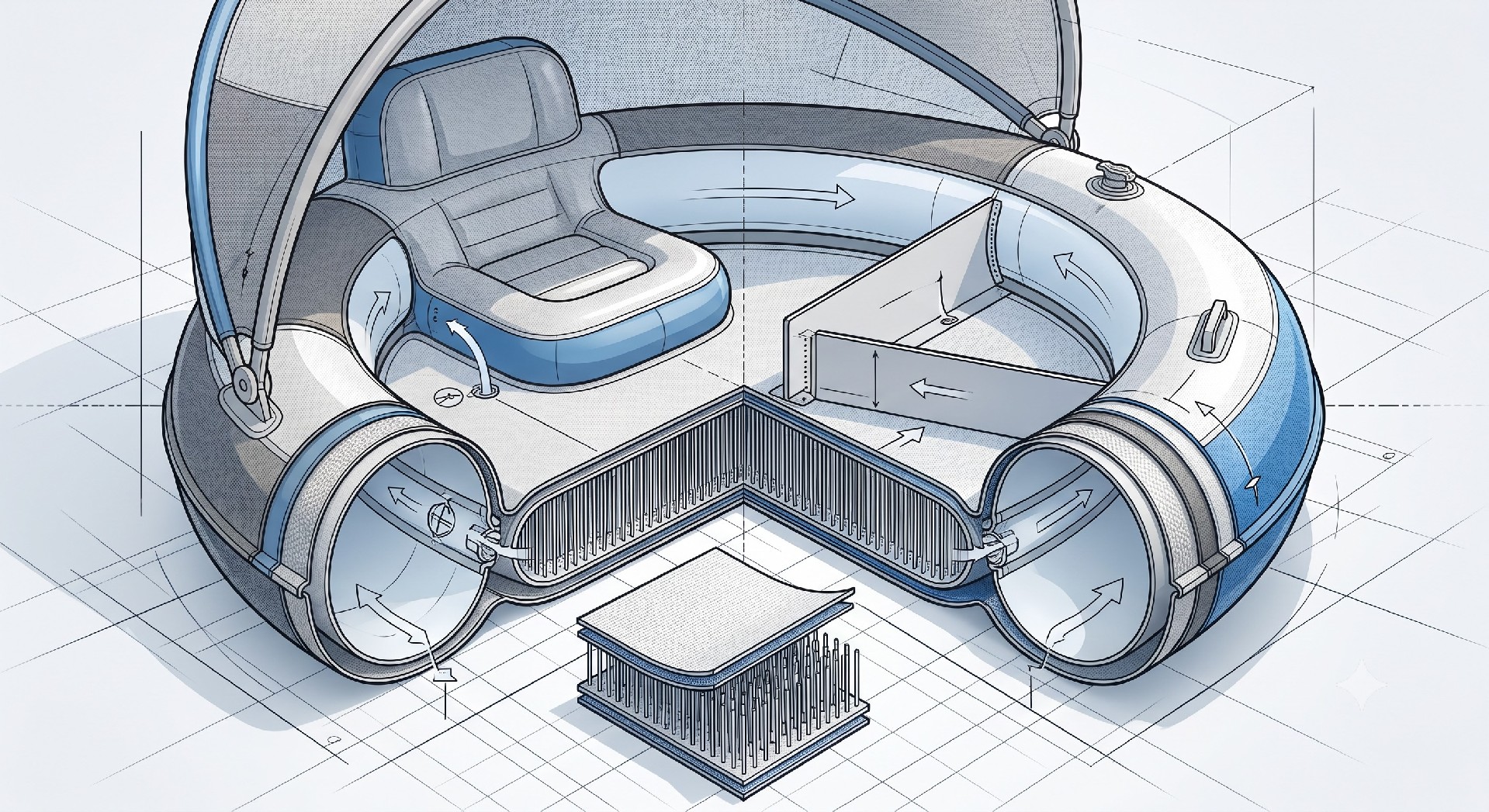
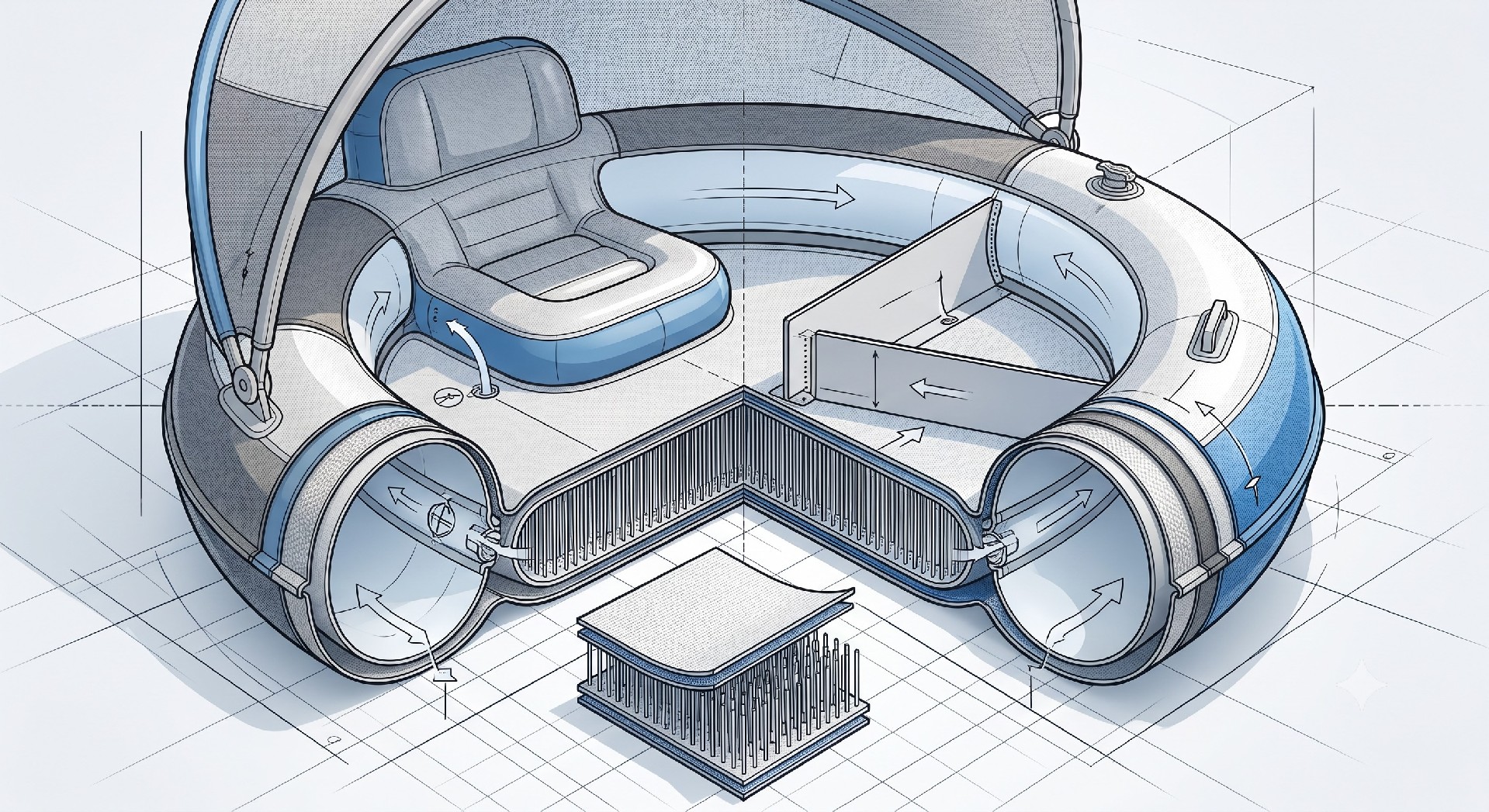
For products requiring significant structural integrity, such as toddler slides or floating islands, the Drop-Stitch Core technology is paramount. This process involves thousands of polyester threads connecting the top and bottom PVC layers. When inflated to precise PSI (Pounds per Square Inch) levels (typically 8-15 PSI for play structures, compared to ~1.0 PSI for simple floats), the core achieves a rigid, near-hard-shell rigidity. This high-pressure integrity is crucial for supporting dynamic loads and preventing deformation during active play, ensuring the toys remain safe and stable in the water.
Manufacturing Standards and Weld Engineering
The longevity of an inflatable product is only as strong as its seams. High-frequency Heat-Welded Seams represent the gold standard in manufacturing, creating a molecular bond between the PVC layers that is as strong as the material itself. This is superior to glued seams, which degrade over time due to chemical breakdown and shear stress. For B2B sourcing, it is imperative to verify that products meet ISO 6185 standards for inflatable boats and water toys, ensuring the weld integrity can withstand specified internal pressures and external impacts.
Furthermore, sophisticated designs incorporate Multi-Chamber Safety systems. This engineering principle ensures that in the event of a puncture in one chamber, the remaining chambers retain sufficient buoyancy to prevent the toy from sinking or becoming a safety hazard. This feature is not only a safety imperative but also a commercial advantage, significantly extending the product's usable life by allowing for easy, on-site leak detection and repair without total product failure.
| Key Parameter | Technical Specification for Commercial-Grade Toys |
|---|---|
| Material Thickness | 0.9mm / 1100D Reinforced PVC (Minimum for High-Use) |
| Maximum Payload | Varies (e.g., 150 kg / 330 lbs for small play islands) |
| Inflation/Deflation Time | < 2 minutes with high-output commercial pump |
| Safety Standards | CE, EN71, REACH, ISO 6185 (for high-rigidity products) |
| High-Pressure Valve Lifespan | 5+ years for ASTM-approved valves |
Commercial Applications and ROI Analysis
Investing in high-specification toddler pool toys directly correlates with enhanced commercial outcomes. In the glamping resort and premium hospitality sector, the visual appeal and reliability of commercial-grade gear directly contribute to guest retention and positive reviews. A floating play center, engineered with UV-resistant and non-toxic materials, provides a "wow" factor that justifies premium booking rates .
High-Throughput Rental Fleets
For rental operators, the key metric is Turnaround Time. Products with high-volume, rapid inflation valves (such as Boston or Leafield valves) and ergonomic deflation systems reduce operational downtime between rentals. The use of heavy-duty PVC significantly reduces the frequency of replacements, offering a superior Cost per Rental Lifecycle compared to consumer-grade options that often require replacement after 10-15 uses.
Logistical Efficiency
From a logistics perspective, the portability of high-quality inflatables is a major advantage over hard-shell alternatives. The ability to deflate and store a large water park in a compact space reduces shipping costs and off-season storage requirements, representing significant savings in CapEx vs. OpEx .
Conclusion: Strategic Sourcing for the Long Game
Selecting the best pool toys to keep toddlers entertained for hours is a strategic procurement process that demands a balance of engineering, safety, and financial analysis. B2B buyers must move beyond the allure of low-cost, low-spec products and invest in solutions validated by rigorous safety standards such as CE, EN71, and ISO 6185. By prioritizing Drop-Stitch technology, high-denier PVC/Hypalon materials, and heat-welded construction, businesses can ensure maximum uptime, minimized liability, and sustained profitability.
The future of the water toy industry lies in this data-driven approach to durability. Ultimately, a well-engineered product that survives the test of time—and the rigors of toddler play—delivers the highest ROI by fostering brand trust and operational excellence.
