

The Harsh Reality of Water Rescue: Why Equipment Must Be Built for Extremes
When every second counts in a flood, swiftwater, or open-sea rescue, equipment failure is not an option. Disaster response teams operate in the most punishing environments on Earth: debris-filled floodwaters, chemically contaminated industrial spills, and high-UV marine conditions that degrade standard materials within months. The selection of water rescue equipment—from inflatable rescue boats and self-righting lifeboats to rigid inflatable boats (RIBs) and rescue rafts—is therefore a critical, high-stakes process governed by rigorous technical standards, material science, and a deep understanding of operational Total Cost of Ownership (TCO).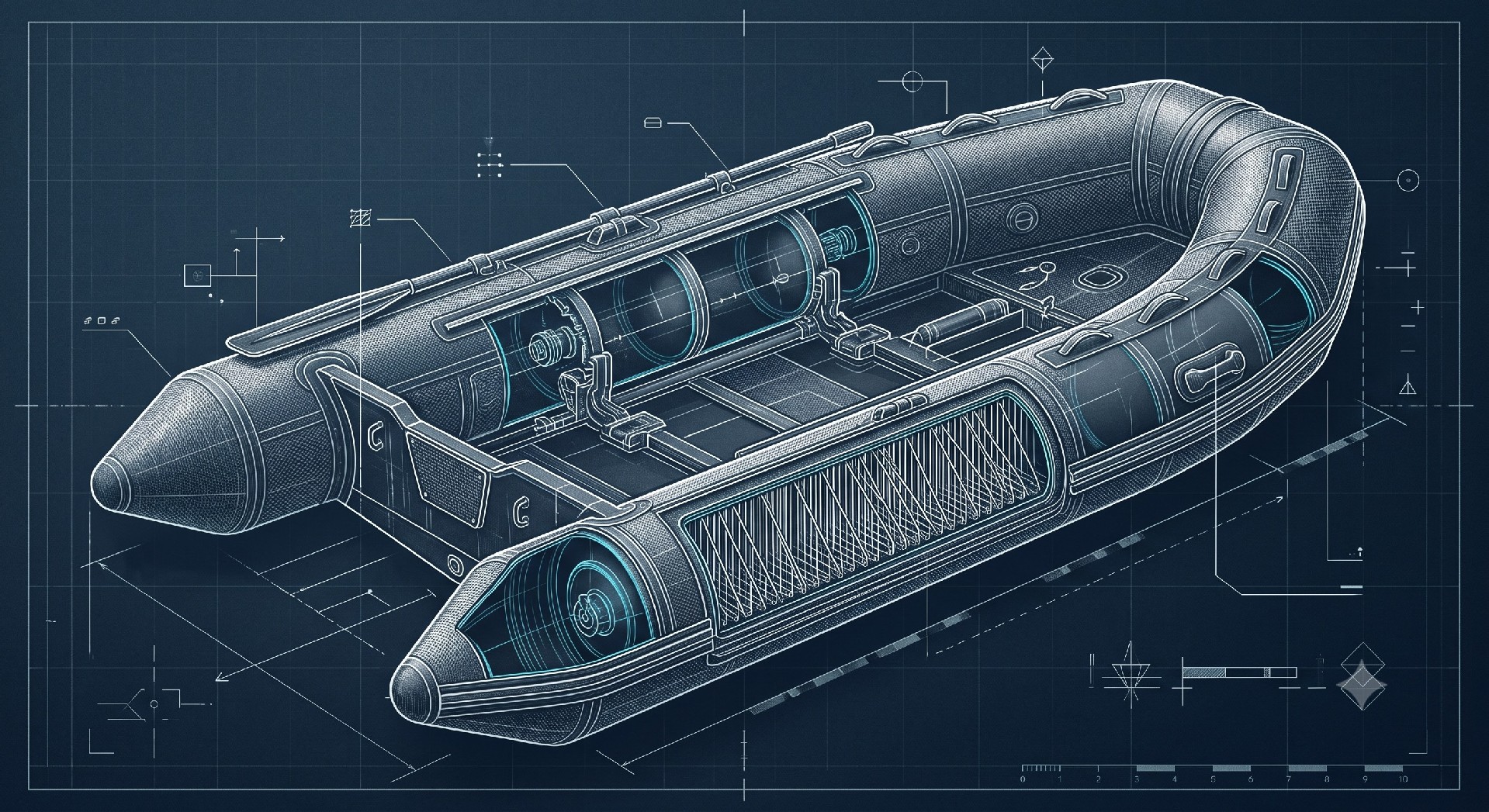 This guide provides a comprehensive, data-driven analysis of how elite rescue teams, including FEMA swiftwater units and coast guards, evaluate and select their equipment based on key metrics: puncture resistance, UV durability, material specifications, and compliance with international standards like ISO 6185, CE, and NFPA.
Drawing on 15 years of B2B outdoor equipment design and industry standards such as the ISO 15372:2000 standard for coated fabrics for inflatable chambers and the rigorous requirements of the 1974 SOLAS Convention, we will dissect the core considerations that define mission-ready gear .
This guide provides a comprehensive, data-driven analysis of how elite rescue teams, including FEMA swiftwater units and coast guards, evaluate and select their equipment based on key metrics: puncture resistance, UV durability, material specifications, and compliance with international standards like ISO 6185, CE, and NFPA.
Drawing on 15 years of B2B outdoor equipment design and industry standards such as the ISO 15372:2000 standard for coated fabrics for inflatable chambers and the rigorous requirements of the 1974 SOLAS Convention, we will dissect the core considerations that define mission-ready gear .
Puncture Resistance: The First Line of Defense in Hostile Environments
The primary threat to inflatable rescue equipment in the field is puncture. Debris such as submerged trees, jagged metal, and collapsed infrastructure common in flood zones can instantly compromise a single-chamber boat. This is why multi-chamber design is a fundamental safety requirement.
Multi-Chamber Safety: The Redundancy Imperative
Professional rescue boats are engineered with multiple independent air chambers. For instance, a 6-8 person inflatable rescue boat may feature 3 to 4+ independent air chambers, ensuring that if one chamber is punctured, the remaining chambers provide sufficient buoyancy to keep the craft afloat and the team safe . A self-righting rescue boat, designed to automatically re-orient itself in rough seas, can feature over 10 independent air chambers for ultimate redundancy and stability . This compartmentalization is a non-negotiable safety standard, directly mitigating the risk of catastrophic failure.
Armor Against Abrasion: Bottom Protection and Materials
Beyond internal compartments, the exterior of the boat must resist constant abrasion from grounding, dragging over rocks, and contact with sharp surfaces. High-quality rescue boats incorporate a thick, reinforced rubber layer or 'armor' on the bottom to enhance wear and puncture resistance. In high-spec models, the base material thickness can exceed 1.0 mm, and it is often constructed from a dense PVC or Hypalon (CSM) composite that is both thick and highly resistant to cuts .
Industry Standards in Action: Certified Durability
Selection committees rely on specific data points from material tests to verify durability. Procurement documents often require materials to withstand UV exposure tests like GB/T 16422.3-2022 (24 hours with no fading or deformation) and extreme temperature tests from -50°C to +70°C . Material strength is quantified through metrics like tensile strength (e.g., ≥89.9 kN/m warp, ≥81.9 kN/m weft) and adhesive strength (e.g., ≥4.6 kN/50mm) .
The Material War: Hypalon vs. PVC in Rescue Applications
The choice between Hypalon (Chlorosulfonated Polyethylene or CSM) and PVC is arguably the most critical decision in water rescue equipment procurement. While both are common in inflatable boats, their performance profiles for professional, year-round use are dramatically different.
Hypalon (CSM): The Professional's Choice
Hypalon is a synthetic rubber renowned for its exceptional durability. For naval, coast guard, and search-and-rescue (SAR) operations deploying vessels 200+ days per year, Hypalon is not a luxury—it is an operational requirement .
UV Resistance: Hypalon exhibits exceptional resistance to UV degradation, maintaining its structural integrity and color over many years .
Chemical Resistance: It is highly resistant to fuel, oils, saltwater, and a wide range of chemicals, which is vital in contaminated water rescues .
Temperature Range: It remains stable and flexible in extreme cold down to -40°C and heat up to +130°C .
Operational Lifespan: With proper maintenance, a Hypalon boat can last 15–20 years or more .
Hypalon is the material of choice for premium rescue equipment, often paired with a high-tenacity polyester reinforcement layer to provide dimensionally stable, tear-resistant fabric .
PVC: The Value Proposition with Significant Trade-offs
PVC (Polyvinyl Chloride) is a more budget-friendly material that is lighter and easier to repair in the field . However, for demanding rescue environments, its limitations are significant.
UV Vulnerability: Sun and heat are PVC's biggest enemies. In tropical environments, UV degradation accelerates, leading to fading and material hardening .
Chemical Susceptibility: It is more susceptible to damage from certain solvents and petroleum products .
Operational Lifespan: In demanding conditions, a PVC boat's lifespan is typically 5–10 years, often requiring tube replacement every 4-5 years .
| Material Property | Hypalon (CSM) - Professional Grade | PVC - Commercial Grade |
|---|---|---|
| UV Resistance | Exceptional (minimal degradation over years) | Moderate (fades and hardens over time) |
| Chemical Resistance | Excellent (fuel, oils, saltwater tolerant) | Adequate (susceptible to solvents) |
| Temperature Range | Stable from -40°C to +130°C | Becomes brittle in cold, softens in heat |
| Typical Lifespan | 15-20+ years (with maintenance) | 5-10 years (in demanding conditions) |
| Typical Thickness | 0.9mm - 1.0mm+ (often with armor layer) | 0.9mm (standard) |
| Common Use Cases | Military, Coast Guard, SAR, Year-round Heavy Deployment | Seasonal, Recreational, Moderate Climate Use |
Total Cost of Ownership (TCO): A Data-Driven Analysis
The initial procurement cost is just the tip of the iceberg. A comprehensive TCO analysis reveals that the cheaper upfront cost of PVC often leads to higher long-term expenses for professional rescue teams. A PVC tube set typically costs 30–50% less upfront than Hypalon . However, factoring in the replacement cycles, increased maintenance hours, and the hidden cost of operational downtime, a Hypalon build often proves more economical over a 10-year lifecycle. For teams operating in harsh environments, this makes Hypalon the superior long-term investment.
Deployment Logistics and Safety Features
Inflation and Deflation Speed
In an emergency, setup time is critical. Rescue boats must be deployable rapidly, which requires efficient inflation systems. For example, a rescue raft might be designed for a quick inflation time of ≤15 minutes using a combination of high-output electric pumps and manual backup pumps . Teams often carry compressed air cylinders as a backup inflation device for field repairs, alongside mandatory repair kits and spare parts .
Payload and Passenger Capacity
Clear specifications are critical for mission planning. Rescue craft are classified by their capacity.
A small 5-person rescue raft may have a maximum payload of 600 kg .
A larger 6-8 person rescue boat can have a maximum payload of 1000 kg or more .
A larger self-righting rescue boat can accommodate 8 people and have a payload capacity of over 400 kg .
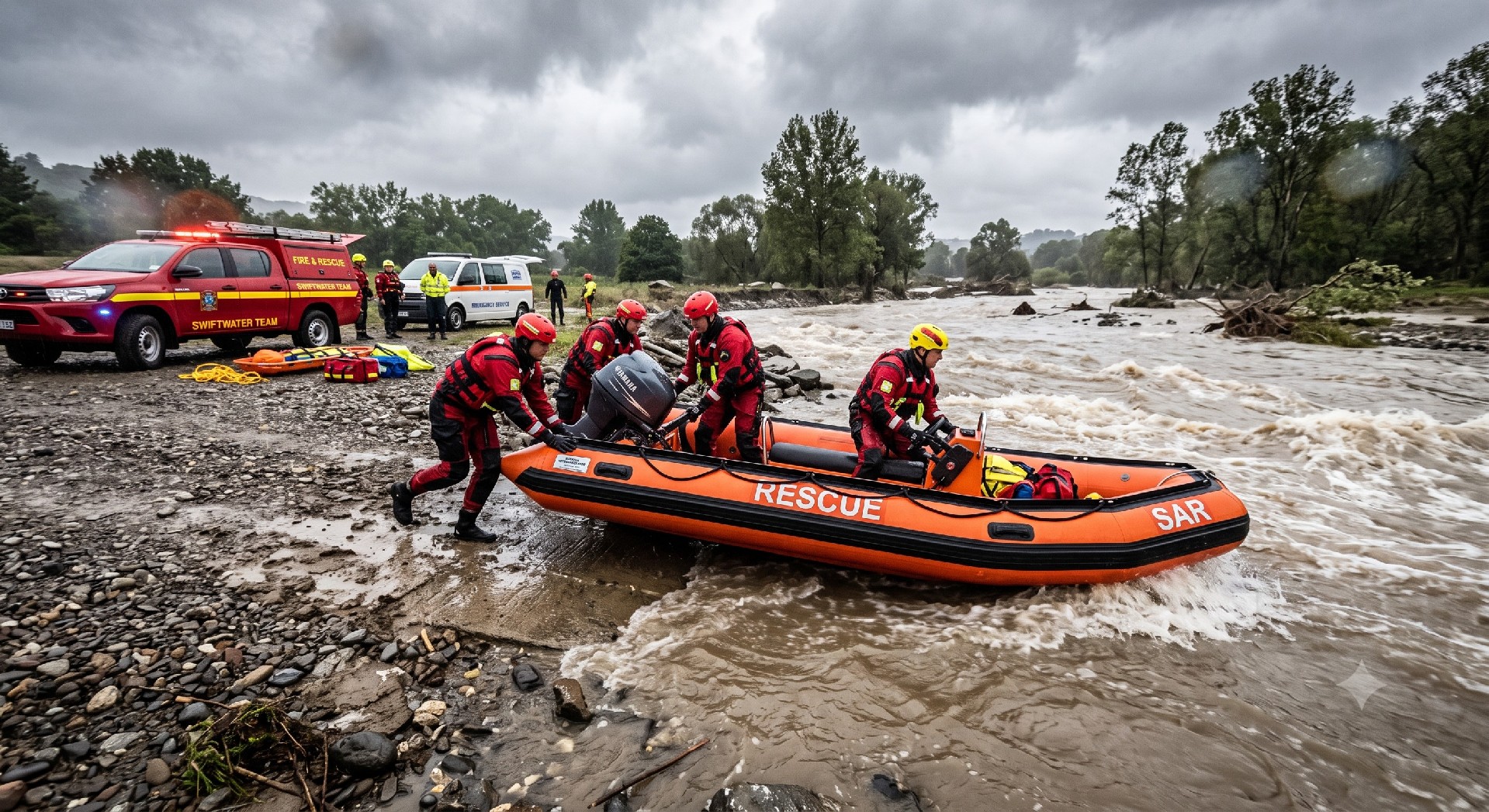
These metrics also determine the required outboard motor size. Minimum horsepower requirements for swiftwater rescue boats often start at 20 hp, with 30 hp recommended for demanding operations .
Certification: ISO 6185, CE, and NFPA Compliance
Compliance with international standards is non-negotiable for official procurement and insurance purposes. Key standards include :
ISO 6185 (Parts 1-4): The international standard specifying the minimum safety requirements for the design, materials, and manufacture of inflatable boats.
CE Marking: A mandatory conformity marking for products sold in the European Economic Area, indicating compliance with health, safety, and environmental protection standards.
NFPA G-rated Rope: For swiftwater operations, rope (e.g., 12.5mm or 11mm) must be NFPA G-rated, a certification for life safety rope .
For example, a tender document might require a Certificate of Conformity to ISO 6185-4 (for boats with a hull length of 8m to 24m) and CE marking for a new rescue boat, which must be supplied at the delivery stage .
Conclusion: Selecting the Right Tool for the Mission
The selection of water rescue equipment is a sophisticated process that balances immediate operational needs against long-term durability and cost. For disaster response teams, the evidence is clear:
For extreme, year-round, and multi-environment operations, Hypalon is the superior material choice due to its unparalleled UV, chemical, and abrasion resistance. The higher upfront cost is justified by a longer lifespan and lower total cost of ownership.
Multi-chamber design and built-in redundancy are essential safety features that protect both the rescue team and the victims.
Adherence to strict international standards like ISO 6185 and CE provides the framework for quality assurance and legal compliance.
 By focusing on these data-driven criteria, procurement teams can confidently invest in equipment that will perform reliably in the harshest conditions, ultimately saving lives and maximizing return on investment.
Keywords: Hypalon, PVC, UV resistance, puncture resistance, multi-chamber, ISO 6185, CE, total cost of ownership (TCO), rescue boat, swiftwater rescue, inflatable boat.
