

Introduction: The Commercial Imperative for Durable Water Sports Gear
For B2B buyers—from resort procurement managers to rental fleet operators—supplying equipment for a day-long water sports adventure is a high-stakes investment. The difference between a profitable, low-maintenance fleet and a logistical nightmare lies in the technical specifications and material science of the equipment you source. This guide provides an authoritative, data-driven analysis of the commercial-grade inflatable equipment essential for a premium guest experience, focusing on material durability, safety standards, and total cost of ownership (TCO).
Decoding Material Science: PVC vs. Hypalon and the Drop-Stitch Core
When sourcing high-durability inflatable water sports equipment for commercial use, the material composition is non-negotiable. The primary decision lies between high-grade PVC and Hypalon, each offering distinct performance characteristics. For rental environments, reinforced PVC is often the material of choice due to its superior UV resistance and durability without excessive weight. Key metrics include:
Denier Count: For example, 1100D and 1200D reinforced PVC represent the industry standard for high-abrasion resistance and structural integrity. This high denier count ensures the material can withstand repeated impacts from tubes, towables, and guest handling .
Material Thickness: Commercial-grade equipment typically utilizes 0.9mm to 1.2mm PVC sheeting. This thickness directly correlates with puncture resistance, with a thicker gauge offering a significantly extended commercial lifespan in high-traffic rental scenarios.
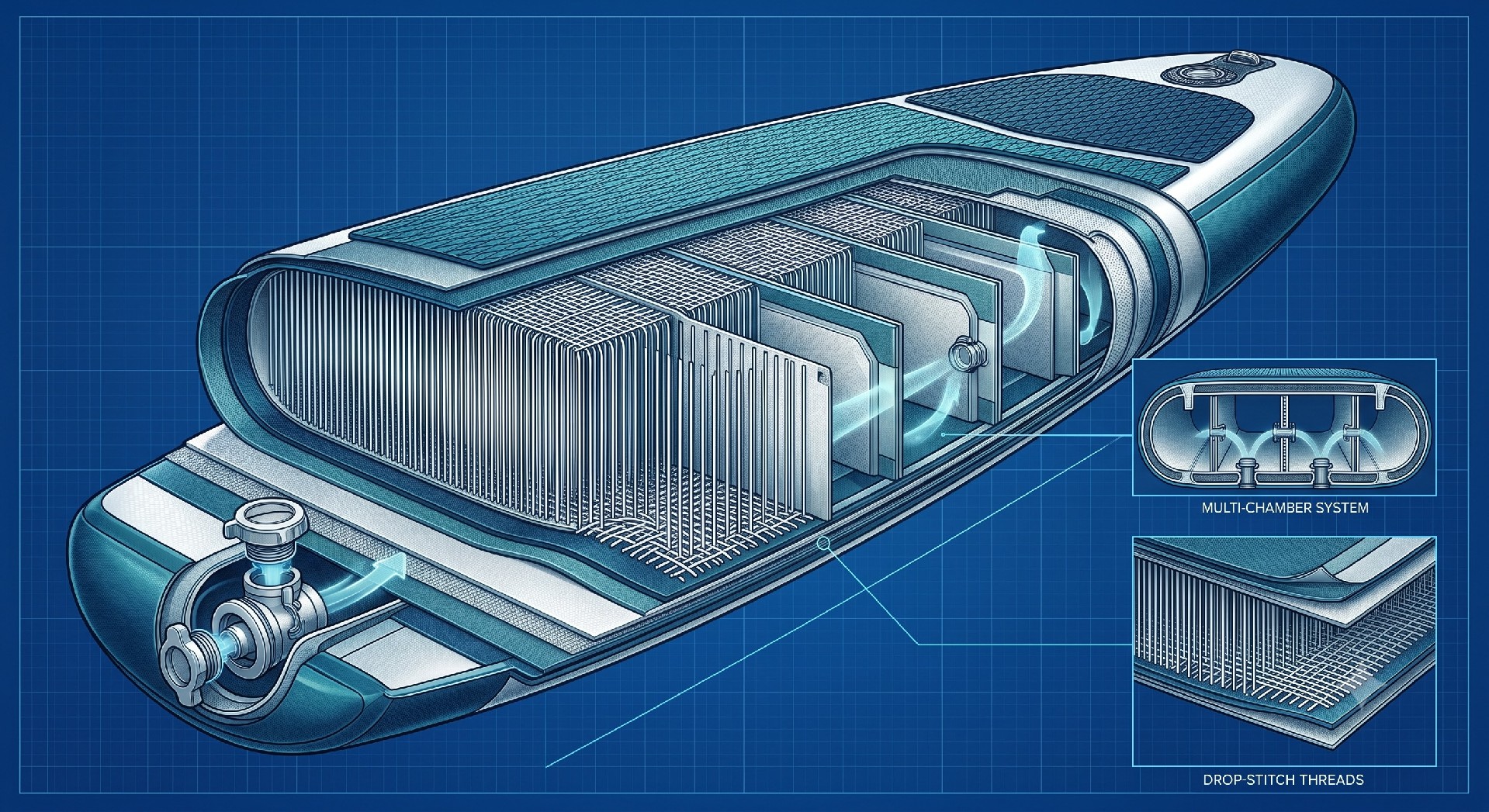
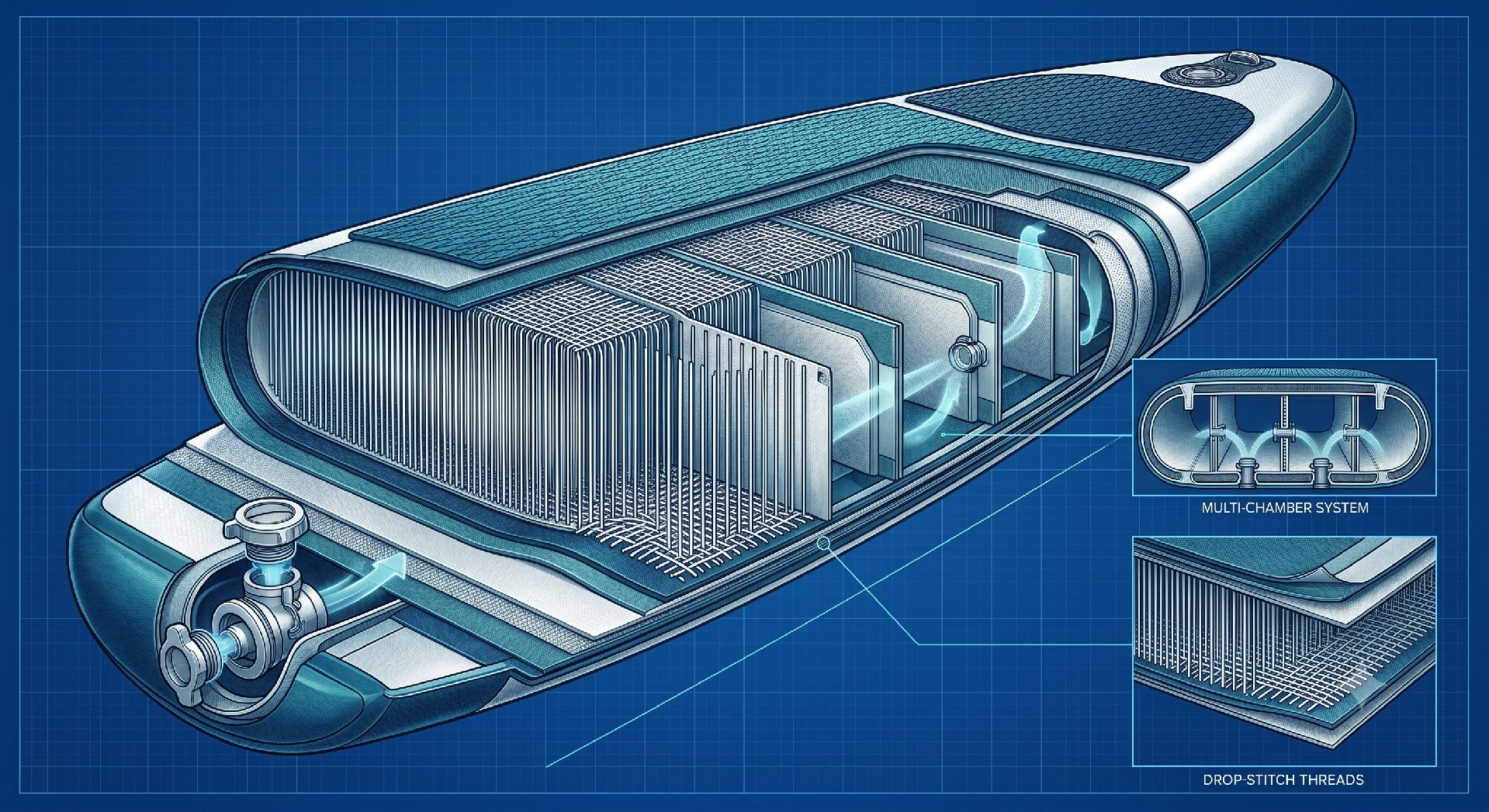
Drop-Stitch Technology: This manufacturing process uses thousands of high-tensile polyester threads connecting the top and bottom fabric layers. When inflated to high pressures (typically 12-15 PSI for premium boards and 8-10 PSI for towables), the structure becomes exceptionally rigid. This allows inflatable SUPs and decks to achieve rigidity comparable to hard-shell alternatives, a critical factor for guest satisfaction and safety .
Engineering and Welding: The Key to Longevity
The seam integrity of your equipment is paramount to minimizing downtime. Advanced manufacturing techniques such as Heat-Welded Seams and RF (Radio Frequency) Welding are non-negotiable for commercial gear. Unlike glued seams, which can degrade with saltwater exposure and UV radiation, welded seams create a molecular bond, eliminating a common point of failure.
Air Chambers: Multi-chamber designs are an industry standard for safety . In the event of a puncture, the remaining chambers maintain buoyancy, allowing guests to safely return to shore, a feature that significantly reduces liability for rental operators.
Valve Lifespan: High-pressure valves are engineered for rapid inflation and deflation, accelerating your fleet's turnaround time between rentals. Look for valves with aluminum or brass bases to prevent stripping, a common maintenance issue that degrades equipment lifespan.
| Key Parameter | Commercial Specification | Industry Standards |
|---|---|---|
| Material Construction | 1100D / 1200D Reinforced PVC | High abrasion & UV resistance |
| Material Thickness | 0.9mm - 1.2mm (Commercial Grade) | Enhanced puncture resistance |
| Core Technology | Drop-Stitch Fabric | High-tensile polyester threads |
| Operating Pressure | 12-15 PSI (SUP) / 8-10 PSI (Towables) | Optimizes rigidity & performance |
| Seam Integrity | Heat-Welded / RF Welded | Molecular bond for longevity |
| Safety Certification | ISO 6185 / CE / EN71 Compliant | Global safety and quality benchmarks |
| Max Payload | Typically 250 kg - 400 kg | Dependent on equipment size |
| Inflation Time | < 10 min with high-pressure pump | Accelerates rental turnaround |
Safety, Compliance, and Industry Standards
Adherence to international safety standards is not just a legal requirement; it is a testament to your brand's commitment to guest safety and operational excellence. Verify that your sourced equipment meets the following certifications:
ISO 6185: The international standard for inflatable boats, covering construction, buoyancy, and stability requirements. Compliance ensures the product is fit for its intended purpose and environment .
CE and EN71: Essential for equipment used in the EU market, ensuring compliance with health, safety, and environmental protection standards.
REACH Compliance: Verifies that the materials used are free from harmful chemicals, ensuring the equipment is safe for guests and environmentally responsible.
Personal Flotation Devices (PFDs): All equipment should be paired with Coast Guard-approved or equivalent life jackets. Data consistently shows that 85% of drowning victims in boating incidents were not wearing a PFD, underscoring the critical importance of this safety provision .
Strategic Sourcing: Total Cost of Ownership and ROI
For B2B buyers, the initial purchase price is only one component of the TCO. Consider the following for a profitable ROI:
Deflation Efficiency: Optimized portability reduces storage costs significantly, particularly during off-season periods. High-quality equipment can be deflated and stored in a fraction of the space required by hard-shell alternatives .
Maintenance Costs: Cheaper equipment often has a shorter lifespan due to seam failure and UV degradation. Investing in premium materials yields a longer commercial lifespan, reducing the frequency and cost of replacements.
Operating Expenditure (OpEx): Rapid inflation/deflation systems reduce labor costs and increase daily rental throughput. Equipment that sets up quickly allows for more rentals per day, directly boosting revenue.
Resort and Fleet Integration: Enhancing Guest Experience
To elevate the guest experience at a Glamping or premium resort, the equipment must be aesthetically pleasing, comfortable, and reliable. Providing commercial-grade equipment ensures that guests have a trouble-free adventure, leading to higher satisfaction rates, positive reviews, and return visits. As highlighted by industry experts, focusing on guest comfort and sun protection is crucial . Integrating accessories like waterproof dry bags, storage pouches, and handlebar storage solutions can significantly enhance the perceived value of your rental packages .
Conclusion: Strategic Gear Sourcing for Market Leadership
Equipping a day-long water sports operation demands more than just purchasing equipment; it requires a strategic focus on high-grade materials like 1100D PVC, advanced manufacturing processes like drop-stitch and RF welding, and a rigorous commitment to ISO and CE safety standards. By prioritizing these technical and engineering specifications, B2B purchasers can secure a robust, high-ROI fleet that ensures a premium, safe, and memorable customer experience, solidifying their position in the competitive water sports tourism market.
