

Introduction: The Commercial Imperative for Slow-Water Inflatables
For B2B buyers, rental fleet managers, and resort operators, the decision to invest in inflatable boats for slow-moving rivers is a significant strategic choice. Unlike their whitewater counterparts, these vessels must excel in stability, passenger comfort, and durability against constant, low-impact use. Poorly chosen equipment leads to increased downtime, high maintenance costs, and a diminished customer experience. As highlighted by industry experts, genuine inflatable watercraft are defined by their use of tough, coated fabric and multiple air chambers, a critical distinction from pool toys which are 'inexpensive, made of thin plastic, easily punctured and usually have only one air inlet' . This guide provides a data-driven technical analysis to empower your procurement decisions.
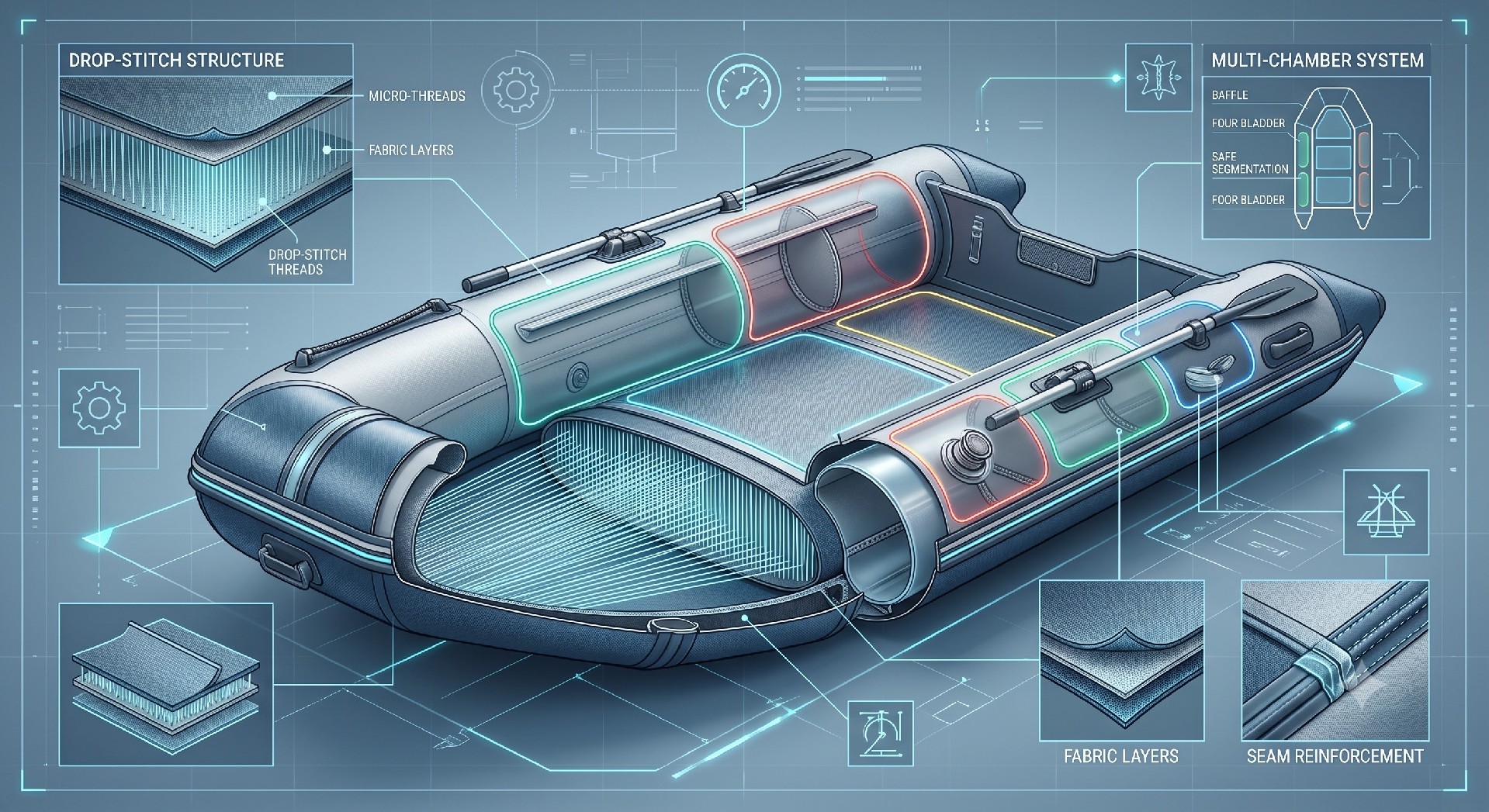
Material Science and Fabric Engineering
The foundation of any commercial-grade inflatable boat is its fabric. The choice of material directly impacts the vessel's lifespan, puncture resistance, and overall total cost of ownership (TCO). For slow-moving river applications, where abrasion from sandy beaches and debris is common, material selection is paramount.
PVC vs. Hypalon/Nitrilon
While both materials are used in the industry, they offer distinct advantages. High-grade PVC, often used with a polyester scrim, offers excellent stiffness and is more cost-effective, making it a popular choice for rental fleets. However, premium materials like Hypalon or Gumotex's proprietary Nitrilon are renowned for superior UV and chemical resistance, as seen in the Gumotex Palava which is constructed from 'super tough Nitrilon fabric' and is rated for moving water up to Grade 2 . For B2B buyers, this translates to a longer lifespan in harsh, sunny environments. A key metric is the denier count of the fabric; for heavy-duty use, a 1100D (Denier) reinforced PVC is a benchmark for exceptional abrasion resistance.
Drop-Stitch Technology and Rigidity
For slow-moving rivers, a rigid floor significantly improves handling and paddling efficiency. Drop-stitch technology, where thousands of high-tenacity threads connect the top and bottom fabric layers, allows for high-pressure inflation. This creates a floor stiff enough to stand on, a feature critical for fishing or boarding operations. For example, the high-pressure drop-stitch floor in models like the Blackfoot Angler 160HB is 'stiff enough to stand on without flexing under the weight of angler and gear' . Typical operating pressures for these floors range from 10 to 15 PSI, providing a hard-shell-like platform.
Technical Specifications and Industry Compliance
When evaluating suppliers, these key technical specifications and compliance standards must be non-negotiable in your B2B sourcing checklist.
| Key Parameter | Technical Specification |
|---|---|
| Primary Material | e.g., 0.9mm / 1100D Reinforced PVC or Nitrilon® / Hypalon |
| Maximum Payload | e.g., 240 kg (529 lbs) to 400 kg (882 lbs) |
| Inflation Pressure (Floor) | e.g., 10 - 15 PSI (High-Pressure Drop-Stitch) |
| Industry Compliance | CE Certified, EN71, ISO 6185, REACH Compliant |
| Chamber Count | Minimum 3+ Independent Air Chambers |
| Number of Persons | 2 to 4, depending on model |
Commercial Considerations: ROI and Operational Efficiency
Beyond raw materials, the commercial viability of your fleet depends on operational efficiency, storage, and regulatory compliance. The U.S. National Park Service mandates that all inflatable vessels must carry a patch kit and pump, and operators must 'Know how to use patch kit' . This underscores the need for B2B suppliers to provide comprehensive maintenance training and robust repair kits.
Portability and Storage
A primary driver for choosing inflatables is their logistical advantage. The ability to deflate and pack a boat into a dry bag or rucksack allows for easy transport and off-season storage, significantly reducing warehousing costs. The Gumotex Palava, for instance, 'packs down into the dry bag / Rucksack and goes in the back of your car ready for the next adventure,' and is portable enough for overland travel .
Fleet Durability and Maintenance
In a rental or commercial setting, downtime equals lost revenue. Products built with commercial-grade materials and multi-chamber safety ensure high uptime. The reliance on advanced features like frame seats that double as camp chairs adds value for high-end glamping and guided tour operations . Adherence to standards like REACH and EN71 ensures your equipment is safe for end-users and meets global regulatory standards.
[IMAGE_2]
Conclusion: A Data-Driven Sourcing Strategy
Selecting an inflatable boat for slow-moving rivers requires a balance of material science, engineering precision, and commercial acumen. By prioritizing key metrics such as fabric denier, drop-stitch PSI, and CE/ISO compliance, B2B buyers can secure a fleet that minimizes total cost of ownership while maximizing guest satisfaction and operational safety. Invest in the technical due diligence now to secure a profitable and reliable asset for years to come.
