

Introduction: The Post-Trip Maintenance Gap in B2B Procurement
For commercial outfitters, glamping resorts, and rental fleets, a sleeping bag is not just equipment—it is a depreciating asset. The single most critical variable determining the 10-year total cost of ownership (TCO) is not the initial fill power or fabric denier, but the post-trip care protocol. Neglecting proper cleaning and storage is the primary driver of premature insulation failure, leading to customer complaints about cold spots and a 30-40% reduction in usable lifespan . This guide provides a data-driven framework for institutional-grade sleeping bag maintenance, extending ROI and ensuring compliance with hygiene standards.
Understanding the Commercial Stakes: Down vs. Synthetic Insulation
From a product lifecycle perspective, the insulation type dictates the maintenance regimen. Down insulation offers the highest warmth-to-weight ratio and superior compressibility. However, down is a natural protein fiber; it is highly susceptible to degradation from body oils and requires strict, solvent-free cleaning protocols to preserve its natural loft . Synthetic insulation, while more forgiving and quick-drying, is prone to permanent crush damage if stored compressed for extended periods, which is a common error in high-turnover storage facilities . For a B2B fleet, the choice often hinges on the operational capacity for specific care routines.
Post-Trip Protocol: The First 24 Hours
Immediate Airing and Moisture Management
Regardless of fill, the immediate post-trip priority is moisture elimination. Human perspiration saturates the microclimate within the bag. Failing to air a bag immediately after use can lead to mildew formation and a permanent loss of loft within 48 hours . It is imperative to turn the bag inside out and hang it in a shaded, well-ventilated area for 6-8 hours. Direct sunlight must be avoided, as UV radiation degrades nylon shell fabrics, reducing tensile strength .
Field Spot-Cleaning vs. Full Wash Cycles
Full washes are mechanically stressful. For commercial fleets, a rule of thumb is to minimize full wash frequency to once or twice per season, or whenever visible grime or loss of loft is detected . High-friction areas (hood, zipper draft tube, foot box) should be treated with a spot-cleaning regimen using a soft brush and mild, non-detergent soap to remove surface oils. This preserves the integrity of the Durable Water Repellent (DWR) shell and the internal baffles.
The Technical Wash Cycle: Specs for Commercial Machinery
When a full wash is unavoidable, the process must be industrial-grade but gentle. Commercial operations must avoid household top-loading machines with agitators, which can tear internal baffles and shift insulation unevenly .
Machine Specifications:
Equipment: Large-capacity front-loading or commercial washers.
Detergent: Use only technical soaps (e.g., Nikwax Tech Wash for synthetics, Down Wash for down). Never use standard detergents, which strip natural oils from feathers and leave residues that inhibit loft .
Cycle Settings: Cold to lukewarm water (<40°C). Delicate cycle.
Rinse Cycle: A minimum of two extra rinse cycles is critical to remove all soap residue.
Hand Washing Protocol for Delicate High-Fill Bags:
For high-value down bags, hand-washing in a tub is the gold standard. Soak the bag in lukewarm water with down wash. Gently knead to work the solution through the insulation. Do not wring or lift the bag by the fabric when wet, as a soaking wet down bag can weigh upwards of 10-15 kg, and improper lifting can rip the internal baffles . Support the entire weight with your arms underneath.
| Maintenance Parameter | Technical Specification / Procedure | Commercial Impact |
|---|---|---|
| Washing Equipment | Front-loading washer (no agitator) / Hand wash in tub | Prevents internal baffle damage, extending lifespan |
| Wash Temperature | Cold to lukewarm (<40°C) | Preserves DWR coating and prevents fiber melt |
| Detergent Type | Technical wash (e.g., Nikwax) - specific to Down or Synthetic | Removes oils without stripping insulation; maintains loft |
| Drying Temperature | Low to Medium Heat | Prevents fabric melt and damage to insulation structure |
| Drying Aids | 2-3 Clean Tennis Balls | Crucial for breaking down clumps and restoring loft |
| Long-term Storage | Large breathable sack / Hanging in a cool, dry place | Prevents permanent compression damage; ensures decades of service life |
Drying: The Make-or-Break Phase
Inadequate drying is arguably the leading cause of sleeping bag failure in rental operations. Insulation that is even slightly damp will clump, resulting in cold spots and eventual mildew .
Commercial Drying Specs:
Equipment: Commercial tumble dryer (large drum).
Heat: Low to medium heat. Do not use high heat, as it can melt synthetic fibers or the nylon shell .
Agitation: Add 2-3 clean tennis balls or dryer balls. These are not optional; they are essential for mechanically breaking down clumps and restoring loft by fluffing the fill .
Duration: 2-4 hours for down, checking and fluffing manually every 20-30 minutes. Synthetic bags dry faster but require the same diligence. Before storing, the bag must be 100% bone dry .
Storage Strategy: Maximizing Long-Term Loft
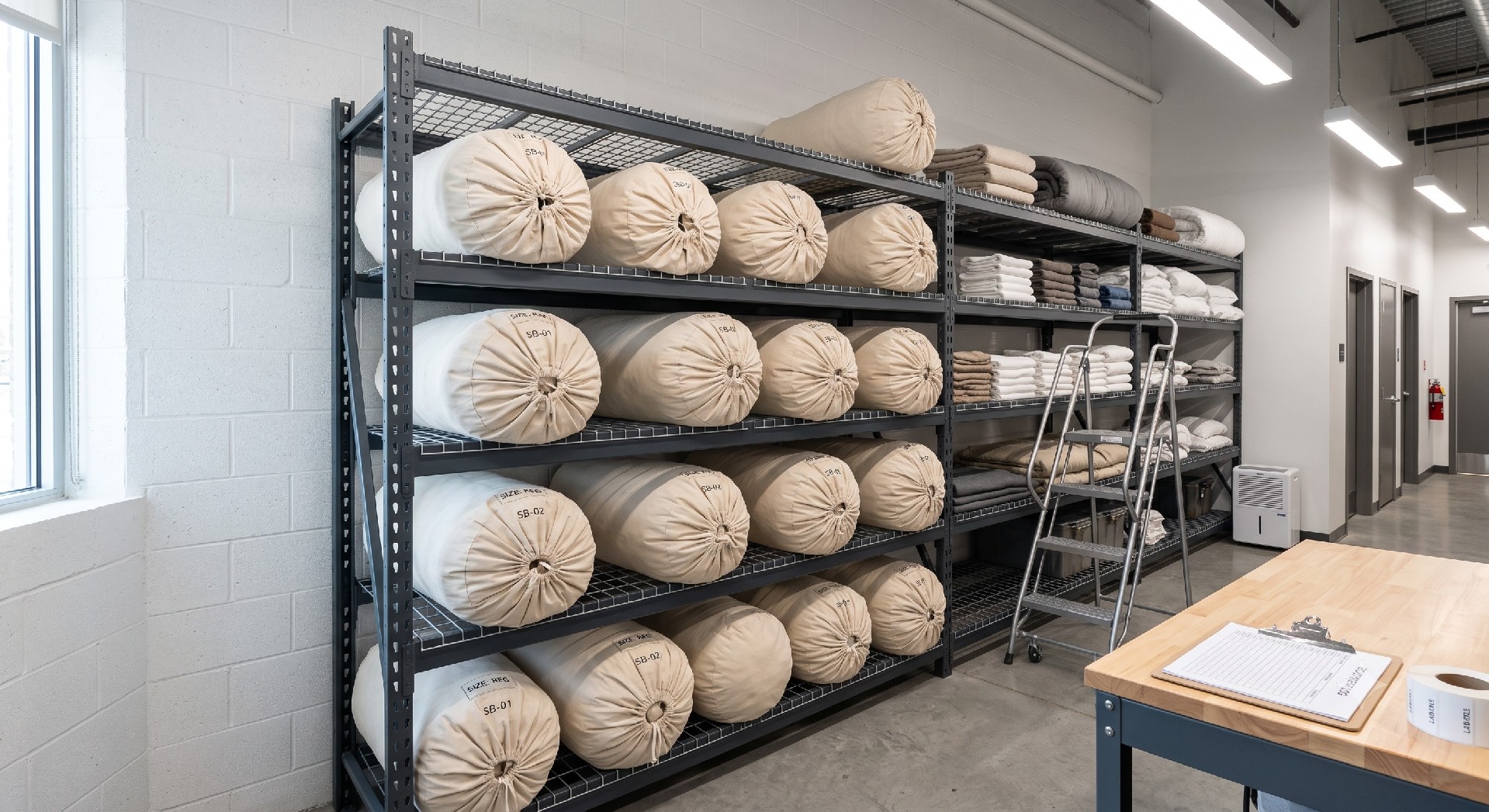
The definitive rule for B2B storage: Never store sleeping bags in their small stuff or compression sacks. Prolonged compression permanently deforms the insulation clusters, reducing loft and thermal efficiency .
Long-Term Storage Specifications:
Container: Large, breathable cotton or mesh storage sacks. These allow air circulation while preventing dust accumulation.
Environment: Cool, dry, and temperature-controlled. Avoid garages, basements, and attics prone to humidity and temperature swings .
Alternative: Hang the bag on a wide, padded hanger in a closet to maintain loft without creasing .
For glamping and resort applications, investing in higher-quality storage sacks and climate-controlled storage spaces reduces replacement frequency, directly impacting the bottom line. This structured maintenance approach extends the service life of a premium sleeping bag from 5 years to 15+ years, delivering a substantial ROI for commercial buyers.
[IMAGE_2]
Conclusion: A Strategic Asset
In the outdoor rental economy, the sleeping bag is the highest-touch piece of gear. Viewing aftercare not as a chore, but as a critical asset management strategy, is the hallmark of successful operators. By implementing rigorous cleaning, drying, and storage protocols, businesses can reduce operational costs by up to 40% over a decade, enhance customer experience, and ensure the longevity of their inventory. For procurement specialists, specifying durable shells (e.g., reinforced ripstop nylon) and requiring manufacturers to provide clear, industrial-grade care labels is non-negotiable for long-term profitability.
