

Introduction: The Commercial Buyer’s Dilemma
In the demanding world of commercial marine operations, sourcing the right hardware is a critical business decision. Fleet managers and procurement officers face a constant struggle: balancing upfront costs against long-term durability, corrosion resistance, and total cost of ownership (TCO). The choice of Aluminum Alloy Accessories for Commercial Boats directly impacts vessel safety, maintenance schedules, and operational efficiency. This guide provides a technical deep dive into material science, manufacturing standards, and financial justification to empower you to make the best B2B purchasing decisions for your fleet.
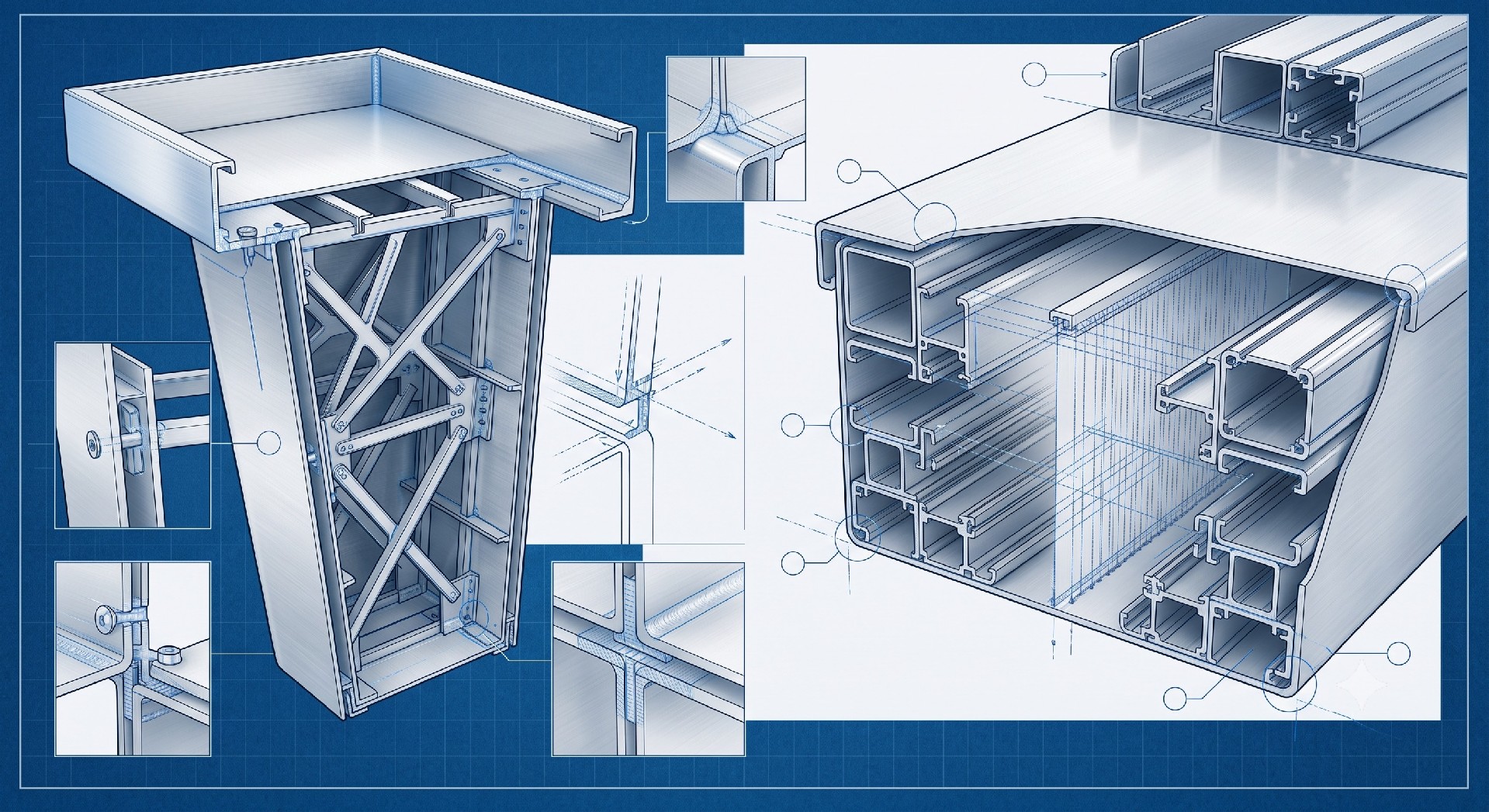
Material Deep Dive: Why 5000 and 6000 Series Alloys Dominate
Not all aluminum is created equal. For commercial marine applications, the alloy series dictates performance. The two primary workhorses are the 5000 series (like 5083) and the 6000 series (like 6061-T6).
5000 Series (Magnesium-Alloyed)
Known for exceptional corrosion resistance, particularly in saltwater environments, and high strength. It is the benchmark for hulls and structural components exposed to continuous immersion.
6000 Series (Magnesium-Silicon-Alloyed)
Offers a high strength-to-weight ratio and excellent extrusion characteristics. It is frequently used for rails, hatches, and hardware where complex shaping is required.
When sourcing accessories like rub rails, cleats, or hatch covers, verifying the alloy is the first step in ensuring ROI. For instance, a trim tab made of 6005-T5 aluminum offers the equivalent strength to 10-gauge stainless steel but with significant weight savings and corrosion resistance.
Weld Engineering and Fabrication Quality
The failure point of many metal accessories is often the weld. For commercial-grade components, look for heat-welded seams and structural integrity. In high-stress applications like hatch covers for crew supply vessels, the use of thicker dog arms and hidden hinges (often found on ABS Certified components) ensures superior strength over time. Similarly, for load-bearing equipment like transom support plates, die-cast construction from 1060 alloy provides consistent quality and distributes mounting stress over a wider area to prevent hull cracks.
| Key Parameter | Technical Specification |
|---|---|
| Material & Alloy | 6061-T6 / 5083 Marine-Grade Aluminum |
| Strength (Yield) | 276 MPa (6061) / 230 MPa (5083) |
| Corrosion Resistance (Salt Spray) | 500 to 1000+ hrs (ASTM B117) |
| Load Capacity | Up to 500kg per unit (varies by accessory) |
| Compliance | CE, ISO 6185, REACH, ABS Certified |
Surface Treatment and Corrosion Resistance (CE, ISO, ASTM)
In the marine environment, corrosion is the primary enemy. Beyond the alloy itself, surface treatments are critical. Anodized or powder-coated finishes provide a barrier against saltwater and UV degradation.
When evaluating suppliers, demand compliance with international standards. ASTM B117 (salt spray testing) is a key metric. Premium components offer corrosion resistance up to 1000 hours or more in salt spray tests, compared to the industry standard of 200-500 hours. Compliance with CE, ISO 6185, and REACH regulations is non-negotiable for distribution in regulated markets, confirming that the material composition is free from hazardous substances and meets structural safety benchmarks.
Commercial Use Cases: From Fishing Vessels to Glamping Resorts
Whether you are outfitting a fleet of aluminum fishing boats for high-seas work or constructing floating pontoon docks for a luxury glamping resort, the hardware must be tailored to the environment.
High-Traffic Hatches: Quick-acting 4-dog hatches with over-center auto-stops are ideal for workboats where speed and positive engagement are visually verifiable.
Load-Bearing Hardware: Pile guides and dock accessories with a load capacity of up to 500 kg per segment are essential for commercial marinas handling heavy foot traffic or tidal fluctuations.
Lightweight Rigging: Large aluminum cam cleats with protective tooth designs reduce line wear and are rated for maximum loads up to 2.2 kN (approximately 500 lbs), crucial for rescue and safety applications.
[IMAGE_2]
Sourcing Strategy: Total Cost of Ownership (TCO)
When comparing quotes, look beyond the unit price. Calculate the TCO based on material quality and maintenance cycles. Cheaper, lower-grade accessories (e.g., 5052 alloy) may save 20% on initial procurement but require more frequent replacement due to lower yield strength (130 MPa vs. 276 MPa for 6061). Investing in reinforced 6061 or 5083 accessories ensures a longer lifespan, reducing downtime and logistical costs for your commercial fleet.
Conclusion
Sourcing Aluminum Alloy Accessories for Commercial Boats requires a balance of engineering knowledge and commercial strategy. By prioritizing corrosion resistance, fabrication quality, and certified standards, B2B buyers can secure hardware that not only performs in extreme marine environments but also maximizes the long-term profitability of their fleet. Use the technical specifications and alloy data provided in this guide to drive your procurement negotiations and ensure you are getting the commercial-grade durability your operations require.
