

The Commercial Imperative: Why Valve Reliability is Non-Negotiable
For B2B fleet operators, rental businesses, and resort outfitters, an inflatable kayak's air pressure valve isn't just a component—it is the critical interface that determines operational safety, fleet profitability, and brand reputation. A valve failure doesn't merely cause downtime; it represents a potential catastrophic safety event. This is why commercial-grade inflatable kayaks utilize sophisticated valve systems designed to perform under extreme conditions of temperature fluctuation, UV exposure, and rigorous daily inflation cycles. In this technical analysis, we dissect the engineering, materials, and compliance standards that separate durable, high-performing valves from substandard alternatives, providing procurement managers with the data needed to make informed sourcing decisions.
Material Science and Compliance Standards: The First Line of Defense
The safety architecture of an inflatable kayak begins with its valve material integrity. Valves must withstand harsh marine environments, including saltwater corrosion, UV degradation, and physical impact. Premium valves are constructed using high-grade stainless steel cores or corrosion-resistant engineered plastics. For example, advanced models integrate a stainless steel core that offers up to 40% more corrosion resistance than plastic-only alternatives, ensuring longevity even in ocean waters . This is particularly crucial for Class E devices as defined by ISO 25649-7:2024—inflatable boats with a length between 1.2 and 2.5 meters and a buoyancy of less than 1,800 N, intended for use in protected shore zones .
Certifications as a Benchmark for Quality
Sourcing managers must verify that valve components meet rigorous international standards. Look for CE marking, compliance with EN ISO 6185 for inflatable boats, and evidence of REACH and RoHS material safety testing . Additionally, environmental certifications such as EPR France Packing and EPR Germany Packing indicate adherence to strict European recycling and waste management standards, a critical factor for brands targeting EU markets . These certifications are not just paperwork; they are a manufacturer's commitment to traceable material quality and engineering rigor.
Critical Technical Specifications: PSI, Drop-Stitch, and Air Retention
The operational safety of an inflatable kayak is directly linked to its ability to maintain stable internal pressure. This is where precision-engineered valves, such as Halkey Roberts or Leafield military-style valves, become essential. Unlike the simple Boston valves often found on budget models, these are designed for higher pressures and are necessary for rigid drop-stitch floors . Drop-stitch technology allows inflatable kayaks to achieve remarkable rigidity and high pressure, mimicking the performance of hard-shell kayaks. However, this also places immense stress on the valve system.
In a commercial setting, pressure stability translates to safety and performance. For instance, many high-quality kayaks operate within the 0.1 bar to 0.3 bar (1.5 PSI to 4.3 PSI) range, with some drop-stitch floors exceeding this . The valve system must be capable of securely maintaining these pressures. A comprehensive pressure hold test, where a kayak is inflated and monitored for a minimum of 24 to 72 hours, is a standard quality assurance metric in top manufacturing facilities .
| Key Parameter | Technical Specification |
|---|---|
| Material Thickness | 0.9mm - 1.2mm / 1000D - 1100D Reinforced PVC or Marine-Grade Hypalon |
| Maximum Payload | 230 kg - 400 kg (507 lbs - 880 lbs) |
| Inflation Pressure | 0.1 bar - 0.3 bar (1.5 PSI - 4.3 PSI) for main chambers, higher for drop-stitch floors |
| Valve Material | Corrosion-resistant Stainless Steel or High-Grade Engineered Plastic |
| Certifications | CE, ISO 6185, REACH, RoHS, EPR France/Germany Packing |
Pressure Relief Valves (PRVs): The Over-Inflation Safety Net
Perhaps the most critical safety feature in a commercial-grade inflatable kayak is the Pressure Relief Valve (PRV). Without a PRV, an inflatable kayak left in direct sunlight can experience a dangerous pressure buildup as the internal air expands. This can lead to seam failure, hull rupture, or, in extreme cases, an explosion . PRVs are pre-set to open at a specific pressure, venting excess air to protect the vessel's structural integrity.
Engineering Precision in Pressure Management
Advanced systems, such as those found on the Pelican iESCAPE 110, automatically release excess pressure when the kayak's internal environment exceeds a predetermined threshold due to temperature changes or prolonged sunlight exposure . Some models offer user-adjustable or closable PRVs, allowing operators to lock in pressure for optimal rigidity and open them post-use to facilitate storage . The inclusion of PRVs is a key indicator of a product's suitability for high-throughput rental environments where equipment is frequently exposed to varying temperatures and rapid inflation-deflation cycles.
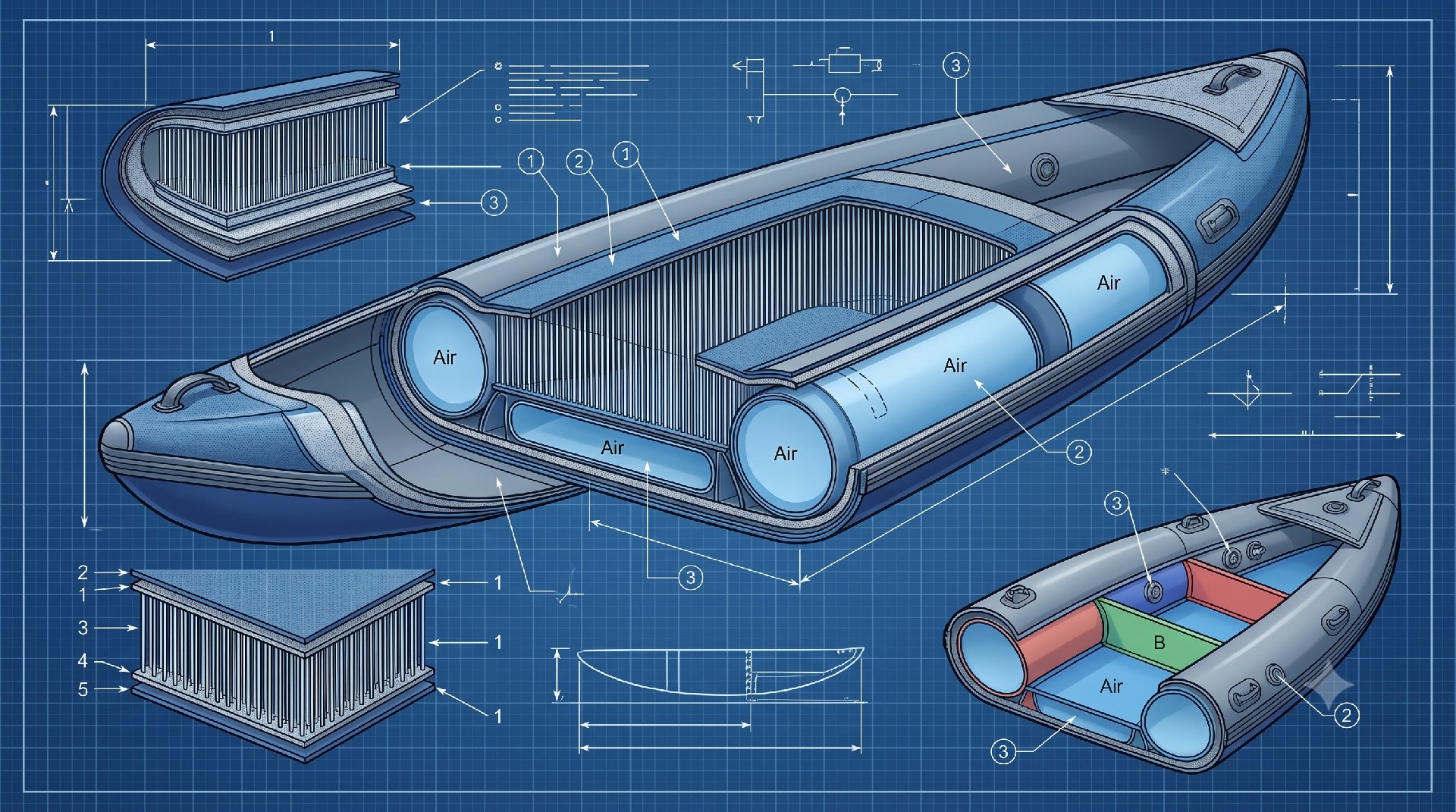
Multi-chamber safety is a related critical design element. A kayak with three or more independent air chambers ensures that even if one chamber is compromised due to puncture or valve failure, the remaining chambers provide sufficient buoyancy for a safe return to shore . This redundancy is a fundamental requirement for commercial fleets and aligns with the safety objectives of ISO 25649-7 for Class E devices .
[IMAGE_2]
B2B Sourcing Strategy: Beyond the Price Tag
For procurement specialists, selecting the right inflatable kayak supplier requires a deep dive into their production capabilities and quality assurance processes. High-volume manufacturers in regions like Zhejiang, Jiangsu, and Guangdong offer integrated supply chains, in-house material processing, and advanced RF welding lines that are critical for producing durable, airtight products .
Key Supplier Performance Metrics
Evaluate potential partners using a data-driven approach. Key Performance Indicators (KPIs) such as On-Time Delivery (target ≥94%), Response Time (≤3 hours), and Reorder Rate (≥15%) provide quantifiable evidence of a supplier's reliability . Leading suppliers boast certifications and documented testing protocols for seam strength, air retention, and puncture resistance. For instance, documented evidence of pressure hold tests at 18+ PSI for 48 hours demonstrates a commitment to quality that directly impacts fleet durability and safety . Furthermore, top-tier suppliers such as Ningbo Hot Wind Plastic Technology Co., Ltd. offer CE-certified products and maintain dedicated R&D departments for continuous product innovation .
By prioritizing suppliers who demonstrate excellence in these areas, B2B buyers can ensure that their fleet's air pressure valves—and the kayaks they serve—are engineered for extreme durability, compliance, and reliable performance, thereby protecting both their investment and their end-users.
