

Introduction: The Critical Imperative of Compliance in Commercial Water Parks
In the commercial water park industry, safety is not merely a feature—it is the foundational pillar upon which successful businesses are built. For B2B buyers, procurement managers, and resort developers, navigating the landscape of regulatory standards such as CE, EN71, and ISO 6185 is essential to mitigate liability, ensure guest safety, and maximize operational ROI. This masterclass delves into the engineering specifications and compliance requirements that define the highest grade of commercial water park equipment, from material science to structural integrity.
As global standards evolve, including the upcoming revision of GB/T 18168 for water amusement equipment, staying ahead of compliance is a competitive advantage . . This guide provides a data-driven analysis of the key features that guarantee a safe and profitable investment.
Understanding the Regulatory Framework: From CE to ISO
Compliance with international standards is the first filter for commercial-grade equipment. It assures operators that the equipment has undergone rigorous testing for safety and durability.
CE Certification & European Norms
The CE mark is a mandatory conformity indicator for products sold within the European Economic Area. For water parks, compliance with EN 17232 is critical, as it specifies safety requirements and test methods for water play equipment and features . While CE certification demonstrates a baseline for safety, leading manufacturers achieve TUV certification against EN ISO 25649, which covers floating leisure articles and represents a higher level of quality and safety assurance. This certification is often instrumental in securing operating licenses and comprehensive insurance coverage .
ISO Standards for Floating and Static Structures
ISO 6185 and EN ISO 25649 are specific to inflatable boats and floating leisure articles, outlining stringent requirements for buoyancy, stability, and material strength. Compliance with these standards ensures that inflatable water parks can maintain structural integrity and stability in varying water conditions, supporting the specified number of users without compromising safety.
National Standards (e.g., GB/T 18168)
In key markets like China, compliance with GB/T 18168 (Water Amusement Equipment General Technical Conditions) is non-negotiable. This standard dictates design, manufacturing, installation, and operational requirements for water amusement facilities, ensuring they meet local regulatory expectations. The standard is currently under revision to further enhance safety protocols .
Material Science and Structural Engineering
The choice of materials and manufacturing processes directly impacts the lifespan and safety of commercial water park equipment. Data-driven specifications are key to evaluating supplier quality.
Commercial-Grade Fabric and Reinforcement
The primary material for inflatable parks is PVC or TPU-coated fabric. For commercial use, a thickness of 0.9mm to 1.0mm reinforced PVC is the industry benchmark . High-denier fabrics (e.g., 1100D) offer superior abrasion and puncture resistance. For static fiberglass slides, the use of INEOS fiberglass with AOC resin ensures high strength-to-weight ratios and UV stability for decades of use.
Drop-Stitch Core Physics and Air Retention
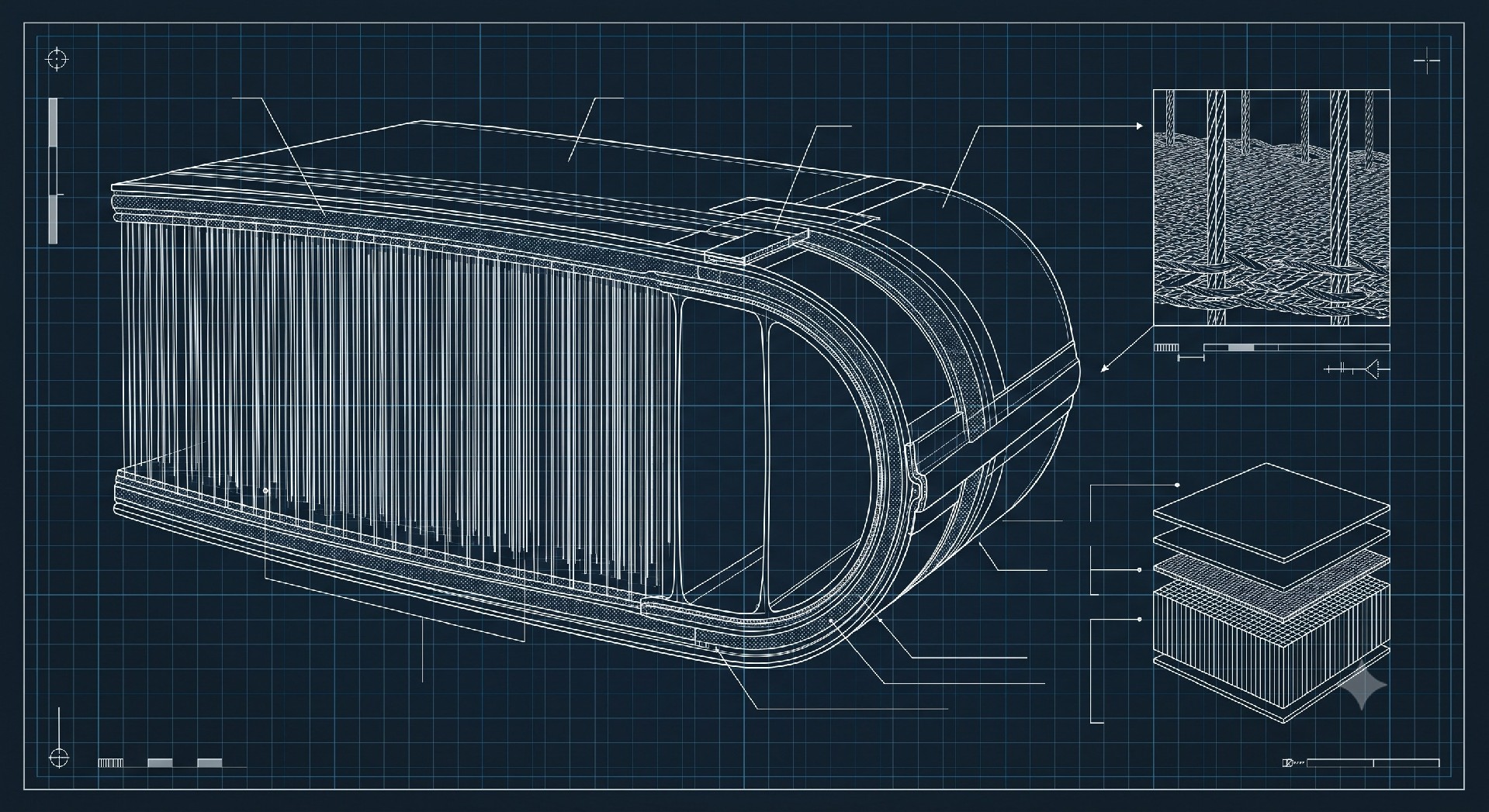
High-performance inflatables utilize drop-stitch technology, where thousands of threads connect the top and bottom layers of the fabric. This structure allows for high inflation pressures—typically 7-15 PSI—creating a rigid, stable surface comparable to hard-shell alternatives. The integrity of the air retention system relies on heat-welded seams rather than hand gluing, which eliminates weak points and ensures reliable performance, especially in saltwater environments .
Critical Safety Features and Redundancy
Beyond structural materials, specific safety features are paramount to prevent accidents and ensure rapid response in emergencies.
Multi-Chamber Safety Systems
A key safety feature is the division of the structure into multiple independent air chambers. In the event of a puncture in one chamber, the remaining chambers maintain buoyancy and structural integrity, allowing for safe evacuation. This design redundancy is a standard requirement for commercial certification.
Non-Slip Surfaces and Soft Landing Zones
Wet environments are inherently hazardous. Commercial equipment must feature non-slip surfaces and, where applicable, soft landing zones to mitigate injury risks . Integrated handrails, secure D-ring and flap connection systems, and inflatable bumpers further reduce the risk of falls and collisions .
Guardrails and Safety Nets
For elevated slides and high-traffic areas, reinforced guardrails and safety nets are standard. Data from manufacturers suggests that advanced models with safety redundancy features can reduce accident risks by up to 40% in crowded environments .
| Key Parameter | Technical Specification |
|---|---|
| Material Thickness | 0.9mm - 1.0mm Commercial-Grade Reinforced PVC / TPU |
| Fabric Denier (Abrasion Resistance) | 1100D (Industry Standard for High-Durability) |
| Drop-Stitch Core Pressure (PSI) | 7-15 PSI (for rigid, stable surfaces) |
| Maximum Payload Capacity (Static Slides) | 100kg - 500kg+ per segment |
| Maximum Payload Capacity (Floating Parks) | Supports 20-30+ users simultaneously |
| Certification Standards | CE, EN 17232, EN ISO 25649, GB/T 18168 |
| Regulatory Compliance | REACH (for chemical safety), TUV Certified |
Technical Specifications & Performance Metrics
The following table provides a comparative overview of key technical specifications for commercial-grade water park equipment. These metrics are essential for B2B buyers to assess quality and compliance.
Commercial Implications: ROI and Operational Lifespan
Investing in compliant, high-spec equipment directly impacts the bottom line. High-quality materials (e.g., UV-resistant PVC) extend product lifespan by 30-50%, reducing replacement costs and downtime . Furthermore, CE or TUV certification simplifies the process of obtaining operational licenses and insurance, significantly reducing project risk. Features like rapid inflation systems and modular designs also enhance operational efficiency, accelerating turnaround times and maximizing revenue per square meter.
[IMAGE_2]
Conclusion: Making the Safe Investment
In the B2B commercial water park sector, cutting corners on safety is a false economy. By prioritizing equipment that meets CE, EN71, and ISO 6185 standards, with robust material specifications like 0.9mm reinforced PVC and drop-stitch technology, operators protect their guests and their brand reputation. As the regulatory landscape becomes more stringent, buyers must leverage detailed technical specifications as a primary evaluation criterion. This masterclass underscores that safety-first engineering is the ultimate driver of commercial success.
