

Introduction: The High Cost of Cutting Corners on Water Slide Raft Procurement
For B2B procurement managers, resort owners, and water park operators, the choice of water slide rafts is a critical financial decision. While the initial purchase price is a significant capital expenditure (CapEx), the long-term operational expenditure (OpEx) is where the true cost of ownership is revealed. Premium, long-lasting water slide rafts are not merely an expense; they are a strategic investment in operational efficiency, guest safety, and sustained profitability.
This guide provides a data-driven analysis of how high-quality, durable water slide rafts reduce operational costs. We will delve into material science, engineering specifications, and total cost of ownership (TCO) to demonstrate why the cheapest quote is often the most expensive choice in the long run. By understanding key metrics like drop-stitch PSI, PVC/Hypalon thickness, and payload capacity, you can make an informed sourcing decision that maximizes your ROI.
Material Science and Structural Engineering for Commercial Durability
The operational lifespan of a water slide raft is determined by its resistance to environmental stressors: UV radiation, abrasion, chemical exposure (chlorine/saltwater), and physical impact. Premium commercial-grade rafts are engineered to withstand these elements.
Comparative Material Analysis: PVC, Hypalon, and Drop-Stitch Construction
The choice of material defines the raft's durability, repairability, and performance.
Reinforced PVC (Polyvinyl Chloride): The industry standard for high-traffic commercial applications. Advanced manufacturing processes use commercial-grade 0.9mm to 1.2mm PVC with high-density denier fabric (e.g., 1100D) for tensile strength. For example, some suppliers offer models with a material thickness 30% greater than standard, providing superior puncture and abrasion resistance . UV-resistant coatings and anti-puncture linings are essential for longevity in outdoor environments.
Hypalon (CSM): A synthetic rubber known for its exceptional resistance to UV, ozone, and chemicals. While highly durable, it is generally more expensive and less common in standard inflatable water slides than PVC, often being reserved for high-end or specialized applications.
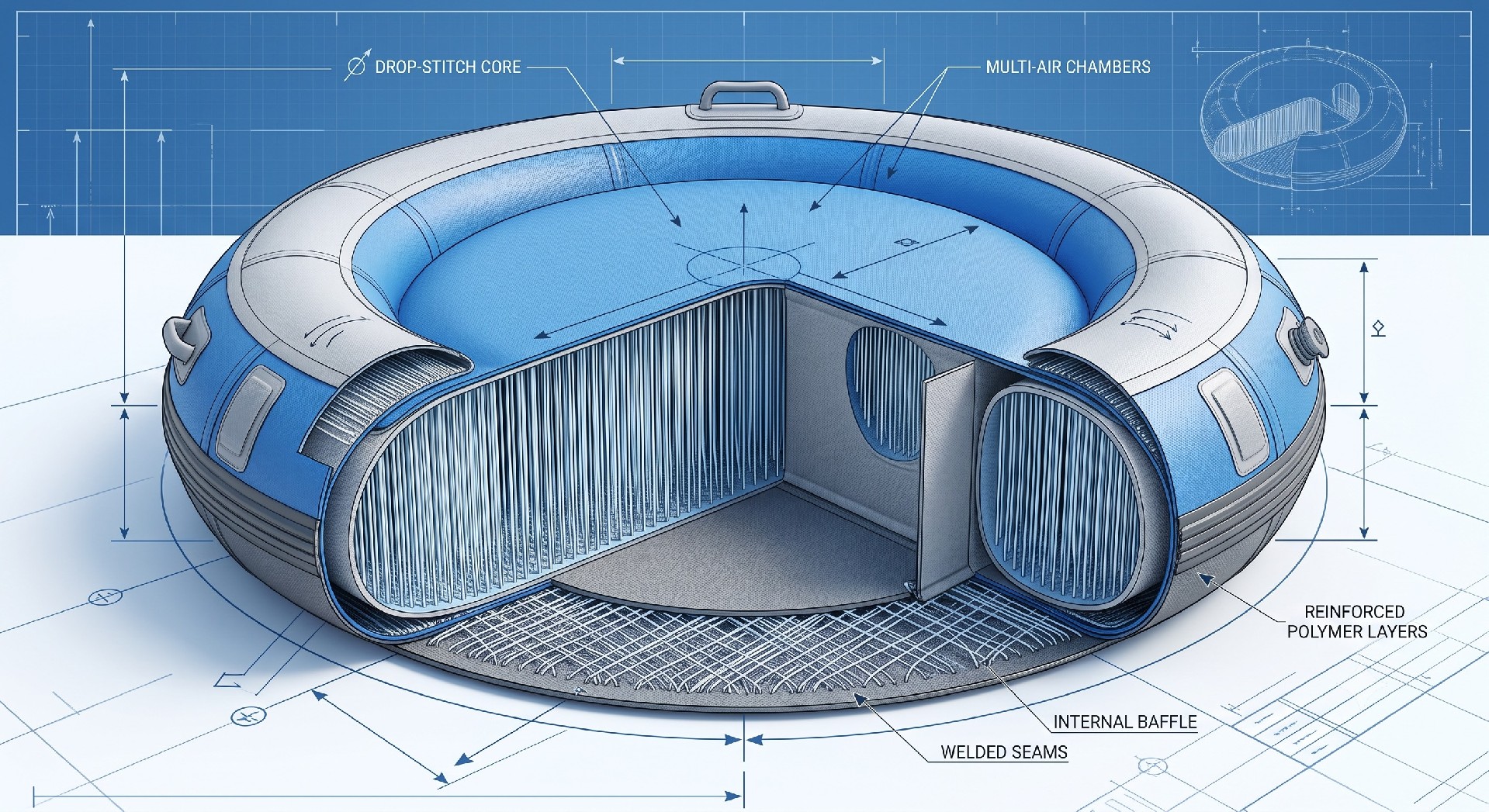
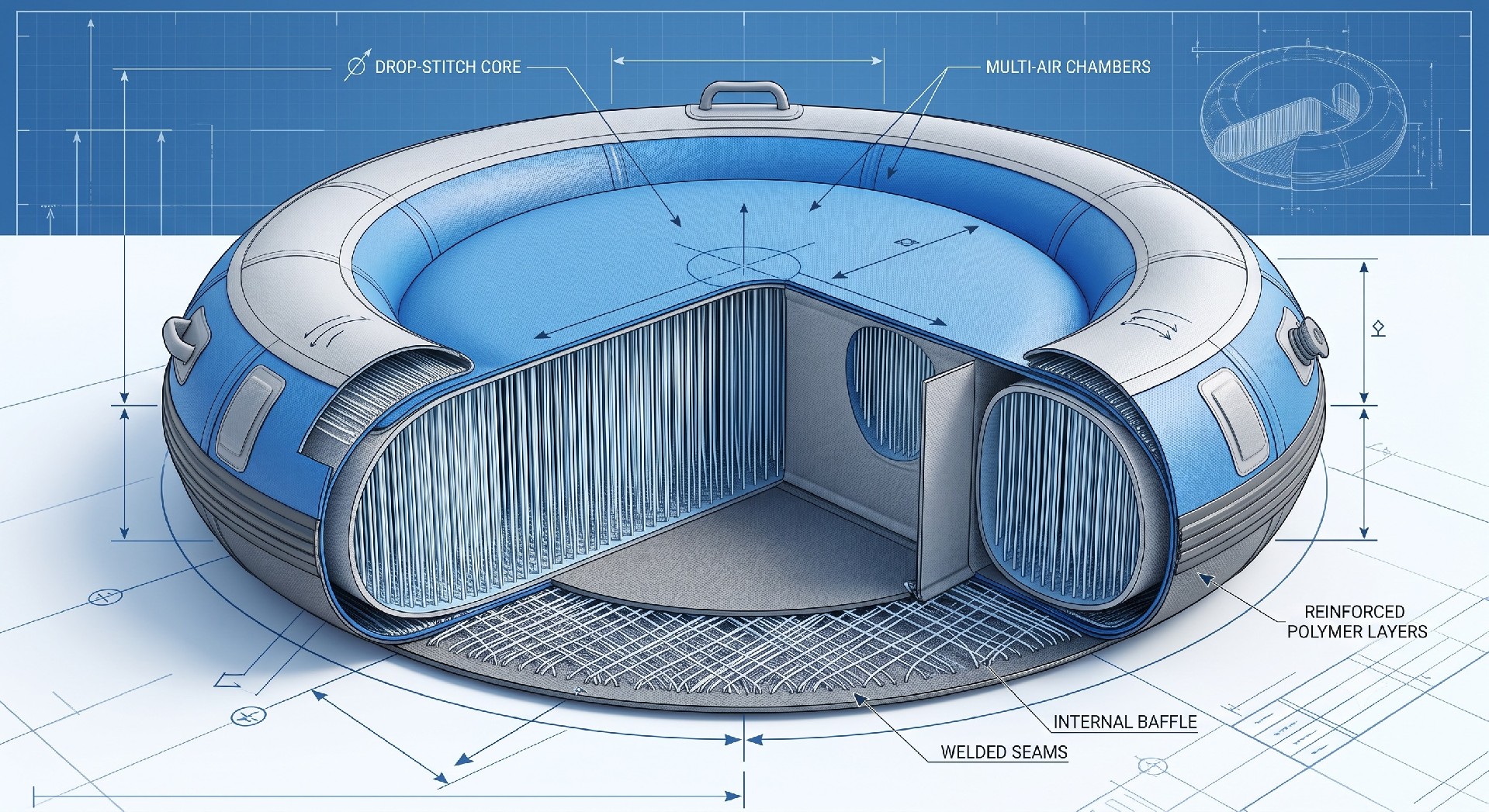
Drop-Stitch Technology: This construction method is a game-changer for water slide raft rigidity. It involves thousands of polyester threads connecting the top and bottom layers of the fabric. When inflated to high pressures (e.g., 8-10 PSI), it creates a stiff, rigid floor that significantly improves performance and responsiveness, a feature often found in high-performance whitewater rafts and premium commercial slides . This rigidity improves user experience and reduces structural flex that can lead to premature wear.
Seam Engineering: The Critical Failure Point
Seam integrity is paramount for air retention and structural strength.
High-Frequency (HF) Welding: This is the superior method for commercial-grade rafts. HF welding uses radio waves to fuse the PVC material at a molecular level, creating a seam that is often stronger than the surrounding material. It is the preferred technique for preventing leaks and delamination.
Glued Seams: While cheaper, glued seams are a primary failure point, especially under constant UV exposure and physical stress. As a B2B buyer, prioritize suppliers that utilize heat-welded seams with triple-layer reinforcement in high-tension zones .
Multi-Chamber Safety: Premium rafts are often designed with multiple independent air chambers. This ensures that if one chamber is compromised, the raft retains significant buoyancy, enhancing safety and allowing for a controlled exit from the water .
Technical Specifications and Industry Standards
To ensure you are procuring a safe and durable product, it is imperative to demand compliance with international standards and precise technical specifications.
Regulatory Compliance and Safety Certifications
Adherence to standards is non-negotiable. Key certifications include:
EN1069: The European standard for water slides, covering safety requirements and test methods.
ISO 6185: The international standard for inflatable boats and watercraft, which covers material specifications and buoyancy requirements.
ASTM F2374: The standard practice for the design, manufacture, operation, and maintenance of inflatable amusement devices, crucial for the US market .
CE Marking: Required for products sold in the European Economic Area, indicating conformity with health, safety, and environmental protection standards .
REACH: A European Union regulation concerning the Registration, Evaluation, Authorisation, and Restriction of Chemicals, ensuring materials are free from hazardous substances.
| Key Parameter | Technical Specification (Premium / Pro Model) |
|---|---|
| Material Thickness | 0.9mm - 1.2mm Reinforced PVC with UV-resistant coating |
| Maximum Payload Capacity | Up to 500 kg / 1,100 lbs (supports 4-6 riders) |
| Material Innovation | 30%-thicker PVC for prolonged UV exposure and abrasion resistance |
| Seam Construction | High-Frequency (HF) Welded Seams for superior strength |
| Drop-Stitch Floor PSI | 8-10 PSI for rigid, responsive performance |
| Safety Features | Multi-chamber design for emergency buoyancy and safety |
| Industry Standards | CE, EN1069, ISO 6185, ASTM F2374 compliant |
Commercial Application Scenarios and ROI
The transition to long-lasting, high-quality rafts has a quantifiable impact on the bottom line. Operators have reported that while premium units may have a higher upfront cost, they are 2.9x more cost-efficient on a per-rental basis over a five-year period .
Total Cost of Ownership (TCO) Analysis
A TCO analysis reveals the hidden costs of budget-tier equipment:
Repair & Maintenance: Budget rafts often require $7,500–$20,000 in cumulative repairs, downtime, and early replacement over five years, whereas premium units reduce this to $1,500–$6,700 .
Operational Lifespan: Premium commercial-grade rafts can sustain 300–1,000+ rental cycles and last 5–10+ years before replacement, compared to a significantly shorter lifespan for budget alternatives .
Utilization and Revenue: High-quality rafts command higher rental rates ($800–$1,500/day) compared to budget units ($300–$500/day), directly improving net profit per booking .
Case Scenarios: Resorts, Water Parks, and Rental Fleets
High-Throughput Water Parks: Rafts must withstand constant use and exposure to chemicals and UV. Premium materials and weld integrity ensure minimal operational downtime.
Resorts and Glamping: The aesthetics, rigidity, and comfort of premium rafts enhance the guest experience, justifying higher rental or attraction fees.
Rental Businesses: Investing in durable rafts accelerates break-even. While all equipment tiers break even within 28–35 rentals, premium units generate higher cumulative net profit over the long term .
Conclusion: A Strategic Investment for Sustainable Operations
Reducing operational costs in the water attractions industry is not about finding the cheapest equipment; it is about optimizing the lifecycle value of your assets. Procuring long-lasting water slide rafts with superior materials, advanced construction like drop-stitch technology, and robust safety certifications is a critical strategic move. By prioritizing quality and total cost of ownership over initial price, B2B buyers can significantly reduce repair costs, minimize downtime, and enhance guest satisfaction. This approach transforms a simple purchase into a long-term, high-return investment for your business.
