

Introduction: The Commercial Imperative for Extreme Durability in Water Parks
For B2B buyers and water park operators, the durability of inflatable equipment is not a matter of convenience but of commercial viability. The relentless cycle of sun exposure, chemical aggression, physical abrasion, and high-pressure demands of a commercial water park environment pushes equipment to its limits. The failure of a single water park tube can lead to costly downtime, customer safety risks, and a tarnished brand reputation. This guide focuses on the pivotal role of advanced heat-welding technology, specifically comparing Hot Air (Heat Bonding) and High Frequency (HF) welding, as the primary determinant of a tube's lifespan. We will delve into the engineering and material specifications that separate commercial-grade products from consumer-grade alternatives, providing a data-driven framework for sourcing decisions .
Understanding the Core Engineering: Material Science and Welding Technologies
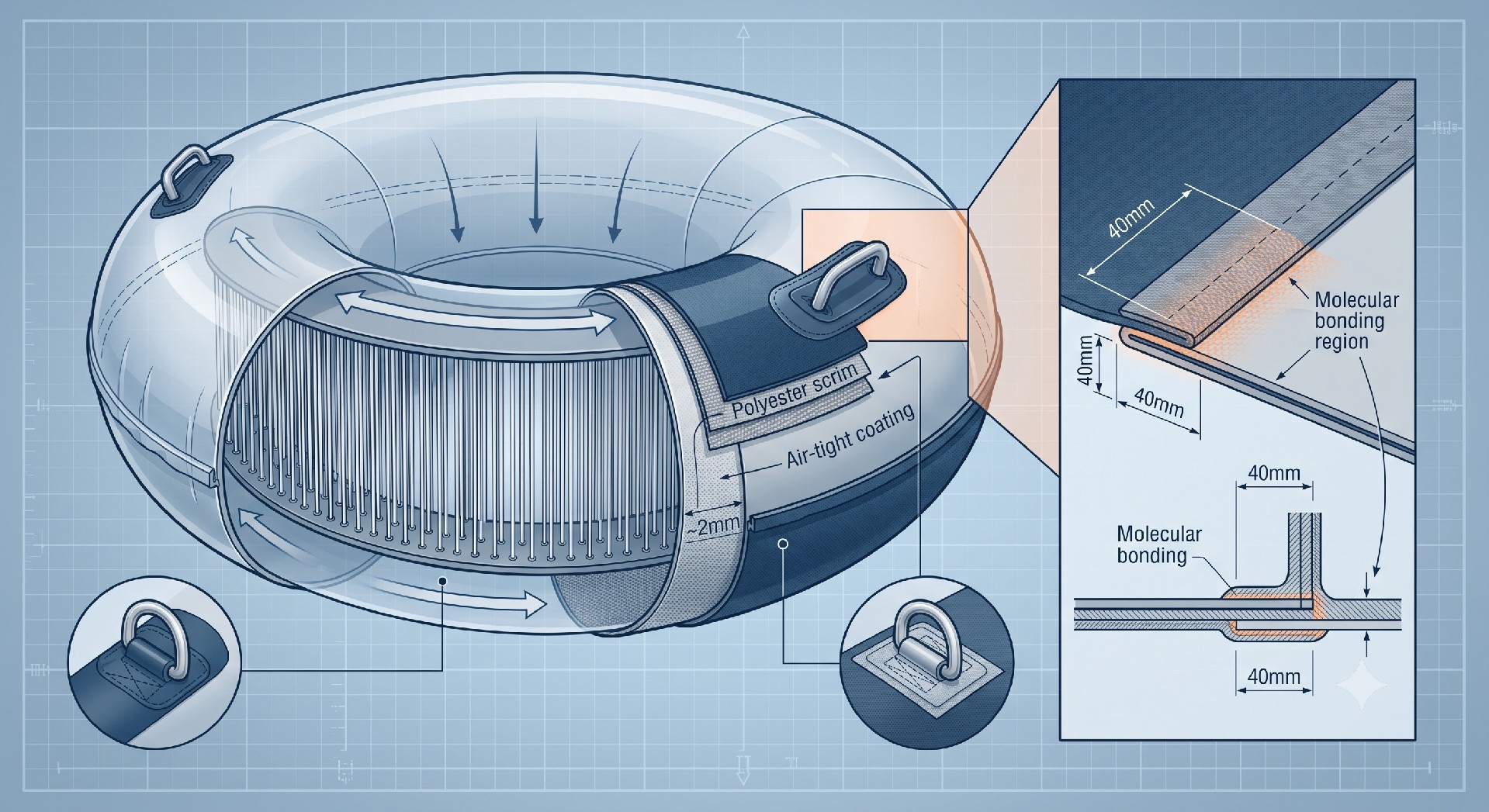
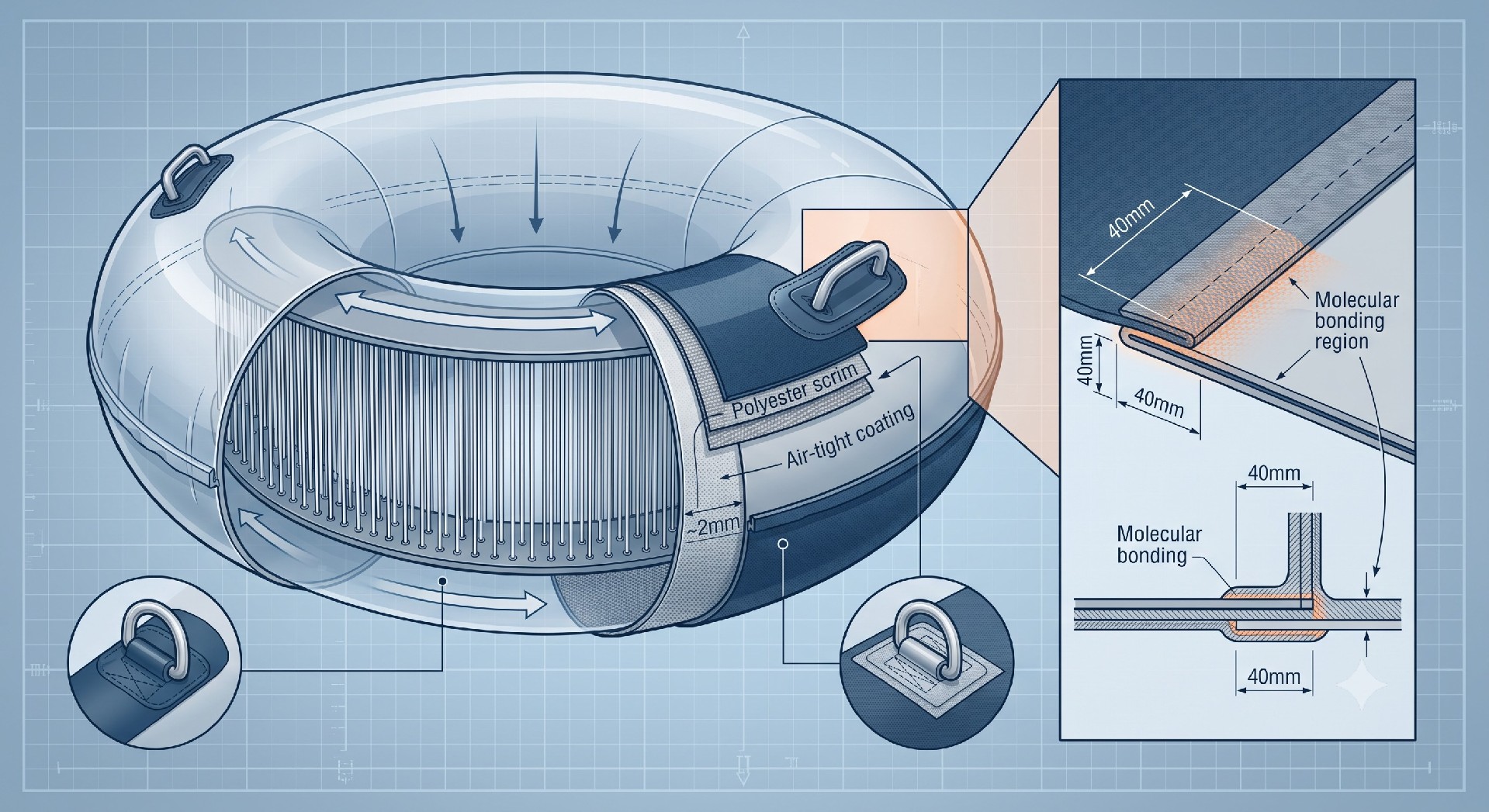
The foundation of any durable water park tube lies in its material composition and the method by which it is assembled. The primary materials are PVC (Polyvinyl Chloride) formulations, often characterized by their gauge (thickness) and denier count (fabric density). Commercial-grade tubes typically use a minimum of 0.9mm to 1.0mm (approximately 30 to 40 gauge) of reinforced PVC. This material is chosen for its inherent resistance to chemical degradation, abrasion, and UV light. However, the material alone is insufficient; the integrity of the seams is where the battle for durability is won or lost. Glued seams are a common failure point in lower-quality equipment, as adhesives degrade over time, especially when exposed to water and UV radiation. This is where heat-welding technologies become critical .
1. High Frequency (HF) Welding: The Industrial Workhorse
HF welding, also known as dielectric welding or radio-frequency welding, is an industrial, mass-production technology that uses high-frequency electromagnetic fields to generate heat directly within the PVC material itself . The tube's components are placed between two electrodes that emit a high-frequency field. This causes the polar molecules within the PVC to oscillate, generating heat and fusing the material under pressure.
Industrial Standard: HF welding is the most common and economical technology for mass-producing commercial inflatables .
Durability Performance: The weld created is extremely strong and durable, creating a homogenous bond that is often as strong as the parent material itself. This method is particularly effective for creating the complex shapes and multiple layers required in high-quality water park tubes.
Mass Production Benefit: Its suitability for high-volume, consistent production makes it a reliable choice for ensuring each unit meets stringent quality standards.
2. Hot Air (Heat Bonding) Welding: The Precision Artisan Approach
Hot air welding (or Heat Bonding) is a semi-automated technique that uses a stream of very hot air and pressure to melt and fuse the PVC material at the overlapping area of the sheets . This method is a blend of skilled craftsmanship and precision machinery, allowing for detailed control over the welding process.
Enhanced Performance: Hot air welding is often perceived as producing superior quality, particularly for applications requiring high strength and aesthetics. The smooth welds produced are not only visually appealing but also more comfortable for users, reducing the risk of abrasion .
Application Niche: This technology is often the preferred choice for high-end, custom, or limited-production runs where weld quality and finish are paramount .
Thickness Tolerance: It can be effectively applied to a wide range of material thicknesses, making it versatile for different tube designs.
Data-Driven Durability: Puncture Resistance, UV Defenses, and Load Metrics
To objectively evaluate durability, we must translate material and manufacturing choices into quantifiable performance metrics. The longevity of a water park tube is primarily determined by its resistance to physical damage and environmental degradation.
| Key Parameter | Technical Specification | Commercial Impact |
|---|---|---|
| Material Thickness | 0.9mm to 1.0mm (30-40 gauge) Reinforced PVC | Directly correlates with puncture resistance and load-bearing capacity. |
| Max Payload Capacity | Up to 200 kg per single tube | Determines the commercial application and revenue potential. |
| Welding Technology | High Frequency (HF) or Hot Air (Heat Bonding) | Ensures seam integrity, exceeding glued seams in chemical and UV resistance. |
| Safety Standards | CE, EN71, ISO 6185 Compliance | Mandatory for B2B sales and ensures guest safety and legal compliance. |
| Avg. Commercial Lifespan | 3-5+ seasons with proper maintenance | Key metric for calculating Total Cost of Ownership (TCO) and ROI. |
Puncture and Abrasion Resistance
The combination of thick, reinforced PVC (0.9mm to 1.0mm) with a robust, high-integrity weld is the primary defense against punctures and abrasion. Drop-stitch technology, while more common in high-pressure towables, also contributes to durability by maintaining a rigid shape that can better distribute impact forces. The use of 1100D reinforced PVC and robust construction techniques are directly correlated with higher resistance to tears and punctures .
UV and Chemical Resistance
Prolonged exposure to UV radiation and pool chemicals (like chlorine) is a relentless enemy of inflatable equipment. High-quality formulations are engineered with UV stabilizers and anti-aging agents to prevent the material from becoming brittle and cracking. This is often indicated by compliance with international safety and quality standards.
REACH Compliance: Ensures the PVC material is free from harmful substances and is safe for prolonged human contact.
CE & EN71 Certification: These standards, particularly EN71, are essential for children's products, confirming that the materials and construction are safe and durable .
Technical Specifications
The following table provides a comparative overview of the key technical specifications that define the durability and performance of heat-welded water park tubes. These metrics serve as critical benchmarks for B2B procurement and fleet management decisions.
| Key Parameter | Technical Specification | Commercial Impact |
|---|---|---|
| Material Thickness | 0.9mm to 1.0mm (30-40 gauge) Reinforced PVC | Directly correlates with puncture resistance and load-bearing capacity. |
| Max Payload Capacity | Up to 200 kg per single tube | Determines the commercial application and revenue potential. |
| Welding Technology | High Frequency (HF) or Hot Air (Heat Bonding) | Ensures seam integrity, exceeding glued seams in chemical and UV resistance. |
| Safety Standards | CE, EN71, ISO 6185 Compliance | Mandatory for B2B sales and ensures guest safety and legal compliance. |
| Avg. Commercial Lifespan | 3-5+ seasons with proper maintenance | Key metric for calculating Total Cost of Ownership (TCO) and ROI. |
Safety, Compliance, and Lifespan: Calculating True Total Cost of Ownership (TCO)
For B2B buyers, the initial purchase price is only one factor in the total cost of ownership. The durability provided by advanced welding technology directly impacts operational costs, safety, and revenue.
Safety: Multi-Chamber Design and ISO 6185 Compliance
Safety is paramount in commercial water parks. Multi-chamber designs are a critical safety feature, ensuring that if one air chamber is punctured, other chambers remain inflated, providing buoyancy and preventing a catastrophic failure. Reliable heat-welded seams on all chambers are essential for this safety mechanism to function. Compliance with standards like ISO 6185 (for inflatable boats) often serves as a benchmark for the rigorous testing of seams and overall durability, even for tubes, as it ensures a level of construction integrity appropriate for demanding aquatic environments .
Operational Lifespan and Fleet Management
Heat-welded seams, whether HF or Hot Air, exhibit significantly greater resistance to the stresses of a commercial environment compared to glued seams. The absence of a chemical adhesive that can degrade means the weld's strength is consistent over a longer period, often extending the useful life of a tube by multiple seasons. This reduces the frequency of replacements, minimizing downtime and ensuring a consistent, high-quality guest experience .
Conclusion: Making the Data-Driven Choice
For commercial water parks, the choice of water park tubes is a strategic investment. The data is clear: heat-welding technology, whether through the robust, industrial reliability of High Frequency welding or the precise, high-quality finish of Hot Air welding, is non-negotiable for maximizing durability and safety. When sourcing, prioritize tubes made from thick, reinforced PVC (0.9mm minimum) and ensure the manufacturer uses HF or Hot Air welding. Validate your choice by checking for compliance with REACH, CE, and EN71 standards. By focusing on these data-driven technical specifications and understanding the engineering principles behind the manufacturing, B2B buyers can significantly reduce operational risks, lower their total cost of ownership, and deliver a safer, more reliable product to their customers.
