

Introduction: The High-Stakes Reality of Commercial Water Toy Compliance
For B2B procurement managers, resort operators, and rental fleet owners, the safety certification of commercial water toys is not merely a regulatory hurdle—it is the bedrock of brand reputation, liability management, and operational longevity. In an industry where a single product failure can lead to injury, costly litigation, or a full-scale recall, understanding the engineering science behind certifications like CE, EN71, ISO 6185, and REACH is critical. This masterclass delves into the technical specifications, material science, and rigorous testing protocols that define a truly commercial-grade inflatable product, providing you with the data-driven insights needed to make high-stakes sourcing decisions.
Decoding the Regulatory Landscape: CE, ISO, and Beyond
Navigating the global regulatory environment is the first step in ensuring your inventory meets market access requirements and safety standards. While general toy safety standards like ASTM F963 and the Consumer Product Safety Improvement Act (CPSIA) set baseline requirements for children's products in the US, commercial water toys used in rental and resort settings face a more complex matrix of evaluations .
CE Marking & EN71 Standards
For the European market, the CE mark is mandatory, indicating compliance with health, safety, and environmental protection directives. The EN71 standard, specifically, governs the safety of toys and includes rigorous tests for mechanical and physical properties, flammability, and the migration of specific elements . For commercial water toys, this means stringent limits on phthalates and heavy metals (e.g., lead, mercury, cadmium) under the REACH regulation, ensuring that materials are non-toxic even with prolonged exposure to water and sunlight .
ISO 6185: The Standard for Inflatable Boats
For larger, more complex water toys that border on small watercraft, ISO 6185 becomes the critical standard. This specification outlines the minimum safety requirements for inflatable boats, covering aspects like buoyancy, stability, and construction. Unlike general toy standards, ISO 6185 focuses on the structural integrity needed to withstand marine environments and payloads, making it a key benchmark for commercial durability .
Material Science: The Foundation of Durability and Safety
The science of safety begins at the molecular level. The choice of material determines the product's resistance to punctures, UV degradation, and chemical leaching.
Reinforced PVC vs. Hypalon
While both materials are used in the industry, commercial-grade water toys predominantly rely on high-density, reinforced PVC (Polyvinyl Chloride) due to its superior cost-effectiveness and weldability. Leading suppliers utilize industrial-grade PVC tarpaulin with UV-resistant lamination, typically ranging from 0.45mm to 0.9mm in thickness . The denier count of the polyester scrim—often 1100D—is a key indicator of its tensile strength. In contrast, Hypalon (chlorosulfonated polyethylene) offers excellent UV and chemical resistance but is significantly more expensive and is often reserved for specialized, high-end commercial applications.
Drop-Stitch Technology: Engineering Rigidity
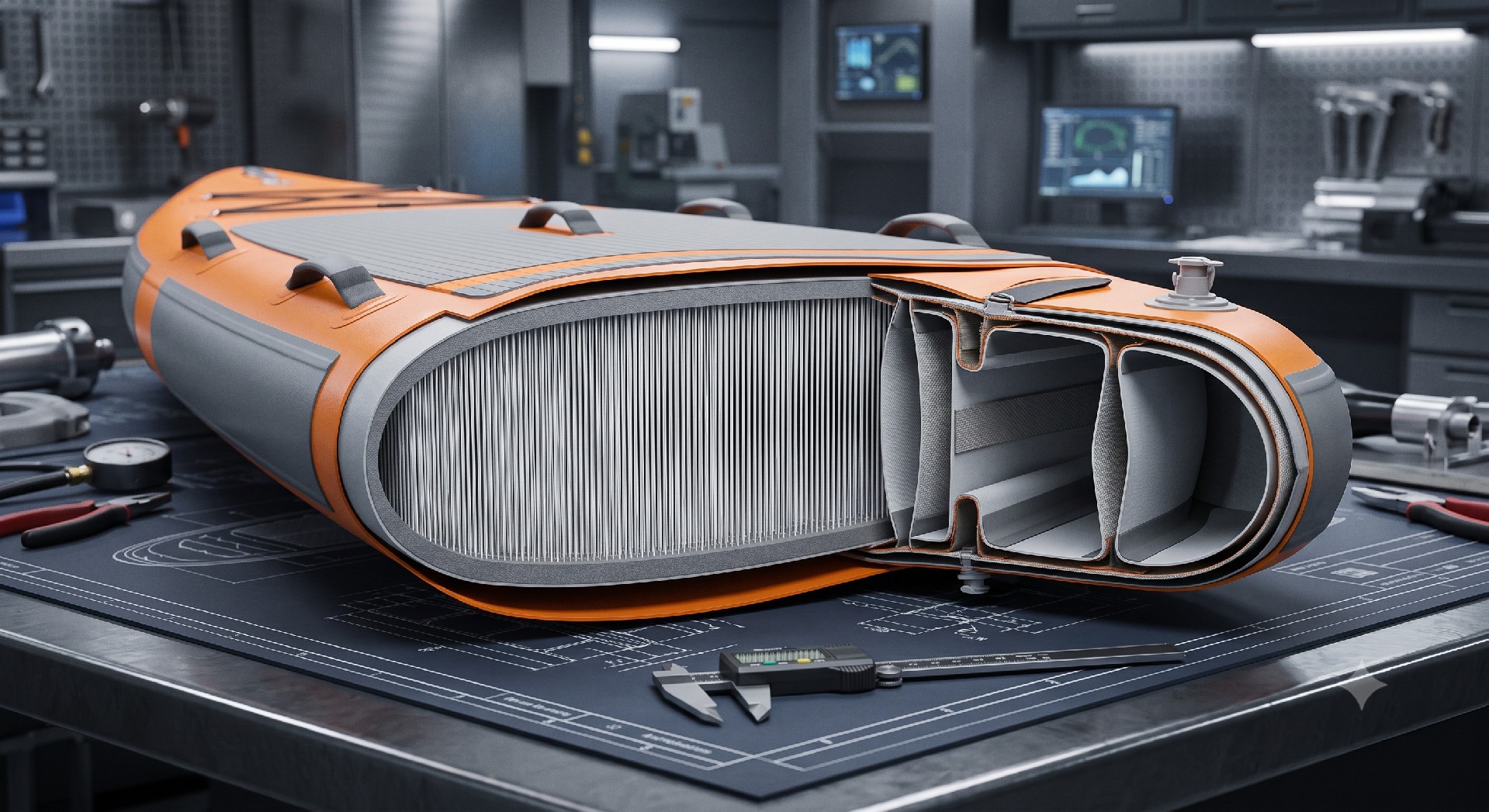
The secret to the rock-hard rigidity of modern stand-up paddleboards and towable toys lies in drop-stitch construction. Thousands of high-tenacity polyester threads connect the top and bottom fabric layers. When inflated, these threads are under tension, creating a stiff, flat, and incredibly strong core . This technology allows commercial toys to withstand operational pressures of up to 10-15 PSI (pounds per square inch), far exceeding the 1-2 PSI of traditional inflatables, and provides the stable platform required for active use.
Technical Specifications: A Data-Driven Overview
To bridge the gap between marketing claims and engineering reality, B2B buyers must demand specific performance metrics. The following table outlines the critical specifications that define a safe and durable commercial water toy.
| Key Parameter | Technical Specification |
|---|---|
| Material Composition | 1100D Reinforced PVC Tarpaulin with UV Lamination |
| Material Thickness | 0.45mm - 0.9mm (Commercial Grade) |
| Maximum Payload | 400 kg / 880 lbs (Typical for Towable Toys) |
| Working Pressure | 10-15 PSI (Drop-Stitch Construction) |
| Air Retention | ≤ 10% Pressure Loss over 24 Hours |
| Seam Construction | High-Frequency (RF) Welded / Heat-Welded |
| Tensile Strength | ≥ 800N / 5cm |
| Tear Resistance | ≥ 120N |
| Key Certifications | CE, EN71, REACH, ISO 6185 (as applicable) |
Manufacturing Excellence: The Science of Seam Integrity
A product is only as strong as its weakest seam. In commercial water toys, the manufacturing process is a key differentiator between a product that lasts a season and one that survives a decade.
High-Frequency (RF) Welding vs. Gluing
Top-tier manufacturers employ Radio Frequency (RF) welding or heat-welding technology to bond fabric panels . This process uses electromagnetic energy to fuse the PVC material at a molecular level, creating a bond that is as strong as the material itself. In contrast, glued seams are susceptible to degradation from chemicals, saltwater, and UV exposure, making them unsuitable for heavy commercial use. Look for suppliers that document their in-process quality control (IPQC) and perform burst pressure tests and water leakage tests on every batch .
Multi-Chamber Safety Systems
For commercial applications, redundancy is a fundamental safety principle. High-end inflatable water toys incorporate multi-chamber designs, meaning the structure is divided into several independent air compartments. This engineering feature ensures that in the event of a puncture in one chamber, the remaining chambers provide sufficient buoyancy to prevent the unit from sinking or collapsing entirely, offering critical time for rescue or evacuation .
Commercial Application and Total Cost of Ownership (TCO)
While upfront cost is a factor, the true measure of value lies in the Total Cost of Ownership (TCO). Investing in certified, high-spec equipment reduces downtime caused by repairs and replacements, lowers maintenance costs, and protects your business from liability.
Rental Fleet and Resort Use
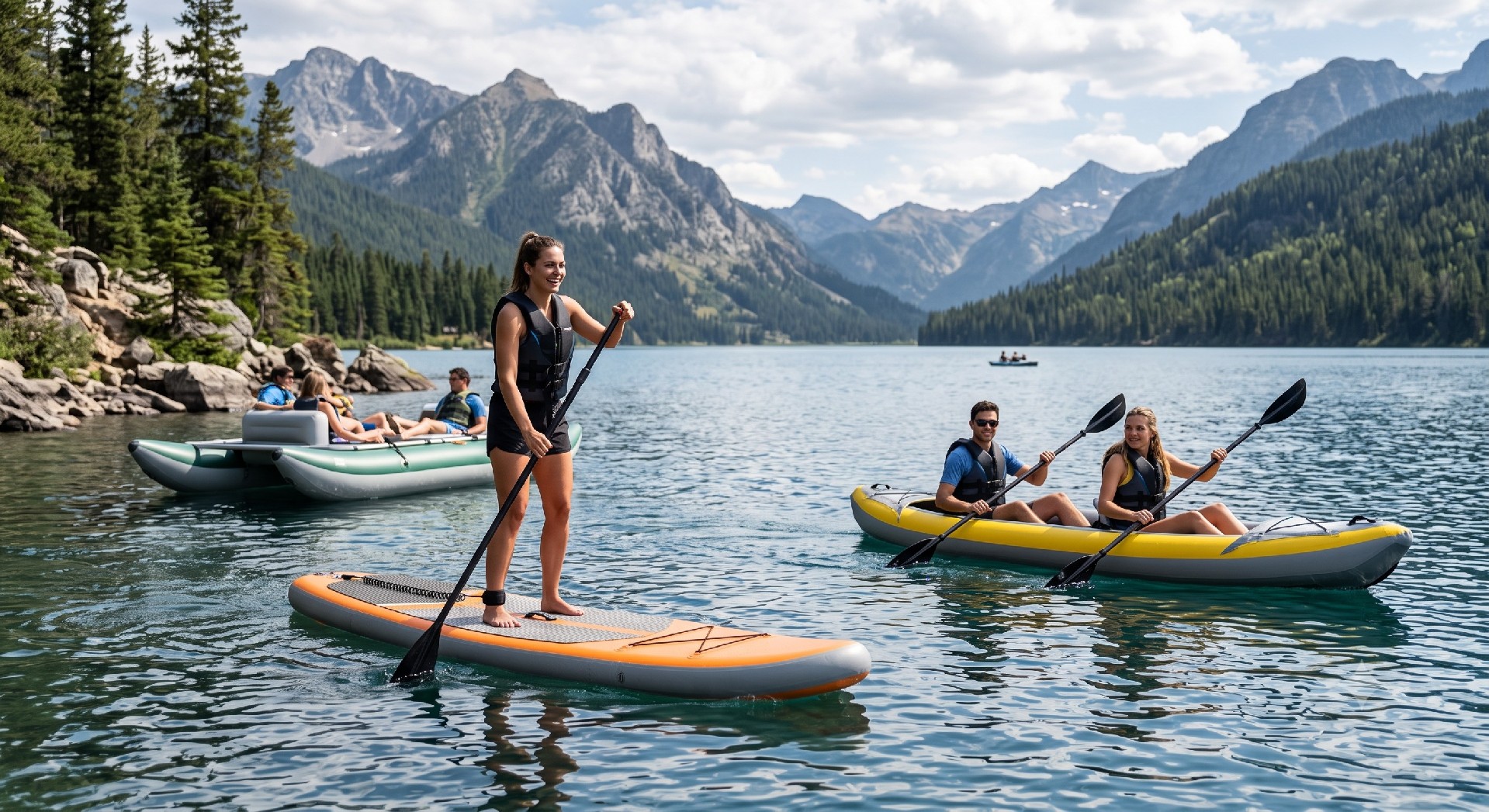
For high-throughput rental operations and luxury resorts, products built to CE and ISO 6185 standards offer the assurance of consistent performance. Features like industrial-grade PVC (0.9mm), RF-welded seams, and multi-chamber safety directly translate to fewer consumer complaints, lower insurance premiums, and higher guest satisfaction . A standard commercial water toy with a payload capacity of 400 kg and ≤10% pressure loss over 24 hours is designed for the rigors of back-to-back rental cycles.
Conclusion: The Certified Path to Commercial Success
For the B2B buyer, the science behind safety certifications is a powerful tool for risk mitigation and quality assurance. By prioritizing products that meet CE, EN71, ISO 6185, and REACH standards, and by demanding transparency on material thickness, welding techniques, and PSI limits, you are not just buying equipment—you are investing in the operational resilience and reputation of your business. The data is clear: regulatory compliance and engineering integrity are the most reliable predictors of commercial success in the water toy industry.
