

Introduction: The High-Stakes Economics of Quality in Water Parks
For commercial operators, from resort water parks to high-throughput rental fleets, the decision between cost-saving and quality in Theme Park Flotation Equipment is a direct determinant of annual profitability. The market is flooded with options, yet the true cost of ownership is hidden in material degradation, seam failure, and punitive insurance premiums resulting from non-compliance. This masterclass delves into the engineering specifications and international safety mandates that separate a premium asset from a liability, focusing specifically on CE, EN ISO 6185 (now transitioning to EN ISO 25649), and ASTM standards .
Navigating the Regulatory Labyrinth: CE, ASTM, and EN ISO 6185/25649
Understanding the hierarchy of compliance is the first step in asset protection. The European standard EN ISO 6185 (and its successor, EN ISO 25649) provides the specific framework for inflatable floating leisure articles for use on and in the water, distinguishing them from land-based inflatable amusement devices .
The Distinction in Standards
It is critical to differentiate between standards. ASTM F2374 strictly covers land-based inflatable amusement devices (bounce houses, slides) and explicitly excludes devices designed primarily as floating devices . For flotation equipment, compliance with the EN ISO 25649 series is paramount for safety and liability management . Manufacturers who adhere to these standards provide verified quality, such as those holding TUV certifications for each single element against EN ISO 25649 .
| Key Parameter | Technical Specification & Compliance |
|---|---|
| Primary Standard | EN ISO 25649 (successor to ISO 6185) / ASTM F2374 (Land-based exclusion) |
| Material Specification | 0.9mm / 1100D Reinforced PVC, Anti-UV & Anti-Heat Treatment |
| Max Payload Capacity | Up to 400 kg / 880 lbs (Drop-stitch construction) |
| Seam Construction | High-Frequency Heat Welding (No Glue) |
| Safety Features | Multi-Chamber Air Relief Valves, Non-Slip Surfaces |
Fabric Engineering: PVC Thickness, Denier Count, and UV Resistance
Inflatable assets live in harsh environments, exposed to UV rays, chlorine, saltwater, and constant abrasion. Premium commercial-grade equipment utilizes specialized materials, such as 0.9mm reinforced PVC tarpaulin, offering superior puncture resistance and airtightness compared to standard pool floats . Leading manufacturers are now employing customized anti-UV and heat-resistant materials, extending operational lifespan by 30% to 50% compared to standard materials .
Drop-Stitch Technology and PSI
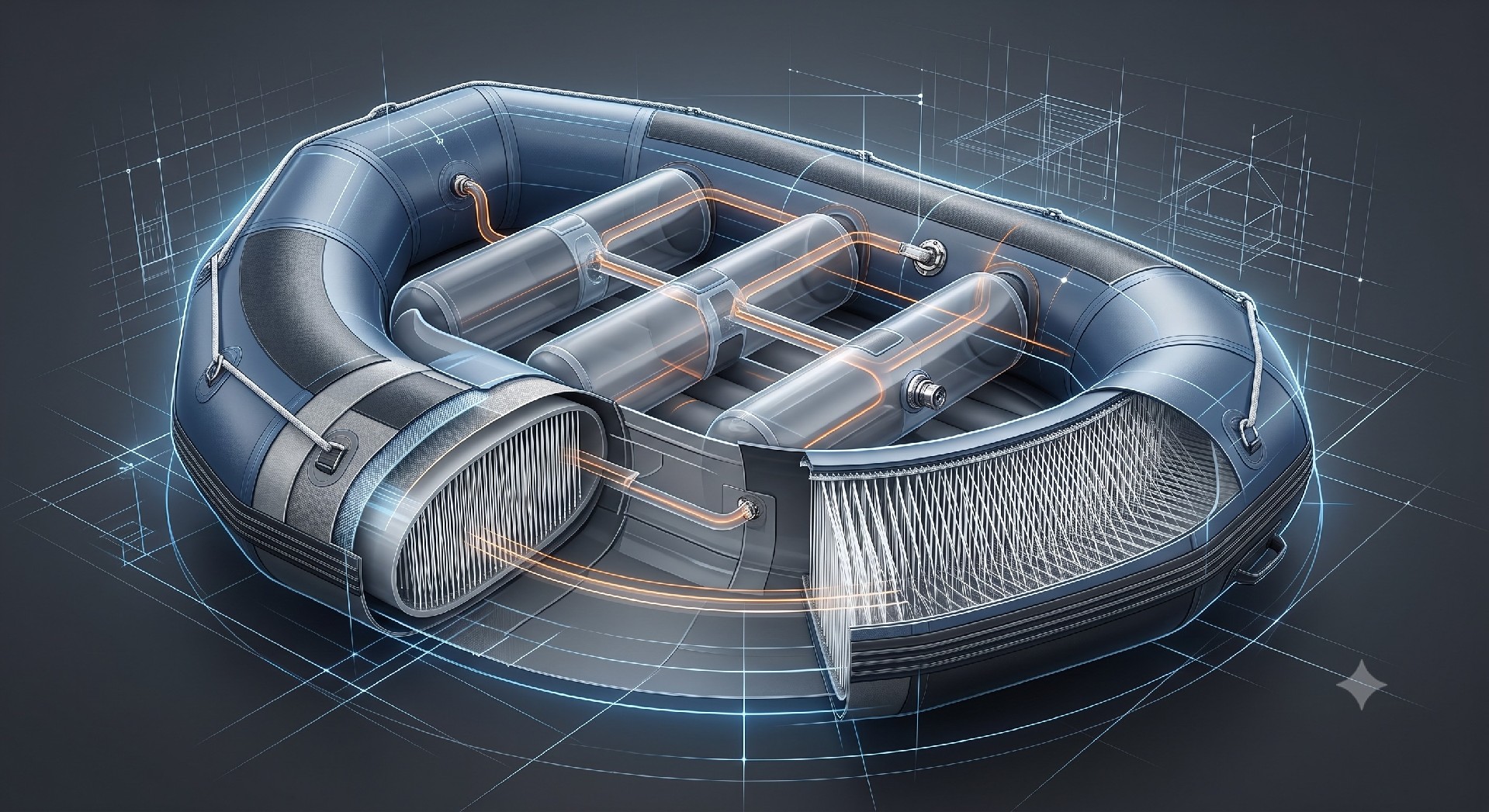
The key to rigidity in high-end flotation equipment is Drop-Stitch construction. This technology allows for high-pressure inflation, creating a rigid, plank-like surface that mimics hard-shell performance. Critical metrics include the maximum payload (often rated up to 400kg), wall thickness (e.g., 0.9mm), and the specific PSI the structure can hold without deformation. Equipment meeting high safety certifications must pass stringent surface resistance tests, including resistance to cold liquids, wet heat, abrasion, and scratching .
[IMAGE_2]
The Manufacturing Edge: Heat-Welded Seams vs. Glued Joints
The manufacturing process is the final arbiter of durability. In premium commercial equipment, components like anchor rings and handles are fused to the main body using high-frequency welding machines. This eliminates glue, which can peel off during prolonged soaking, ensuring a stable, leak-proof connection . Other advanced techniques include internal seam taping, which provides an extra layer of airtight security, and multi-chamber designs that allow for controlled emergency deflation and buoyancy.
Heat Welding: Creates a homogeneous bond, fusing materials at a molecular level. Ideal for high-stress areas in marine environments.
Reinforced Connection Systems: High-quality producers use eyelet connection systems and reinforced D-rings, ensuring the whole park remains stable even in inclement weather .
Commercial Lifespan and Total Cost of Ownership (TCO)
Quality controls directly impact the commercial lifespan of your fleet. An inferior product may have a lower upfront cost, but its expected lifespan in a high-UV, high-volume rental operation is significantly shorter. ASTM D4306 tests for UV degradation, ensuring materials can withstand 500+ hours of exposure without significant property loss . Such rigorous material verification ensures minimal maintenance and maximizes uptime. This is the fundamental driver of ROI; quality controls reduce repair rates and keep the business running smoothly .
Conclusion: Compliance as a Competitive Advantage
In the B2B procurement of Theme Park Flotation Equipment, quality controls are not a cost center but a strategic investment. By insisting on compliance with CE, EN ISO 25649, and utilizing verified materials and weld engineering, operators secure insurance, enhance guest safety, and guarantee a longer asset lifespan. When sourcing, prioritize manufacturers with independent TUV certification for each element, as this demonstrates a commitment to safety and quality that defines a reliable business partner .
