

Introduction: The Hidden Risk in Your Supply Chain
For B2B buyers and procurement specialists in the outdoor and water sports industries, the decision to source a new inflatable product design is often a complex balancing act of cost, quality, and time-to-market. However, one critical factor frequently overlooked in the initial excitement of a new product launch is patent protection. In the rapidly evolving world of high-performance inflatables, a failure to understand and secure intellectual property (IP) rights can lead to catastrophic financial losses, legal battles, and reputational damage. This comprehensive guide explores why patent protection is not just a legal formality but a strategic imperative for any serious player in the inflatable equipment market, covering the technical specifications, materials, and return on investment (ROI) that define commercial success.
1. The Innovation Landscape: Why Patents Matter in Inflatable Design
The inflatable industry is undergoing a quiet revolution. Gone are the days of simple, single-chamber pool toys. Modern commercial-grade inflatables are sophisticated engineering marvels, leveraging advanced materials and complex internal structures to deliver performance once thought impossible . This innovation boom is reflected in a surge of patent activity, with companies like Jiangsu Guorun Electric Co. Ltd., Bestway Inflatables & Material Corp., and WangLi Plastic & Electronics securing critical IP on everything from integrated inflation pumps to multi-chamber tensioning structures .
2.1 The Anatomy of a Patent: What Can Be Protected?
Understanding the scope of patent protection is the first step in developing a robust sourcing strategy. A patent grants the holder exclusive rights to an invention, preventing others from making, using, or selling the patented design for a set period. In the context of inflatable products, this can cover a wide array of innovations:
Novel Mechanical Features: This includes integrated air pump designs, like the inflation-suction integrated pumps developed by Jiangsu Guorun, which offer dual functionality for rapid setup and teardown .
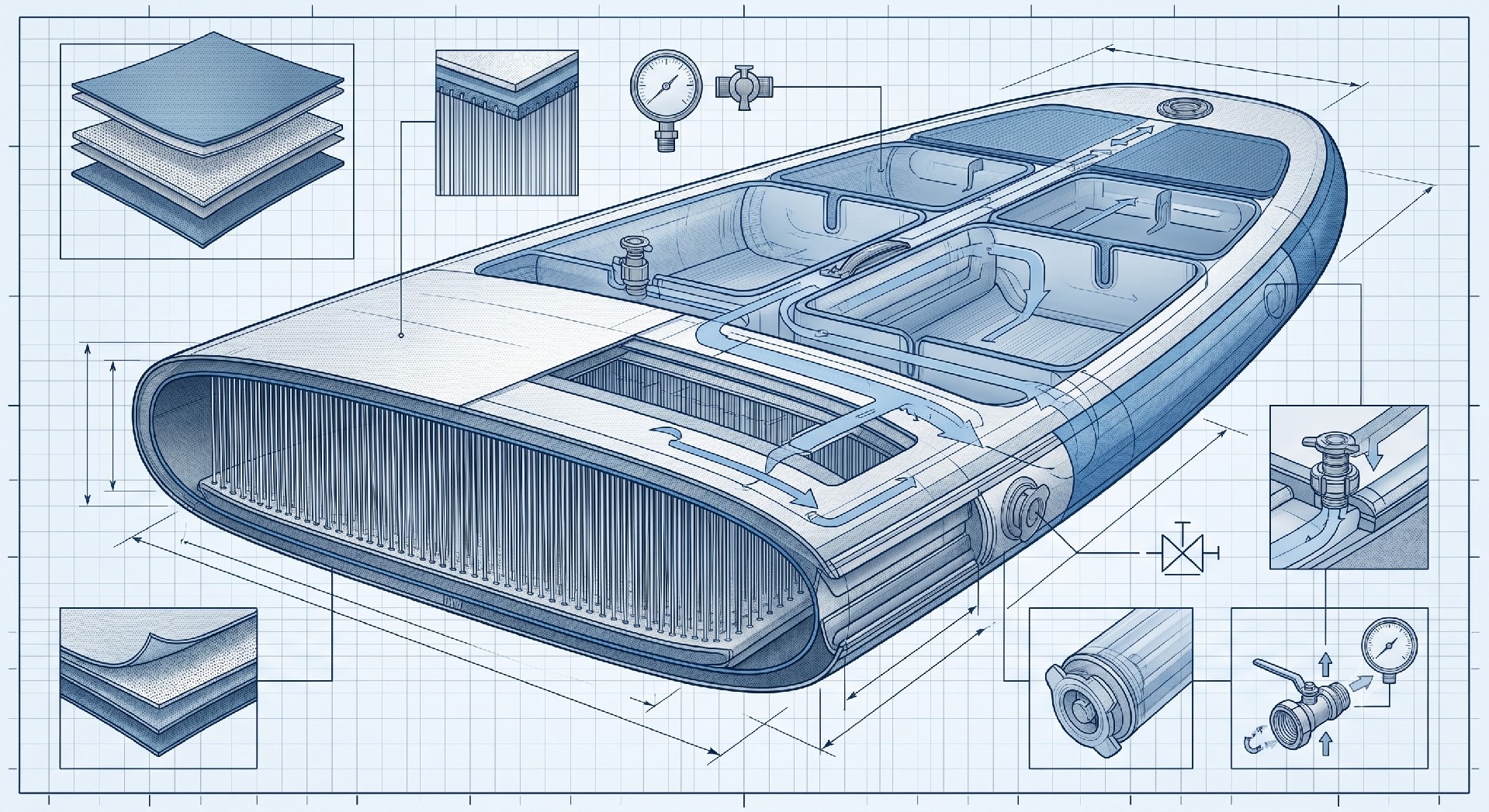
Advanced Internal Structures: The core of modern inflatable rigidity is the drop-stitch or internal tensioning structure. Patents like those from Bestway cover new methods of manufacturing these structures, using retention strips to secure a network of tensioning strands between the top and bottom walls of an air chamber, thereby improving shape retention and structural integrity at higher pressures .
Material and Construction Innovations: Innovations extend beyond the structural design to materials and manufacturing methods. Patents are being filed for weaving techniques, high-tenacity fabrics, and even multi-layer chambers for improved comfort and performance .
3. The Technical Specs That Define a Market: A Materials Deep Dive
When evaluating the ROI of a patented design, B2B buyers must look beyond the concept and delve into the tangible specifications that dictate a product's lifespan and performance. Patented designs often provide a competitive edge by allowing for superior metrics in key areas.
3.1 Material Science: PVC, Hypalon, and Beyond
The choice of material is fundamental. While traditional PVC remains ubiquitous due to its low cost and weldability, it faces challenges with creep and deformation at high pressures, as noted in recent patent applications . Patented solutions often focus on mitigating these issues. For example, reinforced PVC with a higher denier count (e.g., 1100D) or laminates that incorporate a high-tenacity fabric layer provide superior puncture resistance and dimensional stability, directly impacting the product's load capacity and lifespan. Hypalon (CSPE), known for its exceptional UV and chemical resistance, is another high-end material often featured in patented designs for extreme environments, though it comes at a premium price point.
3.2 Drop-Stitch and Internal Tensioning: The Physics of Rigidity
Drop-stitch technology has revolutionized inflatable products, especially for towables, paddleboards, and high-pressure floors. This construction uses thousands of polyester threads that are welded between two sheets of PVC fabric. When inflated, these threads create a rigid, flat structure capable of withstanding high pressures. Patents in this space, such as those from Bestway, focus on the novel construction of these tensile assemblies to improve manufacturing efficiency and reduce the use of non-degradable materials without sacrificing performance . The core advantage of a patented drop-stitch floor over a standard inflatable is its ability to achieve a much higher PSI, delivering a solid, near-rigid platform that enhances stability and hydrodynamics. A well-executed patented design can achieve operating pressures of 15-20 PSI, compared to the 1-3 PSI of conventional inflatables.
3.3 The Integrity of Seams: Welded vs. Glued
Seam integrity is the defining factor between a long-lasting commercial asset and a liability. Patented manufacturing processes often specify high-frequency (HF) welding or heat welding over traditional gluing. HF welding creates a molecular bond that is as strong as the material itself, offering superior airtightness and resistance to peeling. Glued seams, while cheaper to manufacture, are susceptible to degradation from UV exposure, saltwater, and constant flexing. When evaluating a new design, a B2B buyer should look for patented or proprietary welding techniques that ensure the product remains durable over thousands of inflation/deflation cycles.
| Parameter | Technical Specification |
|---|---|
| Material | 1100D / 0.9mm Reinforced PVC with Hi-Tenacity Polyester Drop-Stitch Core |
| Max Operating Pressure | 20 PSI (1.38 bar) |
| Maximum Payload | 400 kg (880 lbs) |
| Inflation Time (Built-in Pump) | < 2.5 Minutes |
| Chamber Configuration | Multi-Chamber (1 Main + 2 Auxiliary) |
| Welding Standard | High-Frequency Welding (ISO 6185 Compliant) |
| Weight | 45 kg (99 lbs) |
4. Compliance and Certification: The Silent Guarantors of Quality
Beyond the patent itself, a high-quality design will inherently be built to meet rigorous international safety and quality standards. These standards are non-negotiable for any B2B operation, impacting insurance costs, liability, and brand reputation.
CE and EN71: Essential for products sold in the European market, these standards cover mechanical and physical properties, flammability, and chemical safety (like REACH compliance for restricted substances).
ISO 6185: This specific standard for inflatable boats is crucial for commercial operators. It defines the construction, performance, and safety requirements for different types of inflatable boats, including load capacity and buoyancy. A patented design that simplifies multi-chamber construction can more easily meet the safety requirements of this standard .
REACH Compliance: This regulation restricts the use of certain hazardous chemicals in manufacturing. Materials like PVC must be formulated to be REACH-compliant, which is a key indicator of a responsible and forward-thinking supplier.
5. Commercial Applications and ROI: Building a Fleet for Profit
For rental operators, resorts, and commercial water sports companies, the Total Cost of Ownership (TCO) is paramount. A patented design that offers superior durability and lower maintenance can significantly boost the bottom line.
5.1 Reducing Fleet Downtime
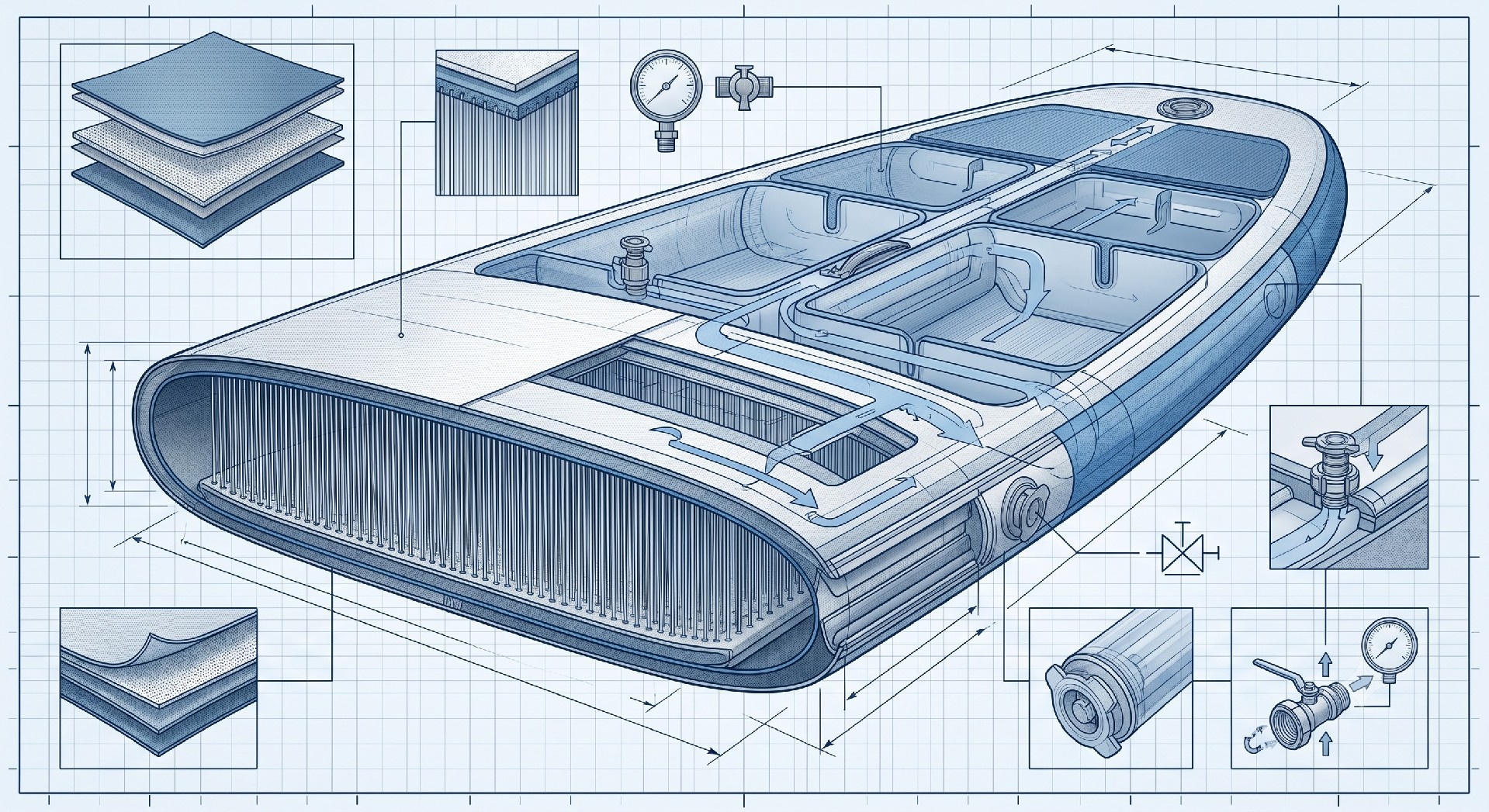
Durability is key. Patented high-pressure valves, such as those described in filings by WangLi Plastic & Electronics, can offer a longer service life, reducing the frequency of replacements and repairs . Similarly, innovative multi-chamber designs, like those patented for dual-chamber airbeds, provide a crucial safety backup, allowing for continued operation or safe return to shore if one chamber is compromised, thereby reducing liability and increasing customer confidence .
5.2 Efficiency of Rapid Inflation Systems
Time is money in the rental business. Patented integrated inflation and deflation systems, such as the line-controlled air pumps developed by Jiangsu Guorun and WangLi, can dramatically reduce turnaround times between rentals . The ability to quickly and safely inflate multi-chamber systems without operator error, as seen in automated pressure detection systems, is a game-changer for high-throughput operations.
5.3 Maximizing End-User Satisfaction
Ultimately, a high-performance product leads to happy customers and repeat business. The enhanced rigidity provided by patented drop-stitch floors delivers a superior experience on the water. Hydrodynamically optimized hull designs, which are often the subject of design patents, offer better tracking and higher speeds, directly enhancing the user's enjoyment and the perceived value of your rental fleet.
Conclusion: A Strategic Blueprint for Sourcing Success
In the competitive landscape of the outdoor and inflatable equipment industry, patent protection is the cornerstone of a successful sourcing strategy. It is a clear marker of innovation, a legal safeguard against copycats, and a strong indicator of quality and performance. By focusing on designs with robust patent portfolios, B2B buyers gain access to superior technical specifications, improved safety standards, and ultimately, a better return on investment. As the industry continues to evolve, driven by materials science and innovative engineering, the ability to identify and secure patented products will remain the differentiator between market leaders and those who get left behind.
