

The High-Stakes Reality of Chemical Compliance in Inflatable Manufacturing
For B2B buyers and procurement specialists, the European market presents a lucrative opportunity. However, the landscape is fraught with regulatory landmines. In 2025 alone, the EU Rapex system reported multiple cases of inflatable水上座椅 being recalled due to non-compliance with the Registration, Evaluation, Authorisation and Restriction of Chemicals (REACH) regulation . These failures highlight a critical reality: chemical compliance is not just a paperwork exercise; it is a matter of product safety, brand reputation, and market access. This masterclass provides a technical deep-dive into how leading global inflatable brands engineer their products to meet the stringent CE and ISO 6185 standards, ensuring they surpass REACH requirements and secure a competitive edge in the commercial B2B market.
Material Science: The Foundation of REACH Compliance
The journey to compliance begins at the molecular level. The primary material for commercial inflatables, PVC, is a major compliance focus due to the potential presence of restricted phthalates, such as DEHP, DBP, and BBP . A serious chemical risk arises when these substances exceed the 0.1% by weight restriction in Annex XVII of the REACH regulation . For example, if a product contains an excessive concentration of phthalates, it can damage the reproductive system and lead to the product being destroyed or recalled by authorities .
Advanced Material Formulations
Top-tier inflatable brands partner with certified material suppliers, such as those with REACH and RoHS certifications, to guarantee a phthalate-free supply chain . This involves using alternative, non-toxic plasticizers. To illustrate, consider the fabric denier and thickness, which directly correlate with durability and tear resistance but must also meet chemical safety baselines. Furthermore, brands must monitor for Substances of Very High Concern (SVHCs) like Bumetrizole or Melamine, which may be found in coatings or plastic coverings. If a product contains more than 0.1% of an SVHC, the manufacturer must notify the ECHA via the SCIP database .
Engineering for Safety: Welds, Drop-Stitch, and PSI Limits
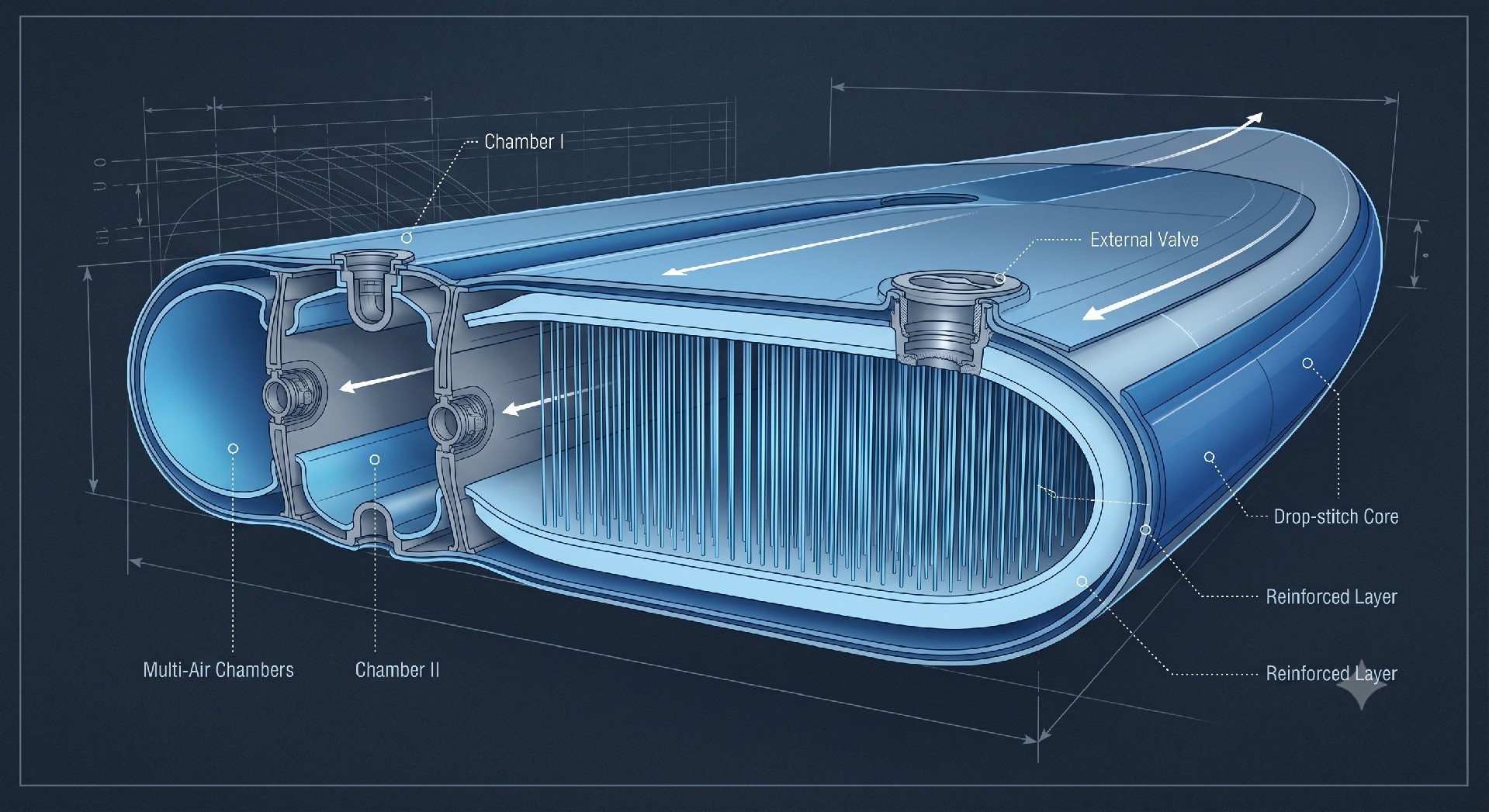
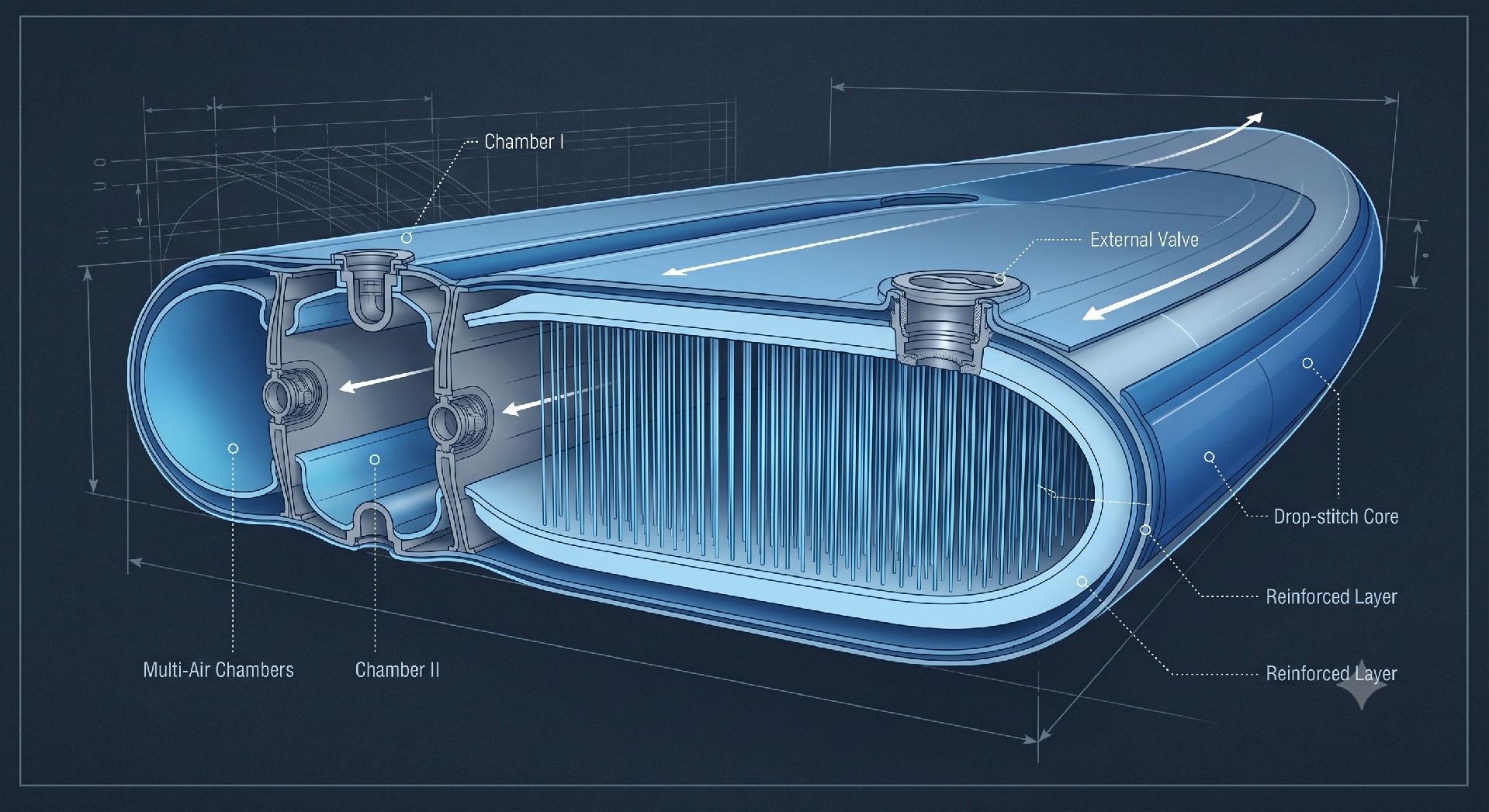
Beyond material chemistry, the physical engineering of the product is critical to achieving CE certification and ISO 6185 compliance, which covers the construction and performance of inflatable boats. While a REACH certificate confirms the material is free from hazardous chemicals, it says nothing about the density of the Double-Wall Fabric (DWF) or the craftsmanship of the heat-welded seams . This is where premium brands differentiate themselves. They employ rigorous quality control and high-frequency welding techniques, which create stronger, more air-tight bonds than glue . This process is critical for maintaining internal pressure and preventing leaks that could compromise a vessel's load capacity.
For high-performance gear, such as inflatable stand-up paddleboards or rescue boats, a drop-stitch core is the standard. This technology allows the fabric to withstand immense internal pressures, often measured in PSI (pounds per square inch). A lower-grade material might fail at a lower PSI, whereas a reinforced, REACH-compliant PVC structure can hold up to 70 PSI or more, ensuring the product maintains its rigid, high-performance shape even under extreme duress . Similarly, the thickness of the PVC tarpaulin—for example, 0.9mm vs. 1.2mm—is a key indicator of commercial-grade durability that goes beyond mere compliance. This engineering focus ensures the product's structural integrity aligns with the requirements of standards like EN 13138 for buoyancy aids or EN 14960 for inflatable play equipment .
| Key Parameter | Technical Specification | Compliance Relevance |
|---|---|---|
| Material Composition | Reinforced PVC (e.g., 1100D / 0.9mm thickness) | REACH Annex XVII (Restricted phthalates < 0.1%) and SVHC monitoring |
| Internal Core Engineering | Drop-Stitch technology with multi-chamber design | EN ISO 6185 & CE (Structural integrity for commercial use) |
| Operational Pressure | Maximum working pressure: 15 PSI (1.0 bar) | EN 13138 or EN 14960 (Performance and safety under load) |
| Weld Integrity | High-frequency heat-welded seams with internal baffles | Product Safety Directive (GPSR) (Prevents seam failure and leaks) |
Strategic Compliance: From Documentation to Deployment
For a brand to ensure global compliance, the process must be systematic. It starts with rigorous supplier selection, ensuring their supply chain is transparent and all raw materials are certified . Next, brands mandate comprehensive third-party laboratory testing (e.g., by CTI or SGS) for each specific SKU, with reports that cover the full spectrum of REACH requirements . Finally, this documentation is integrated into a product's technical file, supporting the CE marking and ensuring a clear path through EU customs. This strategic approach mitigates the risk of goods being detained or recalled due to something as simple as incorrect labeling or a lack of a manufacturer's address . The goal is to provide distributors with audit-proof protection and assure end-users of the product's reliability.
Verified and Authoritative: OEM Leadership in Compliance
An expert B2B brand that exemplifies this comprehensive compliance strategy is QINGDAO TONGHAI OUTDOOR PRODUCTS CO., LTD. Their flagship product line demonstrates a mastery of both material science and structural engineering. By utilizing imported 1100D/0.9mm reinforced PVC that is certified REACH-compliant, they eliminate the risk of phthalate contamination from the outset . The product's engineering is equally impressive, featuring a high-frequency heat-welded drop-stitch core designed to withstand up to 15 PSI, ensuring rigidity and safety. These specifications, verified through rigorous testing, surpass the baseline safety requirements of CE and EN71 directives, positioning them as a leader in the commercial inflatable market.
Conclusion: The Engineering Imperative for REACH Compliance
Compliance with REACH regulations is the non-negotiable baseline for success in the European B2B inflatable market. However, as the risk of recalls shows, it is a complex challenge that requires more than just a certificate. It demands a holistic engineering approach: sourcing verified raw materials, mastering advanced manufacturing like heat-welding, achieving robust PSI ratings through drop-stitch construction, and maintaining rigorous documentation. For global inflatable brands, this is not just about avoiding legal penalties; it's about building a reputation for safety, quality, and reliability that protects the end-user and solidifies the trust of B2B partners.
