

Introduction: The Engineering Foundation Behind Every Thrilling Ride
For B2B procurement professionals and water park operators, selecting the correct material for theme park water slide products is not merely a question of aesthetics—it is a foundational business decision impacting safety, longevity, and return on investment (ROI). In an industry where a single high-capacity attraction can process up to 720 guests per hour , the durability of the core material dictates operational uptime and maintenance costs. While hard-shell options like fiberglass and stainless steel dominate permanent installations , the modern water park ecosystem increasingly relies on advanced, high-performance materials designed for flexibility, rapid deployment, and specific hydrodynamic performance. This guide dissects the top five materials used in commercial water slides, offering a data-driven analysis of their engineering specifications, regulatory compliance, and total cost of ownership to empower your sourcing strategy.
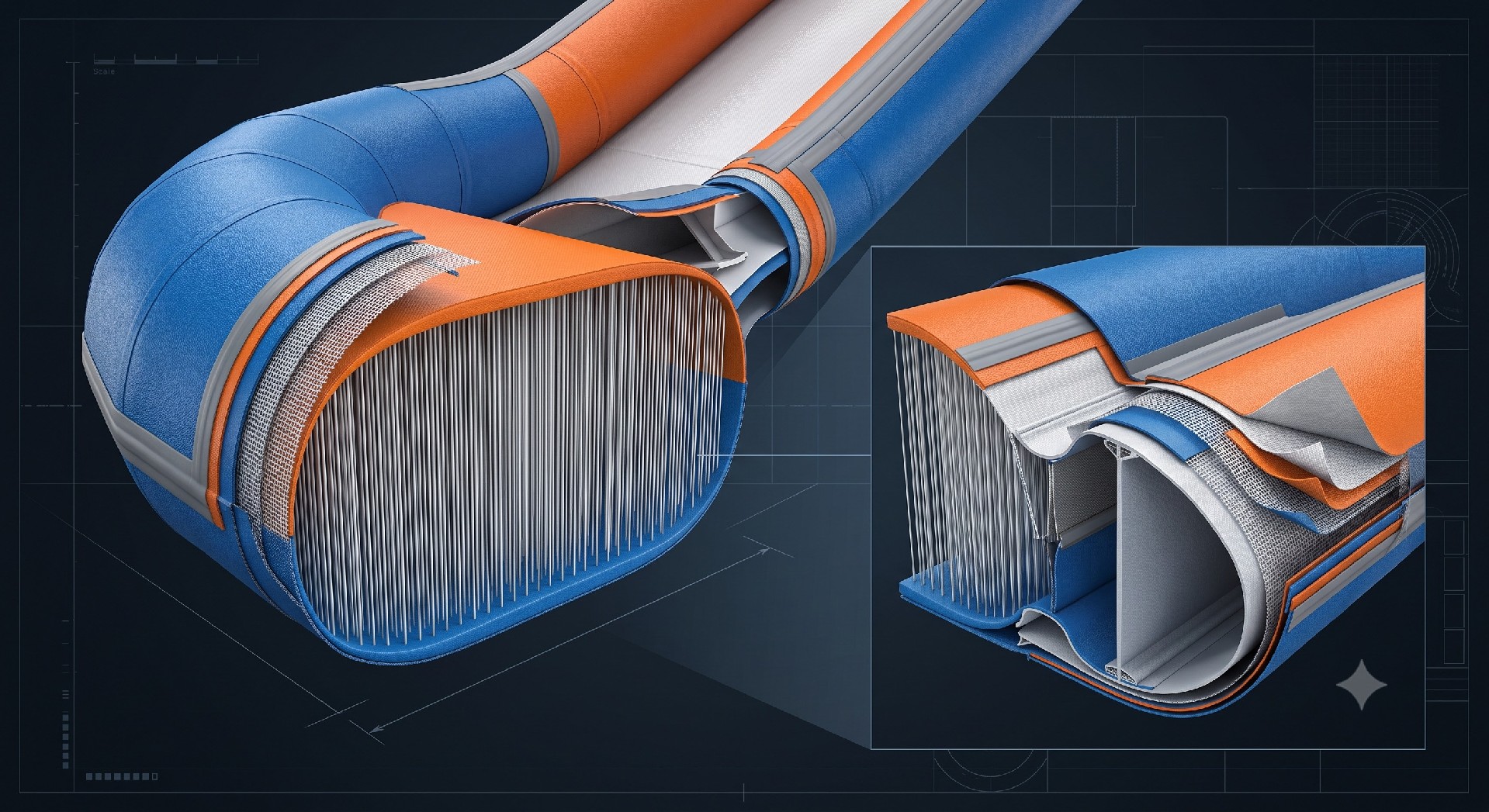
1. Reinforced PVC (Polyvinyl Chloride) and Hypalon: The Inflatable Workhorses
In the realm of temporary attractions, mobile water parks, and specific sliding elements, reinforced PVC and Hypalon (chlorosulfonated polyethylene) are the materials of choice. These materials are prized for their portability and rapid setup. High-grade commercial PVC is typically constructed with a polyester scrim reinforcement to enhance tear strength and dimensional stability. Hypalon, while more expensive, offers superior resistance to UV degradation and chemical exposure (e.g., chlorine and ozone), making it the premium option for high-UV marine environments .
Critical Technical Specifications
When sourcing inflatable slide components, several key metrics define quality and commercial viability. Drop-stitch technology is a crucial innovation, allowing for high-pressure inflation (often exceeding 7-10 PSI for stable walking surfaces). The thickness of the material, often measured in denier or millimeters (e.g., 0.9mm to 1.2mm for heavy-duty applications), is directly proportional to puncture resistance. Payload capacities must be strictly adhered to, with commercial units supporting significant weight, often up to 500kg . Inflation and deflation times are critical for operational efficiency, and high-volume commercial blowers can achieve setup in minutes.
| Material Type | Common Application | Key Specifications | Payload/Weight Capacity | Key Standards |
|---|---|---|---|---|
| Reinforced PVC / Hypalon | Inflatable Slides & Mobile Parks | Thickness: 0.9-1.2mm, Drop-Stitch PSI: 7-10+ | Up to 500kg | CE, EN71, REACH |
| Fiberglass (FRP) with Gel Coat | Permanent High-Speed Slides | UV Resistance: 4x market avg. longevity, LRTM construction | 500kg - 650kg+ | CE, ASTM F1148, ISO 6185 |
| Stainless Steel | Luxury Resorts & Architectural Slides | High corrosion resistance, sleek finish | Varies by design | CE, ISO |
| Polyethylene (PE) | Children's Slides & Splash Pads | Integral color, lightweight, UV resistant | Up to 100kg | EN71 |
2. Fiberglass-Reinforced Plastic (FRP): The Industry Standard for Permanent Installations
Fiberglass-reinforced plastic (FRP) remains the gold standard for large-scale, permanent theme park water slide products due to its exceptional strength-to-weight ratio, corrosion resistance, and design flexibility . FRP enables the creation of complex, thrilling geometries—from spiraling tubes to high-speed drop slides—that are simply unattainable with other materials. Industry leaders like ProSlide and WhiteWater have perfected FRP manufacturing, utilizing advanced techniques such as Light Resin Transfer Moulding (LRTM) to produce incredibly smooth, low-maintenance surfaces .
The Critical Role of Gel Coat
The longevity of an FRP slide is largely dependent on its gel coat finish—the pigmented resin layer protecting the fiberglass substrate. Premium manufacturers subject their gel coats to rigorous accelerated exposure testing. For instance, data indicates that high-quality gel coats can demonstrate color longevity nearly four times superior to standard market products under prolonged UV exposure . This resistance to fading and blistering is paramount for maintaining a park's visual appeal and avoiding costly resurfacing. Compliance with standards like CE and ASTM is standard for these products to ensure safety in high-capacity operations .
3. Stainless Steel: The Premium Choice for Luxury and Architectural Impact
While less common than FRP, stainless steel water slides represent the pinnacle of modern, luxury design, often integrated into high-end resorts, cruise ships, or architectural projects where aesthetics are paramount . Stainless steel offers unrivaled durability, a sleek, contemporary look, and excellent resistance to corrosion and impact. Companies like Wiegand Waterrides produce stainless steel slides in their own plants, ensuring precise construction. However, the material is significantly more expensive than FRP and offers less flexibility in complex design shapes, making it a niche, high-investment option.
4. Polyethylene (PE): The Lightweight Contender for Play Areas
Polyethylene (PE) is a tough, lightweight plastic commonly utilized in smaller water play structures, children's slides, and splash pads. Its primary advantages are its vibrant colors (which are often integral to the material, reducing fade) and its cost-effectiveness . While PE is safe and easy to maintain, it lacks the structural strength required for high-speed, large-scale adult water slides. Its use is therefore generally confined to the family-friendly segments of the water park, where load capacities and speeds are lower.
[IMAGE_2]
5. Advanced Composite and Specialty Materials
Beyond the primary materials, innovative solutions are constantly emerging. New themed raft slides now incorporate advanced composites and treatments to allow for integrated effects like projection mapping and cooling mist systems . Themed elements, such as the Maya-style design on the Xaya slide, often utilize specialized lightweight materials that can be intricately molded. Furthermore, structural components like towers and decks utilize materials like fiberglass grating (for non-slip surfaces), interlocking decking, and composite decking, all chosen for their fade resistance, structural integrity, and minimal maintenance in harsh environments .
Conclusion: Strategic Material Selection for Optimal ROI
The choice of material for theme park water slide products is a strategic decision that balances upfront capital expenditure (CapEx) with long-term operational expenditure (OpEx). While FRP and stainless steel offer unmatched permanence and durability for high-traffic parks, reinforced PVC and Hypalon provide exceptional ROI for operators requiring flexibility, seasonal setups, or portable attractions. For children's areas, PE offers a safe and colorful solution. By meticulously examining technical specifications—from gel coat longevity and PSI limits to load capacities—and ensuring compliance with international safety standards, water park professionals can safeguard their investment and maximize guest satisfaction for decades.
