

Introduction: The Critical Need for Speed in Ice Rescue
In the high-stakes arena of ice rescue, every second directly correlates with survivability. The physiological shock of cold water immersion—often within the first 2-5 minutes—can incapacitate a victim, making rapid deployment not just a goal, but a necessity. For B2B procurement specialists, safety directors, and fleet managers, the challenge lies in balancing this critical time factor with the uncompromising demands of equipment reliability, durability, and compliance. This masterclass dissects the engineering, materials, and safety standards that define premium intelligent rescue devices, focusing on how specific specifications translate directly to reduced response times and increased operational effectiveness in ice scenarios. We will explore the concrete data and compliance frameworks that commercial buyers must evaluate to secure high-performance, certified equipment for professional and rescue fleets.
The objective is clear: to move beyond theoretical benefits and provide a technical blueprint for selecting equipment that excels under the extreme duress of ice and freezing water conditions.
Material Engineering: The Core of Ice Rescue Performance
The fundamental performance of any inflatable rescue device begins with its material architecture. In ice scenarios, equipment must resist puncture from jagged ice edges, maintain flexibility in sub-zero temperatures, and deliver unmatched structural rigidity. The primary materials dominating the commercial and professional rescue sector are high-grade PVC and Hypalon, each offering distinct advantages.
PVC (Polyvinyl Chloride) with Drop-Stitch Technology
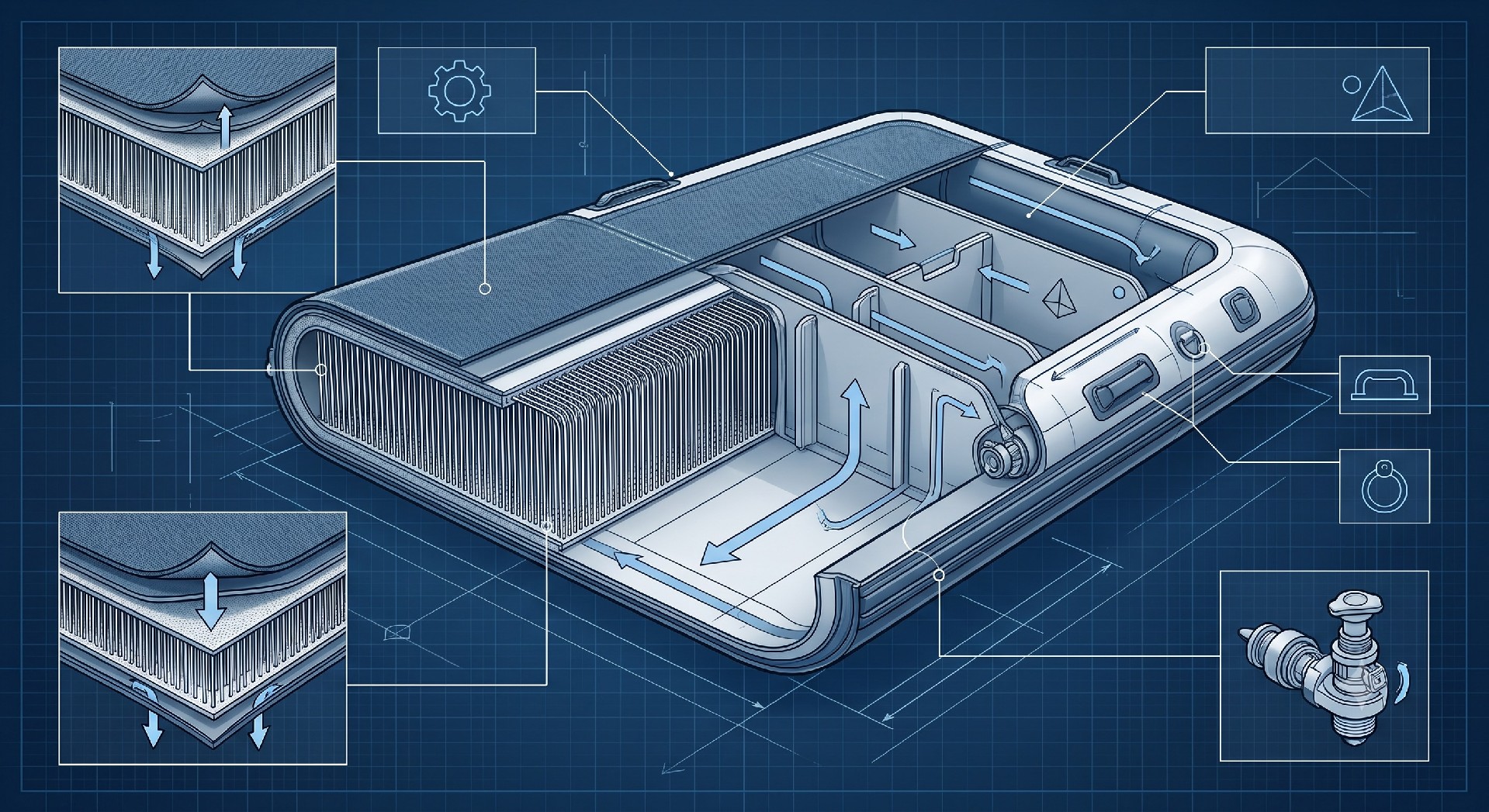
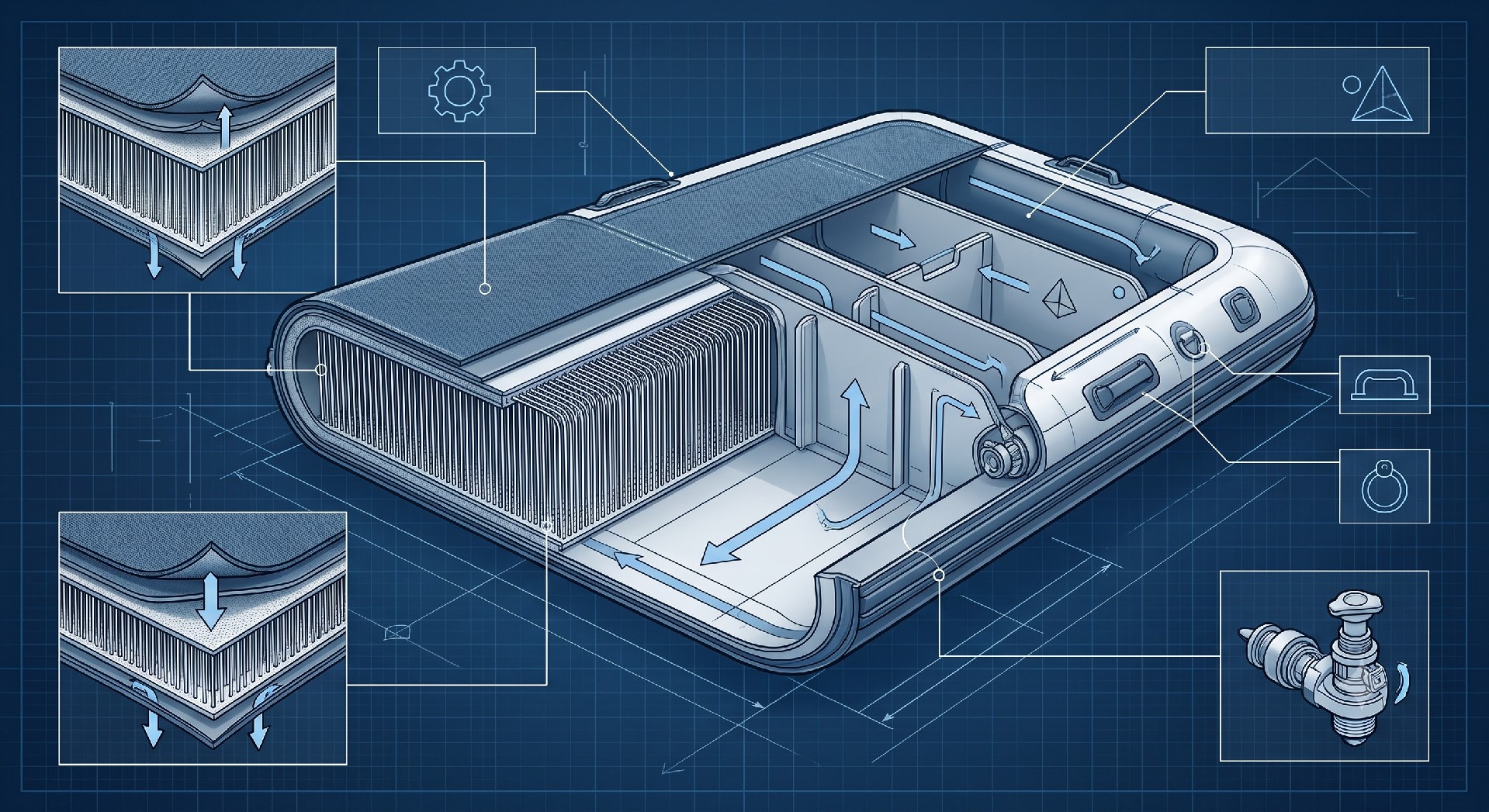
For ice rescue sleds and platforms, drop-stitch PVC construction is the industry standard. This technology involves thousands of high-tenacity polyester fibers connecting the top and bottom fabric layers. When inflated to the optimal pressure—typically 12-14 PSI as seen in professional-grade ice rescue sleds —this internal core transforms the soft fabric into a rigid, walkable structure, akin to a solid hard-shell board. This rigidity is critical for a rescue platform that must support not only the weight of a rescuer and victim but also the dynamic forces of extraction.
The performance of drop-stitch material is quantified by several key metrics. For high-end commercial equipment, the fabric thickness is a critical indicator of durability. Specifications often require a base material thickness of ≥0.9mm with a robust 1100D reinforcing layer, designed to withstand the abrasive nature of ice and repeated deployments . In professional applications, the bottom layer often features an additional protective 'armor' layer to provide the highest level of puncture resistance .
Hypalon (CSM) and Advanced Composites
For extreme environments, Hypalon (Chlorosulfonated Polyethylene) or advanced polymer composites are the materials of choice. These materials offer superior resistance to UV degradation, extreme temperature fluctuations, and chemical exposure. In a B2B context, equipment constructed from these materials commands a premium price point but delivers a significantly lower Total Cost of Ownership (TCO) over its lifecycle due to its extended lifespan and reduced maintenance requirements.
CE & ISO 6185 Compliance: The Regulatory Baseline
For any B2B procurement, compliance with international standards is non-negotiable. It is the first filter for quality assurance, liability management, and operational safety. While specific certifications may vary by region (e.g., CE marking in Europe, EN standards), two key benchmarks are paramount for inflatable rescue equipment.
| Key Parameter | Technical Specification (Professional Grade) |
|---|---|
| Material Thickness | ≥ 0.9mm / 1100D Reinforced PVC with additional bottom armor layer |
| Maximum Payload (Static) | ≥ 900 kg (showing extreme capacity, typical rescue sleds are > 200 kg) |
| Operating Pressure | 12-14 PSI (for rigid drop-stitch structure) |
| Inflation Time | ≤ 4 minutes (with high-output pump or CO2 system) |
| Total Weight (Device) | ≤ 85 kg (for powered multi-mode units) / ≤ 15 kg (for basic rescue sleds) |
| Buoyancy Flotation | ≥ 230 kg (static load for single rescue board) |
| Compliance Standards | ISO 6185, CE, REACH, EN12402, EN166/EN12492 (varies by component) |
The ISO 6185 Standard
This is the primary international standard for inflatable boats and rescue craft. It classifies inflatable boats by type and specifies the requirements for their design, materials, and testing. For ice rescue devices, compliance with ISO 6185 ensures a baseline of structural integrity and performance. This involves rigorous testing for seam strength, material resistance to abrasion, and overall hull integrity under load. Procurement specialists should always request documentation proving adherence to this standard, as it validates the engineering and manufacturing process. Similarly, compliance with the European standard EN12402-5:2006 and EN12402-6:2006 for lifejackets and flotation devices is crucial, ensuring the crew's personal safety equipment meets the highest safety benchmarks .
CE Certification and Other Key Standards
The CE marking is a mandatory conformity mark for products sold in the European Economic Area. For ice rescue equipment, this signifies that the product meets EU safety, health, and environmental protection requirements. This is often supplemented by specific EN standards for components, such as EN166:2001 for personal protective equipment (PPE) face shields, or EN12492:2012 for helmets used in mountaineering and rescue operations . Furthermore, compliance with REACH (Registration, Evaluation, Authorisation and Restriction of Chemicals) is essential, particularly concerning the materials used, ensuring they are free from hazardous substances. These certifications provide a legal and operational safety net, confirming the product has been independently tested and meets stringent quality benchmarks.
Technical Specifications Matrix: Critical Performance Metrics
Understanding the hard data is essential for any B2B decision. The following specifications, drawn from real-world procurement documentation, represent the performance baseline for professional-grade ice rescue devices .
| Key Parameter | Technical Specification (Professional Grade) |
|---|---|
| Material Thickness | ≥ 0.9mm / 1100D Reinforced PVC with additional bottom armor layer |
| Maximum Payload (Static) | ≥ 900 kg (showing extreme capacity, typical rescue sleds are > 200 kg) |
| Operating Pressure | 12-14 PSI (for rigid drop-stitch structure) |
| Inflation Time | ≤ 4 minutes (with high-output pump or CO2 system) |
| Total Weight (Device) | ≤ 85 kg (for powered multi-mode units) / ≤ 15 kg (for basic rescue sleds) |
| Buoyancy Flotation | ≥ 230 kg (static load for single rescue board) |
| Compliance Standards | ISO 6185, CE, REACH, EN12402, EN166/EN12492 (varies by component) |
Operational Efficiency: Inflation and Deployment Systems
The intelligent design of a rescue device extends to its deployment and inflation systems, where innovation directly reduces critical response times. Time is the most valuable metric, and modern systems are engineered to minimize it.
Rapid Inflation Technology
Gone are the days of manual pumps being the primary inflation method. Professional rescue equipment often integrates high-output, battery-powered electric pumps or, critically, CO₂ gas inflation systems. The target for deployment, from a stowed state to a fully rigid and operational platform, is measured in minutes. A quick and simple inflation system can mean the difference between a rescue and a recovery. For instance, many advanced rescue sleds are designed to be operational in under five minutes, a massive advantage over traditional methods.
Multi-Chamber Safety Engineering
Intelligent design dictates that a single point of failure should not compromise the entire mission. Multi-chamber systems are a key safety feature, dividing the device's buoyancy into multiple independent air chambers . This ensures that even if one chamber is punctured by ice, the remaining chambers provide sufficient flotation to complete the rescue. This engineering principle is a critical requirement for high-safety applications, providing redundancy and a vital safety margin in unpredictable ice conditions.
Commercial Applications: From Rescue Teams to Glamping Resorts
The application of these intelligent rescue devices extends across various commercial and professional sectors, each with unique operational priorities.
Emergency Service Providers
For fire departments, coast guards, and urban search and rescue (USAR) teams, the primary driver is saving lives. The use of drone-deployed flotation systems and powered rescue boards exemplifies the integration of robotics and remote control to minimize rescuer risk. These intelligent devices allow for rapid response times, often deploying within 3-5 minutes , a capability that was previously unattainable.
Commercial and Adventure Fleets
Tour operators offering ice-fishing, winter sightseeing, or extreme sports experiences must prioritize both guest safety and operational efficiency. Durable, easy-to-store inflatable platforms are ideal for this market. Their ability to be quickly deflated, packed, and stored, combined with their high load capacity (often up to 300 kg), makes them a superior alternative to traditional hard-shell boats in seasonal operations .
Glamping and Premium Resorts
For high-end resorts, integrating commercial-grade rescue and recreation equipment is about delivering premium, safe experiences. Equipment must not only be functional but also aesthetically pleasing and easy to operate. The 'set-it-and-forget-it' nature of high-quality inflatable gear—resistant to UV damage and requiring low maintenance—makes it an attractive asset for resort operations seeking to enhance their waterfront offerings.
In these diverse applications, the common thread is the need for reliable, certified, and high-performance equipment that can be deployed quickly and safely, minimizing risk to both personnel and clients.
Conclusion: Engineering for Survival
Intelligent rescue devices are not merely inflatable tools; they are sophisticated, engineered systems designed for the most unforgiving environments. For the B2B buyer, the path to acquiring the right equipment lies in understanding the critical interplay of materials (thick, high-denier PVC or Hypalon), construction (drop-stitch technology for rigidity), safety standards (ISO 6185, CE, REACH), and deployment systems (rapid inflation, multi-chamber safety).
As the data shows, devices with a load capacity of 300 kg and a total weight of just 85 kg are not just convenient; they are the result of intelligent engineering that directly addresses the physics of the rescue scenario, balancing power with portability. The shift towards automated, remote-controlled, and rapidly deployed systems is the new frontier in ice rescue—a field where advanced technology and engineering expertise combine to reduce response times, mitigate risk, and, most importantly, save lives. By prioritizing these data-driven, certified specifications, commercial fleet managers and safety directors are making a strategic investment in performance, compliance, and the ultimate measure of success: operational readiness in the face of a cold-water emergency.
