

Introduction: The Commercial Imperative of CE Compliance
In the competitive landscape of water park and resort operations, the choice of equipment directly impacts guest safety, operational efficiency, and the bottom line. For B2B buyers and procurement specialists, sourcing Theme Park Floating Rings is not merely a transaction; it is a decision laden with regulatory, financial, and reputational implications. The CE marking, a mandatory conformity mark for products sold within the European Economic Area, serves as the definitive benchmark for safety and quality. This comprehensive guide delves into the engineering, material science, and commercial rationale that make compliance with CE marking and its underlying standards—such as EN ISO 25649 and EN 71—non-negotiable for any serious commercial operation.
Ignoring these standards exposes operators to significant liability, potential legal action, and the risk of catastrophic equipment failure. This guide will equip you with the technical knowledge to evaluate suppliers, understand critical specifications, and make data-driven sourcing decisions that maximize both safety and return on investment.
Understanding the Regulatory Framework: CE, EN ISO 25649, and EN 71
The CE marking indicates that a product meets the essential health, safety, and environmental protection requirements of relevant European directives. For Theme Park Floating Rings, compliance is primarily demonstrated through adherence to the EN ISO 25649 series of standards, which specifically address floating leisure articles for use on and in the water. Unlike general toy standards, this framework accounts for the unique risks associated with open-water environments, including user entrapment, drowning, and structural failure.
The EN ISO 25649 Series: A Hierarchical Safety Framework
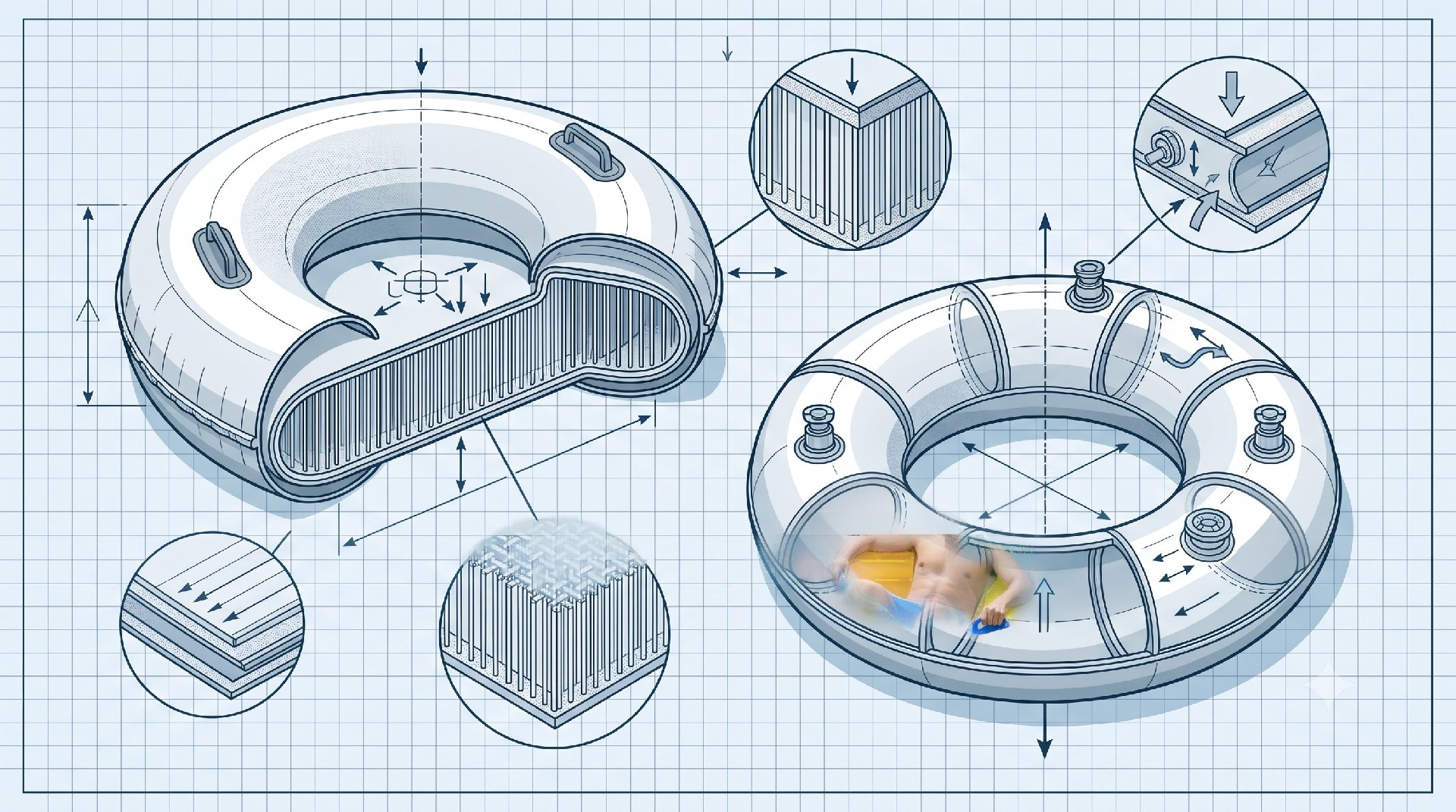
The EN ISO 25649 standard classifies floating leisure articles into different classes based on their design and intended use. Theme Park Floating Rings, which feature a buoyant structure with an opening for the user to sit in, are typically classified as Class B devices . This classification triggers specific and rigorous safety requirements:
Class B Devices: Defined as devices providing a buoyant structure with one or more body openings into which the user is positioned partly immersed . This includes floating rings with interior seat segments .
Safety Requirements for Class B: These include strict regulations on sizing, admissible number of users, and maximum load capacity . The standard mandates specific tests for buoyancy and residual buoyancy to ensure the device remains afloat even if one chamber is compromised .
Material and Construction: The standards require materials to withstand prolonged water immersion, UV exposure, and abrasion. Valves and stoppers must be designed to prevent accidental deflation .
EN 71: The Overlap with Children's Equipment
While EN ISO 25649 is the primary standard for floating leisure articles, EN 71 (the European Toy Safety Standard) becomes relevant if the floating ring is marketed or intended for use by children under 14 years of age. The 2026 revision of EN 71-8 now explicitly includes inflatable activity toys, extending its scope to cover many products previously outside its purview . This means a floating ring used in a family-oriented water park may need to demonstrate compliance with both the general safety requirements of EN 71 and the specific water-performance requirements of EN ISO 25649 .
Certifications like these are not merely stickers; they are evidence of rigorous third-party testing. B2B buyers should request test reports to verify claims.
Engineering Excellence: Material Science and Manufacturing Specs
The durability and safety of a Theme Park Floating Ring are determined by its materials and construction. A CE-compliant product mandates the use of high-grade, tested materials. Key metrics for procurement professionals to evaluate include:
Material Composition & Thickness: Commercial-grade inflatables use high-denier (e.g., 1100D) reinforced PVC or silicone blends. Thickness typically ranges from 0.9mm to 1.2mm for heavy-duty applications, offering enhanced resistance to UV damage and abrasion compared to standard materials .
Weld Engineering: The integrity of seams is critical. CE-compliant rings utilize high-frequency heat-welded seams, which create a bond as strong as the material itself, rather than glued seams which can degrade over time .
Drop-Stitch Construction: For applications requiring high rigidity (like a solid floor or sidewalls), drop-stitch technology is employed. This involves thousands of threads connecting the top and bottom fabric layers, allowing the structure to hold high pressures (often exceeding 10 PSI) and maintain its shape under load.
Maximum Payload: This is a critical safety and operational metric. Commercial rings are engineered to support capacities from 100kg to over 500kg, accommodating both individual users and group use . The max payload is directly tied to the buoyancy calculations mandated by EN ISO 25649 .
Technical Specifications Comparison
The following table provides a comparative overview of specifications for commercial-grade Theme Park Floating Rings, demonstrating the difference between base-level and premium, CE-compliant products .
| Parameter | Base Model (Non-CE Compliant) | Advanced Model (CE Compliant) |
|---|---|---|
| Material Thickness | 0.3mm Standard PVC | 0.9mm / 1100D Reinforced PVC |
| Max Payload | 100kg | 400kg |
| Seam Construction | Glued | High-Frequency Heat-Welded |
| UV Resistance | Minimal | UV-Stabilized (ASTM D4306) |
| Certification | None | CE, EN ISO 25649 |
| Expected Commercial Lifespan | 1 Season | 3-5 Seasons |
Critical Output Metrics
Beyond basic materials, commercial buyers must scrutinize performance metrics. Drop-stitch PSI (pounds per square inch) is a key indicator of rigidity and weight capacity. Higher PSI allows for a firmer, more stable platform, which is essential for guest comfort and safety in high-traffic environments. For instance, a professional-grade ring may maintain a working pressure of 0.5 to 0.7 bar (7-10 PSI) to support its maximum load without deforming.
Commercial ROI: Safety, Durability, and Total Cost of Ownership
From a B2B perspective, the investment in CE-compliant Theme Park Floating Rings is justified by a superior Total Cost of Ownership (TCO). While the initial purchase price of a non-compliant product may be lower, the associated risks and replacement costs are significantly higher.
Risk Mitigation and Liability
CE certification is a powerful defense against liability claims. In the event of an accident, a court will scrutinize whether the equipment met applicable safety standards. A CE mark provides robust evidence that the manufacturer and operator acted with due diligence. Conversely, using non-certified equipment exposes the operator to claims of negligence .
Operational Lifespan and Wear
CE-compliant rings are built to withstand thousands of use cycles. They feature UV-resistant coatings that prevent degradation from sunlight, tear-proof seams, and hardware resistant to corrosion from chlorine or saltwater . A high-quality ring may last for several seasons, whereas a cheaper unit may need to be replaced annually.
UV Resistance: Materials must pass accelerated aging tests (e.g., ASTM D4306) to ensure they don't become brittle and crack .
Abrasion Resistance: High-denier fabrics and robust coatings minimize damage from constant contact with surfaces and life jackets.
[IMAGE_2]
Conclusion: A Strategic Investment in Safety and Quality
For procurement managers, resort owners, and water park operators, the mandate is clear: the sourcing of Theme Park Floating Rings must be governed by a strict adherence to CE marking and its underlying standards. Compliance is not a bureaucratic hurdle but a strategic investment that guarantees guest safety, protects the brand from liability, and ensures a better return on investment through superior durability and performance. By prioritizing suppliers who demonstrate a verifiable commitment to EN ISO 25649 and EN 71 standards, you are not just buying a product; you are securing operational excellence and peace of mind for years to come.
