

Introduction: The Non-Negotiable Standard for Commercial Water Parks
For B2B buyers and water park operators, sourcing theme park floating rings is a critical decision that impacts guest safety, operational uptime, and liability. While price and aesthetics are factors, the single most important procurement criterion is compliance with CE marking and the underlying EN ISO 25649 series of standards. In the European Economic Area (EEA), CE marking is not a suggestion; it is a mandatory legal requirement for products placed on the market. For theme park floating rings, which fall under Class B devices per ISO 25649-4, this certification signifies that the product meets stringent EU safety, health, and environmental protection requirements. This masterclass provides a detailed engineering analysis of what CE compliance entails, the technical specifications that matter, and how to evaluate suppliers based on data-driven metrics .
The Regulatory Landscape: Understanding EN ISO 25649-4 for Class B Devices
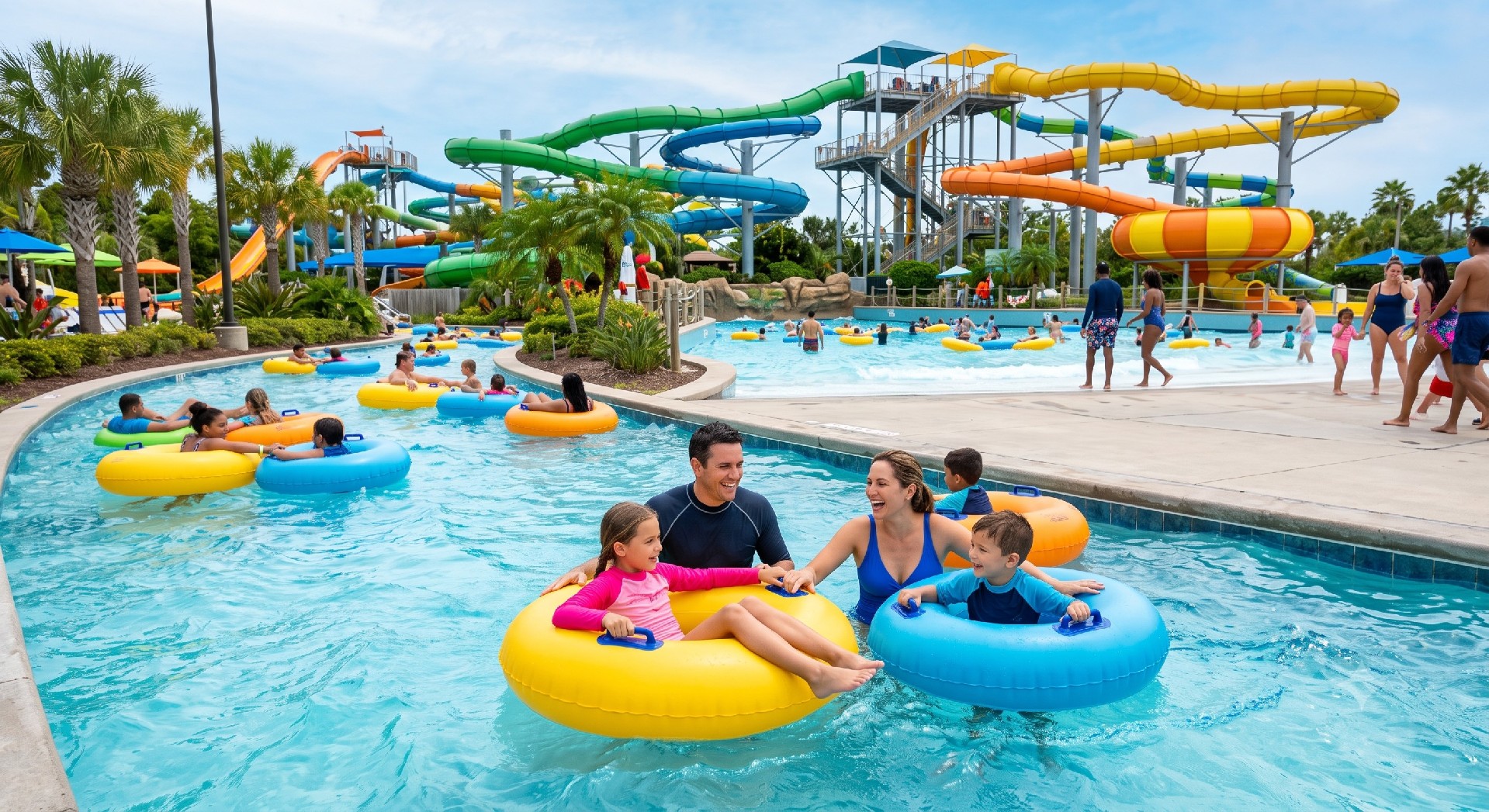
Floating rings for theme parks are classified as Class B floating leisure articles under the EN ISO 25649 series. This standard specifically covers devices that provide a buoyant structure with one or more body openings into which the user is positioned, partly immersed . This classification is crucial because it dictates specific design and safety requirements distinct from towable devices (Class C) or large floating parks (Class D). Compliance with CE marking for these rings requires adherence to the harmonized standard EN ISO 25649-4:2024 .
Key Safety Requirements for Class B Devices
The standard mandates rigorous testing and design criteria to mitigate risks of drowning, entrapment, and injury. Key areas of focus include:
Sizing and Admissible Number of Users: The product must be clearly marked with its maximum load capacity and the number of users. This involves precise calculations of buoyancy and space per person .
Buoyancy and Residual Buoyancy: The ring must provide sufficient buoyancy to keep the user afloat even if one or more air chambers are compromised. This is a critical safety factor .
Valves and Protruding Parts: Valves and other components must be designed to minimize the risk of injury or entrapment. They must also be durable and resistant to damage .
Grab Handles and Restraint Systems: Handles and any body-holding systems must undergo rigorous pull tests to ensure they can support the user's weight without failure, particularly during re-embarkation from the water .
Entrapment Prevention: The design must prevent the user's feet, legs, or torso from becoming trapped in any part of the product .
In-Water Performance: The product must be tested for stability and performance in its intended environment (e.g., pools, protected lake areas) .
Engineering Specs: The Pillars of a Compliant Floating Ring
CE compliance is validated through rigorous testing that demands high-quality materials and construction. A non-compliant product will almost certainly fail these tests. Below are the critical engineering specifications that a CE-certified theme park floating ring must meet.
| Key Parameter | Technical Specification for CE-Compliant Theme Park Floating Rings |
|---|---|
| Primary Material | 0.9mm - 1.2mm Reinforced PVC (1100D+ or equivalent) |
| Tensile Strength (Typical) | Warp ≥ 2500 N/5cm, Weft ≥ 2300 N/5cm |
| Seam Construction | High-Frequency (HF) Heat-Welded / Hot-Air Welded |
| Maximum Payload / Capacity | 100kg to 500kg (depending on model/class) |
| Safety Features | Multi-Chamber Design, Reinforced Grab Handles, Flush-Mount Valves |
| Applicable Standards | EN ISO 25649-1, EN ISO 25649-4:2024 (Class B), CE |
| Warranty / Working Life | 1-year warranty / 3-5 years commercial working life |
1. Material Science: PVC, Hypalon, and Drop-Stitch Cores
The choice of material is foundational. For commercial-grade rings, reinforced PVC (Polyvinyl Chloride) is the industry standard, often with a thickness of 0.9mm or greater, and a denier count of 1100D or higher for superior abrasion and puncture resistance . A critical specification is the tensile strength, which for compliant fabrics often exceeds 2500 N/5cm (warp) and 2300 N/5cm (weft) .
While high-end applications like extreme white-water rafting might use Hypalon (CSM) for its superior UV and chemical resistance, reinforced PVC offers an excellent balance of durability and cost-effectiveness for theme park use. A key manufacturing innovation is the use of drop-stitch technology in some premium rings, allowing for much higher inflation pressures (PSI) and creating a rigid, stable platform. This requires precise engineering to ensure the thousands of internal threads are evenly tensioned. For CE compliance, the material must also pass stringent tests for heat resistance, UV stability (to prevent degradation), and flame retardancy .
2. Welding and Seam Integrity
A product is only as strong as its seams. CE-compliant rings utilize high-frequency (HF) heat welding or hot-air welding for all seams. This process fuses the material at a molecular level, creating a bond that is often stronger than the parent material itself. This is a critical advantage over glued seams, which can degrade over time. The standard requires that seams show no signs of separation, delamination, or leakage after rigorous testing . For compliance, manufacturers must demonstrate consistent heat-seal parameters (temperature, pressure, and time) to ensure a reliable bond.
3. Multi-Chamber Safety and Valves
To meet residual buoyancy requirements, commercial floating rings should feature multiple independent air chambers. In the event of a puncture, the remaining chambers must provide enough flotation to support the user and allow them to reach safety. This is a direct requirement from the EN ISO 25649 series . High-quality, one-way valves that are flush with the surface of the ring are essential. These must be durable, resistant to corrosion, and capable of withstanding the pressures of repeated inflation and deflation over the product's lifecycle .
Commercial Implications: ROI and Operational Lifespan
Choosing a CE-certified theme park floating ring is a strategic financial decision. While non-certified products may have a lower upfront cost (CapEx), they pose significant hidden risks.
Total Cost of Ownership (TCO) and Liability
A key component of TCO is the product's lifespan. CE-certified materials and construction are designed for a commercial lifecycle of 3 to 5 years of heavy use . This durability directly translates to lower replacement frequency, reduced maintenance costs, and less downtime for repairs.
Conversely, the use of non-compliant or substandard materials leads to premature failure, including seam delamination, UV degradation, and punctures. A single product failure can lead to:
Injury or Drowning: Resulting in lawsuits, compensation, and irreversible brand damage.
Loss of License and Insurance: Many insurers and local licensing authorities require proof of CE certification for commercial water park equipment .
Operational Downtime: A high failure rate means more time spent on patching and repairing, and less time generating revenue.
Consumer Perception and Brand Trust
In the age of social media, a single negative guest experience can go viral. Investing in high-quality, safe equipment builds a reputation for excellence and reliability. A well-maintained fleet of CE-compliant rings ensures consistent performance, positive guest experiences, and a higher return on investment over the long term.
Supplier Evaluation: What to Look For
When sourcing, buyers must look beyond a simple claim of 'CE certification.' Scrutinize the supplier's technical documentation, including:
Test Reports: Request full test reports from an independent third-party body like TÜV SÜD. A supplier with TUV certification for each element against EN ISO 25649 provides an additional layer of assurance .
Traceability: The supplier should have a robust quality management system that ensures material traceability and consistent manufacturing processes. Look for ISO 9001 certification as an indicator of quality management .
Warranty: A strong warranty (e.g., 1-year warranty with a 3-5 year working life) is a sign of a supplier's confidence in their product .
Conclusion: The Mandate for Safe and Profitable Operations
Compliance with CE marking is not a bureaucratic hurdle; it is the bedrock of a safe, sustainable, and profitable theme park operation. For theme park floating rings, adherence to the EN ISO 25649-4 standard ensures that every product meets the highest levels of safety, durability, and performance. By demanding CE certification and understanding the engineering specifications behind it, B2B buyers can protect their guests, their brand, and their bottom line.
