

Introduction: The Commercial Imperative for Durability in Surf Rafts
For B2B buyers in the water sports rental, resort, and rescue sectors, the durability of a surf raft is not just a feature—it is the cornerstone of profitability, safety, and brand reputation. A raft that fails prematurely due to punctures, UV degradation, or seam separation translates directly into lost revenue, increased operational costs, and potential safety hazards. From a manufacturer's perspective, achieving exceptional durability is a complex engineering challenge that involves meticulous material selection, advanced manufacturing techniques, and rigorous testing. This technical deep-dive explores the critical factors that make a surf raft truly durable, providing commercial buyers with the data-driven insights needed to make informed sourcing decisions. We will dissect the core components—from fabric technology and welding methods to valve systems and industry standards—to reveal what separates a premium, long-lasting product from a disposable alternative.
The Foundation of Durability: Advanced Fabric Technologies
The fabric is the primary defense against the harsh marine environment. When evaluating a surf raft, two key metrics are the base material and its construction. The most common materials are high-grade PVC (Polyvinyl Chloride) and Hypalon (Chlorosulfonated Polyethylene), each offering distinct advantages. A true commercial-grade raft moves beyond simple material naming to specify exact technical parameters, such as denier count and fabric thickness.
Denier and Thickness: The First Line of Defense
Denier measures the linear mass density of the fabric's yarn. A higher denier, such as 1000 Denier polyester, indicates a thicker, more robust thread that offers superior abrasion and puncture resistance. The material thickness, often specified in millimeters (e.g., 0.9mm to 1.2mm), is another critical specification . In professional-grade rafts, you will commonly find 1000D PVC fabric used for the main tubes and a reinforced layer on the bottom for additional protection . This combination provides a strong, lightweight, and highly resistant surface.
Puncture and Tear Strength: The Numbers That Matter
Beyond material composition, durability is quantified through standardized tests. The trapezoid tear test, for instance, measures the force required to propagate a tear. While specific values can vary, reputable manufacturers test against rigorous standards such as those from the FAA for life rafts, which require a minimum of 67 pounds (approx. 298 N) of force to puncture the fabric . Look for commercial surf rafts that openly share these performance metrics, as they are a direct indicator of resilience in rocky or debris-filled environments. A hull that can withstand over 50,000 wear and puncture resistance tests in a manufacturing setting demonstrates an extreme level of reliability .
Seam Integrity: Welded vs. Glued
A surf raft is only as strong as its seams. The method of joining fabric panels is arguably more critical to long-term durability than the fabric itself. Two primary methods exist: heat welding and gluing (or cementing).
Heat welding is the gold standard. This process uses high-frequency or hot air to fuse the material layers at a molecular level, creating a bond that is as strong as, if not stronger than, the surrounding fabric. Welded seams do not rely on adhesives that can dry out, become brittle, or break down over time due to UV exposure and chemical degradation. This makes them incredibly durable and resistant to peel failure. On the other hand, glued seams, while sometimes easier to repair in the field, introduce a potential point of failure. The adhesive's lifespan is finite and is often the first component to degrade, especially when exposed to saltwater and harsh sunlight.
Understanding Peel and Shear Strength
Manufacturers test seam strength using seam peel and seam shear tests. These tests quantify the force needed to separate the bonded layers. As an example, stringent regulatory standards require a seam peel strength of 0.6 N/mm of width under specific conditions . Advanced manufacturing utilizes heat-welded seams to consistently achieve and exceed these benchmarks, ensuring structural integrity under heavy loads and in turbulent water.
| Key Parameter | Technical Specification |
|---|---|
| Material Type | 1000 Denier Reinforced PVC or Hypalon |
| Fabric Thickness | 0.9mm - 1.2mm |
| Seam Construction | Heat-Welded (Molecular Bond) |
| Maximum Payload (Example) | 300 kg - 400 kg (660 - 880 lbs) |
| Drop-Stitch Floor PSI | 7 - 10+ PSI |
| Certifications | CE, ISO 6185, REACH Compliant |
Core Engineering: Drop-Stitch and Multi-Chamber Safety
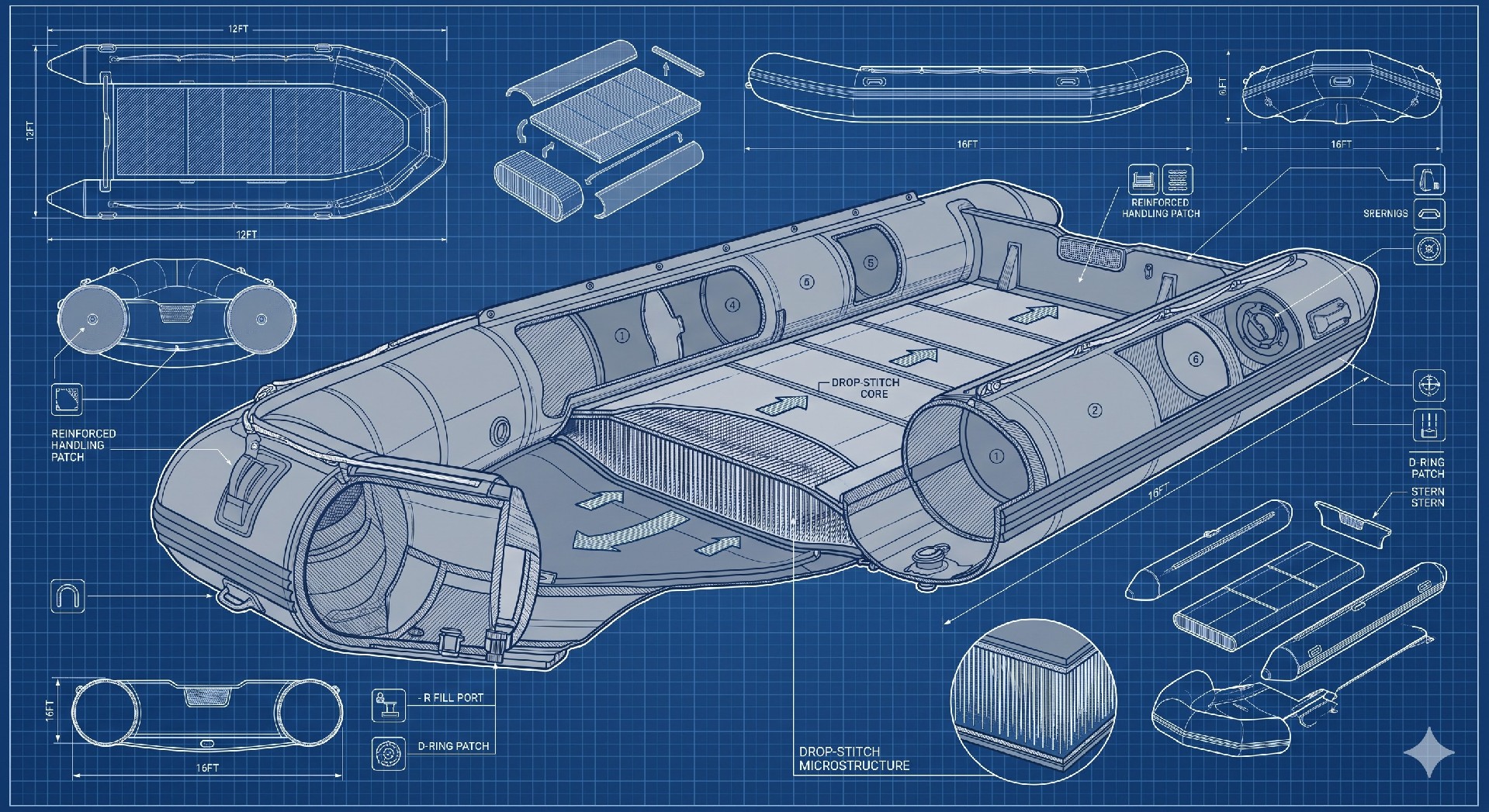
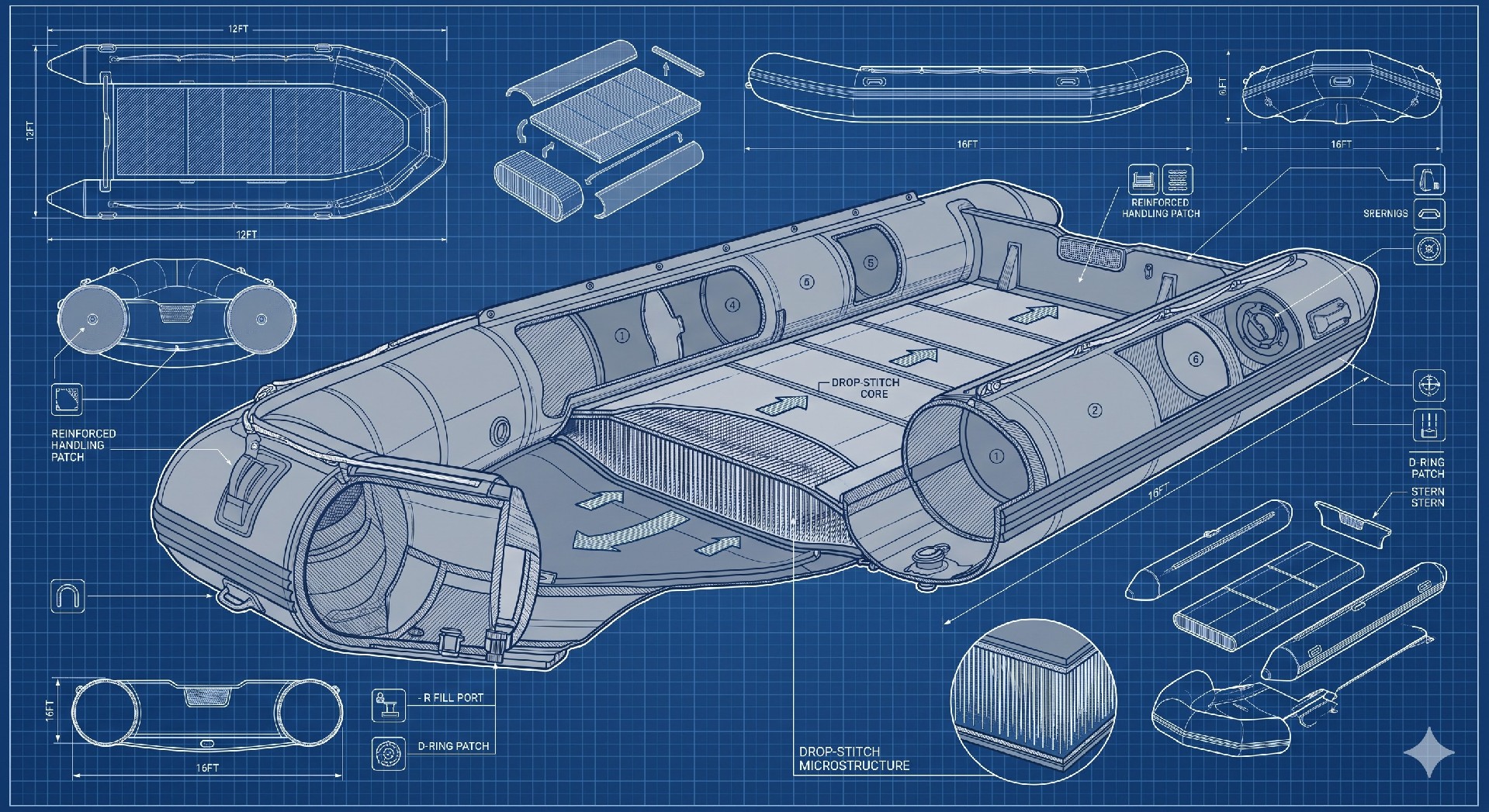
A hallmark of modern, durable surf rafts is their construction, which often incorporates drop-stitch technology or multi-chamber designs, or a combination of both, to provide unparalleled rigidity and safety.
The Physics of Drop-Stitch Rigidity
Drop-stitch fabric consists of two layers of material connected by thousands of high-tenacity polyester threads. When inflated, these threads hold the fabric layers taut, creating a flat, rigid, and high-pressure surface. This technology allows for the creation of inflatable floors and hulls that mimic the performance of hard-shell equipment. The PSI (Pounds per Square Inch) a drop-stitch floor can handle is a key metric; while traditional inflatable tubes operate at low pressure (2-3 PSI), a drop-stitch floor can be inflated to 7-10 PSI or more. This high pressure not only provides rigidity for better performance but also enhances the structure's resistance to impact damage. The internal threads distribute load and absorb energy, preventing punctures from penetrating both layers.
Multi-Chamber Safety Systems
True commercial durability also encompasses survivability. A surf raft divided into multiple, independent air chambers ensures that a puncture in one section doesn't compromise the entire vessel . This feature is paramount for rental operations and rescue scenarios. This is not just a safety feature but a commercial one, as it allows a raft to remain operational and return to shore under its own power after a minor incident, reducing the likelihood of costly towing or rescues. Furthermore, positive buoyancy requirements for commercial vessels often mandate that a craft can remain afloat with a critical chamber deflated, ensuring the safety of its passengers .
Industry Standards and Compliance
For a B2B buyer, compliance with established international standards is a non-negotiable aspect of durability. These standards provide a framework for testing and quality assurance that builds trust and mitigates risk.
CE Certification: Indicates that the product meets EU safety, health, and environmental requirements, confirming the raft has undergone rigorous safety assessments .
ISO 6185: This is the international standard for inflatable boats. It specifies requirements for different types of boats, based on their maximum load capacity, covering construction, materials, and safety .
REACH Compliance: Ensures that the materials used, particularly plastics and coatings, are free from harmful substances, which is crucial for environmental sustainability and operator safety.
USCG / EASA Standards: For rescue applications, adherence to stringent aviation or maritime regulations is critical. For example, the EASA specifies that an inflated raft must maintain a minimum pressure for extended periods (e.g., not falling below the minimum raft mode operating pressure for 24 hours ) and must withstand a pressure at least 1.5 times the maximum operating pressure .
Looking for a surf raft with these certifications is a direct way to validate a manufacturer's claims about its durability and safety.
Commercial Application Scenarios and Lifespan
The definition of 'durability' is context-dependent. A raft used for weekly high-intensity whitewater tours needs a different set of specifications compared to one used for calm lake fishing or as a floating platform at a resort.
Extreme Rapids and Whitewater: Requires maximum abrasion resistance, a reinforced bottom (often a double-layer or drop-stitch floor), and high puncture resistance to withstand impacts with rocks . Multi-chamber self-righting hulls are also a premium feature here for safety.
High-Throughput Rentals: Needs a robust, low-maintenance material like thick PVC or Hypalon with welded seams to handle daily inflation, deflation, and rough handling by inexperienced users. A fast inflation/deflation system is key to commercial turnaround.
Resort and Glamping: Often prioritizes aesthetic appeal and comfort alongside durability. However, the structural integrity provided by drop-stitch floors for walk-on stability is essential for a premium guest experience. Materials need to withstand constant UV exposure.
Rescue Operations: Demands the highest level of reliability, with materials tested to extreme standards, multiple chambers for redundancy, and rapid deployment capabilities.
From a manufacturer's perspective, the expected commercial lifespan of a well-maintained, high-quality surf raft can range from 10 to 15 years, with minor repairs and periodic maintenance. This far exceeds the 1-2 year lifespan of consumer-grade products, providing a significantly superior ROI over the long term .
Conclusion: The Manufacturer's Verdict on Durability
Durability in a surf raft is not a single attribute but the sum of its parts—all engineered to work together. From the molecular bond of a welded seam to the high-precision PSI of a drop-stitch floor, every element contributes to a product's ability to withstand real-world conditions. For B2B buyers, moving beyond superficial marketing and focusing on hard specifications like fabric denier, material thickness, seam type, PSI ratings, and certification compliance is the only way to ensure a sound investment. A durable surf raft is a long-term asset that delivers superior safety, lower operational costs, and a better experience for the end-user. Partnering with a manufacturer that is transparent about these technical details and committed to rigorous testing and quality control is the ultimate strategy for success in the competitive world of outdoor water recreation and safety equipment.
