

Introduction: The Commercial Imperative for High-Strength PVC Tarpaulin Kayaks
For the discerning importer, the inland and coastal water sports market presents a significant growth opportunity. However, the bedrock of a profitable and reputable rental or tour operation lies in the durability, safety, and performance of its fleet. While traditional hard-shell kayaks dominate the consumer space, the commercial sector is rapidly shifting towards high-strength PVC tarpaulin kayaks. This migration is driven by logistical efficiency, lower total cost of ownership, and advancements in material science that now rival the rigidity of their polyethylene counterparts . This guide serves as a comprehensive technical deep-dive for B2B buyers, dissecting the critical specifications—from denier count to drop-stitch PSI—that define commercial-grade inflatable watercraft. We will analyze the manufacturing, material compliance, and ROI frameworks to empower you to make a data-driven sourcing decision.
Understanding the Core Material: The PVC Tarpaulin Matrix
Not all PVC is created equal. The term 'PVC tarpaulin' encompasses a vast range of qualities. For commercial kayaks, the material is a composite: a high-strength polyester scrim coated with layers of PVC resin . The critical metrics for importers are the denier count of the base fabric and the overall thickness (measured in millimeters) and weight (GSM). A 1000D polyester base with a 28x26 weave count is the industry standard for heavy-duty applications, offering a superior strength-to-weight ratio compared to lower deniers like 500D or 840D, which are often reserved for dry bags or entry-level leisure craft .
Denier and Abrasion Resistance: The First Line of Defense
The denier (D) measurement indicates the linear mass density of the fibers. In high-abrasion environments—such as beaching on rocky shores or frequent loading and unloading—a 1000D fabric provides significantly higher puncture and tear resistance than 500D variants. Suppliers like DERFLEX and Jinlong offer 1000D and even 1500D options, which are essential for combatting the wear and tear of high-turnover rental fleets .
Coating Formulations and Environmental Compliance (REACH, EN71)
Beyond the fabric, the PVC coating is the key to longevity. Commercial-grade materials utilize specialized formulations for UV resistance (Anti-UV grade 4-5), cold crack resistance (maintaining flexibility down to -30°C), and resistance to saltwater corrosion . For importers targeting European or North American markets, compliance is non-negotiable. The material must meet REACH, RoHS, and EN71 standards to ensure they are free from phthalates and heavy metals . This is particularly critical for rentals where the equipment is in constant contact with users.
Engineering for Rigidity: The Drop-Stitch Core and PSI Limits
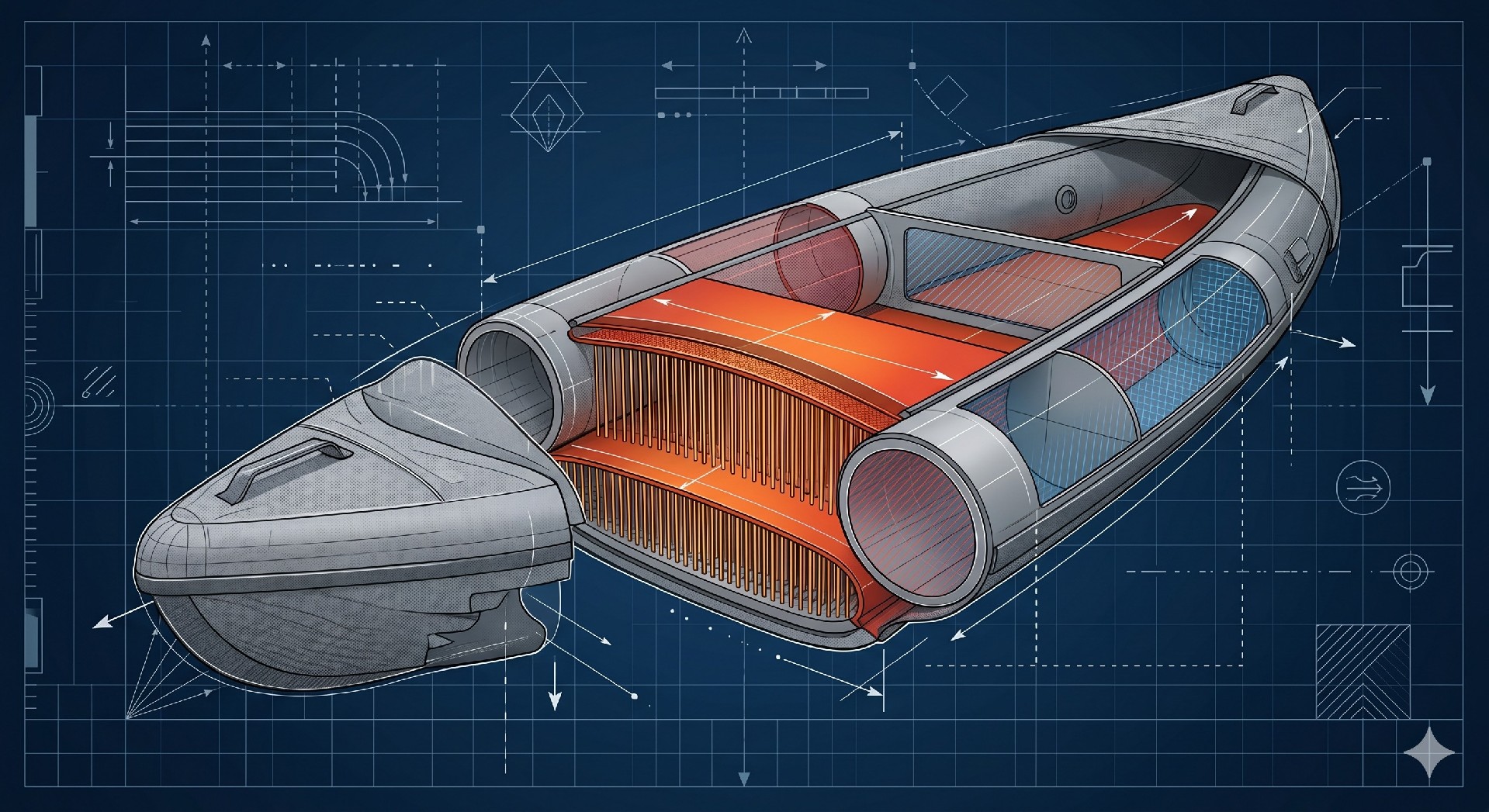
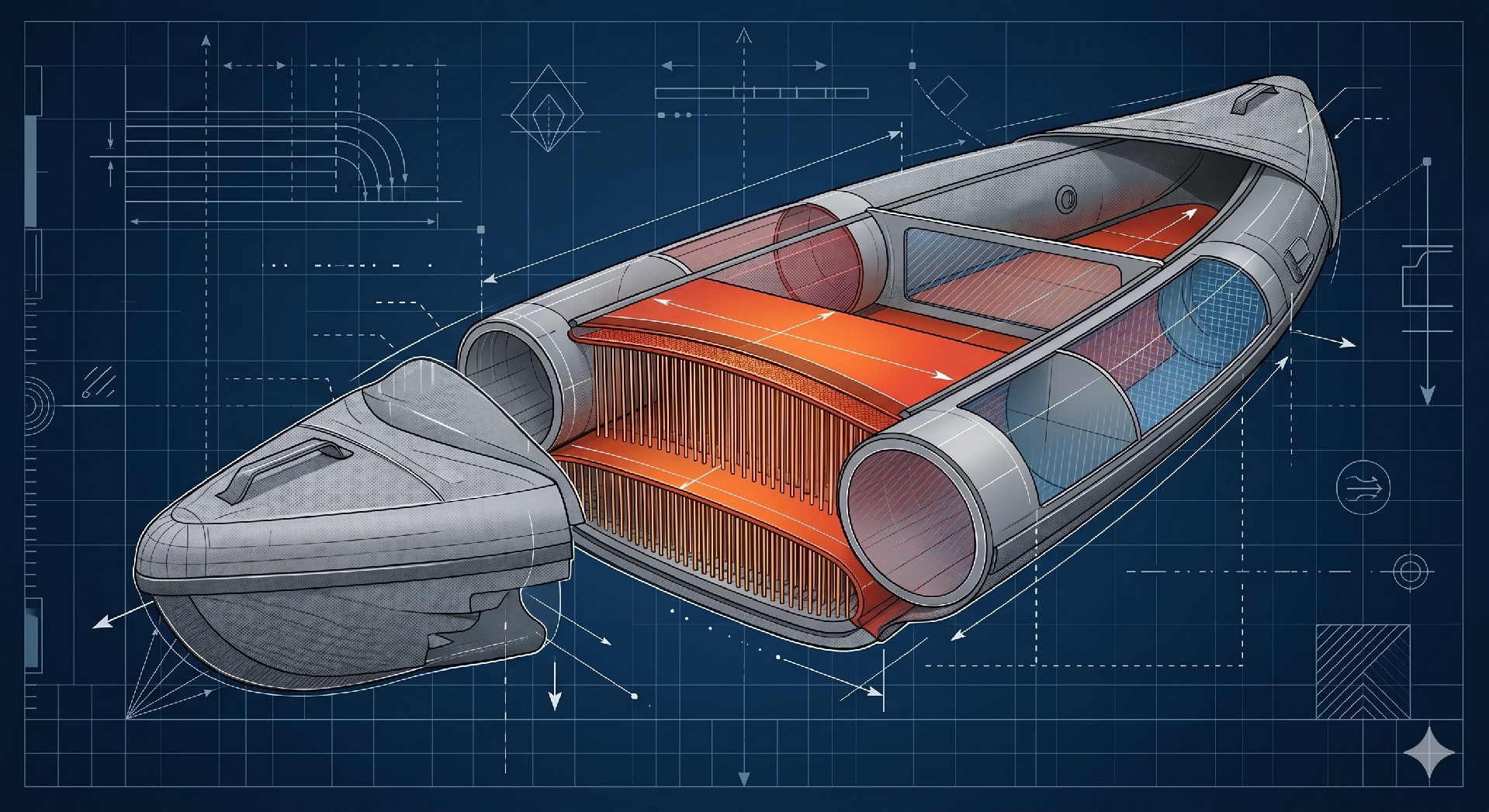
The primary limitation of early inflatable kayaks was their 'soggy' feel, which resulted in poor tracking and low paddling efficiency. The introduction of drop-stitch technology has revolutionized the segment. This manufacturing technique utilizes thousands of polyester threads connecting the top and bottom fabric layers. When inflated, these threads hold the material taut, creating a rigid, flat, or shaped structure capable of withstanding high pressure .
Operational Pressure: PSI and Inflation/Deflation Time
Drop-stitch floors and gunwales are rated for specific PSI (Pounds per Square Inch) limits. High-performance kayaks require pressures of 10-15 PSI to achieve optimal rigidity. This is critical for commercial operators as it directly impacts performance and user experience . However, high pressure requires investment in reliable inflation systems. The trade-off between rigidity and inflation time is a key factor in fleet efficiency. High-pressure chambers take longer to fill, necessitating the use of dual-stage pumps or battery-operated electric pumps to reduce turnaround times .
| Key Parameter | Technical Specification (Commercial Grade) | Impact & Justification |
|---|---|---|
| Material Composition | 1000D x 1000D Polyester with PVC Coating (0.9mm - 1.2mm thickness) | |
| Drop-Stitch Core | High-density polyester thread (e.g., 23x23 or 28x26 weave count) | |
| Operating Pressure | Floor: 10-15 PSI (Drop-Stitch); Gunwales: 3-5 PSI | |
| Maximum Payload | 400 kg - 500 kg (approx. 880-1100 lbs) | |
| Inflation/Deflation Time | 5-10 minutes (using dual-stage/electric pump) | |
| Safety Compliance | REACH, RoHS, EN71, ISO 6185 | |
| Seam Technology | Heat-Welded / High-Frequency (HF) welded seams | |
| Temperature Resistance | -30°C to +70°C | |
| UV Resistance | Anti-UV Grade 4-5 (Prevents fading and cracking) |
Multi-Chamber Safety and Seam Integrity: Welded vs. Glued
Safety is paramount, especially when operating under the liability of a rental business. The primary safety feature in a modern inflatable kayak is the multi-chamber design. By incorporating separate air compartments, the kayak retains buoyancy even if a single chamber is compromised, allowing passengers to reach shore safely.
The Superiority of Heat-Welded Seams
The integrity of these chambers depends entirely on the seams. Low-quality kayaks utilize glued seams, which are susceptible to degradation from UV exposure, saltwater, and age. Commercial-grade PVC tarpaulin kayaks must utilize high-frequency (HF) welding or hot-air welding. This process molecularly fuses the PVC layers, creating a bond that is as strong as the material itself, ensuring air-tightness and long-term structural integrity .
Total Cost of Ownership (TCO) and ROI for Importer
From a B2B perspective, the initial unit cost is only one piece of the puzzle. The true value of heavy-duty PVC tarpaulin kayaks lies in their Total Cost of Ownership (TCO). While hard-shell kayaks require expensive transportation (trailers, roof racks) and large storage facilities, high-strength PVC kayaks deflate to a fraction of their size, reducing warehousing costs and shipping container volume. This efficiency can lead to significant CapEx savings in logistics and storage infrastructure.
Quantified Lifespans and Rental ROI
Commercial-grade PVC, with proper care and UV protection, offers a quantified commercial lifespan that often outstrips hard-shell alternatives in rental environments because repairs (patching PVC) are simpler and more cost-effective than repairing cracked polyethylene. For rental operators, the maximum payload is a key metric, with commercial models often supporting 400 kg to 500 kg (approx. 880 to 1100 lbs), accommodating two adults and gear . This versatility increases the hourly rental revenue potential per unit.
Conclusion: A Strategic Sourcing Framework
Sourcing high-strength PVC tarpaulin kayaks for the commercial market demands a shift in evaluation criteria. It requires a move away from the 'pool toy' perception and a focus on industrial-grade engineering. Importers must demand ISO 6185 compliance, verify material thickness (0.9mm+), specify 1000D denier polyester, and insist on reinforced drop-stitch floors capable of 10+ PSI. By prioritizing these technical specifications and complying with global safety standards, importers can build a fleet that ensures high customer satisfaction, minimizes downtime, and maximizes long-term profitability.
