

Introduction: The Commercial Case for Precision Maintenance
In the B2B outdoor equipment sector, an inflatable boat is not merely a product—it is a capital asset. For fleet managers, resort operators, and rental enterprises, the total cost of ownership (TCO) is directly tied to maintenance protocols. While the initial procurement focuses on material thickness and payload capacity, the long-term profitability hinges on understanding the science of fabric degradation, valve lifespans, and seam integrity. This guide provides a data-driven framework for maximizing the commercial lifespan of your inflatable assets, moving beyond basic care to a strategic maintenance operation.
Fabric Tech Deep Dive: Hypalon vs. PVC in Commercial Environments
The cornerstone of any maintenance strategy is understanding the material science of your fleet. The two primary fabrics—CSM (Hypalon) and PVC—dictate maintenance schedules and operational ROI.
Hypalon (CSM) Durability
Hypalon is renowned for its exceptional resistance to UV degradation, ozone, and chemical attack. A well-maintained Hypalon tender can last 30 years in temperate climates and over a decade in harsh tropical sun . This material is ideal for high-exposure commercial environments. However, it requires specific adhesives for patching, and cleaning is critical to prevent oxidation and surface chalking .
PVC Fabric Performance
While PVC offers a lower initial cost, its lifespan in commercial service is often less than one-third that of Hypalon under UV stress . PVC is more susceptible to heat and UV, leading to plasticizer migration and eventual cracking. For PVC fleets, rigorous UV protection—including storage under covers and the application of UV-blocking sprays (like 303 Aerospace Protectant, applied annually)—is non-negotiable .
Weld Engineering and Seam Integrity
Seams are the most vulnerable stress points on an inflatable boat. In a commercial setting, the distinction between machine-welded seams and hand-glued seams is critical. Welded seams offer superior strength and air retention, reducing the risk of delamination under high pressure . Maintenance protocols must include regular inspection of seam tape and internal baffles. If a patch intersects a seam, technicians must apply glue liberally in two coats and allow a 24-hour curing period before pressurization to prevent the patch from separating .
Technical Specifications & Maintenance Metrics
To optimize asset utilization, maintenance must be tied to quantifiable technical data. The following table outlines critical technical specifications every B2B operator must monitor.
| Key Parameter | Technical Specification & Commercial Impact |
|---|---|
| Material Thickness & Denier | 0.9mm - 1.2mm / 1100D Reinforced PVC or CSM (Hypalon). Higher denier = superior abrasion resistance. |
| Maximum Payload Capacity | Typically 400 kg to 800+ kg (880 lbs to 1760+ lbs). Exceeding this voids warranties and accelerates seam stress. |
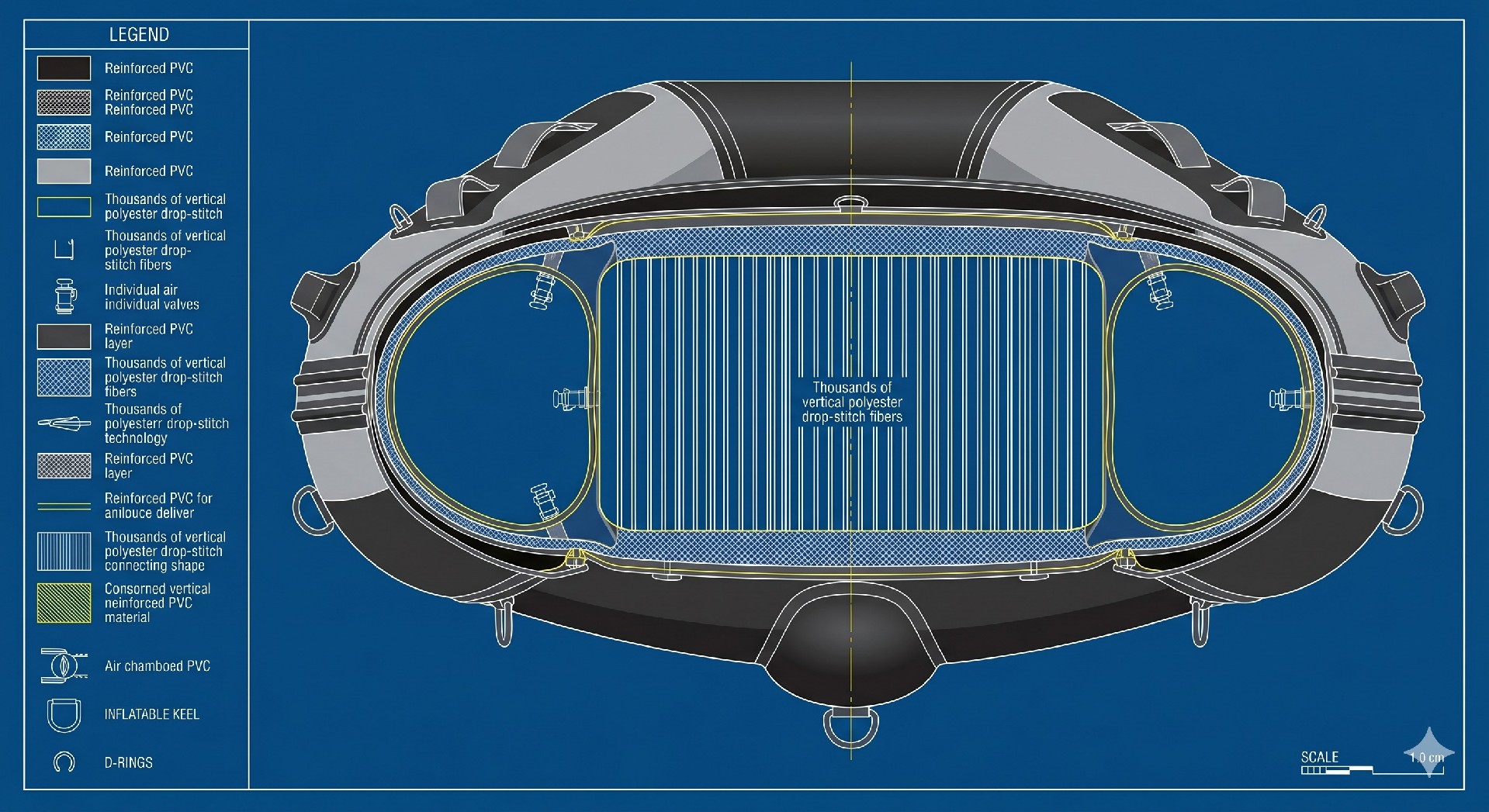
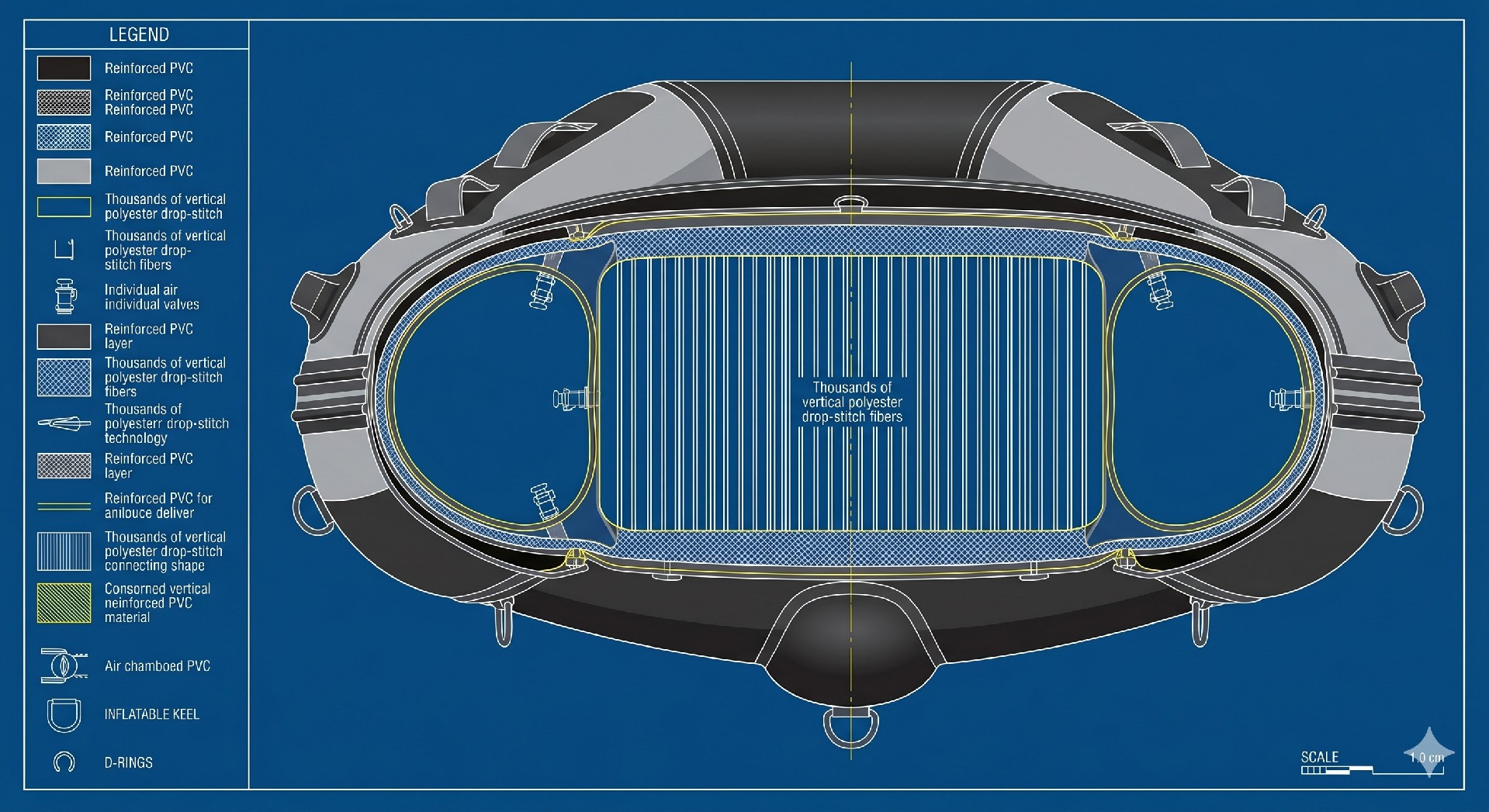
| Drop-Stitch Floor PSI | 10 - 15 PSI (High-pressure core). Maintains hull rigidity; critical for planing and load distribution. |
| Inflation/Deflation Time | Optimized for commercial turnaround. High-volume pumps reduce downtime to under 5 minutes. |
| Valve Lifespan | High-pressure valves rated for 5-10 years with proper cleaning and O-ring lubrication. |
| UV Protection Strategy | Annual application of UV protectant (e.g., 303 Aerospace) is recommended to prevent chalking and cracking. |
Critical Output Metrics for Fleet Managers
Inflation/Deflation Time: For high-throughput rental operations, rapid inflation systems are vital. Standard drop-stitch floors require specific PSI (e.g., 10-15 PSI) for rigidity. Time to inflate and deflate directly impacts turnaround efficiency.
Maximum Payload: Consistent overloading (exceeding the 400kg/880lbs rating) stresses seams and fabric, accelerating material fatigue . Adhering to capacity limits is a maintenance imperative.
Drop-Stitch Core Integrity: The internal drop-stitch threads maintain the floor's rigid shape. Routine PSI checks ensure that core integrity is preserved without straining the fabric.
Maintenance Protocols: Valves, Cleaning, and Storage
Valve Lifespan and Maintenance
Valves are a common source of slow leaks. Fortunately, they are serviceable. A valve inspection should involve cleaning the sealing surfaces with a toothbrush and lightly lubricating O-rings with silicone or synthetic grease . Avoid over-tightening plastic valves. For pressure relief, consider fitting Pressure Relief Valves (PRVs) to automatically vent air during thermal expansion, preventing seam bursts .
Cleaning and Corrosion Prevention
Saltwater is the primary enemy of inflatable boats. Salt crystals act as abrasives and attract moisture, leading to material degradation . Mandate fresh-water rinsing after every saltwater use. For deep cleaning, use specialist marine cleaners, not household bleach, which can break down PVC coatings .
Off-Season Storage Strategy
Proper storage extends the asset's life significantly. Store boats partially inflated (not fully deflated) to prevent creases and protect the fabric's structure . Ensure the boat is completely dry before storage to prevent mold and mildew . Store in a cool, dry place away from direct sunlight; if possible, use UV-protective covers .
Commercial Application and Safety Compliance
For B2B operators—from glamping resorts to rescue departments—maintenance is integral to compliance and safety. Adhering to International Maritime Organization (IMO) standards, which often require professional inspections every five years, ensures the vessel's seaworthiness . For rental fleets, a proactive maintenance schedule minimizes downtime and protects against liability. Investing in a comprehensive repair kit—including specific adhesives for your material (Hypalon or PVC), seam rollers, and a heat gun—ensures rapid, reliable field repairs .
Conclusion: The ROI of Rigorous Maintenance
In the B2B inflatable equipment market, maintenance is not an operational cost; it is a profit center. By implementing a strategic maintenance regime that includes material-specific cleaning, precise PSI management, and rigorous valve and seam inspections, operators can extend the commercial lifespan of their assets from a mere 2-5 years (with neglect) to 15+ years . This longevity directly translates to improved ROI, reduced capital expenditure, and a consistent, professional experience for the end-user. Choose your materials wisely, adhere to the technical specifications, and treat maintenance as a core business function.
