

Introduction: The Commercial Imperative of Rigid Inflatable Platforms
For B2B buyers, fleet managers, and outdoor equipment procurement specialists, the choice of a tender or workboat is a critical capital expenditure decision. The inflatable boat with aluminum floor represents a strategic intersection of durability, portability, and performance, offering a distinct advantage over traditional hard-shell alternatives or air-floor variants. This guide provides a comprehensive technical evaluation, addressing material science, engineering specifications, and commercial ROI to facilitate an informed sourcing decision.
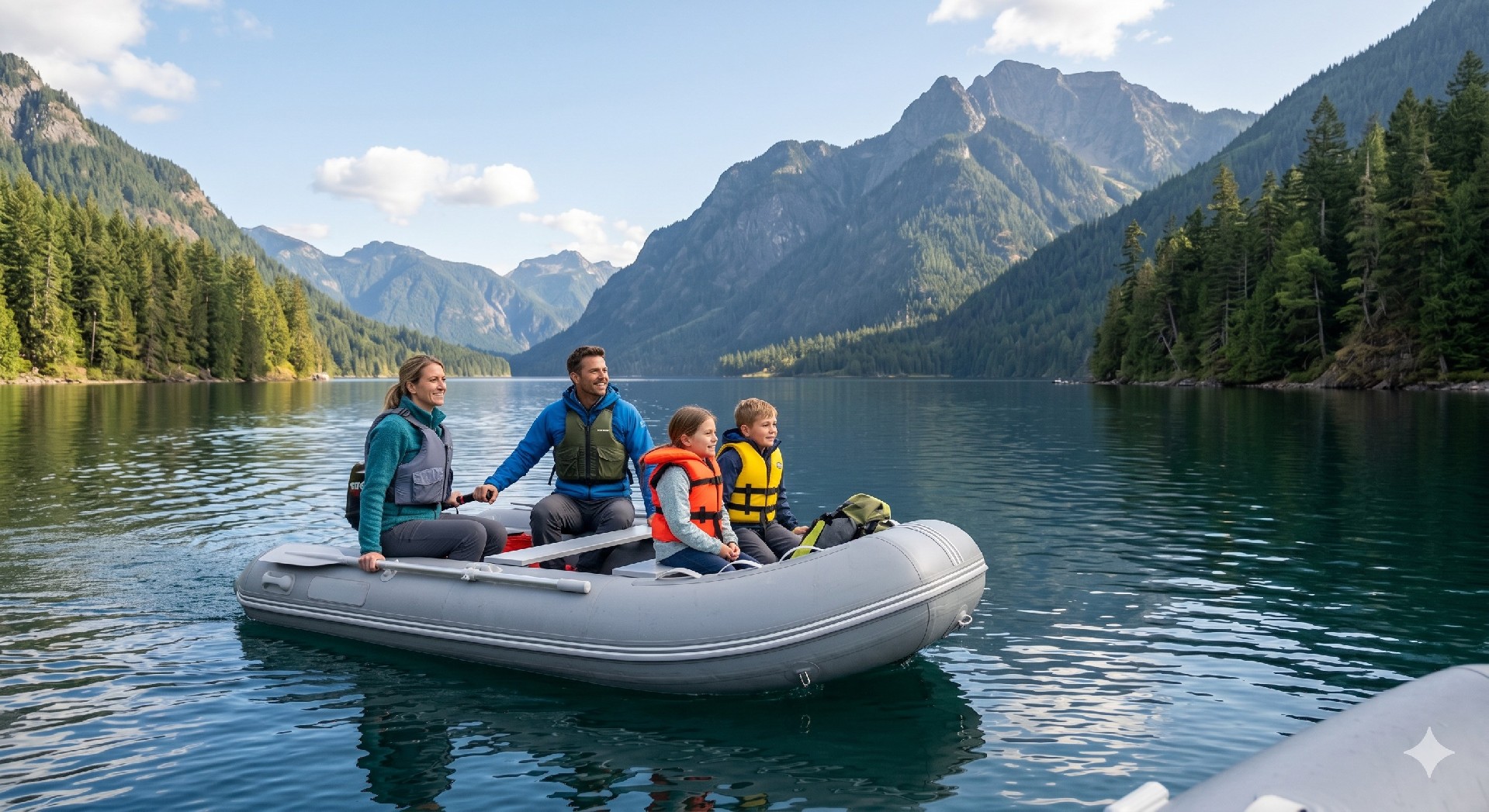
Engineering Core: Drop-Stitch Physics and Aluminum Rigidity
The Structural Synergy
Unlike purely inflatable vessels, the inflatable boat with aluminum floor utilizes an aluminum alloy floor system—often comprising interlocking panels with integrated stringers—to provide a rigid, standing platform. This rigidity is essential for load stability and outboard motor performance. The aluminum floor is paired with high-tensile tube fabric, typically PVC (e.g., 1100 g/m² or 1100 Decitex) or Hypalon (e.g., CSM, 1670 Decitex), which is inflated to precise pressures to absorb impact and provide buoyancy.
Data from commercial-grade models, such as the Selva T 340 A and NDiver DS420, indicate tube pressure ratings up to 0.35 bar (5 psi), ensuring a rigid hull shape that minimizes flex under power . This combination yields a semi-rigid structure that outperforms air-floor boats in terms of planing efficiency and load distribution.
Technical Specifications and Performance Metrics
To objectively assess performance, procurement managers must scrutinize key engineering data. The following table synthesizes critical parameters from leading models, demonstrating the scale and capability available in the market.
| Model | Length (m) | Beam (m) | Max. Load (kg) | Tube Pressure (bar) | Fabric | Chambers |
|---|---|---|---|---|---|---|
| NDiver DS420 | 4.2 | 1.9 | 841 | 0.35 | Commercial Grade PVC | 3 + 1 (Keel) |
| Selva T 340 A | 3.4 | 1.54 | 550 | 0.25 | 1100 g/m² PVC | 3 |
| Defender 430 | 4.3 (14'1") | 1.88 (6'2") | 950 (2094 lbs) | 0.35 (5 psi) | Valmex 1100 or Hypalon | 3 + Keel |
| Highfield Roll Up 250 | 2.5 | 1.61 | 450 | N/A | PVC or Hypalon | 3 |
Material Deep Dive: PVC vs. Hypalon and Fabric Denier
Fabric Composition and Durability
The longevity of an inflatable boat with aluminum floor is intrinsically linked to its tube material. High-frequency welded PVC, such as Mehler Valmex, offers excellent UV resistance and is generally more cost-effective and repairable in the field. In contrast, Hypalon (CSM) is renowned for its superior resistance to chemical degradation, extreme UV exposure, and abrasion, making it the material of choice for rescue and commercial applications in harsh environments. The fabric denier and weight (e.g., 1100 Decitex vs. 1670 Decitex) directly correlate to puncture and tear resistance .
Seam Integrity and Manufacturing Standards
Welded seams provide a monolithic bond that is superior to glued seams in terms of longevity and strength, particularly in high-pressure applications. Compliance with standards like ISO 6185 and EN71 or CE certification (Category C for inshore waters) is a non-negotiable baseline for commercial-grade equipment. Features such as marine-grade aluminum transoms (powder-coated to prevent corrosion) and stainless steel D-rings are indicative of quality manufacturing .
Commercial Use Cases and Total Cost of Ownership (TCO)
The inflatable boat with aluminum floor excels across a diverse range of B2B applications:
Rescue and Emergency Services: The high load capacity (e.g., 841 kg on a 4.2m model) and multi-chamber safety (e.g., 3+1 or 5+1 chambers) are essential for rapid deployment and high-risk rescue .
Glamping and High-End Resorts: The rigid deck provides a premium, stable experience for guests, crucial for maintaining high safety ratings and guest satisfaction in luxury outdoor settings.
Fishing and Hunting Fleets: The ability to stand securely and haul heavy gear in remote locations (as highlighted by the Zodiac Cadet 270 ALU) enhances operational efficiency .
From a TCO perspective, the aluminum floor minimizes maintenance costs associated with wooden transom rot or inflatable floor panel failures. Total assembly times are often quoted at under 15 minutes, significantly reducing turnaround times for rental or commercial fleets .
[IMAGE_2]
Conclusion: Strategic Sourcing for Long-Term Value
Investing in a high-quality inflatable boat with aluminum floor is a strategic decision that balances upfront capital with long-term durability and operational efficiency. For B2B buyers, prioritizing models with certified materials (REACH compliant PVC or CSM), welded seams, multi-chamber security, and comprehensive warranties (e.g., 5-year factory warranty) is paramount . By leveraging the specifications and performance data outlined in this guide, procurement experts can confidently select a platform that meets the rigorous demands of commercial, rescue, and premium leisure environments.
