

The Commercial Imperative: Redefining Fleet Mobility and Profitability
For B2B buyers in the outdoor recreation, rental, and resort sectors, the shift from traditional hard-shell kayaks to advanced touring inflatable kayak PVC models represents a significant strategic advantage. The decision pivots on three critical pillars: total cost of ownership, operational efficiency (fleet turnaround and storage), and the ability to deliver a premium guest experience . Modern drop-stitch technology and multi-chamber PVC engineering have eliminated historical performance compromises, offering rigidity comparable to polyethylene hulls while reducing storage space requirements by up to 70% and cutting shipping costs by over 60% .
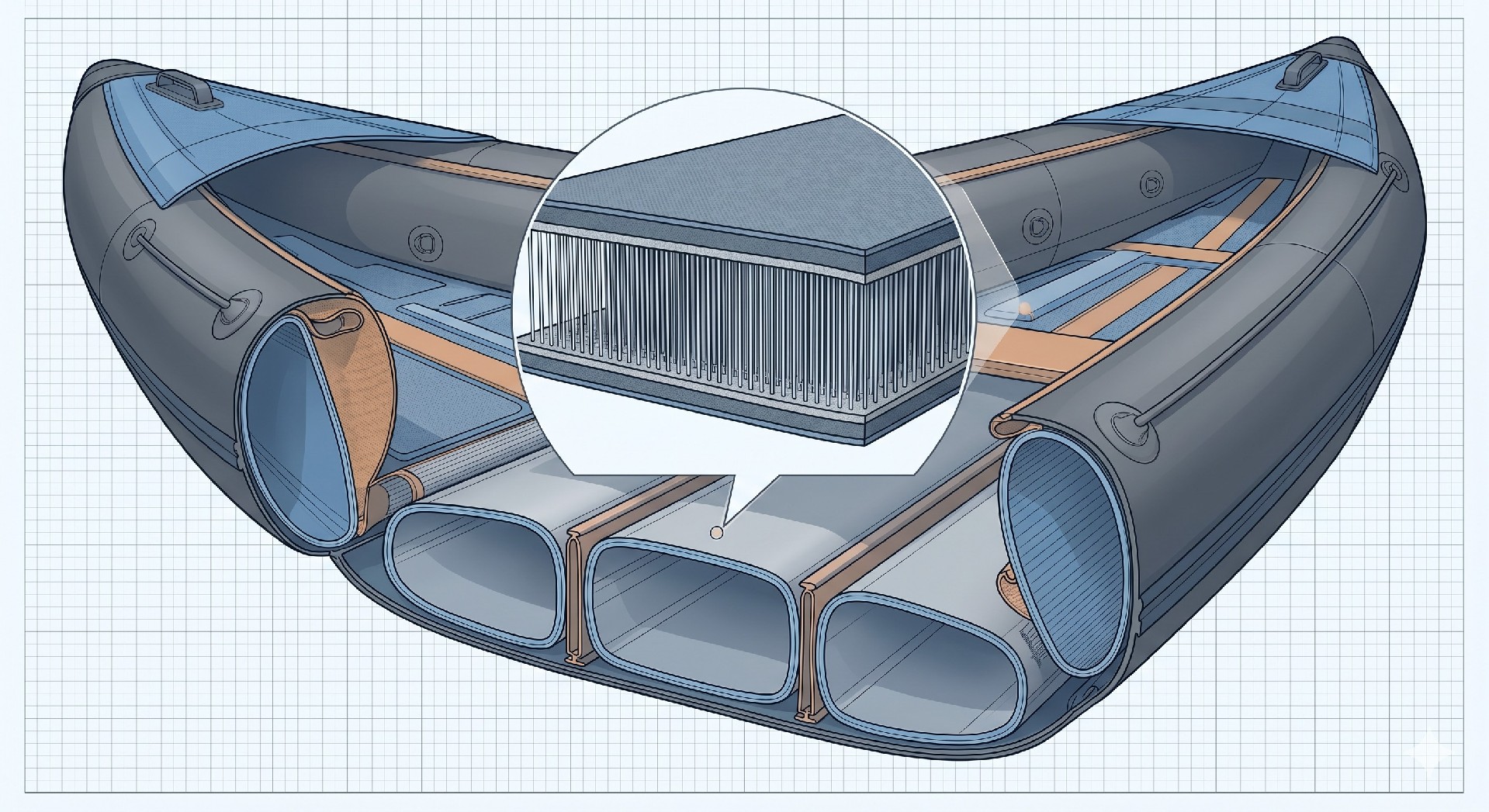
Fabric Tech Deep Dive: Engineering the Modern PVC Hull
The durability and lifespan of a commercial-grade touring inflatable kayak PVC are determined by its material composition and construction methodology. B2B buyers should prioritize models utilizing reinforced high-denier PVC fabric, with thickness ranging from 0.7mm for side tubes to 0.9mm for flooring . This material composition is critical for resistance to abrasion from sandy beaches, submerged rocks, and repetitive handling.
Drop-Stitch Core Physics: Achieving Rigidity
The core technological breakthrough in modern models is the High-Density Drop-Stitch (HDDS) floor. This process involves thousands of polyester threads connecting the top and bottom layers of the floor. When inflated to pressures between 1.2 and 1.5 PSI, these threads create a rigid, near-solid structure that transforms the kayak's performance on the water . A commercial-grade kayak typically features a 5cm to 7cm thick drop-stitch floor, providing the stiffness required for efficient gliding and paddling, akin to a hard-shell kayak .
Weld Engineering: Seam Integrity for Commercial Use
Seam construction is a definitive indicator of product quality and longevity. For high-turnover rental fleets, RF-welded (Radio Frequency) seams are the gold standard . RF welding creates an incredibly strong mechanical bond by fusing the PVC layers at a molecular level, creating a seam that is often stronger than the material itself. This ensures fail-proof air retention and significantly reduces the risk of seam separation under stress, a common failure point in lower-quality, glued alternatives.
Multi-Chamber Safety Systems
Commercial operators must prioritize safety. The best touring inflatable kayak PVC designs feature a multi-chamber safety system, typically consisting of three independent air chambers (two side tubes and the drop-stitch floor) . This ensures that in the event of a puncture in one chamber, the kayak retains significant buoyancy and stability, providing a crucial safety margin for guests and allowing for safe return to shore.
Technical Specifications: The B2B Sourcing Benchmark
When evaluating suppliers, B2B buyers must scrutinize specific data points to compare quality and value. The following benchmarks represent industry standards for high-performance, commercial-grade touring inflatable kayak PVC.
| Key Parameter | Technical Specification (Commercial Grade) |
|---|---|
| Material Thickness | 0.7mm - 0.9mm Reinforced PVC (High Denier) |
| Floor Technology | High-Density Drop-Stitch (HDDS) - 5cm to 7cm thickness |
| Maximum Payload | 200 kg - 285 kg (440 lbs - 628 lbs) |
| Air Chambers | 3 (Side tubes + Floor) for enhanced safety |
| Seam Technology | RF-Welded (Radio Frequency) for maximum durability |
| Inflation Pressure | Up to 1.5 PSI (Drop-stitch floor) |
| Industry Compliance | CE Certified, ISO 6185, REACH Compliant materials |
Commercial Application Scenarios: ROI and Fleet Integration
The versatility of the modern touring inflatable kayak PVC extends its ROI potential across multiple commercial verticals. Beyond standard rentals, these kayaks are increasingly being integrated into high-end glamping experiences, guided eco-tours, and even as support craft for rescue and emergency departments due to their fast deployment times . Their ability to be packed into compact bags (e.g., a 55x36x87cm pack size for a 3-person model) allows resorts to maintain a large fleet without requiring dedicated boat storage facilities, freeing up valuable operational space .
[IMAGE_2]
Conclusion: Strategic Sourcing for Long-Term Value
In the B2B outdoor equipment market, the touring inflatable kayak PVC has evolved into a sophisticated, high-performance asset. By prioritizing models with reinforced drop-stitch flooring, RF-welded seams, multi-chamber safety systems, and verifiable compliance with CE or ISO standards, procurement managers can secure a durable, safe, and profitable fleet. The data is clear: investing in advanced engineering translates directly to reduced fleet downtime, lower replacement costs, and a superior end-user experience that drives premium pricing and customer loyalty.
