

Introduction: The Commercial Imperative of Proper Storage
For B2B purchasers, fleet managers, and outdoor resort operators, the procurement of a PVC inflatable boat is only the first step in a long-term asset management journey. The true cost of ownership is significantly influenced by the efficacy of your off-season and long-term storage protocols. Improper storage is the leading cause of premature material degradation, seam failure, and a drastic reduction in the return on investment (ROI) for these commercial-grade assets. This guide serves as a comprehensive, data-driven manual for mastering the art and science of PVC inflatable boat storage, ensuring your fleet remains operationally ready and structurally sound for years to come.
Phase 1: Pre-Storage Preparation - The Critical Foundation
Before considering where or how to store a PVC inflatable boat, a meticulous preparation phase is non-negotiable. This stage directly impacts the material's longevity and prevents common issues like mold, mildew, and chemical degradation.
Comprehensive Cleaning Protocols
The primary enemy of PVC fabric is not just physical abrasion but also chemical contamination. Salt, sand, algae, fish scales, and fuel residues act as catalysts for material breakdown. For B2B operators managing high-turnover rentals, this is a critical operational step.
Detergent and Procedure: Use a mild, biodegradable soap or a specialized PVC boat cleaner mixed with warm water. Avoid harsh chemicals like bleach, ammonia, acetone, or MEK for routine cleaning, as these will attack the fabric's protective coatings and cause it to become brittle.
Technique: Employ a soft brush or sponge to remove embedded grime from seams, fittings, and the hull. A rigorous cleaning schedule, especially for boats used in saltwater, prevents micro-abrasions and chemical etching of the material.
Critical Rinse and Dry: After cleaning, the boat must be thoroughly rinsed with fresh water. Complete drying is mandatory; any residual moisture, particularly in the seams and fittings, will foster mold growth and can cause the PVC material to break down over time. For faster drying, use a cold-air hairdryer in a well-ventilated area.
Damage Assessment and Repair
With the boat clean and dry, conduct a full inspection to identify any scratches, scuffs, or cuts. In a commercial environment, even minor damage can be a liability. Mark any flaws and repair them immediately using a PVC-specific repair kit and a two-part adhesive. Ignoring these issues until spring often results in irreparable damage and fleet downtime. This pre-storage audit is a core component of asset lifecycle management.
Phase 2: Material Science and Environmental Control
The operational environment is the single most significant factor determining the lifespan of a PVC inflatable boat. The material's reaction to temperature, humidity, and UV radiation is governed by its chemical composition, which is often subject to stringent standards like REACH and CE.
Thermal and UV Management
PVC material exhibits a fundamental vulnerability to extreme temperatures and UV rays.
Heat and Sunlight: Prolonged UV exposure breaks down PVC on a molecular level, causing it to become brittle, fade, and lose tensile strength. Extreme heat (such as in an unventilated attic) accelerates this process and weakens adhesives used in seams. For outdoor storage, use UV-resistant covers and apply a UV protectant like 303 Aerospace Protectant annually.
Cold Temperatures: PVC becomes fragile and more susceptible to cracking in subzero conditions. The ideal storage temperature range for PVC inflatable boats is between 6°C and 16°C (43°F - 61°F). Storing below 5°C (41°F) can compromise the material's integrity.
Humidity Control: High humidity is detrimental to the seams and glues. Glue from any manufacturer will not stand up to frequent outdoor storage in hot and humid weather. A cool, dry, and well-ventilated environment is essential to prevent mold and preserve adhesive bonds.
Storage Medium: Inflated vs. Deflated
The decision to store a boat inflated or deflated is a critical one, often dictated by available space and fleet size.
Inflated (Hanging): This is the preferred method for long-term storage. It eliminates creasing and stress on folds. For a B2B warehouse, hang the boat upside down (bottom-up) from the bow or floorboards, ensuring the chambers are slightly inflated—just enough to maintain shape but not fully pressurized. This prevents the material from warping and protects seams from stress.
Deflated (Folded): When space is at a premium, deflation is often necessary. However, it must be done with extreme care to avoid creases, which can lead to material cracking over time. Fold the boat as loosely as possible and avoid sharp bends. Rotate the folded boat periodically throughout the winter to prevent permanent crease lines from forming. Store it off the ground to protect it from pests and moisture.
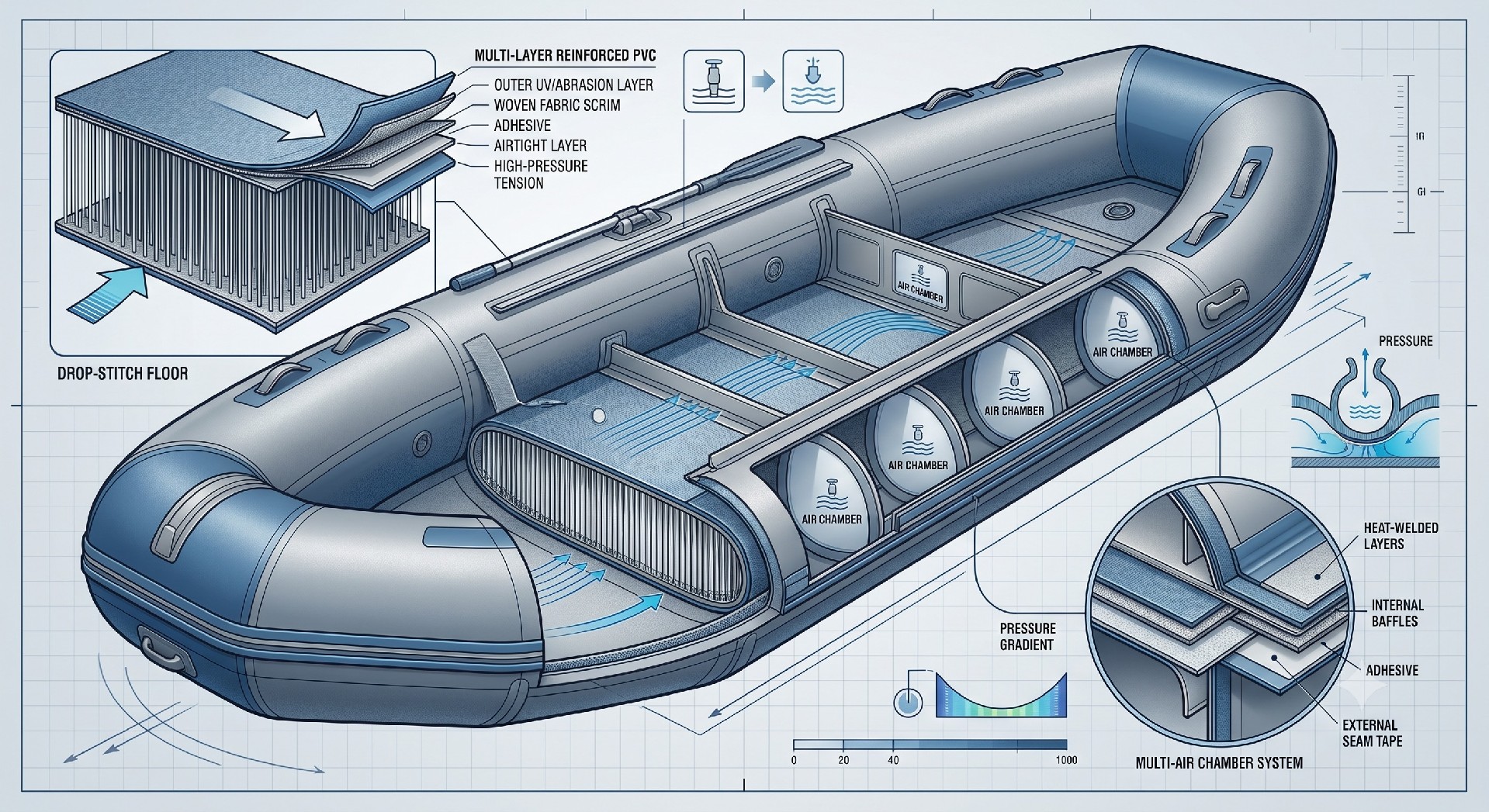
Technical Specifications: A Data-Driven Overview
Understanding the material properties and technical limits of your PVC inflatable boat is essential for developing effective storage and maintenance protocols. The following table outlines key industry-standard parameters that guide fleet management decisions.
| Key Parameter | Technical Specification | Industry Relevance |
|---|---|---|
| Material Thickness | e.g., 0.9mm / 1100D Reinforced PVC | Determines puncture resistance and durability, a key factor in total cost of ownership. |
| Maximum Payload | e.g., 400 kg / 880 lbs | Critical for operational limits and compliance with ISO 6185 standards. |
| Ideal Storage Temperature | 6°C to 16°C (43°F to 61°F) | Prevents PVC from becoming brittle in cold or degrading in heat, extending material life. |
| UV Protectant Application Frequency | Annually (minimum) | Mitigates molecular degradation from UV exposure, a primary cause of material failure. |
| Recommended Deflation Storage PSI | 0.1 - 0.2 PSI (slightly inflated) | Maintains shape while reducing stress on seams and preventing creases. |
Operational Considerations and Risk Mitigation
Beyond the core storage methodologies, B2B operators must consider logistics, safety, and the unique demands of a commercial setting.
Fleet Management Logistics
For high-throughput rental operations or resorts, time is money. The storage method must facilitate rapid deployment. Consider the following:
Fleet Rotation: If storing boats inflated, rotate the air in the chambers a few times over the winter to prevent stale air from accumulating.
Drying Racks: Investing in a dedicated drying rack system can accelerate the preparation phase, ensuring boats are dry before storage and minimizing mold risks.
Valve and Cap Maintenance: Ensure all valves are open during drying to allow any internal moisture to escape. For cold-weather storage, ensure the secondary valve seal/cap is well-fitted to prevent freezing and potential damage.
Environmental Responsibility
Commercial operators must align storage practices with environmental regulations. The chemicals used for cleaning and patching (e.g., MEK, solvents) pose environmental hazards. The industry recommends using biodegradable cleaners and water-based products whenever possible, complying with global standards like REACH to minimize ecological impact.
Commercial Application Scenarios
The principles outlined above are universal, yet their application varies across B2B sectors.
For Water Sports Rental Fleets
Rental fleets face high turnover and intense wear. A well-implemented storage strategy is the bedrock of operational efficiency. Storing boats partially deflated on trailers with proper chafing protection is common. Cleaning and drying between each rental ensures the boat is ready for the next day, maximizing its service life and maintaining a professional appearance. UV protectant application is crucial for fleets exposed to daily sunlight.
For Resort and Glamping Operators
In a premium outdoor experience setting, the guest-facing condition of the equipment is paramount. The cleanliness and vibrancy of the PVC material directly impact customer satisfaction. Storage for these operations often involves climate-controlled facilities to ensure the boats maintain a like-new appearance, free from yellowing or brittleness.
[IMAGE_2]
Conclusion: Maximizing ROI Through Strategic Storage
For the discerning B2B buyer, the storage of PVC inflatable boats is not a passive task but a proactive investment in asset longevity. By adhering to rigorous cleaning protocols, understanding the material science of PVC (including its susceptibility to UV and temperature), and selecting the appropriate storage medium (inflated or carefully folded), fleets can significantly extend their operational lifespan. This data-driven approach to maintenance minimizes costly repairs, reduces downtime, and ensures a consistent, high-quality experience for end-users. A well-stored boat is a profitable boat.
