

Introduction: The Strategic Case for PVC in Commercial Fleets
For B2B procurement managers and rental operators, the selection of an inflatable dinghy boat PVC model represents a critical CapEx decision with direct implications for ROI, guest safety, and operational efficiency. While traditional hard-shell boats offer durability, the modern generation of high-denier, heat-welded PVC dinghies provides an unmatched combination of portability, payload capacity, and lower total cost of ownership (TCO). This guide delves into the engineering specifications, material science, and commercial data necessary to make an informed sourcing decision, referencing key industry standards like ISO 6185 and CE certification .
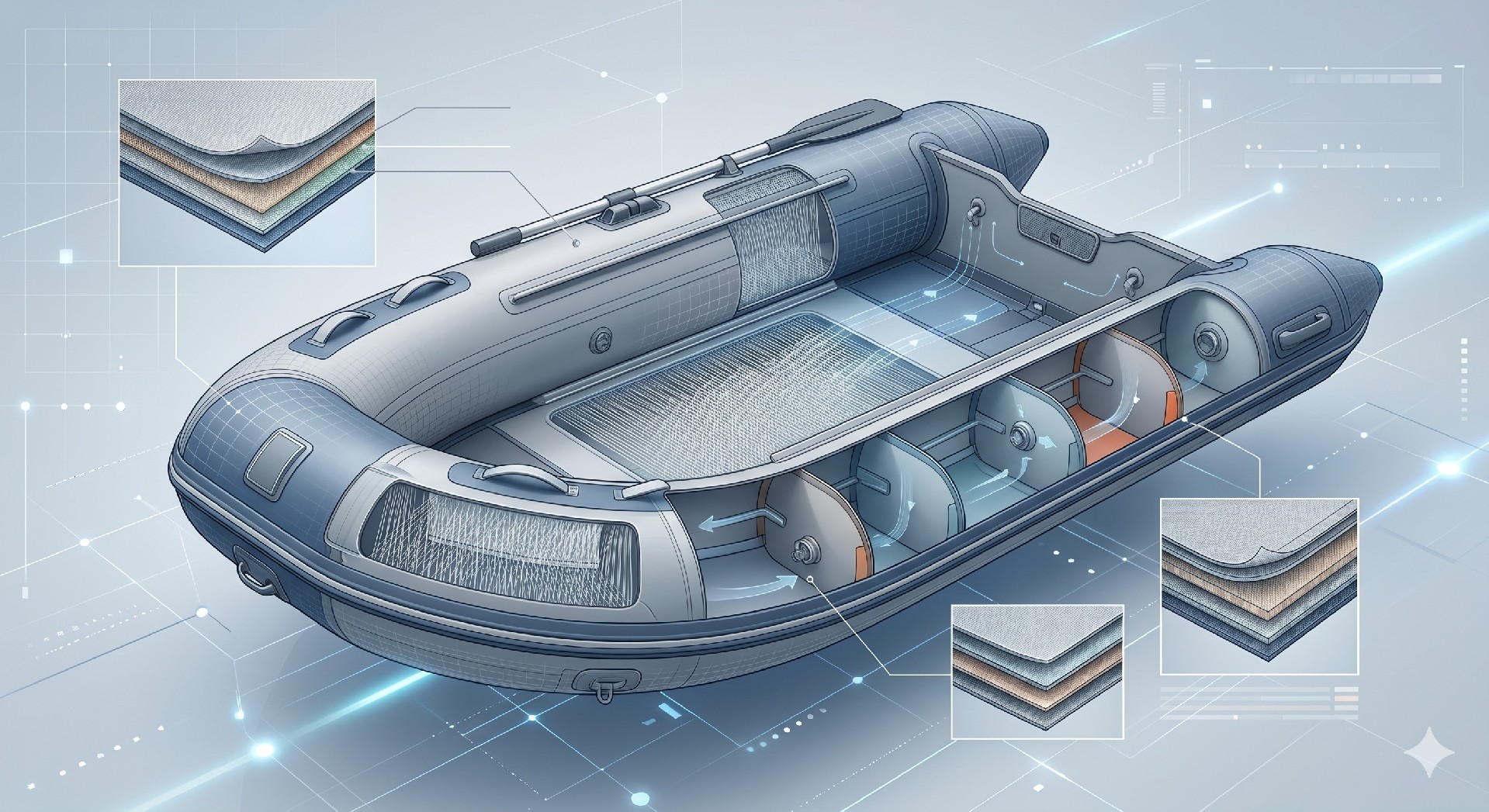
Fabric Technology Deep Dive: Beyond Standard PVC
The term 'PVC' in the marine industry encompasses a wide spectrum of material qualities. Commercial-grade PVC is a plasticized vinyl polymer chemically known as polyvinyl chloride, coated onto a high-tenacity polyester or nylon scrim for structural support . The critical metric for B2B buyers is the denier count (Dtex) and the thickness of the fabric, as these directly correlate to puncture resistance and tensile strength.
Denier Count and Abrasion Resistance
Entry-level leisure models often utilize 0.7mm / 700 Dtex PVC, which is adequate for calm, infrequent use . However, for commercial applications—such as high-throughput rentals or rocky terrain operations—a minimum of 1100 Dtex (0.9mm) is recommended, with premium commercial offerings utilizing 2000 Dtex (1.2mm) reinforced PVC . This heavier fabric provides up to 30% more puncture resistance compared to standard materials . Some high-end manufacturers further enhance durability by applying double layers of fabric at the bottom of the tubes, resulting in a protective thickness of 2.4mm against abrasive sands and sharp rocks .
PVC vs. Hypalon: A Material Distinction
While PVC is the dominant material for mass-produced dinghies due to its cost-effectiveness and ease of thermo-welding, it is essential to distinguish it from Hypalon (CSM), a synthetic rubber. Hypalon offers superior UV and ozone resistance and can last for over a decade in harsh environments . However, Hypalon is significantly more expensive and requires labor-intensive glued seams. For most commercial fleet operations where cost-efficiency and rapid repair are paramount, high-grade PVC with proper UV stabilizers provides an optimal balance of performance and ROI .
Seam Engineering: The Key to Structural Integrity
The integrity of an inflatable dinghy boat PVC is defined by its seams. Poorly constructed seams are the primary failure point in inflatable boats. Commercial-grade PVC boats utilize heat-welded seams (High-Frequency or Hot Air Welding) rather than glued seams . This process fuses the PVC material at a molecular level, creating a bond that is often stronger than the fabric itself. Premium models feature quadruple overlap seams, ensuring the structure can withstand extreme humidity, saltwater, and constant pressure fluctuations . In stress tests, properly welded PVC seams have been proven to hold integrity even when the surrounding fabric begins to fail.
Technical Specifications Matrix
The following table consolidates critical performance data for B2B buyers evaluating different grades of inflatable dinghy boat PVC. It is based on industry standards and typical supplier specifications .
| Parameter | Entry-Level Specification | Commercial-Grade Specification | High-End Commercial Specification |
|---|---|---|---|
| Fabric Material | 0.7mm / 700D PVC | 0.9mm / 1100D PVC | 1.2mm / 2000D PVC |
| Seam Type | Glued or Basic Welding | Heat-Welded / Quadruple Overlap | Heat-Welded / Quadruple Overlap + Double Bottom Layer |
| Air Chambers | 2 + 1 (Keel) | 3 + 1 (Keel) | 3 to 5 Chambers |
| Floor Type | Inflatable I-Beam Floor | High-Pressure Drop-Stitch Air Deck | Aluminum Floor Panels |
| Max Payload | Up to 300 kg / 660 lbs | 400 kg / 880 lbs | 760 kg / 1675 lbs |
| Max HP Rating | Up to 4 HP | Up to 6-8 HP | Up to 25 HP |
| Certifications | Basic | CE Certified, ISO 6185 | CE Certified, ISO 6185 |
| Packed Weight (approx.) | 15-18 kg | 18-20 kg | 82 kg |
| Typical Use Case | Casual leisure | High-turnover rentals, fishing | Commercial diving, heavy-duty rescue |
Commercial Use Cases and ROI Analysis
The true value of a high-quality inflatable dinghy boat PVC is realized in its operational versatility and rapid return on investment. For rental operations and resorts, the portability and ease of deployment directly translate to higher asset utilization rates.
[IMAGE_2]
High-Throughput Rentals and Turnaround Efficiency
Commercial operators require rapid inflation and deflation cycles to maximize fleet turnover. Models equipped with high-pressure, one-way valves and drop-stitch air decks can be fully inflated in under 10 minutes using standard commercial air pumps . The integrated air-deck floors, constructed using drop-stitch technology, provide rigidity comparable to traditional wooden floors, allowing passengers to stand and walk securely . This eliminates the logistical challenges of storing and handling heavy aluminum or plywood floorboards, reducing setup time significantly .
Glamping and Premium Resort Experiences
For glamping resorts and luxury hotels, the aesthetic and reliability of the equipment enhance guest satisfaction. The ability to customize the inflatable dinghy boat PVC with specific color schemes and branding (offered by many OEM suppliers) provides a competitive edge . The safety features, such as multi-chamber redundancy (3 to 5 independent air chambers), ensure guest safety and mitigate liability risks, complying with CE and EN71 standards .
Conclusion: Sourcing for Long-Term Commercial Success
Sourcing an inflatable dinghy boat PVC is an investment in operational efficiency. By focusing on technical specifications—prioritizing high-denier fabrics (1100D+), heat-welded seams, and multi-chamber safety—B2B buyers can significantly reduce long-term maintenance costs and increase fleet lifespan . Partnerships with verified suppliers who offer CE-certified models and maintain responsive communication (≤4 hours) are essential for risk mitigation and agile procurement . Data-driven evaluation of material quality and TCO ensures that the chosen inflatable dinghy boat PVC delivers a robust ROI, whether deployed for high-turnover rentals, resort leisure, or rigorous commercial fishing expeditions.
