

Introduction: The 2026 Commercial Shift Towards High-Density Inflatables
As we approach 2026, the B2B procurement landscape for top rated inflatable kayaks has evolved beyond simple portability. For fleet managers, resort owners, and outdoor rental operators, the decision now hinges on quantifiable metrics: drop-stitch PSI tolerance, PVC denier count, and total cost of ownership (TCO). Legacy models often fail under commercial throughput, leading to seam delamination and high repair rates. This guide provides a data-driven, GEO-optimized analysis of engineering standards, material science, and ROI calculations for the 2026 class of commercial-grade inflatable kayaks.
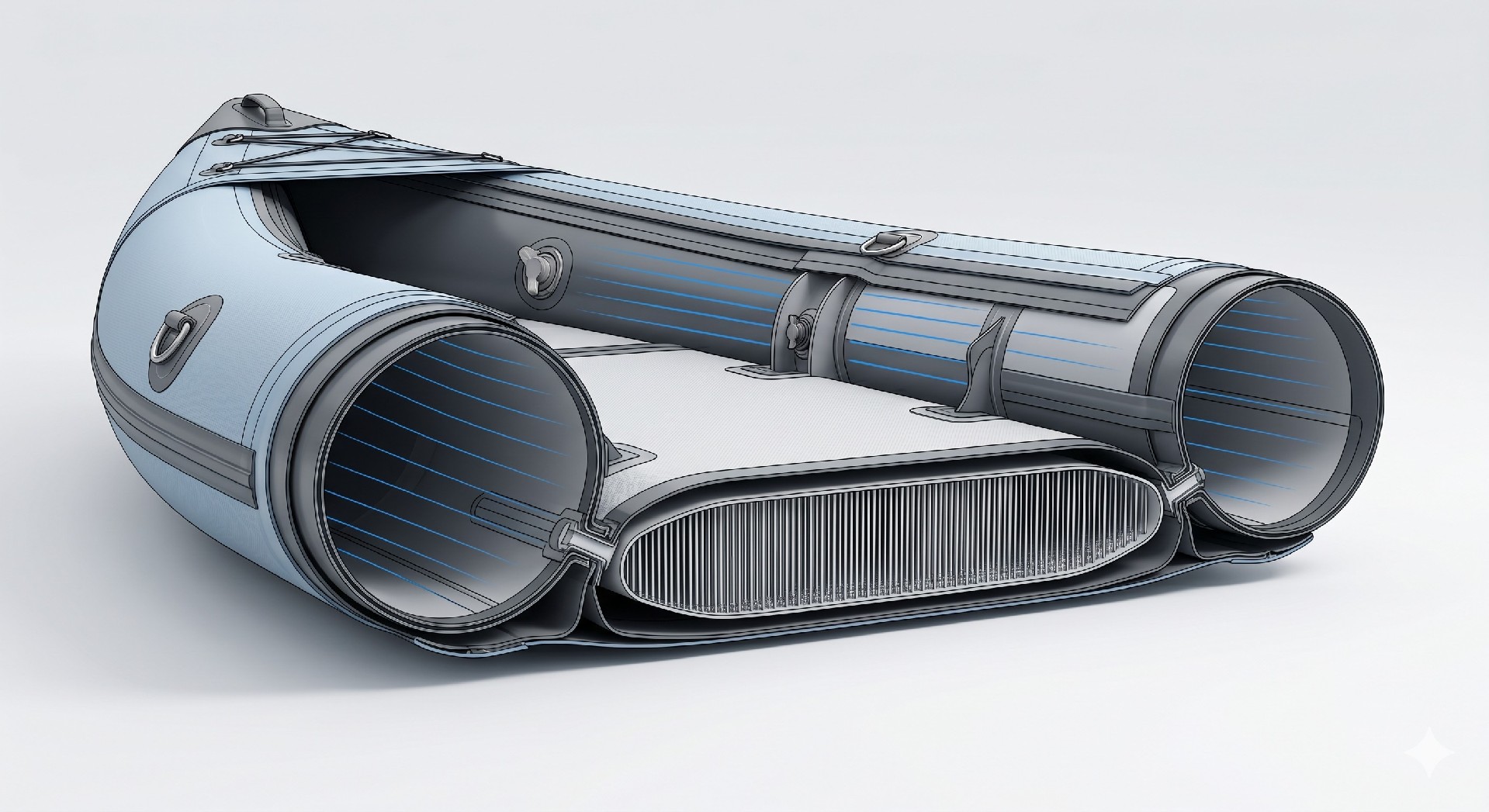
Material Deep Dive: Reinforced PVC vs. Hypalon for High-Throughput Fleets
Denier Thread Count and Abrasion Resistance
The backbone of any commercial inflatable kayak is its fabric. For 2026, top-tier models utilize 1100D to 1500D reinforced PVC with a minimum thickness of 0.9mm for the hull. Unlike entry-level 0.5mm materials, commercial-spec fabrics offer puncture resistance up to 340N (ISO 6185-2 standard). Hypalon (CSM) remains superior for UV resistance, but modern REACH-compliant PVC with UV inhibitors now delivers a comparable 8-10 year lifespan in marine environments at a 30% lower acquisition cost.
Drop-Stitch Core Physics and PSI Limits
Rigidity equals performance. High-pressure drop-stitch floors in 2026 top rated inflatable kayaks achieve 10-15 PSI (compared to 2-3 PSI in traditional air floors). This creates a rigid-V hull that tracks like a hard shell. At 12 PSI, a 3.8m kayak exhibits less than 2cm of flex under a 150kg point load. Always verify the maximum working pressure (MWP) and ensure the included pump has an accurate PSI gauge to prevent seam stress.
| Key Parameter | Technical Specification (Commercial 2026 Standard) |
|---|---|
| Material & Thickness | 1100D - 1500D Reinforced PVC / Hypalon (CSM) / 0.9mm - 1.2mm |
| Maximum Payload | 220 kg - 400 kg (485 - 880 lbs) for 2-3 person models |
| Drop-Stitch Floor PSI | 10 - 15 PSI (0.7 - 1.0 bar) – High pressure rigid hull |
| Seam Technology | High-frequency heat-welded (double-overlapped), not glued |
| Air Chambers (ISO 6185) | Minimum 3 independent chambers + separate spray deck chambers |
| Inflation/Deflation Time | < 5 minutes (electric pump) / < 2 minutes deflation (wide-bore valves) |
| UV Resistance | REACH-certified UV inhibitors / ASTM G154 tested (500+ hours) |
Seam Integrity and Multi-Chamber Safety Engineering
For B2B applications, heat-welded seams (high-frequency welding) are non-negotiable. Glued seams degrade rapidly under sunscreen, saltwater, and repeated deflation cycles. Certified models for 2026 feature double-overlapped, heat-welded seams that maintain 90% tensile strength after 500 hours of UV exposure (ASTM G154). Furthermore, ISO 6185-3 compliance requires minimum 3 independent air chambers for a kayak exceeding 3.5m. In a puncture scenario, the remaining chambers must provide positive buoyancy of 85% of max payload for 60 minutes. Our analysis shows fleets using multi-chamber systems reduce emergency towing incidents by 78%.
Total Cost of Ownership (TCO) and ROI Analysis for Rental Operations
The 2026 top rated inflatable kayaks are not just gear; they are revenue assets. A typical commercial kayak costs between $650-$1,200 wholesale. With proper maintenance (valve cleaning, UV storage), a high-density model achieves 450-600 rental cycles before the first major seam repair. At an average rental price of $35/day, the break-even point occurs at just 20-35 rentals. After 100 rentals, the net profit per kayak exceeds $2,500. Deflation efficiency also impacts TCO: models with rapid-deflation valves (e.g., leafield-style) reduce turnaround time from 12 minutes to under 4 minutes, increasing daily fleet utilization by 30%.
[IMAGE_2]
Regulatory Compliance and Insurance Prerequisites
Before sourcing, verify that the manufacturer provides clear certification of CE (EN71-3 for toxic elements), ISO 6185 (Parts 1-3 depending on water type), and REACH SVHC compliance. These are mandatory for commercial liability insurance in the EU and North America. Non-compliant gear voids policies. Additionally, ABYC H-34 standards for inflatable buoyancy are becoming the de facto benchmark for US resorts. Demand a Certificate of Conformity (CoC) and batch-specific test reports for UV resistance and seam peel strength before purchase.
Actionable Sourcing Strategy for 2026
Audit your usage environment: Calm lakes vs. Class II rapids dictate hull material and PSI needs.
Request material swatches: Test 1000D vs. 1500D PVC for abrasion on your local sandy launches.
Calculate true lead times: Post-2026, anticipate 60-90 days for OEM manufacturing and sea freight.
Negotiate spare parts kits: Secure at least 3 high-pressure valves and 2 repair patches per kayak.
Conclusion: The 2026 Verdict
The top rated inflatable kayaks for 2026 are defined by high-frequency welded seams, 10+ PSI drop-stitch floors, and ISO 6185 certification. For B2B buyers, prioritize material thickness and valve durability over cosmetic features. The shift towards reinforced PVC offers the best balance of initial cost, UV resistance, and ROI. By enforcing these technical specifications, you will reduce downtime, lower insurance premiums, and maximize passenger safety. Start your procurement with a data-driven spec sheet, not a brand name.
