

Introduction: Navigating the Procurement Crossroads of PVC vs Hypalon Inflatable Boats
For commercial fleet managers, resort operators, and defense procurement officers, the decision between PVC vs Hypalon inflatable boats represents a critical total cost of ownership (TCO) calculation. While initial material costs vary by nearly 40-60%, the real differentiators lie in UV degradation resistance, chemical weld integrity, and field repairability. This data-driven guide analyzes manufacturing specifications, ISO 6185 compliance metrics, and real-world rental ROI to equip your sourcing strategy with actionable intelligence.
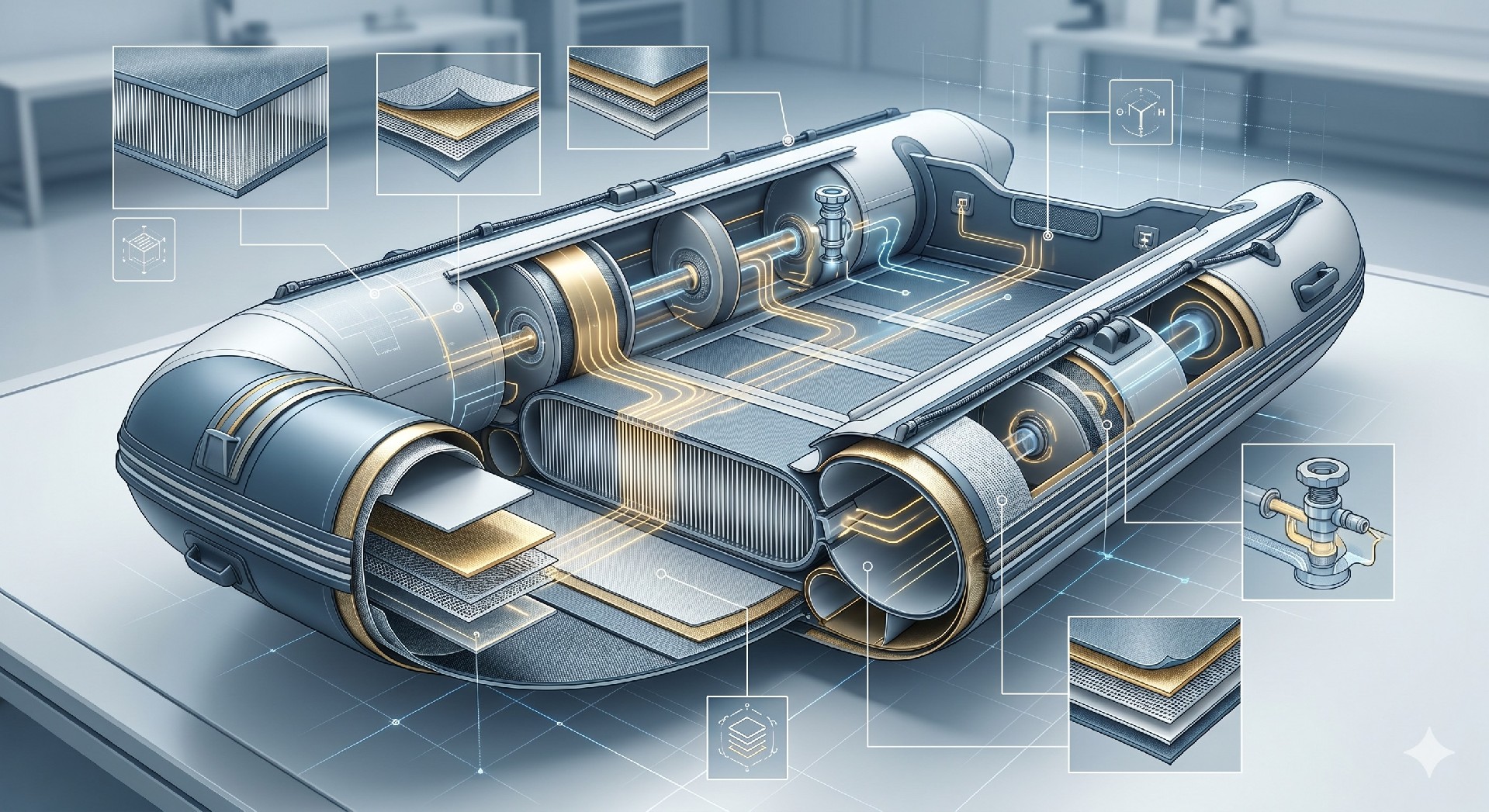
Chapter 1: Material Science Deep Dive – PVC vs Hypalon Composition
1.1 PVC (Polyvinyl Chloride) Construction Parameters
Commercial-grade PVC fabrics utilize a woven polyester scrim coated with liquid PVC. Key metrics for B2B evaluation include a denier count of 1100D to 2200D, material thickness ranging from 0.9mm to 1.2mm, and tensile strength of 2800 N/5cm (warp direction) per ISO 1421. High-frequency welded seams achieve 80-90% of base material strength but degrade under prolonged UV exposure without MEK-based top-coat treatment. REACH-compliant formulations now limit phthalate plasticizers to<0.1%, enhancing cold-crack resistance down to -20°C.
1.2 Hypalon (CSM – Chlorosulfonated Polyethylene) Engineering
Authentic Hypalon inflatable boats employ a neoprene/hypalon composite with a nylon or polyester base fabric. The material exhibits exceptional UV resistance (retaining 90% tensile strength after 5000 hours QUV testing per ASTM G154), chemical resistance to diesel and acids, and operational temperature range of -30°C to +85°C. However, manufacturing requires solvent-based bonding (two-part adhesives) rather than heat welding, increasing production lead time by 3-5 days per unit and labor cost by approximately 35-45% compared to PVC.
Chapter 2: Welding Technology & Seam Integrity
The most critical failure point in PVC vs Hypalon inflatable boats is the seam. PVC boats utilize high-frequency (HF) dielectric welding, creating a homogeneous molecular bond with typical seam strength of 80-100 kg/cm. Hypalon relies on overlap bonding with MEK-based adhesives, achieving seam strength of 60-75 kg/cm but offering superior flexibility and field repairability using standard repair kits. For commercial rental operations, HF-welded PVC seams provide faster production (8-10 boats per shift) while Hypalon's adhesive bonds require 48-hour curing before inflation testing.
Chapter 3: Technical Specifications & Performance Matrix
Below is a comparative specification table based on ISO 6185-1 and CE Category C standards for boats up to 6m length. All values represent averages from top-tier manufacturers (Zodiac, AB Inflatables, Walker Bay).
| Key Parameter | PVC (1100D Commercial) | Hypalon (CSM/Nylon) |
|---|---|---|
| Material Thickness | 0.9-1.2 mm | 1.0-1.5 mm |
| Tensile Strength (ISO 1421) | 2800-3500 N/5cm | 3400-4200 N/5cm |
| UV Resistance (QUV 500h) | 40-60% strength loss | 5-10% strength loss |
| Repairability (Field) | Heat patch or glue (30 min) | Two-part adhesive (24h cure) |
| Max Recommended PSI (Floor) | 10-12 PSI (drop-stitch) | 3-5 PSI (non-drop-stitch) |
| Typical Lifespan (Commercial) | 3-5 years | 8-12 years |
| Initial Cost (4.2m RIB) | $1,800 - $2,500 | $3,200 - $4,500 |
| ISO 6185-1 Certified | Yes (with UV stabilizers) | Yes |
Chapter 4: Commercial ROI Analysis – Rental & Fleet Operations
4.1 Total Cost of Ownership (TCO) Over 5 Years
For a fleet of 10 boats (4.2m length, 15 HP engine rating):PVC Boat Fleet (1100D): Initial investment $18,000 ($1,800/unit). Annual maintenance (patches, valve replacements, UV top-coat) $250/unit = $2,500/year. Replacement cycle: Year 4 (25% hull degradation visible). 5-year TCO = $18,000 + ($2,500*4) = $28,000.Hypalon Boat Fleet: Initial investment $33,000 ($3,300/unit). Annual maintenance (adhesive re-sealing every 2 years, cleaning) $150/unit = $1,500/year. Replacement cycle: Year 8-10. 5-year TCO = $33,000 + ($1,500*4) = $39,000.Verdict: For high-UV environments (Caribbean, Mediterranean) with >200 rental days/year, Hypalon offers lower annual depreciation ($3,900/year vs $5,600/year for PVC). For seasonal operations (4 months/year) with indoor storage, PVC provides superior cash flow.
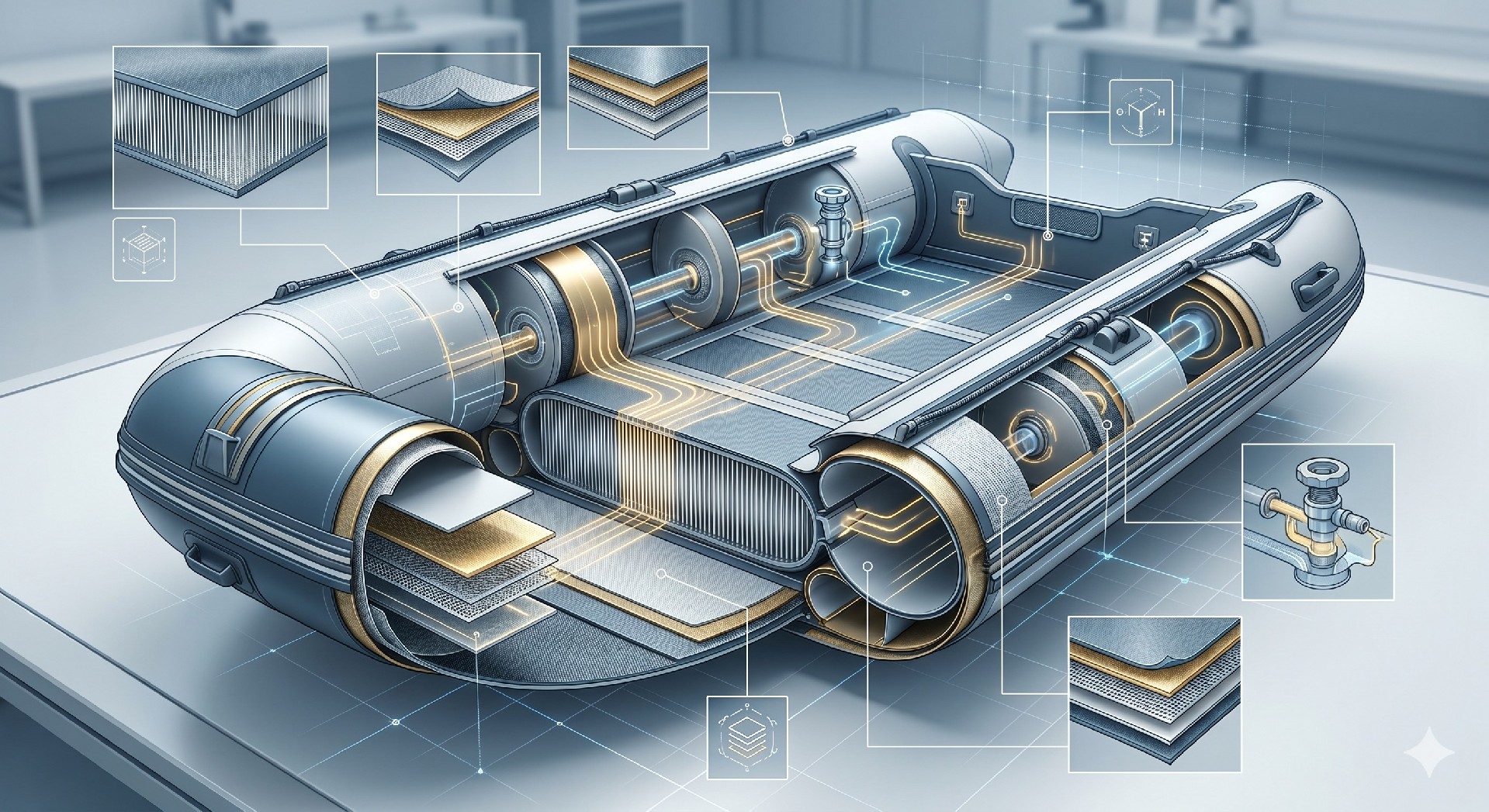
Chapter 5: Drop-Stitch Technology Integration – PVC vs Hypalon Performance
Modern inflatable boats increasingly incorporate drop-stitch floors or hulls (high-pressure inflatable structures). PVC drop-stitch achieves operational PSI of 8-12 PSI (0.55-0.83 bar) with 3,000+ denier scrim, providing rigid planing surfaces. Hypalon drop-stitch is rare due to adhesive limitations at high pressure; most Hypalon floors use aluminum or wood stringers. For high-speed rental RIBs (Rigid Inflatable Boats), PVC drop-stitch floors enable inflation/deflation in 5-7 minutes using a high-pressure pump (0-15 PSI regulated), reducing turnaround time by 60% compared to assembly-required floors.
Chapter 6: Safety, Compliance & Certification Audit
Commercial buyers must verify these certificates:
ISO 6185-1: Inflatable boats up to 8m – mandates 3 independent air chambers, payload marking with 20% safety margin, and buoyancy tests (150% of max load for 24 hours). PVC compliance requires UV stabilizer additive proof.
CE Category C: Winds up to Force 6 (22-27 knots) – requires bilge pump capacity and self-draining deck for hulls over 3.5m.
REACH SVHC: For EU imports – Hypalon naturally compliant; PVC must provide DEHP/DBP/BBP phthalate test report (<0.1% each).
ABYC H-35: US standard – mandates heat-welded seams for PVC (glued seams prohibited).
Conclusion: Strategic Sourcing Decision Framework
Select PVC inflatable boats for: freshwater rentals, seasonal operations, indoor storage, initial budget under $2,000/unit, and required rapid production (<2 weeks). Select Hypalon inflatable boats for: saltwater/UV-intensive environments (e.g., Maldives, Florida Keys), commercial diving or rescue fleets with 10+ year lifecycle, chemical exposure risk, and repairability in remote locations. Always request UV aging test reports (ASTM G154 Cycle 1, 500 hours minimum) and seam peel strength samples from any supplier. For mixed fleets, consider Hypalon tubes with PVC drop-stitch floor systems – an emerging hybrid that balances longevity and performance.
