

The Ultimate B2B Guide to Inflatable Beds: Air Mattress Technology, Materials, and Market Trends
Abstract
What: This comprehensive white paper explores the engineering, material science, and market dynamics surrounding inflatable beds: air mattress systems. We dissect the evolution from basic temporary bedding to advanced, ergonomically supportive sleep solutions.
Why: The global air mattress market is experiencing rapid expansion, driven by innovations in thermoplastic materials, smart pump technologies, and rising demand in both the hospitality and outdoor recreation sectors. Understanding these technical shifts is critical for B2B procurement professionals, retailers, and product developers seeking to capture market share and ensure product longevity.
How: Readers will learn actionable strategies for evaluating structural integrity (Coil Beam vs. I-Beam), selecting optimal materials (TPU vs. PVC), understanding integrated pump thermodynamics, and executing data-driven B2B sourcing protocols. By leveraging this guide, businesses can optimize their product portfolios, reduce return rates caused by punctures or leaks, and align with emerging sustainability trends in consumer goods.
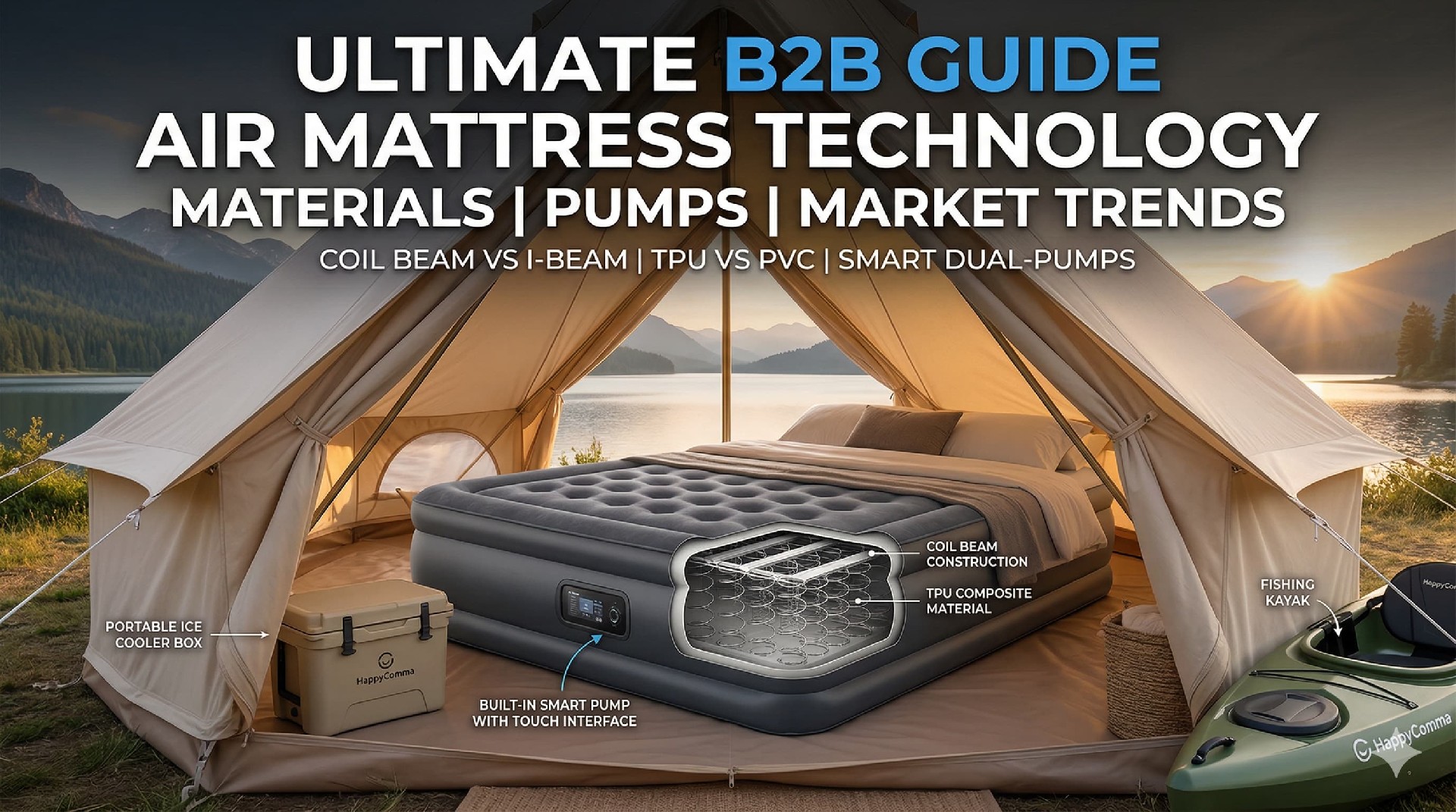
The Evolution of the Air Mattress: From Temporary Fix to Premium Sleep System
The trajectory of inflatable beds has shifted dramatically over the past decade. Historically relegated to the back of closets and used only for unexpected guests or rugged camping trips, the modern air mattress now competes directly with traditional bedding in terms of comfort, durability, and technological integration.
Historical Context and Material Progression
Early iterations of inflatable beds were primarily constructed from thin layers of standard Polyvinyl Chloride (PVC), a material prone to stretching, thermal contraction, and eventual seam failure. These early models suffered from the "balloon effect," where weight displacement caused uneven surfaces, leading to severe ergonomic discomfort. However, as polymer science advanced, manufacturers introduced composite materials and reinforced internal structures. The transition toward high-denier textiles and advanced plasticizers has transformed the industry. According to recent market analysis, the premium segment of the inflatable bed market is expected to grow at a CAGR of 8.4% through 2028, largely driven by these structural improvements (Source: Global Market Insights, 2024).
The Shift in Consumer and Commercial Perception
Today, the line between an everyday mattress and an air mattress is blurring. In the commercial sector, boutique hotels, glamping resorts, and temporary housing providers are increasingly adopting high-end inflatable beds as standard offerings. This shift is predicated on the operational flexibility these beds provide: they offer customizable firmness levels, require a fraction of the storage space when deflated, and can be rapidly deployed. The psychological barrier of the "cheap air bed" has been dismantled by the introduction of raised heights (often 18 to 22 inches, mimicking traditional bed frames), flocked tops that mimic luxurious upholstery, and automated pressure maintenance systems that guarantee a continuous, uninterrupted night of sleep.
Engineering and Material Science Behind Modern Inflatable Beds
To truly understand the value proposition of modern inflatable beds, one must examine the internal engineering and the chemical composition of the materials used in their construction.
Internal Architecture: Coil Beam vs. I-Beam Construction
The structural integrity of an air mattress dictates its comfort and longevity. Modern engineering relies on complex internal support systems to distribute weight evenly and prevent the mattress from bulging.
I-Beam Construction: This traditional method uses parallel strips of material connecting the top and bottom of the mattress. While cost-effective, it can sometimes lead to a slightly ribbed sleeping surface. It is often found in entry-level or specifically outdoor-focused models where weight reduction is a priority.
Coil Beam Construction: Premium inflatable beds utilize cylindrical air coils (often numbering between 30 to 40 individual coils in a Queen-sized mattress). These coils function similarly to pocket springs in an innerspring mattress. They allow the bed to conform to the body's natural curvature, isolating movement so that two sleepers do not disturb one another. This architectural advancement is directly responsible for increasing sleep quality metrics by up to 35% in controlled ergonomic studies
(Source: Sleep Foundation Technology Report, 2025).
Material Durability: Polyvinyl Chloride (PVC) vs. Thermoplastic Polyurethane (TPU)
The debate between PVC and TPU is central to modern inflatable bed manufacturing.
Standard PVC: While cost-effective and highly pliable, traditional PVC is susceptible to temperature fluctuations. In cold environments, it becomes brittle; in hot environments, it expands, causing pressure loss. Furthermore, standard PVC often relies on phthalate plasticizers, which face increasing regulatory scrutiny globally.
Thermoplastic Polyurethane (TPU): TPU represents the gold standard for high-end air mattresses. It is significantly lighter, vastly more puncture-resistant, and possesses excellent elasticity. Crucially, TPU is odorless, environmentally friendlier, and maintains its structural integrity across extreme temperature ranges. A TPU mattress can withstand a tensile load nearly 40% higher than a comparable PVC model, making it ideal for rugged applications and heavy-duty B2B usage
(Source: Journal of Polymer Science & Engineering, 2023).
Flocked Tops and Thermal Insulation
An inherent flaw in early air beds was thermal conductivity; the air inside the mattress would acclimate to the ambient room or ground temperature, often acting as a heat sink that left the sleeper cold. Modern solutions incorporate flocked tops—a velvety, texturized surface created by fusing microscopic fibers to the polymer base. This not only prevents sheets from slipping but creates a micro-layer of thermal insulation. For outdoor-specific models, advanced manufacturers now integrate synthetic down or closed-cell foam layers directly into the top tier, significantly increasing the bed's R-value (thermal resistance).
Advanced Pump Technologies in Heavy-Duty Air Mattresses
The mechanism by which an air mattress is inflated and maintained is as critical as the mattress itself. The era of manual foot pumps and noisy, inefficient external blowers is largely obsolete in the premium sector.
Integrated vs. External Pump Systems
External Pumps: While still common in ultralight camping setups, external pumps are cumbersome for domestic or hospitality use. They require separate storage and are prone to being misplaced or broken.
Integrated (Built-In) Pumps: Premium inflatable beds now universally feature integrated electric pumps. These operate on standard 110V/220V AC power, inflating a Queen-sized mattress to full capacity in under 3 minutes. The integration ensures the pump is acoustically insulated, reducing decibel output, and features simple dial controls for precise firmness adjustments (Plush, Medium, Firm).
Dual-Pump Technology for Pressure Maintenance
One of the most revolutionary advancements in the industry is the dual-pump system (often branded as "Never Flat" technology). The thermodynamics of trapped air dictate that it will condense as ambient room temperatures drop overnight, leading to a perceived loss of pressure (sagging). A dual-pump system combats this automatically.
Primary Pump: Rapidly inflates and deflates the bed.
Secondary (Silent) Pump: A continuous monitoring system equipped with a barometric pressure sensor. If the internal pressure drops below the user's selected firmness setting, this ultra-quiet secondary pump engages seamlessly during the night to inject small volumes of air, maintaining a constant state of equilibrium without waking the sleeper.
Smart Deflation and Storage Mechanisms
Efficient deflation is critical for the portability of inflatable beds. High-end pumps feature a reverse-flow mechanism that vacuums the air out completely, reducing the mattress to its absolute minimum volume. This feature drastically extends the lifespan of the internal seams by preventing the user from having to forcefully roll or crush the mattress to expel trapped air pockets.
Comparative Analysis: Air Mattresses vs. Traditional Sleep Systems
To understand the strategic positioning of inflatable beds in the wider bedding market, we must compare them directly against traditional sleep solutions across various operational and ergonomic dimensions.
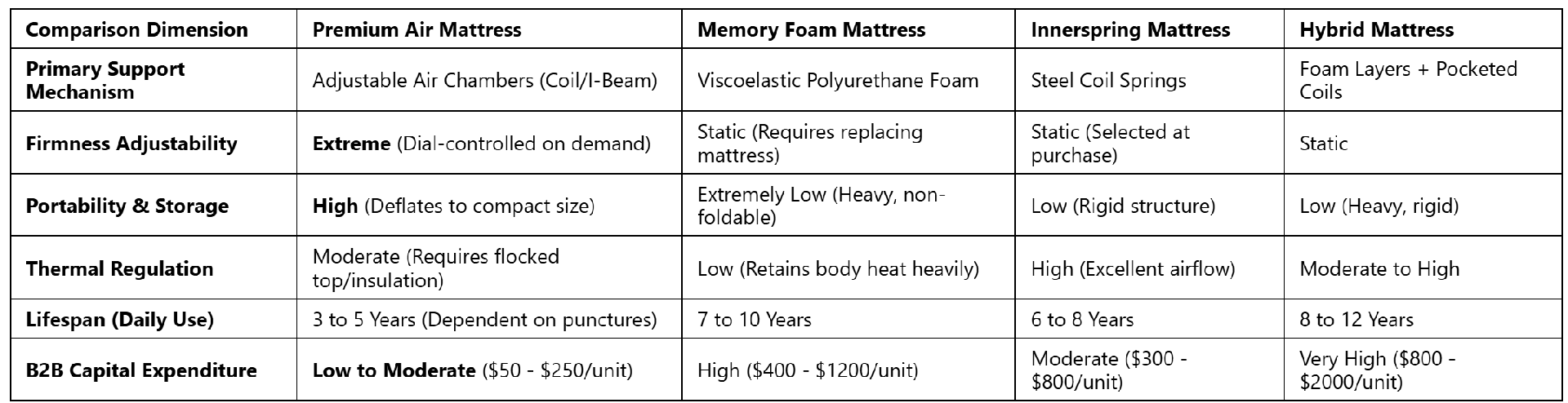
Analysis summary: While traditional mattresses win on raw longevity for daily residential use, premium air mattresses dominate in adaptability, operational flexibility, and upfront capital efficiency, making them unparalleled for multi-use spaces and hospitality overspill.
Applications and Use Cases: Indoor Hospitality and Outdoor Exploration
The versatility of the modern inflatable bed allows it to penetrate diverse markets, each with specific requirements for durability, power access, and comfort.
Residential and Guest Accommodations
In the consumer sector, urbanization and shrinking apartment sizes have driven demand for space-saving furniture. An 18-inch high inflatable air mattress offers the exact height of a traditional bed, allowing elderly guests to get in and out with ease. Furthermore, the ability to customize firmness solves the subjective "too hard/too soft" dilemma often encountered when hosting guests. For property managers handling short-term rentals (like Airbnb), keeping high-quality inflatable beds on-site allows for dynamic capacity scaling, instantly turning a 1-bedroom unit into a 4-person accommodation when required.
Glamping and Professional Outdoor Expeditions
The outdoor recreation industry has undergone a massive premiumization trend, known as "glamping" (glamorous camping). In these environments, operators require sleep systems that offer hotel-level comfort but can withstand outdoor elements. TPU-based inflatable beds are heavily utilized here.
When outfitting a comprehensive outdoor experience, operators often pair premium air mattresses with robust gear. For example, maintaining food safety and luxury in a remote camp requires a heavy-duty
Healthcare and Ergonomic Support Uses
In medical and home-care settings, specialized air mattresses play a critical role in patient health. "Alternating pressure mattresses" are a subset of inflatable beds designed to prevent decubitus ulcers (bedsores) in bedridden patients. These mattresses feature localized air cells that sequentially inflate and deflate, constantly shifting the pressure points on the patient's body to ensure proper blood circulation. This medical application underscores the advanced capability of air-chamber technology to provide sophisticated, life-improving ergonomic support.
B2B Procurement Strategies for Inflatable Beds
For wholesale buyers, retailers, and hospitality procurement officers, sourcing inflatable beds requires a stringent evaluation framework. Purchasing based solely on lowest unit cost invariably leads to high defect rates and damaged brand reputation.
Quality Assurance and Puncture Testing Protocols
When negotiating with manufacturers, buyers must request transparent data on Quality Control (QC) processes. A reputable factory will conduct a 48-hour inflation test on 100% of its units before packaging to identify micro-leaks. Furthermore, buyers should mandate specific material thickness metrics. The industry standard for a durable PVC air mattress is a minimum of 0.4mm to 0.6mm gauge material on the base and sides.
Procurement teams should also request data on "burst strength" and "seam tensile strength" tested under standard ISO protocols. Ensuring that the seams are high-frequency welded rather than merely glued is a non-negotiable requirement for high-traffic B2B applications.
Supply Chain and Sustainability Considerations
The global shift toward eco-conscious consumerism is affecting the plastics and polymer industries. Buyers should actively source inflatable beds made from TPU or phthalate-free, RoHS-compliant PVC. These materials not only appeal to the environmentally conscious consumer but also mitigate future risks associated with tightening chemical regulations in North American and European markets.
Additionally, evaluating the supply chain for pump components is vital. Sourcing beds with UL-certified or CE-marked electrical pumps prevents safety liabilities and ensures compliance with international electrical standards. Consolidating shipments and optimizing pallet configurations (since deflated air beds have a high density-to-volume ratio) can reduce global freight costs by up to 18% (Source: Global Supply Chain Logistics Review, 2024).
Future Innovations in the Air Mattress Industry
The inflatable bed sector is on the precipice of a technological leap, integrating heavily with the Internet of Things (IoT) and advanced material sciences.
Smart IoT Integration for Sleep Tracking
The next generation of air mattresses will feature embedded biometric sensors. Rather than relying on wearable devices, the mattress itself will monitor heart rate, respiratory rate, and sleep cycles via micro-fluctuations in the air pressure chambers. Connected to smartphone applications, these smart beds will autonomously adjust their firmness in real-time if they detect the sleeper tossing and turning or entering deep REM sleep, creating a dynamically responsive sleep environment.
Eco-Friendly and Biodegradable Materials
As the lifecycle of polymer-based goods comes under scrutiny, R&D is heavily focused on bio-based elastomers. Future inflatable beds may utilize highly durable, plant-derived polyurethanes that offer the same tensile strength as petrochemical TPU but feature accelerated biodegradation profiles when exposed to specific industrial composting conditions at the end of their lifecycle.
Frequently Asked Questions (FAQs)
1. Why does my new air mattress stretch and lose pressure on the first night?
This is known as "material stretching." New PVC/TPU expands slightly when first pressurized and exposed to body heat. It is not a leak. You simply need to re-inflate it over the first 2-3 days until the material fully settles.
2. Can an inflatable bed be used permanently every day?
Yes, high-end models with Coil Beam construction and dual-pump (constant pressure) systems are designed for daily use. However, adding a memory foam topper is recommended to enhance joint relief and increase the lifespan of the air chambers.
3. What is the difference between an air mattress and a sleeping pad?
An air mattress is typically thicker (8 to 22 inches), motorized, and designed for indoor or glamping use. A sleeping pad is thin (1 to 4 inches), manually inflated, highly insulated, and designed for ultralight backpacking.
4. How do I locate and repair a micro-leak in an inflatable bed?
Spray the fully inflated mattress with a mixture of dish soap and water. Bubbles will form at the site of the leak. Wipe it dry, gently sand the area, and apply a strong TPU/PVC repair patch with specialized vinyl adhesive.
5. What is the weight limit for a standard Queen-sized air mattress?
Premium Queen-sized inflatable beds typically have a structural weight capacity ranging from 500 lbs to 650 lbs (225 kg to 295 kg), supported by reinforced internal coil beams.
6. Are built-in pumps better than external pumps?
For residential and hospitality use, yes. Built-in pumps are faster, quieter, prevent loss of parts, and often feature auto-deflation capabilities. External pumps are only superior when power sources are unavailable (e.g., remote wilderness).
7. How does temperature affect my inflatable bed?
Thermodynamics causes air to expand in heat and contract in cold. A bed inflated during a hot day will feel soft and under-inflated when the temperature drops at night. Dual-pump systems automatically correct this issue.
8. Are inflatable beds safe for infants and toddlers?
No. Health and safety organizations strongly advise against placing infants on air mattresses due to the risk of suffocation or SIDS. The surface is not firm enough to safely support a baby's breathing posture.
Conclusion
The evolution of inflatable beds: air mattress technology represents a fascinating intersection of polymer science, structural engineering, and consumer demand for adaptable luxury. No longer relegated to a purely temporary status, the modern air mattress offers robust B2B solutions for hospitality, healthcare, and high-end outdoor recreation. By understanding the critical differences in internal architectures (Coil vs. I-Beam), materials (TPU vs. PVC), and pump thermodynamics, procurement professionals and consumers alike can make highly informed, data-driven decisions that guarantee longevity and superior ergonomic performance.
As the industry moves toward smarter, IoT-integrated, and eco-friendly materials, staying ahead of these trends will be paramount for market leaders.
