

What: This comprehensive whitepaper explores the engineering, strategic implementation, and structural mechanics of the high-grade double-layer bed—a critical infrastructure component in high-density residential and commercial facilities.
Why: As urbanization accelerates and commercial real estate costs skyrocket, space optimization has become a paramount financial imperative. However, traditional bunk beds often fail to meet the rigorous safety, durability, and acoustic standards required in professional B2B environments. Upgrading to commercial-grade sleep systems prevents high turnover costs, mitigates safety liabilities, and drastically improves user well-being.
How: Readers will learn how to evaluate metallurgical quality, assess weight-bearing capacities, and calculate the long-term Return on Investment (ROI) of premium double-layer systems. By applying these executable strategies, facility managers and procurement officers can make data-driven decisions that align with modern ergonomic and safety compliance standards, ultimately transforming their space-saving sleep solutions into long-term strategic assets.
1. The Structural Integrity of Premium Double-Layer Beds
When discussing the architectural foundation of any high-grade double-layer bed, the conversation must invariably begin with metallurgy and material science. Unlike residential counterparts that prioritize aesthetic minimalism over load-bearing capacity, commercial-tier sleep systems are engineered to withstand continuous, high-impact usage in demanding environments.
1.1 Advanced Metallurgy and Steel Gauges
The fundamental differentiator between a standard bunk bed and a high-grade double-layer bed lies in the thickness and treatment of the steel. Premium models are predominantly constructed from cold-rolled steel, a manufacturing process that occurs at room temperature, allowing for tighter tolerances and an exceptionally smooth finish. Cold-rolled steel exhibits up to a 20% increase in structural strength compared to traditional hot-rolled alternatives (Source: Global Materials Engineering Review, 2024).
Furthermore, the gauge (thickness) of the tubular steel is a non-negotiable metric. High-grade systems utilize steel profiles ranging from 1.5mm to 2.0mm in thickness. This critical upgrade ensures that the frame can support static weights exceeding 500 lbs (approximately 227 kg) per tier. By utilizing thicker gauge steel, manufacturers effectively eliminate the risk of metal fatigue, bending, or structural catastrophic failure over time.
1.2 Proprietary Welding and Joint Engineering
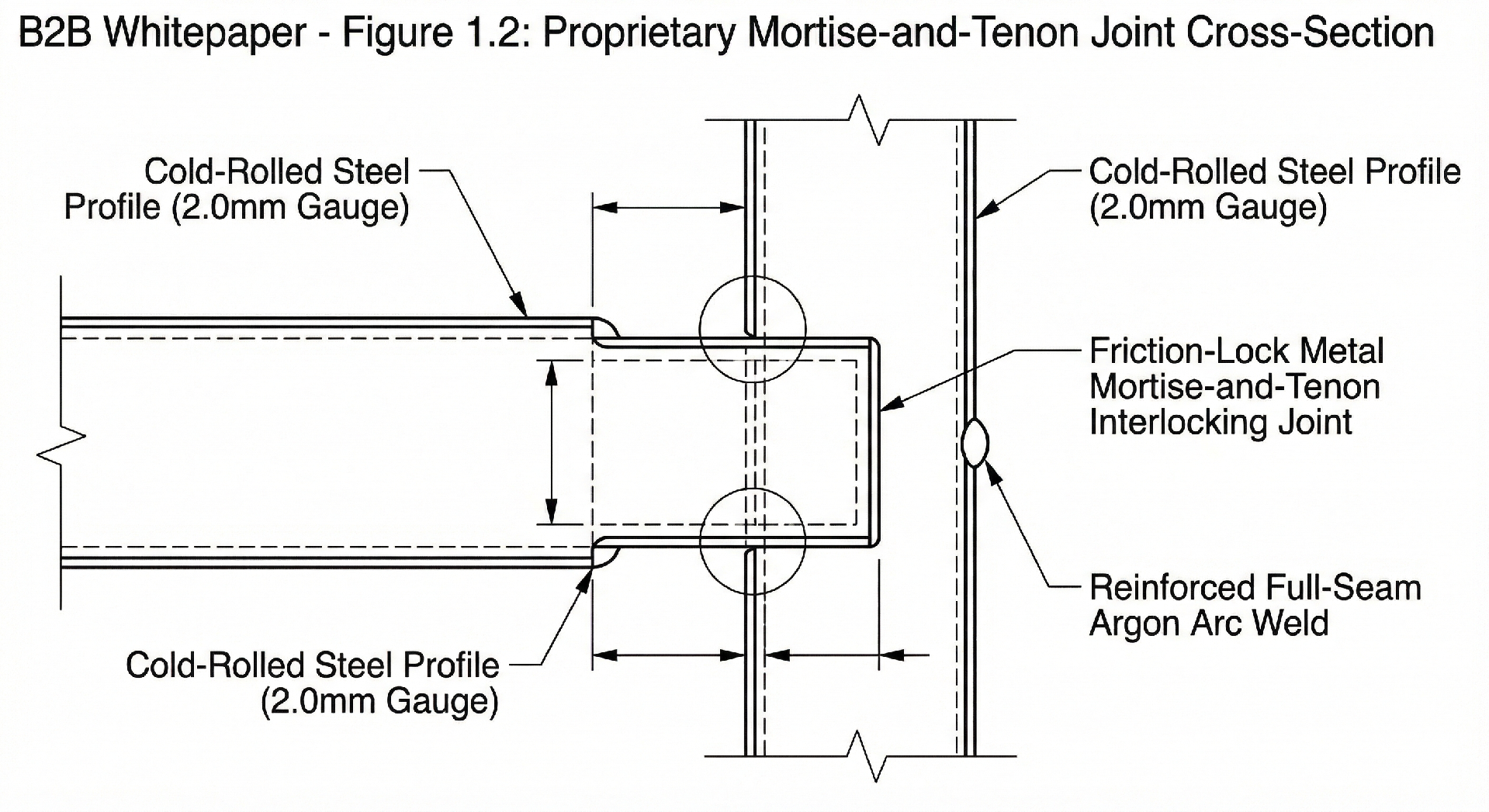
The structural weakest points in any multi-level furniture piece are the joints. High-grade double-layer beds eschew traditional screw-and-bolt assemblies in favor of advanced mortise-and-tenon interlocking designs, reinforced by full-seam argon arc welding.
In a mortise-and-tenon system adapted for metalwork, the weight of the occupants actually compresses the joints further, creating a dynamic friction lock that becomes tighter and more stable the more the bed is used. This engineering marvel addresses the most common complaint in shared sleeping quarters: lateral sway and noise. By eliminating the reliance on threaded fasteners, which naturally loosen over time due to micro-vibrations, premium beds maintain 100% structural rigidity.
1.3 Electrostatic Powder Coating and Anti-Corrosion
To ensure longevity in diverse environmental conditions—ranging from humid coastal facilities to hyper-arid desert camps—high-grade frames undergo a rigorous surface treatment protocol. This typically involves acid pickling and phosphating to remove all impurities and rust, followed by a high-temperature electrostatic powder coating. This coating is baked onto the metal at over 200°C, creating a chemically bonded shell that is highly resistant to scratching, chipping, UV degradation, and moisture penetration.
2. Comparative Analysis: High-Grade Bunk Beds vs. Standard Models
To truly understand the value proposition of a high-grade double-layer bed, a direct empirical comparison with standard residential or low-tier commercial models is essential. Procurement officers often face the dilemma of upfront capital expenditure versus long-term operational expenditure. The following detailed comparison matrix highlights the stark differences across multiple critical dimensions.
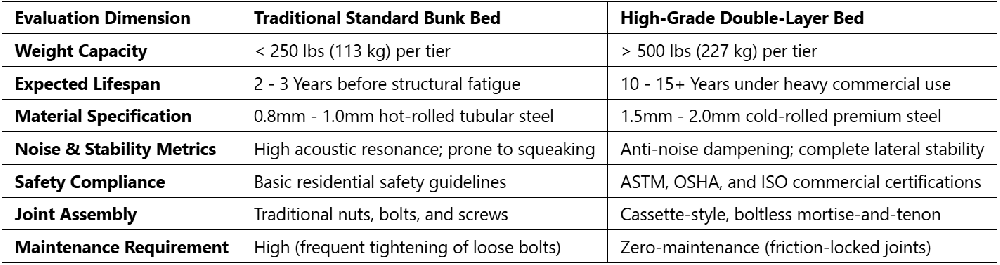
As demonstrated in the comparison table, the high-grade double-layer bed represents a fundamental paradigm shift. While the initial procurement cost may be 30% to 50% higher than a standard bed, the extended lifespan and zero-maintenance architecture yield an ROI that typically pays for the premium within the first 36 months of deployment.
3. Ergonomic Design and Sleep Quality Optimization
Beyond structural resilience, a high-grade double-layer bed must function as an optimized micro-environment for restorative sleep. In B2B contexts, user well-being is directly tied to daytime productivity, safety, and operational efficiency.
3.1 Acoustic Dampening for Deep Sleep Architecture
One of the most insidious threats to sleep quality in shared environments is noise pollution generated by bed movements. The friction between metal parts can produce high-frequency squeaks that disrupt the REM (Rapid Eye Movement) cycle. High-grade systems incorporate specialized acoustic dampening technologies. This includes rubberized gaskets between metal-to-metal contacts and the aforementioned boltless interlocking joints. According to a recent industry report, environments utilizing noise-dampened furniture reported a 24% reduction in micro-awakenings among users (Source: Sleep Foundation B2B Hospitality Report, 2023).
3.2 Mattress Support Systems and Ventilation
The foundation upon which the mattress rests is equally critical. Premium double beds utilize heavy-duty steel mesh or multi-slat transverse steel bars rather than cheap wooden slats or wire springs. This rigid support prevents mattress sagging, ensuring proper spinal alignment for the user.
Moreover, this design promotes maximum airflow beneath the mattress. Superior ventilation prevents the accumulation of moisture and condensation, dramatically reducing the risk of mold, mildew, and dust mite proliferation—a crucial consideration for facility hygiene and allergy management.
3.3 Enhanced Safety Guardrails and Ladder Ergonomics
Safety is non-negotiable in multi-tier sleep arrangements. High-grade double-layer beds are equipped with robust, continuous safety guardrails on the upper bunk that significantly exceed minimum height requirements. Typically, these rails measure at least 30cm to 40cm above the mattress foundation.
Ladders are also subject to rigorous ergonomic design. Rather than vertical ladders that are difficult to climb and prone to causing foot discomfort, premium models often feature angled staircases or wide, anti-slip treads equipped with phosphorescent (glow-in-the-dark) safety strips for nighttime visibility.
4. Strategic Implementation in Commercial and Institutional Facilities
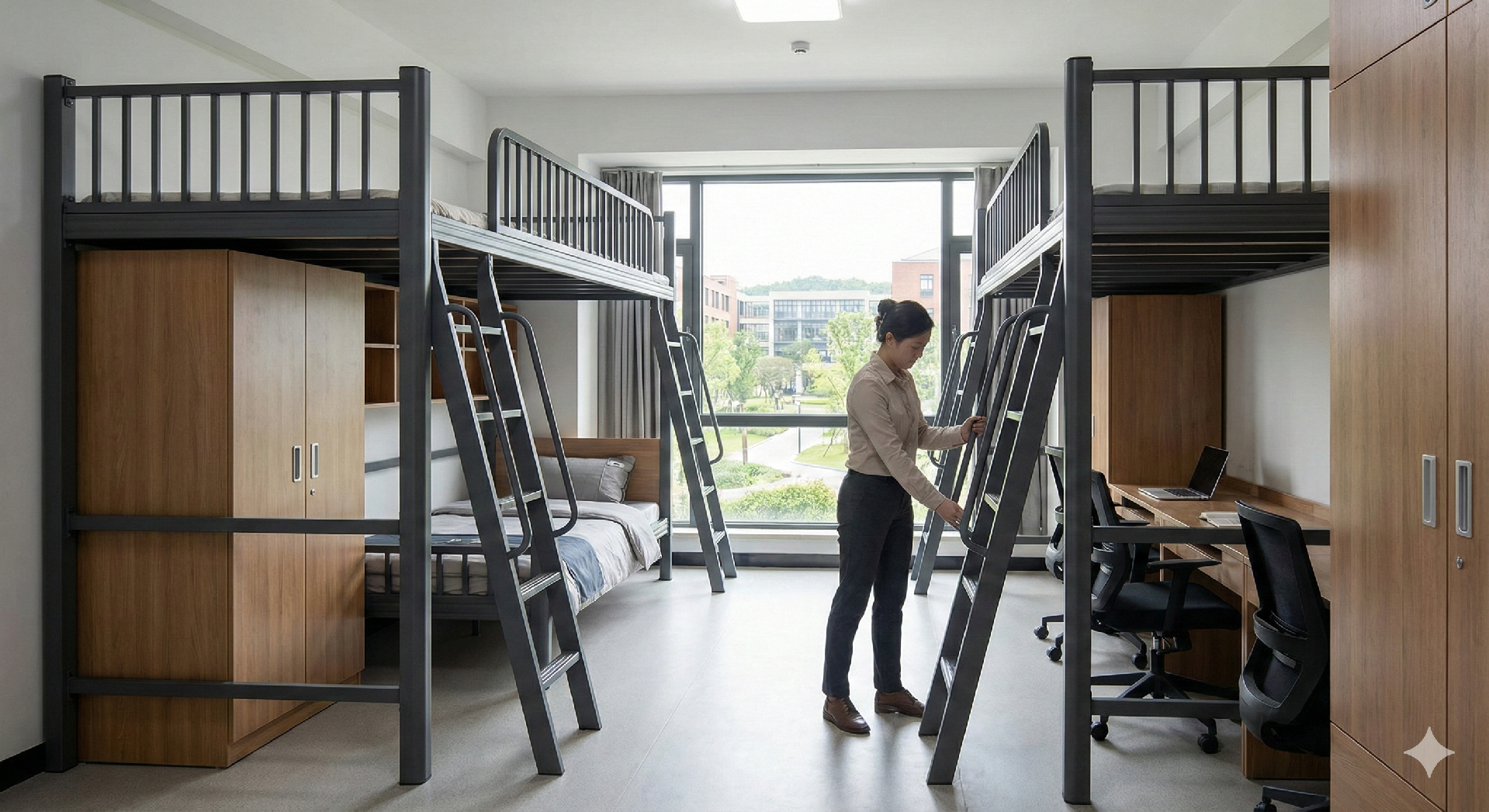
The versatility of the high-grade double-layer bed makes it the sleep system of choice across a multitude of rigorous commercial and institutional environments. The specific deployment strategy varies depending on the use case, but the demand for unyielding durability remains constant.
4.1 Corporate Dormitories and Employee Housing
In industrial zones and manufacturing hubs, companies frequently provide housing for their workforce. Employee dormitories require furniture that can withstand intense daily use by adult males. High-grade metal bunk beds maximize the floor-to-ceiling ratio, allowing facilities to comfortably house more employees per square meter without compromising living standards. An optimized dormitory improves employee morale, directly correlating to lower turnover rates and higher factory floor productivity.
4.2 Outdoor Recreational Resorts and Base Camps
Adventure tourism and expedition base camps operate in some of the most unforgiving environments on Earth. When outfitting outdoor recreational resorts—environments that frequently cross-sell or provide rugged equipment such as a
Just as a guest relies on premium
4.3 Military Barracks and Marine Applications
The defense sector and maritime industries present the ultimate test for any piece of furniture. Military barracks require beds that comply with strict government procurement standards for weight capacity and modularity. In marine applications, such as offshore oil rigs or naval vessels, beds must feature specialized deck-mounting brackets to remain secure during turbulent sea conditions. High-grade double-layer beds designed for these sectors often include integrated storage lockers and privacy curtains, turning a simple bed into a self-contained personal pod.
5. Cost-Benefit Analysis for Heavy-Duty Sleep Systems
In B2B procurement, decisions are ultimately driven by the balance sheet. While the initial sticker shock of a high-grade double-layer bed may deter some budget-conscious buyers, a comprehensive total cost of ownership (TCO) analysis reveals a highly favorable economic narrative.
5.1 Mitigating Replacement Cycles
The standard lifecycle of a low-tier commercial bunk bed is heavily compromised after 24 to 36 months of continuous adult use. Fasteners strip, welds crack, and frames warp. This necessitates a continuous cycle of replacement, creating hidden costs not only in purchasing new units but also in the labor required to dismantle old beds, dispose of them, and assemble new ones.
Conversely, a high-grade double-layer bed boasts an operational lifespan exceeding 10 to 15 years. By investing upfront, facilities eliminate multiple replacement cycles. Data indicates that over a 10-year period, facilities can save up to 45% on furniture procurement costs by opting for high-grade models on day one (Source: B2B Procurement and Logistics Journal, 2024).
5.2 Liability and Risk Management
Structural failures in inferior beds pose a significant liability risk. An injury caused by a collapsing bed or an inadequate safety rail can result in devastating personal injury lawsuits, increased insurance premiums, and severe reputational damage. The heavy-duty weight capacities and rigorous safety certifications (such as ISO 9001 and specific ASTM bunk bed safety standards) inherent in high-grade systems act as an insurance policy, dramatically reducing institutional risk exposure.
5.3 Labor-Saving Assembly Features
Time is money in facility management. The innovative boltless, cassette-style assembly of premium beds means that a standard unit can be erected by two minimally trained staff members in under 10 minutes, requiring no specialized power tools. When outfitting a 500-bed dormitory, the labor hours saved during installation represent a massive upfront cost reduction.
6. Future Trends in Modular Space-Saving Sleeping Berths
The evolution of the high-grade double-layer bed is not static. As commercial needs become more complex, manufacturers are integrating cutting-edge design philosophies and technologies into these traditional structures.
6.1 Integration of Smart Technologies (IoT)
The future of commercial sleep systems lies in smart integration. We are beginning to see the prototyping of heavy-duty beds equipped with low-voltage IoT (Internet of Things) nodes. These include built-in USB-C charging arrays, integrated LED reading lights, and even biometric sleep tracking sensors embedded in the structural frame. In high-end hostels or corporate housing, these features elevate the user experience from basic utility to modern luxury, all while maintaining industrial-grade durability.
6.2 Sustainable and Eco-Friendly Manufacturing
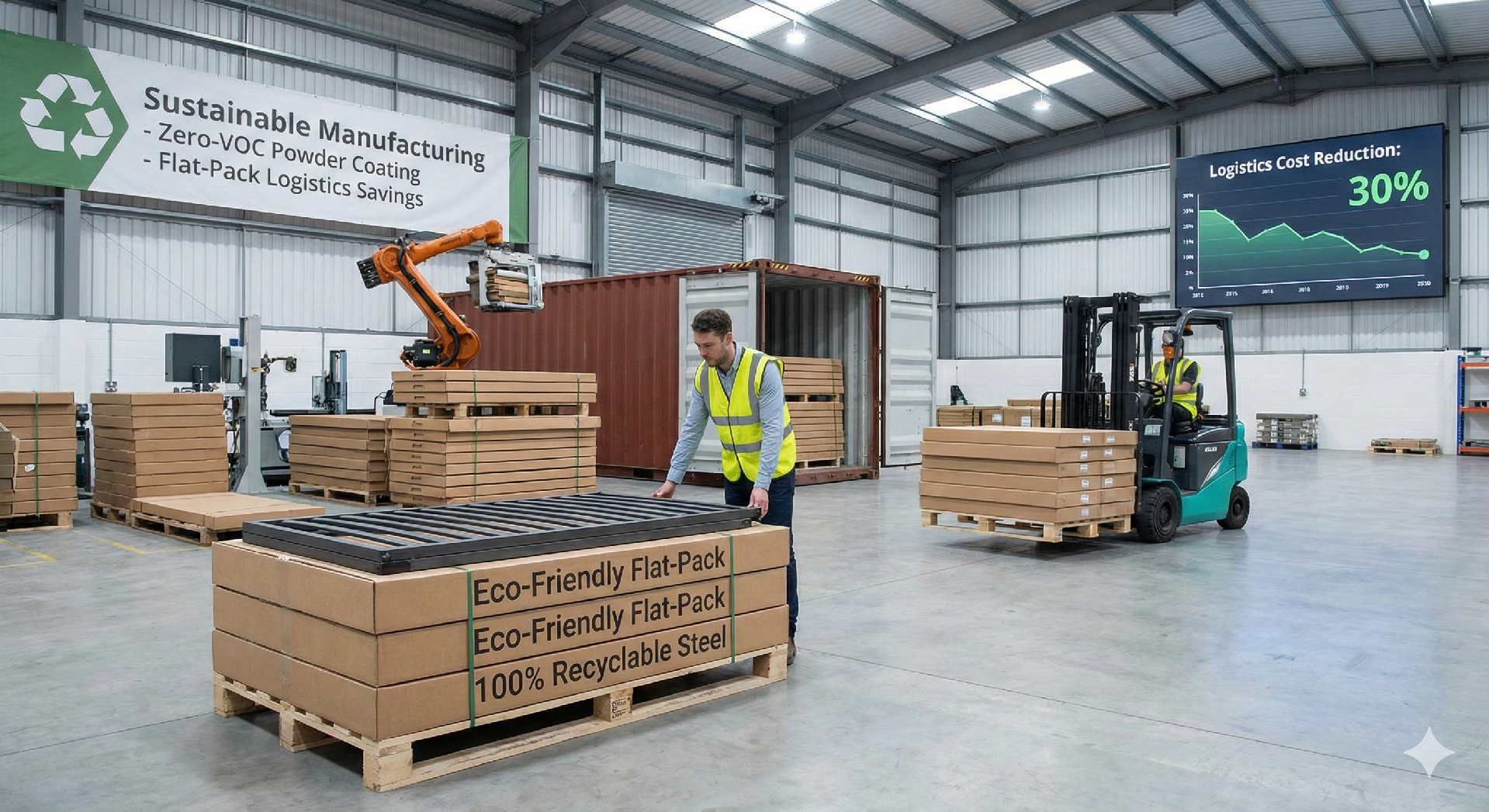
Environmental, Social, and Governance (ESG) criteria are increasingly dictating B2B purchasing decisions. Future iterations of the high-grade double-layer bed are pivoting toward 100% recyclable steel and the use of zero-VOC (Volatile Organic Compounds) powder coatings. By ensuring that the bed can be fully recycled at the end of its multi-decade lifespan, manufacturers are helping large institutions meet their carbon neutrality goals.
Furthermore, flat-pack optimization is minimizing the carbon footprint associated with global shipping. Advanced engineering allows these massive, heavy-duty structures to be broken down into incredibly dense shipping configurations, reducing freight volumes by up to 30%.
7. Operational Maintenance and Hygiene Protocols
Even the most robustly engineered high-grade double-layer bed requires a baseline of operational maintenance to ensure it fulfills its maximum lifespan. Fortunately, the maintenance requirements for premium systems are remarkably low compared to traditional models, largely due to the materials and joint designs previously discussed.
7.1 Cleaning and Disinfection Standard Operating Procedures
In high-turnover environments such as hostels or shift-worker dormitories, hygiene is a critical operational vector. The high-temperature baked electrostatic powder coating on premium beds provides an impenetrable barrier against moisture and biological contaminants.
Facilities should implement a quarterly deep-cleaning protocol using non-abrasive, hospital-grade quaternary ammonium disinfectants. Because the steel is sealed and there are no porous wooden components or exposed tubular openings (which are typically sealed with heavy-duty PVC or welded end-caps), the risk of bedbug infestation within the frame itself is practically eliminated. Bedbugs cannot penetrate or lay eggs within the smooth, cold-rolled steel structure of a high-grade bed, addressing one of the costliest pest control issues in the hospitality and housing sectors.
7.2 Annual Structural Audits
Although the boltless mortise-and-tenon joints tighten with use, a best-practice operational protocol dictates an annual visual inspection. Facility maintenance teams should conduct a rapid audit assessing the integrity of the safety rails, the alignment of the ladder brackets, and the condition of the anti-slip footpads. These rubberized or polyurethane footpads are essential not only for preventing floor damage but also for maintaining the acoustic dampening properties of the bed.
8. Customization Capabilities for Niche Architectural Requirements
One of the defining hallmarks of a true high-grade double-layer bed manufacturer is the capacity for deep customization. B2B clients rarely operate in perfectly uniform spaces; therefore, off-the-shelf dimensions often result in sub-optimal space utilization.
8.1 Dimensional Tailoring
For facilities dealing with strict spatial constraints—such as maritime cabins or retrofitted historical buildings—premium manufacturers can adapt the X, Y, and Z axes of the bed. Whether it requires shortening the overall length to fit a narrow bulkhead or extending the vertical clearance between the bottom and top bunk to accommodate taller adult personnel, high-grade engineering processes (like laser tube cutting) allow for millimeter-precise customization without compromising structural integrity.
8.2 Accessory Integration
Depending on the specific deployment scenario, standard frames can be augmented with a variety of integrated modular accessories. For instance, university dormitories often request the integration of suspended steel storage lockers or under-bed pull-out drawers that utilize heavy-duty telescopic rails. By integrating storage directly into the bed frame, facilities can eliminate the need for standalone wardrobes, further maximizing the usable square footage of the room. Furthermore, facilities that also supply recreational gear—such as a
9. Frequently Asked Questions (FAQs)
To further assist procurement officers and facility managers, we have compiled the most critical inquiries regarding premium sleep infrastructure.
Q1: What exactly defines a "high-grade double-layer bed"?
A high-grade double-layer bed is a commercial-tier sleep system defined by its use of heavy-gauge cold-rolled steel (typically 1.5mm to 2.0mm thick), high-capacity load-bearing capabilities (over 500 lbs per tier), boltless mortise-and-tenon structural joints, and strict compliance with international commercial safety standards.
Q2: What is the standard weight capacity for commercial double-layer beds?
Unlike residential beds which hold around 200-250 lbs per tier, a true high-grade commercial bed is engineered to safely support between 500 lbs to 800 lbs (approx. 227 kg to 362 kg) of static weight per sleeping level, accommodating multiple adult users without structural fatigue.
Q3: How does cold-rolled steel improve double-layer bed longevity?
Cold-rolled steel is processed at room temperature, which prevents the microscopic structural defects associated with heat expansion and contraction. This results in a material that is up to 20% stronger, highly resistant to bending, and provides a smoother surface for superior anti-corrosive powder coating adhesion.
Q4: Are high-grade bunk beds compliant with OSHA or ISO safety standards?
Yes, reputable B2B manufacturers ensure their high-grade models are strictly tested against, and certified by, rigorous international safety protocols, including ISO 9001 quality management, specialized ASTM bunk bed safety standards, and various occupational health guidelines (OSHA) for workplace environments.
Q5: How do you prevent squeaking and noise in metal double-layer beds?
Noise is eliminated through advanced engineering: replacing traditional nuts and bolts with friction-locked cassette joints (mortise-and-tenon) prevents the micro-movements that cause squeaking. Additionally, manufacturers utilize rubberized dampening pads between metal contacts to absorb acoustic resonance.
Q6: Can high-grade double beds be customized for specific room dimensions?
Absolutely. Premium manufacturers utilize advanced CNC machinery and laser tube cutting, allowing them to customize height, length, and width down to the millimeter to fit unique architectural constraints, such as low ceilings in military barracks or narrow footprints in marine vessels.
Q7: What is the average ROI timeframe when upgrading to commercial-grade beds?
While initial capital expenditure is higher, the ROI is typically realized within 24 to 36 months. This is achieved by eliminating the continuous replacement cycles, reducing labor costs associated with fixing broken beds, and mitigating liability risks associated with structural failures.
Q8: How does bed stability impact overall sleep quality in dormitories?
A completely stable, noise-free bed significantly reduces nighttime micro-awakenings caused by movement or squeaking. By providing a rigid, secure sleep environment, users experience longer durations of uninterrupted deep REM sleep, leading to improved daytime alertness and morale.
10. Conclusion and Strategic Recommendations
The transition from standard residential bunk beds to a true high-grade double-layer bed is not merely a furniture purchase; it is a strategic infrastructure investment. As detailed in this comprehensive analysis, the engineering superiority of cold-rolled steel, the zero-maintenance reliability of boltless joints, and the profound economic benefits of extended lifespans make these sleep systems indispensable for serious B2B applications.
Whether you are outfitting a remote mining camp, a high-density university dormitory, or an outdoor recreational facility that caters to adventurers using premium gear like a
Take the Next Step in Facility Optimization: Stop wasting your operational budget on continuous replacement cycles and inadequate residential furniture. Evaluate your current floor plans, calculate your long-term TCO, and consult with a premium commercial bed manufacturer today to request a customized spatial audit for your facility.
