

The Physics of a Hot-Weather Blowout
An inflatable product does not need a puncture to fail on a hot day. The most common summer burst mechanism is thermal expansion of the internal air combined with solar softening of the shell material. When ambient temperature rises from 25°C to 45°C, the absolute temperature of the trapped air increases by roughly 7%, and if the product is sealed and exposed to direct sun, internal pressure can climb far beyond the working pressure stamped on the valve. For a sealed air chamber, the ideal gas law governs the relationship: pressure is proportional to absolute temperature when volume is fixed. In practice, volume is not perfectly fixed, but a taut inflatable — a drop-stitch dock, a sealed air-beam tent, or a high-pressure SUP — has very little give. The result is a pressure spike that loads seams, valve seats, and fabric coatings beyond their design envelope.
This article explains the failure chain from solar gain to seam rupture, identifies which product classes are most exposed, and gives buyers and operators a practical specification and field-management framework. The focus is on commercial inflatable equipment where a burst means downtime, safety exposure, and replacement cost — not on casual consumer toys.
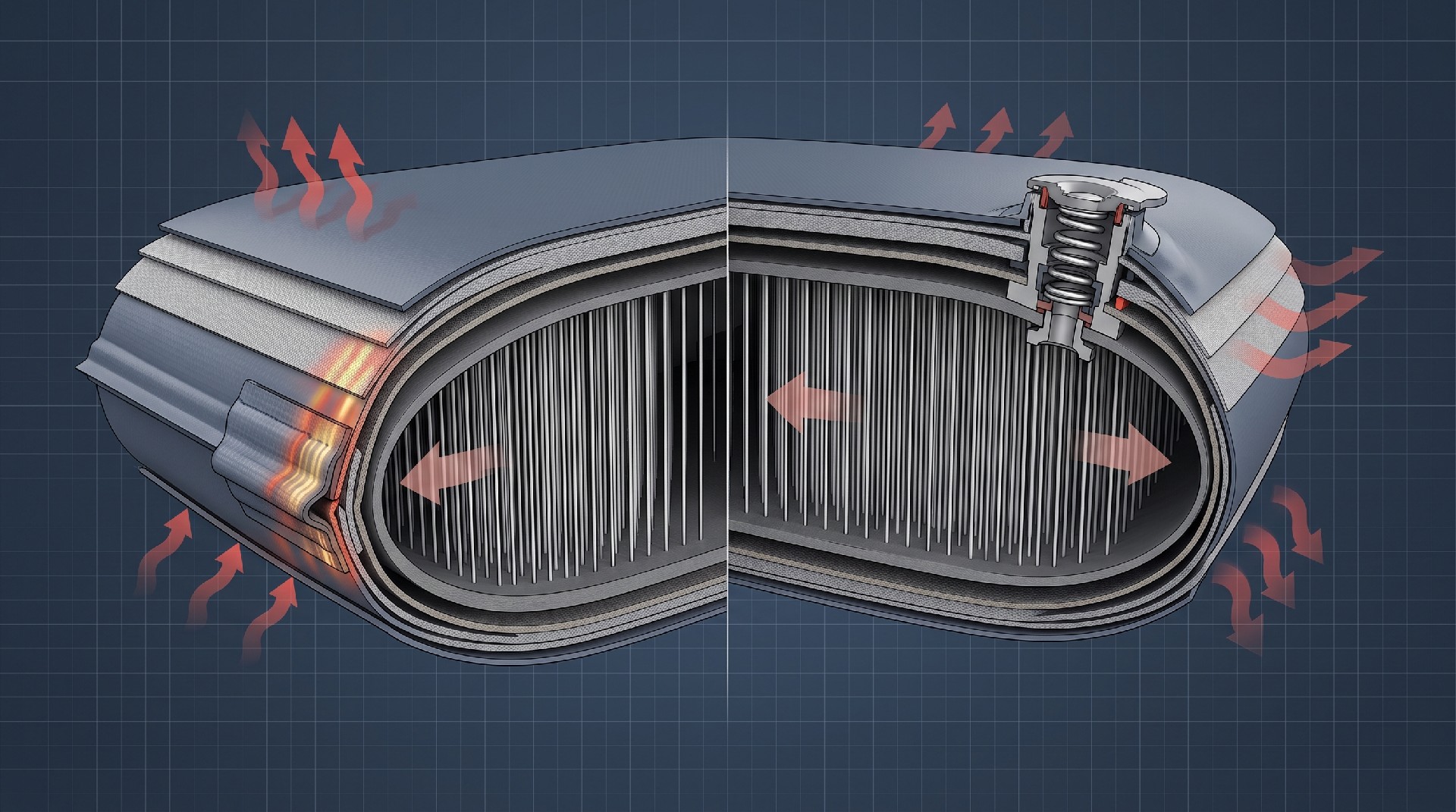
How Solar Gain Turns Into Internal Pressure
Three mechanisms act together on a sunny day:
Thermal expansion of trapped air. A sealed chamber inflated at 20°C and then heated to 60°C in direct sun can see absolute temperature rise by about 14%. If the chamber cannot expand, pressure rises proportionally. A chamber inflated to 10 psi at 20°C could theoretically approach 11.4 psi at 60°C — enough to challenge a seam rated at 12 psi with no safety margin.
Solar softening of PVC and TPU. Thermoplastic shell materials lose stiffness as surface temperature rises. A dark-colored PVC drop-stitch panel in full sun can reach 70–80°C surface temperature, well above the 50–60°C range where many commercial PVC formulations begin to soften and creep. Softened material reduces seam peel strength and allows the fabric to stretch, which paradoxically can either relieve or concentrate stress depending on seam geometry.
Pressure stacking from multiple chambers. In a multi-chamber product, a central chamber that receives more sun exposure can push against adjacent chambers, raising their pressure indirectly. This is common in inflatable docks and air-beam shelters where one side faces the sun and the other is shaded.
The critical variable is not just ambient air temperature but surface temperature of the inflated material. A product on a dark rubber mat, asphalt, or dark decking can run 15–25°C hotter than one on light-colored grass or a reflective surface. Buyers specifying for tropical or desert markets should treat surface temperature, not air temperature, as the design condition.
Which Inflatable Products Are Most at Risk
Risk depends on three factors: working pressure, chamber sealing, and material color. High-pressure sealed products with dark surfaces and limited pressure-relief capacity are the most vulnerable. Low-pressure continuous-blower products are less likely to burst from thermal expansion because the blower maintains a constant flow and the structure is not sealed, but they face different heat-related failures such as blower overheating and fabric degradation.
Typical commercial risk tiers:
Highest risk: Sealed high-pressure products — drop-stitch docks, SUP boards, sealed air-beam tents, inflatable rescue platforms. Working pressures commonly range from 8–15 psi for drop-stitch and 6–12 psi for air beams. A 20–30% pressure rise can exceed seam design limits.
Moderate risk: Multi-chamber inflatable boats and pontoons with operating pressures of 2–4 psi. These have more volume flexibility but still rely on seam integrity and valve seals that can degrade under repeated thermal cycling.
Lower risk: Continuous-blower amusement products and air tents with constant airflow. These are not sealed, but the blower itself and the fabric coating can fail under sustained heat.
Color matters more than many buyers expect. A black or dark navy drop-stitch dock can absorb 80–90% of solar radiation, while a light gray or white surface may reflect 60–70%. The same product in the same location can see a 20–30°C surface temperature difference based on color alone. For commercial fleets operating in high-insolation markets, light colors are not an aesthetic choice — they are a thermal management decision.
| Risk Factor | High-Risk Condition | Lower-Risk Condition | Buyer Verification |
|---|---|---|---|
| Working pressure | Sealed high-pressure (8–15 psi typical for drop-stitch) | Low-pressure continuous blower (0.5–2 psi typical) | Confirm working pressure and proof pressure from supplier datasheet |
| Surface color | Black or dark navy (high solar absorption) | White or light gray (high solar reflection) | Request color samples and surface temperature test data |
| Seam method | Adhesive seam with room-temperature test data only | Heat-welded seam with elevated-temperature peel data | Ask for seam peel-strength test at 60°C or the rated service temperature |
| Pressure relief | No relief valve or non-adjustable set point | Factory-set relief valve at 10–15% above working pressure | Verify set point, adjustability, and clog resistance |
| Operating protocol | Inflated to full pressure in cool morning, left in full sun | Inflated to 70–80% in morning, shaded or partially deflated at peak heat | Confirm operator training and pressure gauge calibration |
| Warranty coverage | Heat-related damage excluded | Heat-related seam or valve failure covered | Review warranty terms for thermal exclusions before purchase |
Design and Specification Responses for Hot Climates
Preventing heat-related bursts is a specification problem before it is an operational problem. Buyers should define the thermal design condition in the purchase specification and require the supplier to confirm seam and valve ratings against it.
Pressure relief and venting
Some commercial sealed inflatables can be specified with a pressure-relief valve or a manually adjustable vent. A relief valve set at 10–15% above working pressure can bleed excess air during peak solar gain and reseal as the product cools. This is common in higher-end drop-stitch docks and sealed air-beam structures, but it is not universal. Buyers should verify whether the relief valve is factory-set, field-adjustable, and whether it can be defeated or clogged. A relief valve that vents too early reduces stiffness; one that vents too late provides no protection. The correct set point depends on the seam and valve rating, which should come from the supplier as tested data, not a generic claim.
Seam and material selection
Heat resistance is a seam property as much as a fabric property. PVC seams are commonly joined by heat welding, radio-frequency welding, or adhesive. Heat-welded seams typically offer better thermal stability than adhesive seams, but the quality of the weld depends on process control. Buyers should ask for seam peel-strength test data at elevated temperature, not just at room temperature. A seam that passes 20 N/50 mm at 23°C may fail at 60°C. TPU and Hypalon/CSM have different thermal profiles; TPU generally offers good low-temperature flexibility but can soften earlier than some PVC formulations, while Hypalon/CSM is known for UV and heat resistance but is heavier and more expensive. Material choice should follow the operating surface temperature, not a generic preference.
Chamber redundancy and isolation
Multi-chamber designs limit the consequence of a single burst, but they also create more valves and seams — more potential failure points. For high-risk applications such as rescue platforms or commercial docks, the buyer should specify the number of independent chambers and the expected performance after one chamber fails. A product that remains partially functional after a single-chamber failure is safer and more commercially viable than one that depends on every chamber holding pressure simultaneously.
Color and surface treatment
Light colors, reflective coatings, and shade structures reduce solar gain. For rental fleets, a simple shade sail or a light-colored cover during peak hours can cut surface temperature significantly. Buyers should also consider whether the product will be stored on dark pavement or transported on a dark trailer bed, both of which can pre-heat the material before it is even inflated.
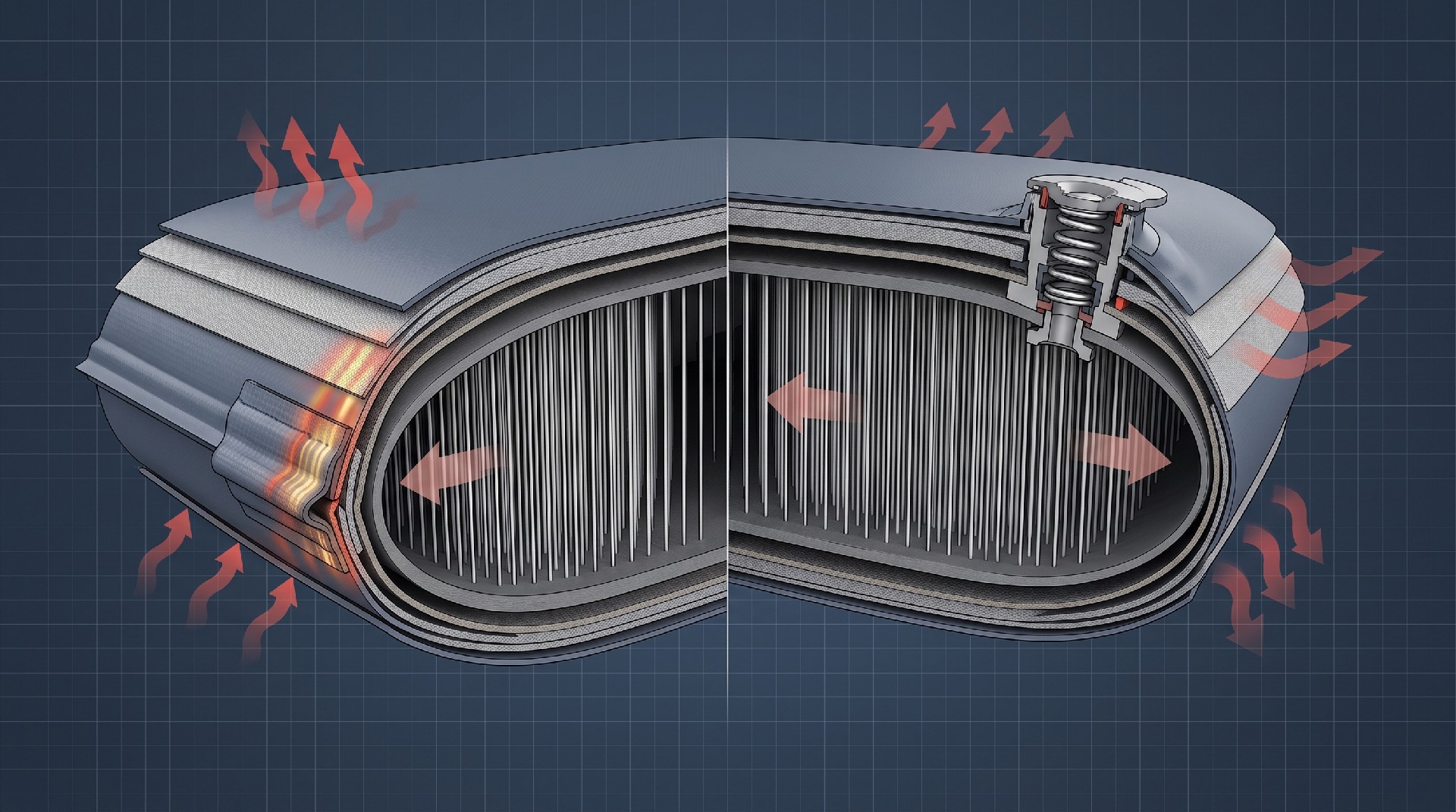
Field Management: What Operators Should Do Before and During Hot Days
Even a well-specified product can burst if it is inflated to maximum pressure on a cool morning and then left in full sun. The operational protocol matters as much as the specification.
Inflate to a lower pressure in the morning. If the day is forecast to exceed 35°C, inflate to 70–80% of the normal working pressure and check pressure as the surface temperature rises. This gives the air room to expand without exceeding the seam limit.
Use a calibrated pressure gauge. Many hand pumps and low-cost gauges are inaccurate at high pressure. A gauge that reads 2 psi high can cause chronic over-inflation. Buyers should verify gauge accuracy as part of the pump specification.
Monitor surface temperature, not air temperature. An infrared thermometer is inexpensive and can identify hot spots. If surface temperature exceeds the material’s rated continuous service temperature — commonly 60–70°C for many commercial PVCs, but supplier-dependent — the product should be shaded or deflated.
Deflate partially during peak heat. For sealed products not in active use, releasing 10–15% of pressure during the hottest hours reduces stress on seams and valves. This is not practical for products in constant use, which is why pressure relief or lower initial inflation is preferred.
Inspect seams and valves after every hot cycle. Thermal cycling accelerates seam creep and valve seal degradation. A seam that looks fine at 25°C may show bubbling or separation at 60°C. Operators should inspect immediately after a hot day, not weeks later.
For rental fleets, the commercial decision is whether to invest in pressure-relief valves, lighter-colored products, or shade infrastructure. The payback depends on replacement frequency. A fleet that replaces burst products every season in a hot climate will usually justify the higher specification cost within one or two seasons.
Buyer checklist: verifying heat resistance before purchase
Ask for the material’s continuous service temperature range and the seam peel-strength test data at that temperature.
Confirm whether the product has a pressure-relief valve, and if so, its set point and whether it is field-adjustable.
Verify the working pressure and the proof pressure of the seams and valves — the proof pressure should be at least 1.5× the working pressure in typical commercial specifications.
Request a sample or prototype and perform a simple solar test: inflate to working pressure, place in direct sun for 2–3 hours, and measure pressure rise and surface temperature.
Confirm the color and surface finish, and ask whether a lighter or reflective option is available for hot markets.
Review the warranty terms specifically for heat-related failures — many warranties exclude thermal damage, so the buyer should understand what is covered.
The Commercial Decision: Specification vs. Replacement Cycle
In hot climates, the choice is not whether to pay for heat resistance but where to pay for it. A lower-cost product with no pressure relief, dark surfaces, and room-temperature seam data will have a shorter service life and a higher replacement rate. A higher-specification product with light colors, verified elevated-temperature seam data, and pressure relief costs more upfront but reduces burst events, downtime, and safety incidents.
The right decision depends on the product class and the operator’s tolerance for failure. For a resort renting drop-stitch docks in a tropical market, a burst is not just a repair cost — it is a guest-safety event and a lost revenue day. For a one-season event rental, a lower-cost product with a controlled inflation protocol may be sufficient. Buyers should define the acceptable annual failure rate and work backward to the specification and operating protocol that can meet it. That is the real thermal design decision, and it should be made before the purchase order, not after the first hot week.
