

Why R-Value Is a Specification That Cannot Be Ignored for Commercial Sleeping Mats
For a rental fleet operator, an R-Value that is too low results in guest complaints, early morning call-outs, and negative reviews that directly impact repeat business. For a resort buyer, it translates to unpredictable heating costs and reduced shoulder-season occupancy. For an outdoor equipment distributor, it is the single most common customer question that separates a premium inventory from a budget line.
R-Value measures thermal resistance: how effectively a material resists conductive heat transfer. For inflatable sleeping mats, this determines how much warmth your body retains in cooler conditions. A higher R-Value means better insulation, but it also comes with tradeoffs in packed size, weight, and material cost. For commercial B2B buyers, choosing a mat based on R-Value alone is insufficient; you must evaluate it alongside seasonal deployment plans, guest demographics, and fleet maintenance cycles.
Deconstructing R-Value: What the Number Actually Means for Your Fleet
In technical terms, R-Value is defined as the temperature difference per unit of heat flux across a surface. For sleeping mats, this is typically measured using a guarded hot plate apparatus under controlled laboratory conditions. The higher the R-Value, the lower the heat loss from a warm body to the cold ground. However, the commercial reality is more nuanced. The standard R-Value stated on a mat's datasheet is often measured in ideal conditions; actual field performance can vary by 15–25% depending on humidity, inflation pressure, user weight, and the ground surface type.
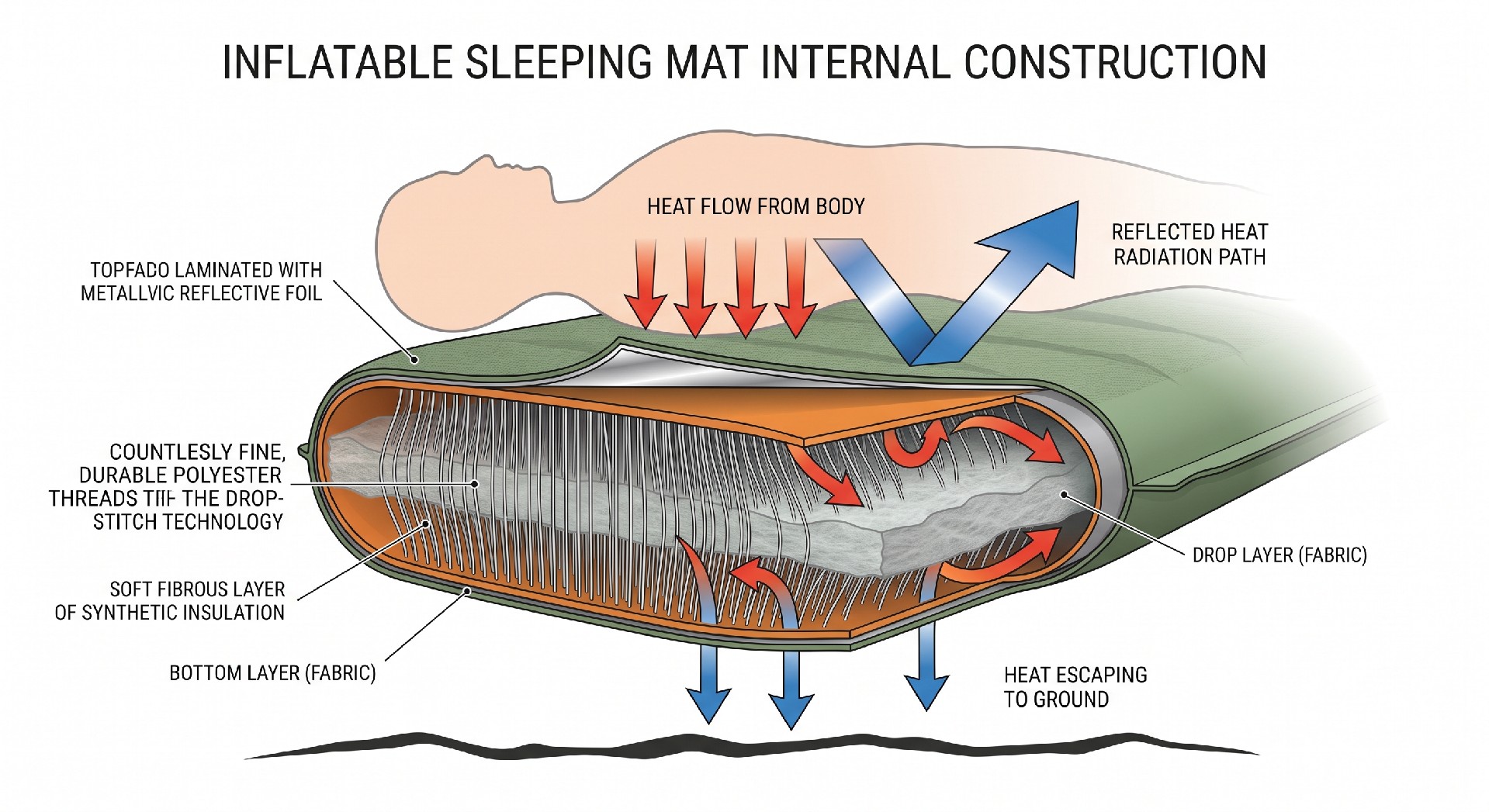
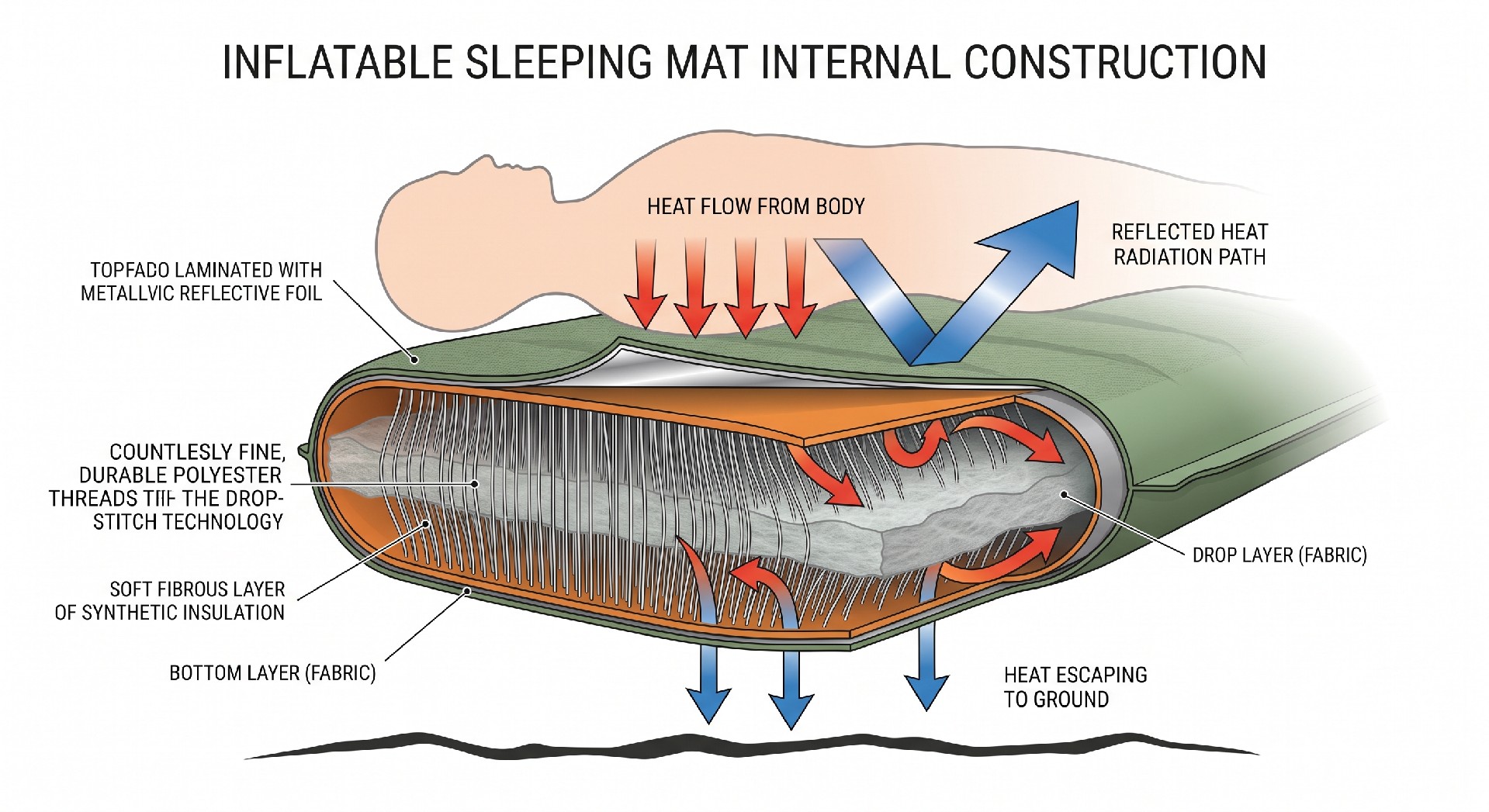
For an inflatable sleeping mat, the thermal insulation comes from two sources: the internal air volume and the internal reflective or insulating layer. Most commercial mats incorporate a synthetic insulation layer, such as polyester batting or a reflective foil, to improve thermal performance. The internal air itself is a poor conductor of heat, making it effective insulation, but it is also subject to convective currents. Convection occurs when warm air within the mat rises and cooler air sinks, creating a circulation that can carry heat away from the sleeper. Advanced designs use internal baffles or a honeycomb structure to limit these convection currents.
Why Convection Control Is a Commercial Metric
In a commercial setting, a mat that relies solely on trapped air will have a significantly lower effective R-Value when inflated to a higher pressure because the internal air is more mobile. Many high-end mats combat this with a layer of synthetic fiber fill between the top and bottom layers. When evaluating a sample from an OEM supplier, ask for the R-Value at two different internal pressures: the recommended operating pressure and a lower pressure that might occur after a day of use. This check will reveal the real thermal stability of the design.
R-Value Ranges and Their Commercial Applications
When specifying sleeping mats for a commercial operation, the typical commercial range for R-Value falls into three broad bands. Each band corresponds to a distinct use case and buyer expectation.
R-Value below 2.0: These mats are generally considered three-season mats, suitable for summer camping and indoor use where nighttime temperatures remain above 10°C. They are often lighter and more compact but are a poor investment for a general-use rental fleet because they limit your ability to book guests in spring and autumn.
R-Value between 2.0 and 4.0: This is the most common commercial range for all-purpose sleeping mats. They are comfortable for temperatures from 0°C to 10°C and are the standard for most resort and rental operations. The cost-to-performance ratio is at its peak in this band, and many OEMs offer this specification as a baseline for custom orders.
R-Value above 4.0: These are four-season or winter mats. They are designed for temperatures below 0°C and are often used by expedition outfitters or alpine lodges. They are heavier, more expensive to produce, and typically require thicker fabric and more insulation, which increases both the packed volume and the per-unit freight cost.
An important commercial decision is to align the R-Value with your target operating season. A resort in a warm climate that operates only during the summer might find an R-Value of 1.8 adequate, while a year-round glamping destination should target a minimum of 3.5 to ensure guest comfort on cooler nights. The cost differential between an R-Value of 2.5 and 4.0 can be 30-40% in wholesale price, so accurate seasonal forecasting is essential.
| R-Value Range | Commercial Application | Typical Material Construction | Fleet Cost Factor |
|---|---|---|---|
| Below 2.0 | Summer camping; indoor events; budget rentals | Simple welded air chambers; no insulation or minimal foil | Lowest cost; highest logistics volume; limited seasonality |
| 2.0 – 3.0 | All-purpose rental; standard glamping; year-round temperate climates | Welded or drop-stitch with thin polyester insulation; optional reflective layer | Balanced cost and comfort; suitable for most commercial fleets |
| 3.0 – 4.0 | Cold-weather camping; shoulder-season resort; premium guest comfort | Drop-stitch construction; thick synthetic insulation; metallized reflective foil | Higher per-unit cost; moderate packed volume; extends usable season by 2-3 months |
| Above 4.0 | Winter expeditions; alpine lodges; luxury all-season glamping | Thick drop-stitch; high-loft insulation; double reflective layers; heavy fabric | Highest acquisition and freight cost; lowest volume per pallet; maximum guest comfort |
Material and Construction Choices That Affect R-Value
The R-Value is not purely a function of the insulation material; it is also determined by the mat's geometry and the materials used for the top and bottom layers. For a B2B buyer, understanding these design variables is critical for evaluating supplier proposals.
Drop-Stitch vs. Welded Construction
Most high-R-Value inflatable sleeping mats use a drop-stitch construction, which involves thousands of tiny threads connecting the top and bottom layers. This creates a flat, stable surface and allows the mat to withstand higher pressures without ballooning. However, drop-stitch mats are more expensive to produce than simple welded air mattresses. The drop-stitch threads themselves can act as thermal bridges, conducting heat from the top to the bottom layer. To mitigate this, some manufacturers use a low-conductivity thread material or apply a thermal barrier coating to the internal surfaces.
In contrast, a mat with a simple welded air chamber is less expensive and lighter but often has a lower R-Value because the internal air moves freely and there is no structural barrier to convection. When reviewing an OEM sample, check the internal construction by partially deflating the mat and feeling for baffles or a fiber-fill layer. If the inside feels completely hollow, the R-Value is likely at the lower end of the range.
Reflective Layers and Metallized Films
Many mats that claim a high R-Value use a metallized film, often aluminized Mylar, laminated to the inner surface of the mat. This film reflects radiant heat back toward the sleeper, adding an incremental R-Value of 0.5 to 1.0 without significantly increasing weight or volume. This is a highly effective and cost-efficient technology for commercial mats. When evaluating a technical datasheet, look for a separate specification of the "reflective R-Value contribution" to understand what portion of the total R-Value comes from conduction versus radiation.
Testing R-Value: What Buyers Should Request from OEMs
Many OEM buyers accept the supplier's stated R-Value without verification. This is a risk. R-Value measurements can be influenced by the test method, the sample preparation, and the environmental conditions. The most common standard used for sleeping mats is ASTM F3340-18, which outlines a test method for measuring thermal resistance. However, not every OEM uses this standard.
When entering the specification comparison stage, request the following from your potential suppliers:
The exact test standard used: Is it ASTM F3340? EN 13537? Or an internal method? An internal method is acceptable only if it is clearly documented and correlated with industry norms.
Test condition details: What was the ambient temperature, the relative humidity, and the applied pressure load? These factors all affect the result.
Batch consistency data: Request R-Value data from the last three production batches to see how consistent the performance is. A variance of more than ±5% indicates a lack of process control.
Third-party test report: If the claimed R-Value is critical for your operation, request a test report from an independent laboratory. This is a standard part of the sample evaluation phase for serious commercial buyers.
Fleet Management and R-Value: Maintenance and Lifecycle Cost
R-Value is not static over the life of the product. It degrades over time due to several factors, and this degradation must be factored into your fleet expansion and replacement planning.
First, the internal insulation can compact over time, particularly if the mat is stored folded or rolled under pressure. This compaction reduces the air volume and the loft of the insulating layer, lowering the R-Value. To mitigate this, store mats fully inflated or loosely rolled, and avoid stacking heavy items on them during off-season storage.
Second, micro-leaks are a silent killer of thermal performance. Even a leak that is too small to noticeably affect inflation over a night can allow moisture-laden air to enter the mat. The moisture increases thermal conductivity, effectively reducing the R-Value. If you notice a pattern of guest complaints about cold spots in specific mats, perform a leak test by submerging the inflated mat in a water bath and looking for a consistent stream of bubbles. Replace mats with chronic micro-leaks.
Third, the reflective layer, if present, can degrade due to repeated flexing and exposure to the chemicals in body oils and sweat. A mat that is not cleaned and dried properly between uses will see its reflective surface tarnish over time, reducing its radiant heating performance. Implement a cleaning protocol that includes a mild soap and a soft cloth, and ensure the mat is completely dry before storage.
ROI Analysis: Balancing R-Value with Packed Volume and Weight
For a rental fleet operator, the relationship between R-Value, packed volume, and weight is a critical commercial equation. A higher R-Value typically requires more insulation and heavier, thicker fabric. This increases the packed volume of each mat, which in turn affects your storage capacity and transport logistics. If you are distributing mats to multiple remote sites, the additional shipping cost per mat can add up quickly.
Consider the following commercial decision matrix:
If your storage is limited and transport costs are high: You may choose a mat with an R-Value of 2.5 to 3.0, which is compact and lightweight, even if it limits your shoulder-season bookings. This is often the optimal choice for temporary event rentals where logistics are the primary cost driver.
If guest comfort is your primary differentiator and storage is not a constraint: You should invest in an R-Value of 4.0 or higher. These mats command a premium guest experience and can allow you to charge higher nightly rates or extend your season.
If you operate a mixed fleet: Consider stocking two grades of mats: a basic R-Value 2.0 for summer use and a premium R-Value 4.0 for winter and shoulder-season packages. This modular approach improves your return on investment by matching the product to the specific use case.
The payback period for a higher R-Value mat can be calculated by estimating the additional revenue from nights that would otherwise be unsold due to cold conditions. For a glamping resort, a single extra night booked per mat per season can pay for the difference in wholesale cost.
Supplier Questions and Sample Evaluation Protocol
Before committing to a contract with an OEM, conduct a rigorous sample evaluation that focuses on thermal performance. The following protocol is designed for a technical product manager or procurement specialist.
Phase 1: Document Review
Review the product datasheet for a clear R-Value specification. Does it define the test standard and the condition?
Request the material composition of the internal insulation and the top/bottom fabrics. Is the insulation polyester, polyamide, or a blend?
Verify that the supplier has a documented quality control process for thermal testing. Ask for their in-line inspection records for R-Value.
Phase 2: Physical Sample Testing
Inflate the sample to its recommended operating pressure. Wait for 30 minutes for the internal air to stabilize.
Perform a personal field test: lie on the mat for 15 minutes on a cool concrete floor. Note any cold spots or areas where heat seems to escape.
If you have the capability, measure the internal temperature of the mat using an infrared thermometer at several points.
Deflate and re-inflate the mat three times. Note if the R-Value feels consistent or if the internal insulation has shifted.
Phase 3: Commercial Assessment
Calculate the packed volume and weight. If you are ordering a container, calculate the number of mats per pallet and the shipping cost per unit.
Estimate the repair cost. Mats with internal insulation are more difficult to patch if punctured. Does the supplier offer a repair kit? Is the seam design repairable in the field?
Evaluate the warranty terms. Does the supplier guarantee the R-Value for a certain number of cycles?
Final Recommendation: Specifying R-Value for Your Operation
There is no single "best" R-Value. The correct choice depends on your commercial model. For a standard rental fleet operating in a temperate climate, an R-Value between 2.5 and 3.5 offers the best balance of cost, comfort, and logistics. For a luxury glamping operator, target an R-Value of 4.0 or higher and use it as a key marketing differentiator. For a budget summer rental operation, an R-Value of 1.8 to 2.0 is acceptable, but you must accept the risk of guest complaints if the weather turns.
When finalizing your purchase, do not rely on the R-Value alone. Integrate it with your specific operational constraints, including storage space, transport capacity, and guest satisfaction goals. The most effective approach is to run a pilot with at least 50 mats from a shortlisted supplier during your target season. Collect guest feedback and inspect the mats for thermal degradation after 30 days of use. This data-driven approach will provide the evidence needed to make a final commitment.
