When the Swimming Ring Becomes a Battlefield: A Commercial Safety Perspective
For many parents, the toddler swimming ring represents a necessary step toward water confidence. But when a child refuses to wear one, the transition from poolside anxiety to genuine water safety requires more than repeated persuasion. For commercial operators—swim schools, resort kids' clubs, and childcare facilities—this refusal pattern represents a safety gap that cannot be resolved through force or bribery alone. The question isn't simply how to make a toddler wear a safety swimming ring. Rather, it's how commercial water safety programs can design a progression that respects a toddler's developing autonomy while maintaining a non-negotiable safety standard. This article provides a structured, compliance-ready approach for commercial settings, examining alternative flotation devices, gradual acclimation protocols, and the operational policies that turn refusal into a manageable safety process rather than a daily confrontation.
Understanding Why a Toddler Refuses a Safety Swimming Ring
The toddler swimming ring is an effective but inherently restrictive device. A child in a properly fitted ring is positioned vertically with arms held slightly aloft, limiting their ability to swim horizontally or interact freely with the water. For a toddler developing motor skills and a desire for independent movement, this restriction can feel like imprisonment. The refusal is often sensory—the pressure of the ring around the torso, the feeling of being held by an inanimate object, the inability to use both arms for splashing or reaching. Additionally, the child may interpret the ring as a barrier rather than a support, associating it with a loss of control. In a commercial setting, this refusal can disrupt a class, cause distress to other children, and create a liability exposure if staff are pressured to bypass the ring entirely. The objective for a swim school or resort is not to force compliance but to offer an alternative that provides equivalent safety while respecting the child's developmental readiness.
Risk Assessment and Classifying Refusal
Before implementing an alternative, commercial operators must classify the nature of the refusal. A child who has never worn a ring requires a different protocol than one who has a negative association following a capsize event or a previous forced placement. The classification informs both the equipment selection and the staff training requirement. A common commercial practice is to document refusal patterns alongside the child's water comfort score (a simple 1–5 scale rating verbal and physical comfort in shallow water). This documentation creates a consistent handover between staff and helps track progress across sessions. Commercial operators should treat this classification as part of their standard induction procedure, with a specific log entry for any child who refuses a flotation device on first or subsequent visits.
Alternative Flotation Equipment: Moving Beyond the Ring
The standard toddler swimming ring is one of several commercial flotation options. Transitioning to an alternative requires an understanding of the buoyancy mechanics and how each device interacts with a toddler's developing motor control. Commercial buyers should evaluate alternatives not as a compromise but as a specification choice tailored to the child's comfort and the operational setting.
1. Swim Vests or PFDs (Personal Flotation Devices)
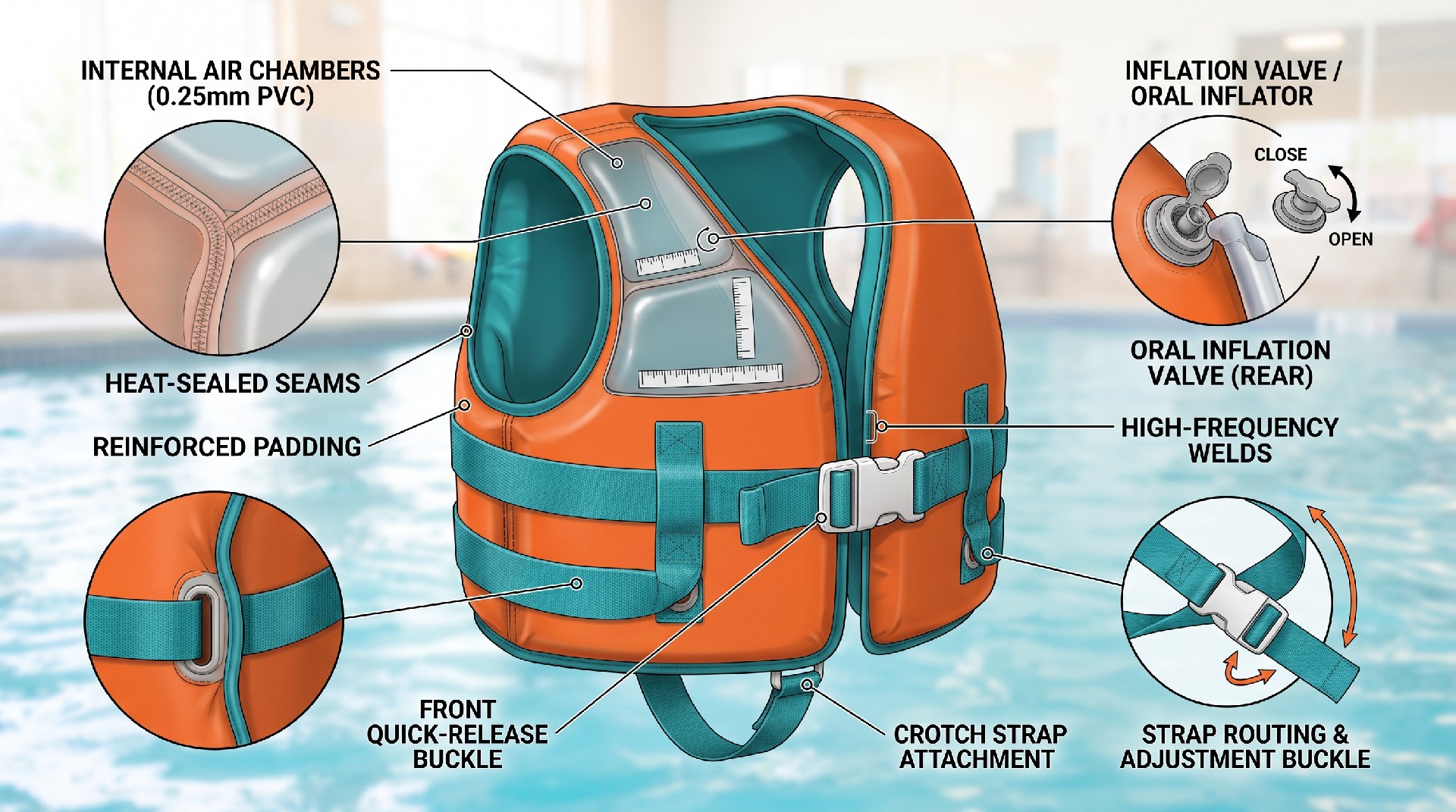
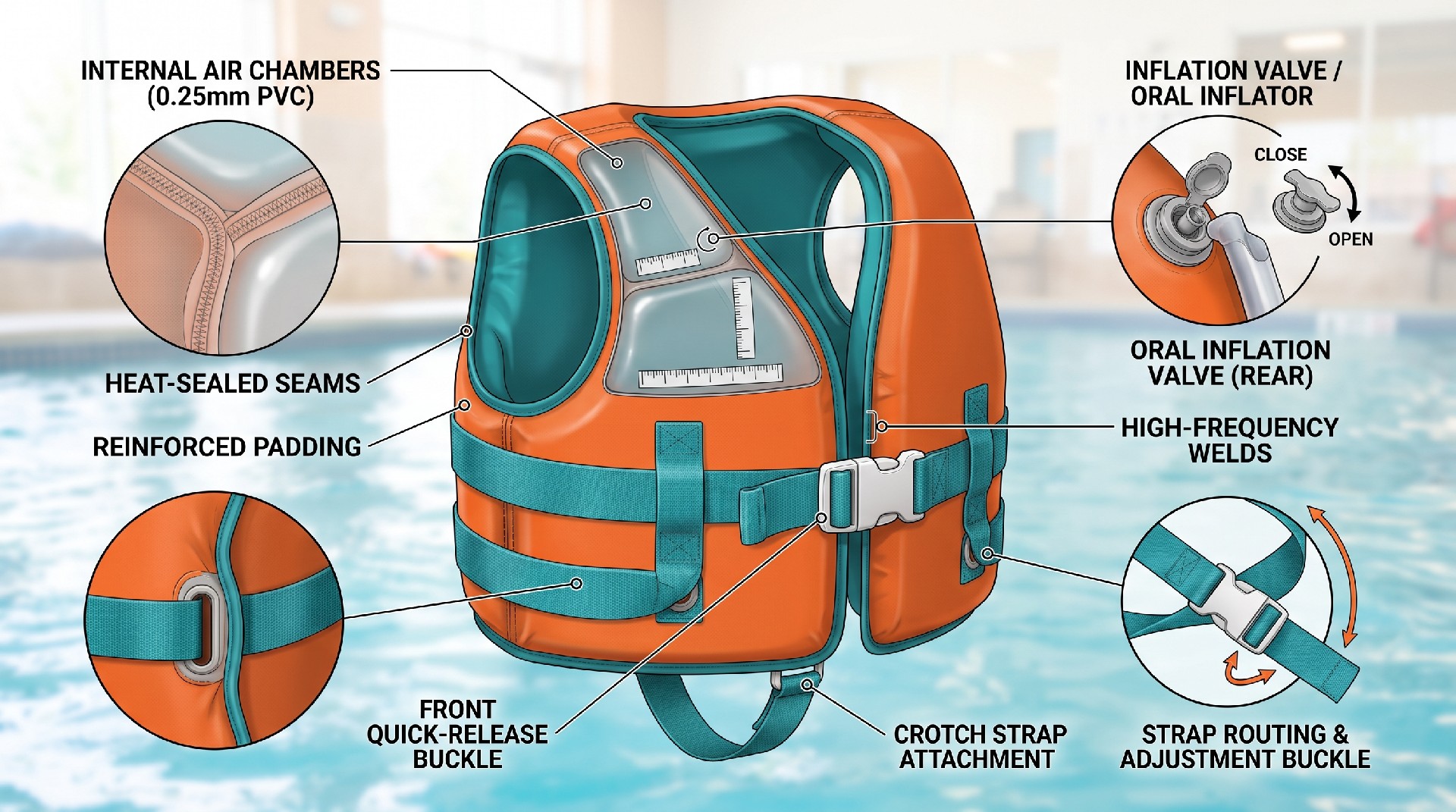
A properly fitted infant or toddler life vest provides buoyancy distributed across the chest and back, leaving the arms completely free. This design allows a child to use their arms for paddling, reaching, and gripping the pool edge—movements that are restricted by a ring. The vest's multiple adjustment straps ensure a secure fit that cannot be shed by a toddler. For commercial swim programs, a vest also offers easy visual identification of fleet brand and size, streamlining fleet management. When specifying vests for commercial use, buyers should ensure they meet a relevant standard where applicable, such as USCG Type II or CE-marked under the relevant PPE regulation. The critical specification for a toddler vest is the minimum weight or chest circumference range, which should be confirmed against the final datasheet. For a commercial pool setting, vests also simplify the process of transitioning children to independence because they learn horizontal swimming mechanics from the start.
2. Arm Bands or Arm Floaties
Arm bands provide buoyancy at the biceps, creating a horizontal floating position that many toddlers find more natural than the upright ring position. For a swim school, arm bands can be staged—starting with fully inflated bands for beginners and gradually reducing inflation as the child gains confidence and skill. This staged approach requires a defined protocol for when to reduce inflation, based on observable water competence rather than time. However, arm bands offer limited trunk support and are not suitable for deep water without direct supervision. Commercial operators should verify the arm band's capacity against the child's weight, using the lower end of the typical commercial range—often 15–30 kg. Operational note: arm bands are generally not designed for open water or unsupervised use, and they must be inspected daily for pinhole leaks, which can develop at the inflation stem.
3. Swim Belts
A flotation belt wraps around the waist and provides buoyancy at the core, allowing a child to float horizontally while maintaining full arm and leg mobility. Swim belts are popular in commercial swim classes for children who have moved beyond the vest but still require support. The belt's position encourages a natural swimming posture and reduces the fatigue that comes with maintaining a vertical position. For a commercial fleet, belts are compact, easy to store, and relatively low-cost. However, they do not provide head-support flotation, so they should be used only in controlled environments with a trained instructor and a maximum depth of 1.2 meters for toddler classes. When sourcing belts, examine the buckle strength and webbing width; a common buyer-side target is a 25mm-wide nylon webbing with a buckle that requires two simultaneous actions to release—a design that prevents accidental unbuckling by the child.
Gradual Acclimation: The Commercial Protocol
In a commercial setting, the transition to any flotation device must be supported by a structured protocol that prepares the child physically and emotionally. This protocol should be clearly documented in the staff training manual and communicated to parents before the first session.
Step 1: Water Play Without Flotation (With Close Supervision)
During initial visits, allow the child to enter the shallow end of the pool—water depth at waist level for the adult—with direct contact support. Let them splash, kick, and hold the side. This period is about establishing a positive water association. A commercial operator can designate a 15-minute warm-up period before any flotation is introduced.
Step 2: Introducing the Alternative Device on Dry Land
Prior to entering the water, let the child handle the alternative device (vest, arm bands, or belt). Allow them to put it on and take it off with supervision, familiarizing themselves with the material and closure. This step reduces the element of surprise and gives the child agency in the process. Commercial staff can use this moment to inspect the device for damage and ensure correct sizing before water entry.
Step 3: Water Entry with Device and Direct Support
Enter the water with the child wearing the device. Keep one hand on the child at all times, providing a secure feeling. Let the child feel the buoyancy with your support, guiding them to kick and paddle. Staff should be trained to maintain constant eye contact and speak in a calm, encouraging tone.
Step 4: Gradual Distance
Over several sessions, gradually reduce direct hand support, moving from two hands to one, then to a fingertip touch, and finally to floating alongside the child. This reduces the child's reliance on the parent or instructor and builds trust in the device. The rate of progression should be individualized; some toddlers may take several sessions to feel comfortable.
Operational Policies for Commercial Settings
A robust operational policy prevents staff from being pressured by parents or time constraints to skip safety steps. This policy should be documented and clearly displayed at the facility.
Policy 1: No Flotation Device = No Entry
For all non-swimmers and toddlers, entry into water beyond waist-depth is prohibited without a correctly fitted and approved flotation device. This rule is non-negotiable and must be enforced by all staff, regardless of parental preference. A clearly stated policy protects both the child and the operator from liability.
Policy 2: Mandatory Alternative for Refusal
If a child refuses the primary device (the ring), staff are authorized to offer a pre-approved alternative (vest, arm bands, or belt) as a first response. Staff are not to engage in prolonged negotiation with a toddler; the alternative is presented as the only available option. This standardized approach streamlines the process and prevents inconsistency among instructors.
Policy 3: Initial Class in Shallow Water
For any child who refuses flotation, the first class is conducted entirely in the shallow end or zero-depth entry area, with water no deeper than knee-height on the adult. This provides a safe introduction and allows the child to regain confidence. Once the child accepts the device in shallow water, the class can move to deeper water.
Policy 4: Quiet Observation
If a child continues to refuse all devices and cannot be safely introduced, they are invited to observe a class from the poolside. This removes the pressure of immediate participation while allowing the child to see other toddlers enjoying the water safely. For commercial programs, this observation period typically lasts one session, after which a second attempt is made. Documenting the observation and the subsequent attempt provides a record of the operator's care and diligence.
Purchase Decision for Commercial Operators
For swim schools, resorts, and childcare facilities, the decision to stock alternative flotation devices is a straightforward commercial choice. A fleet of 10–20 vests, arm bands, and belts allows staff to match the device to the child's preference, reducing refusal incidents and improving class flow. The cost of a commercial-grade toddler vest in the typical commercial range of $25–$45 per unit is offset by the improved safety, reduced instruction time lost to refusal, and the positive parent experience that leads to repeat bookings. Similarly, a set of arm bands or belts at $10–$20 each represents a minimal investment with a high operational return. When specifying the fleet, buyers should consider volume discounts, spare parts (valves and buckles), and a replacement schedule of 2-3 years, depending on usage and UV exposure. A comprehensive approach to toddler water safety isn't about choosing one device over another—it's about creating a flexible, child-centered system that ensures every child can participate safely, regardless of their initial resistance to the swimming ring.
| Alternative Flotation Device | Key Commercial Specification | Operational Advantage | Best Use Case in a Toddler Program |
|---|---|---|---|
| Swim Vest (PFD) | USCG Type II or CE-certified, 15–30 kg range | Full arm mobility, secure fit, easy identification of sizes | Initial sessions for new or reluctant toddlers in deep or shallow water |
| Arm Bands / Arm Floaties | 15–30 kg capacity, single or dual-chamber | Gradual deflation protocol, horizontal floating position | Transition stage for children comfortable in water but needing support |
| Swim Belt | 25mm nylon webbing, safety buckle, 15–30 kg range | Core buoyancy, encourages natural swimming posture, compact storage | Post-vest stage for children progressing to independent swimming |
| Traditional Toddler Ring | Typically 15–30 kg capacity, inflatable ring | Familiar and low-cost, but restricts arm movement | Children who accept the ring without resistance; not ideal for refusal cases |
Staff Training and Emergency Preparedness
Even with the best equipment and policies, a toddler's refusal can escalate into a fear response that compromises safety. Commercial staff must be trained to identify signs of distress beyond simple refusal—such as hyperventilation, trembling, or clinging—and to respond with a calming protocol. This protocol includes removing the child from the water, wrapping them in a warm towel, and offering a quiet space to regroup. Staff should also be trained in basic CPR and rescue techniques, with a clear emergency action plan that includes:
Clear signals for requesting assistance.
Location of emergency equipment (rescue tubes, throw bags).
Communication protocols for notifying management and emergency services.
The decision to remove a child from a class for refusal should always be accompanied by an incident report, documenting the refusal, the actions taken, and the outcome. This report serves both as a record of staff diligence and as a data point for identifying children who may require a more tailored approach. For commercial operators, this documentation is not just good practice—it is essential for liability management.
For parents, the communication should be clear: refusal is a normal phase, but safety is non-negotiable. Provide parents with a simple handout or digital guide that explains the commercial protocols and offers tips for practicing at home. This collaboration between facility and family creates a consistent approach that benefits the child's development and reduces the pressure on staff.
Long-Term Approach and Conclusion
Refusal of a toddler swimming ring is not a failure; it is a developmental milestone that requires a thoughtful, commercial-grade response. By understanding the reason behind the refusal, offering a range of alternative flotation devices, implementing a structured acclimation protocol, and maintaining clear operational policies, commercial water facilities can turn a potential safety hazard into a manageable process. The investment in alternative equipment, staff training, and documented procedures pays dividends in reduced liability, improved parent satisfaction, and—most importantly—a safer environment for every child. The ultimate goal is not to force a toddler into a ring but to guide them toward water confidence and competence, using the right tool for their individual needs.