

Why Commercial Life Jackets Develop Persistent Odors
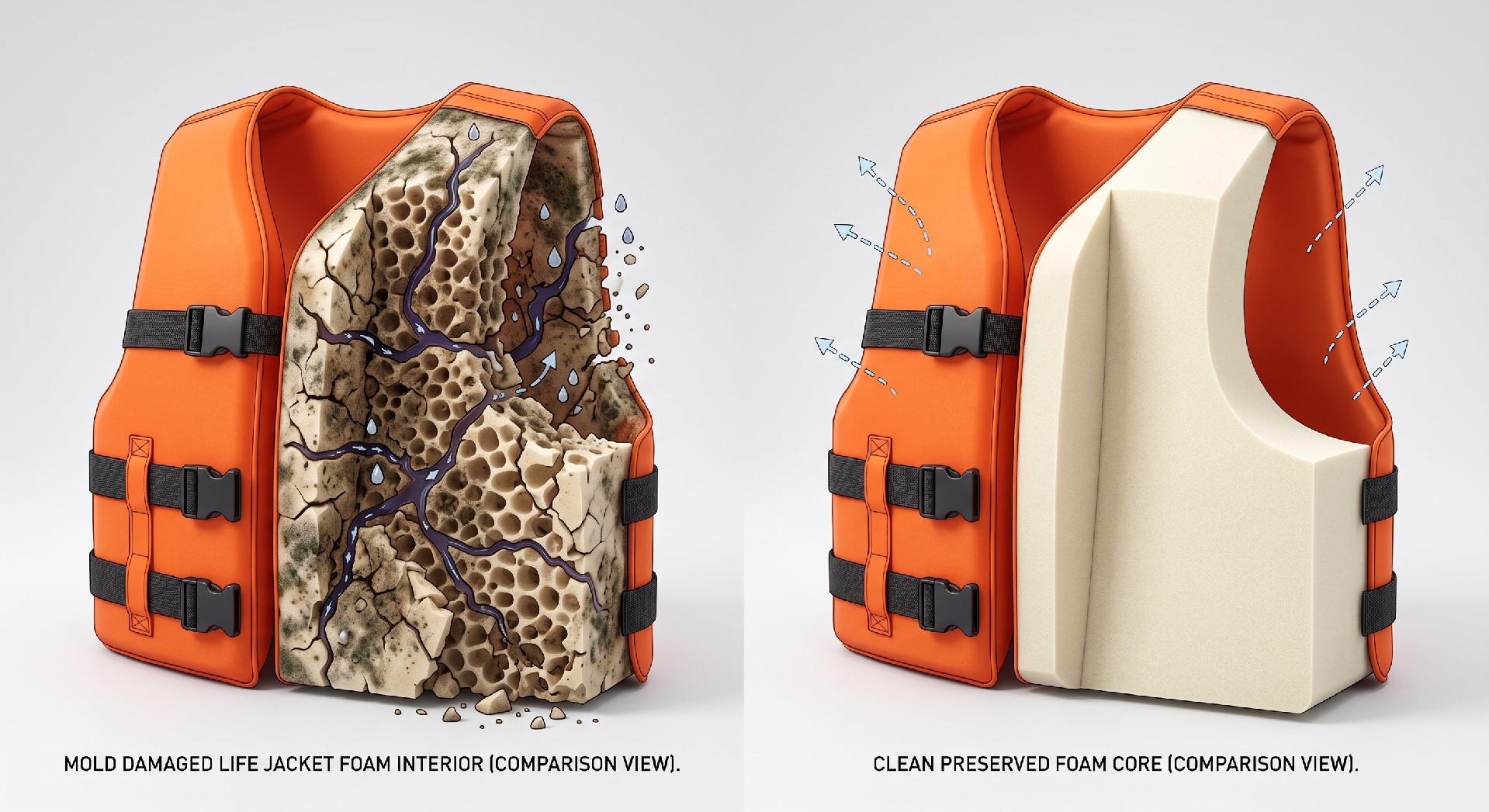
For rental operators, resorts, and marine fleets, life jacket odor is more than a nuisance. It is a direct indicator of material degradation, bacterial growth, and reduced service life. The trapped moisture, body oils, and organic matter inside the foam and fabric create an environment for mold, mildew, and bacteria, leading to the characteristic musty or sour smell. This guide provides a technical maintenance protocol for cleaning and storing life jackets to prevent bad odors, focusing on lifecycle cost reduction and guest satisfaction.
Assessing Your Fleet: Foam Type and Construction Matter
Before implementing a cleaning regimen, classify your inventory. The two dominant commercial life jacket constructions are solid closed-cell foam (often PE or EVA foam) and inherently buoyant inflatable models. Each reacts differently to water ingress and drying.
Closed-Cell Foam (PFD Type I, II, III)
These vests trap water between the foam cells and the outer nylon or neoprene shell. The risk of odor is high because the dense foam acts as an insulator, keeping the core damp for extended periods. Commercial rental fleets typically target vests with a quick-dry shell material to reduce this risk.
Inflatable Life Jackets
These rely on a CO2 cartridge and a pneumatic bladder. While the bladder is waterproof, the harness, cover, and webbing still absorb sweat and saltwater. Cleaning requires careful handling of the inflatable mechanism. Over-aggressive cleaning can damage the seam tape or the gas generator, rendering the device non-compliant with SOLAS or USCG standards.
Step 1: The Cleaning Protocol
The objective is to remove the nutrient source for bacteria without damaging the fabric or buoyancy. Avoid harsh detergents, bleach, or high-pressure washing, which can break down the nylon coating or degrade the foam structure.
Cleaning Routine (Weekly for High-Use Rental Fleets)
Rinse: Use fresh, cold water. For saltwater operations, a thorough fresh-water rinse is mandatory to remove corrosive salts that trap moisture against the fabric.
Wash: Use a mild, non-phosphate soap or a specialized technical fabric cleaner (often labeled for waterproof breathable fabrics). Fill a basin with lukewarm water and submerge the life jacket. Gently squeeze the foam to allow the cleaning solution to penetrate.
Spot Cleaning: For stubborn sweat stains or areas with heavy sunscreen build-up, use a soft bristle brush on the nylon shell. Avoid vigorous scrubbing of the foam core.
Sanitize (Odor Neutralization): Soak in a solution of white vinegar and water (1:3 ratio) for 15-20 minutes. This neutralizes alkaline residues and inhibits mold spores without the toxic off-gassing of bleach. Alternatively, use a commercial grade sanitizer designed for polyethylene foam.
Step 2: The Critical Role of Drying
Odor prevention depends almost entirely on the drying process. A life jacket left damp will begin to sour within 12 hours. Commercial operators must have a dedicated drying infrastructure.
Drying Protocol
Air Drying: Hang the life jacket on wide, non-deforming hangers in a well-ventilated area. Avoid direct sunlight, which can degrade the UV-resistant coating on the nylon and cause the foam to become brittle.
Active Airflow: In high-humidity coastal environments, use industrial fans to circulate air through the armholes and openings. This reduces drying time from 24 hours to 6-8 hours.
Do Not: Use a direct heat source like a hair dryer or radiator. High temperatures (above 50°C/122°F) can cause the foam cells to collapse or the adhesives used in seams to soften, reducing the vest's structural integrity.
| Inspection Point | Failure Signal | Service Action | Retirement Trigger |
|---|---|---|---|
| Outer Shell/Nylon | Stiffness or discoloration (yellowing) | Spot clean with mild soap; air dry | Fabric cracking or tears exposing foam |
| Foam Core (Compression) | Spongy feel or lack of rebound | Check for water retention; extended drying period | Foam no longer returns to shape |
| Buckles & Webbing | Salt residue or rust on hardware | Fresh water rinse and soft brush | Corrosion that prevents secure fastening |
| Inflatable Bladder (if equipped) | Decreased pressure or slow inflation | Inspect seals and valves; cycle test | Failed inflation test or visible seam tear |
| Odor Quality | Musty, sour, or ammonia-like smell | Vinegar soak and 48-hour drying cycle | Persistent odor after deep clean/retirement |
| Labels/Approval Marks | Fading or illegible USCG/CE/ISO marks | N/A (not an operational risk for buoyancy) | Required for compliance; must be visible |
Step 3: Storage Environment
Storage is the final battleground against odor. The environment must be stable and inhospitable to biological growth.
Key Storage Specifications
Temperature: Maintain a commercial storage area between 10°C and 25°C (50°F - 77°F). Temperature fluctuations cause condensation inside the foam.
Humidity: The relative humidity (RH) should be kept below 50%. In humid environments, consider using a dehumidifier or an HVAC system specifically for your storage locker.
Ventilation: Do not store life jackets in sealed plastic bins. This traps any residual moisture and accelerates mold growth. Use mesh bags or open shelving with adequate spacing between vests to allow air circulation.
Orientation: Hang the vests. Folding them compresses the foam, reducing its buoyancy over time and creating creases where moisture pools.
Preventative Maintenance: Long-Term Strategies
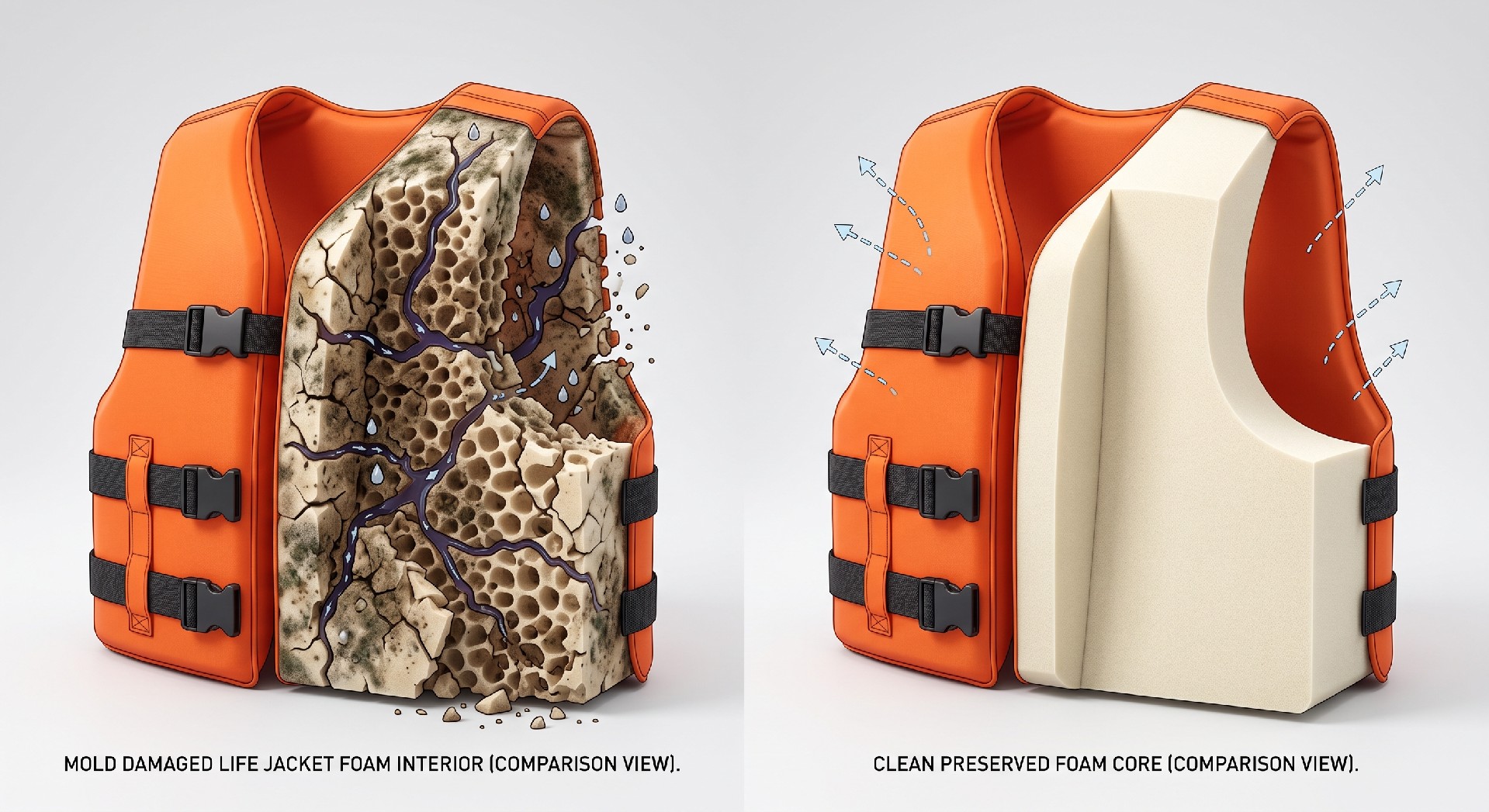
Prevention is cheaper than replacement. A typical commercial solid foam life jacket has a lifespan of 3-5 years under heavy rental use. However, odor-related breakdown (where the foam turns yellow and brittle) often accelerates this timeline.
Inspection and Recording
Implement a logbook or digital tracking system for each vest. Record the cleaning date, storage location, and any visual signs of degradation. If the inner foam feels spongy or emits a persistent odor even after rigorous cleaning, that jacket is a candidate for retirement.
Seasonal Deep Clean
At the end of the peak season, perform a deep clean. Submerge the vests in a tub with a specialized enzymatic cleaner designed to break down body fats. Rinse thoroughly and allow a 48-hour drying period before long-term storage.
The Financial Impact of Odor Prevention
While the cost of a commercial life jacket ranges from supplier to supplier and depends on the buoyancy rating and standard, the cost of reputation is higher. A guest complaining about a foul-smelling vest often equates it with poor hygiene standards across your entire operation. Conversely, clean, dry vests enhance the perceived value of your rental service.
From a fleet management perspective, implementing a structured cleaning and drying process extends the service life of your inventory. This reduces the frequency of bulk replacement, allowing you to allocate capital to other areas of your business. For inflatable life jackets, proper storage prevents the seals from drying out and the CO2 cylinders from corroding, ensuring they are ready for inspection.
Procurement Recommendation
When sourcing life jackets for your commercial fleet, consider the ease of maintenance as a key decision factor. Prioritize vests with vinyl-dipped nylon coatings, which are easier to wipe clean and less absorbent than standard nylon. Look for antimicrobial treatments embedded in the foam during manufacturing. These provide a cost-effective defense against odor in the initial phases of the product lifecycle.
To prevent bad odors and ensure commercial readiness, establish a fixed maintenance schedule that aligns with your operational peak periods. A clean and dry life jacket is a safe life jacket.
