

Air-Supported Structure Decision: Why Layer Choice Determines Deployment Success
For commercial inflatable tent buyers, the choice between a single-layer and double-layer tent is rarely about fabric weight alone. It is a systems-level decision that affects setup time, internal climate control, operational safety margins, and long-term maintenance costs. While single-layer shelters are quick to deploy and cost-effective for short-term events, double-layer configurations offer superior insulation, condensation management, and structural redundancy for extended installations or harsh weather conditions. The right choice depends on specific use cases, and this guide will help you navigate the trade-offs.
Comparing the Core Architecture
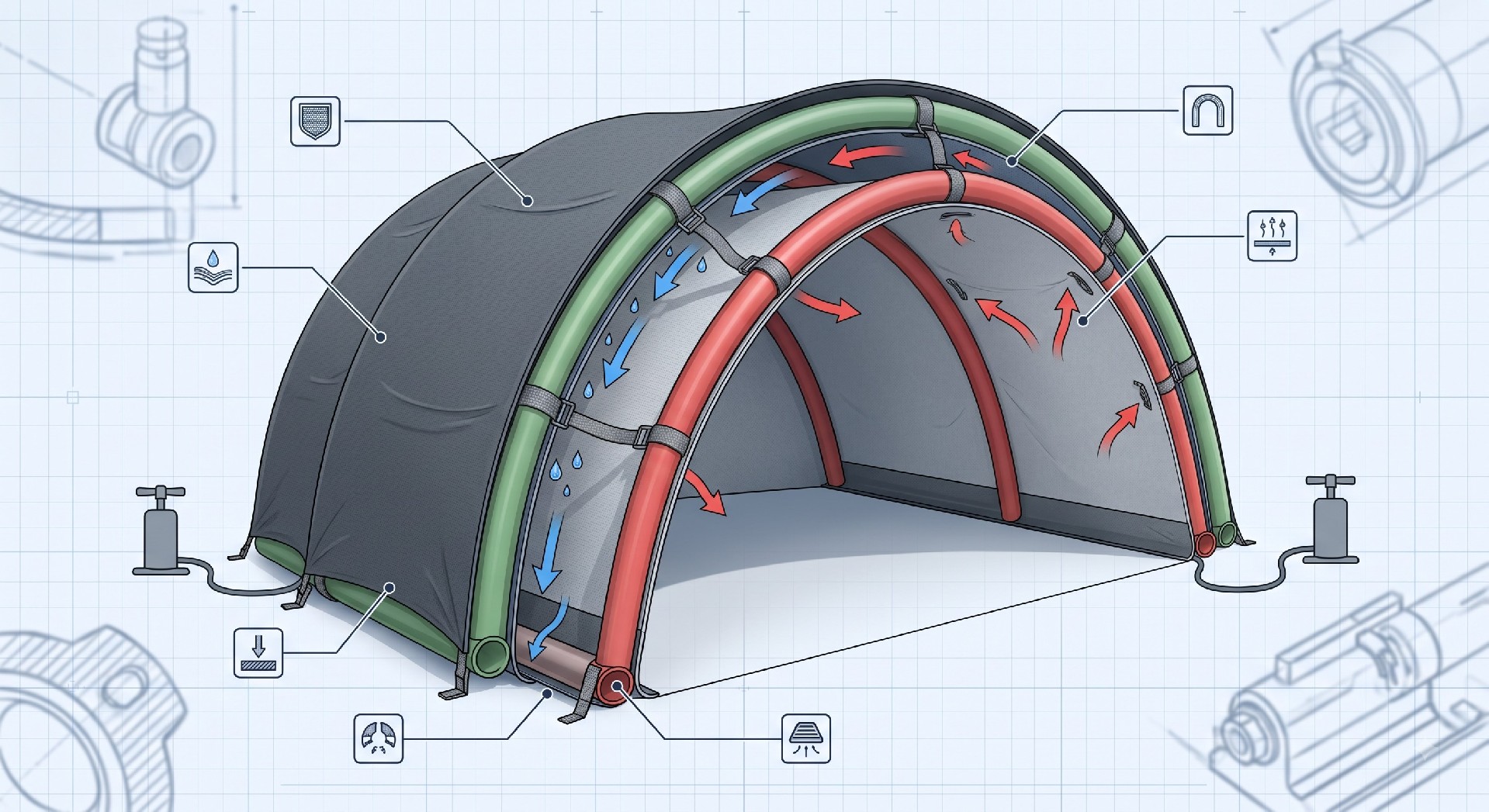
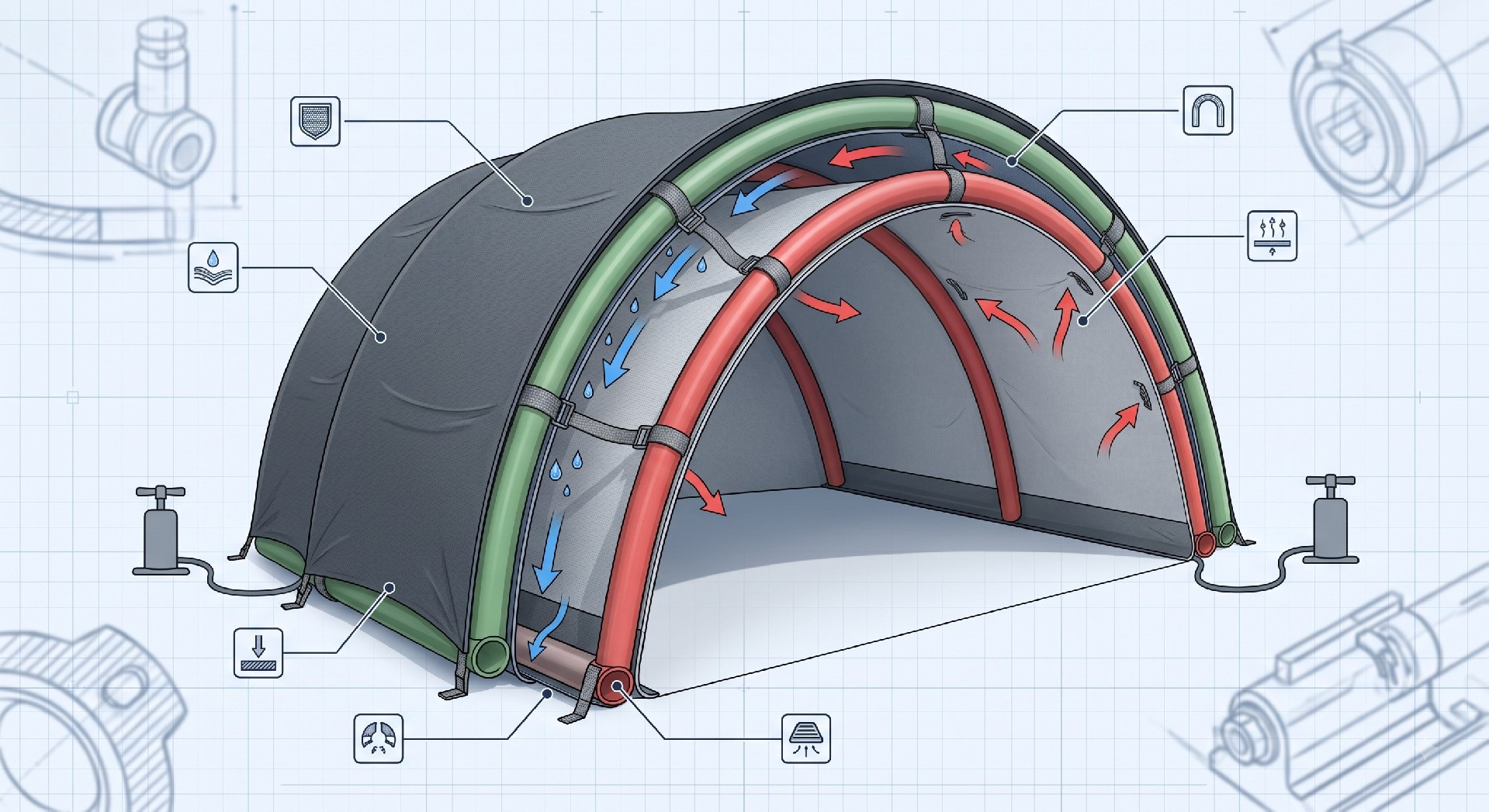
At its simplest, a single-layer tent uses one fabric membrane supported by an air-beam frame or inflatable arch. The air beams are typically enclosed in their own sleeves but share the same internal air volume as the main shelter. A double-layer tent, by contrast, features two distinct fabric skins separated by an air gap or an independent air-beam structure. The outer layer provides weather protection, while the inner layer acts as a thermal barrier and condensation drip path. Often, double-layer tents use two independent air systems, one for the main structure and one for the internal roof, adding redundancy.
Structural and Material Demands
Commercial-grade inflatable tents commonly use flame-retardant, UV-stabilized PVC or high-density polyester for the outer skin. For double-layer tents, the inner layer frequently employs a breathable or less thermally conductive material to manage moisture. The load-bearing beams in both configurations typically operate at a typical commercial range of 6 to 15 PSI (0.4 to 1.0 bar), with higher pressures offering greater rigidity but imposing stricter seam and valve tolerances. The fabric's tear strength and seam construction become critical, particularly in high-wind scenarios where the structure must withstand dynamic loading.
Climatic Performance and Condensation Management
One of the most significant operational differences between the two designs is their response to internal and external temperature differentials. In a single-layer tent, warm, moist air from occupants or equipment rises and meets the cold outer fabric, where condensation forms. This moisture then drips down onto the interior floor, creating slip hazards and damp conditions that can damage equipment or stored goods. Double-layer tents solve this problem by creating a thermal break: the inner layer remains closer to the internal air temperature, preventing surface condensation. Any moisture that forms on the outer layer is channeled away between the two skins, keeping the interior dry and comfortable.
Insulation and Energy Efficiency
For events requiring climate control, such as outdoor winter exhibitions or tropical dining experiences, the double-layer tent provides superior insulation. The trapped air between the two layers acts as a buffer, reducing heat transfer by up to 30-40% compared to a single-layer equivalent. This translates to lower heating or cooling system running costs, which is a critical metric for rental fleet operators who charge by the day. For short-duration, daytime events in moderate climates, the single-layer tent may be perfectly adequate and significantly less expensive to heat.
Wind Resistance and Structural Integrity
While both tents use air-beams to support a fabric envelope, a double-layer system can offer redundancy in cases of puncture or pressure loss. If the primary air system fails, the secondary inner structure may provide emergency support, buying time for evacuation or repair. However, it's important to note that wind resistance primarily depends on the anchoring system, beam diameter, and operating pressure. A well-designed single-layer tent with a properly engineered anchor layout will outlast a poorly anchored double-layer tent in high winds. Buyers should evaluate the wind load test data provided by the manufacturer, which should specify the maximum wind speed at which the structure can be safely occupied.
| Decision Factor | Single-Layer Tent | Double-Layer Tent | Commercial Implication |
|---|---|---|---|
| Setup Time (6x6m) | ~10-15 minutes (2 crew) | ~20-30 minutes (3-4 crew) | Labor cost and event turnaround speed. |
| Condensation Control | Prone to dripping; requires drip trays. | Superior; moisture channeled between layers. | Occupant comfort and equipment protection. |
| Thermal Insulation | Low; rapid heat loss. | High; air gap reduces heat transfer by 30-40%. | Energy costs for heating/cooling. |
| Packed Volume | Compact; lower shipping cost. | Bulky; 20-30% larger pack size. | Transportation and warehouse storage costs. |
| Structural Redundancy | Single air system; failure leads to collapse. | Dual air systems often independent. | Safety margin during power loss or puncture. |
| Initial Cost (Typical) | Lower Capex entry price. | 30-50% higher than single-layer equivalent. | Budget allocation and ROI calculation. |
Setup Labor, Time, and Logistics
Single-layer tents are lightweight and fast to deploy. A commercial 6x6m shelter can often be set up by a crew of two in under 15 minutes using a single high-output blower. Double-layer tents require more steps: the outer skin must be inflated and tensioned before the inner layer is installed and connected to its separate air system. This doubles the setup time and increases the crew requirement to three or four personnel. For rental companies serving high-volume, fast-turnaround events like weekend festivals, the single-layer tent's rapid deployment and recovery translate to higher daily revenue per crew hour.
Packed Volume and Transport Costs
The additional fabric and internal air beams of a double-layer design mean it packs larger and weighs more. For a commercial operator transporting tents via truck or shipping container, this directly impacts freight costs. While the superior performance of the double-layer tent may justify its larger footprint for long-term installations, for pop-up retail or emergency medical stations, the single-layer tent's compact storage is a major logistical advantage.
Commercial Decision-Making: Which One to Buy?
Your choice should be dictated by three primary variables: event duration, climate, and budget. Single-layer tents are suitable for 1-3 day events, fair-weather conditions, and operations where speed is a critical revenue driver. They are also a cost-effective entry point for new event companies building their initial inventory.
Double-layer tents are recommended for:
Multi-week or month-long installations.
Environments with high humidity or large temperature swings (e.g., mountain resorts, tropical beaches).
Applications where occupant comfort is paramount, such as high-end dining or medical clinics.
Locations where structural redundancy is a regulatory or safety requirement.
We recommend reviewing the manufacturer's wind rating and condensation test results to verify the product's suitability for your specific deployment geography. Consider a sample evaluation or on-site trial before finalizing a fleet purchase.
The Final Verdict: Specifying for Your Fleet
For most rental fleets operating primarily in temperate climates with short-duration events, the single-layer tent is the preferred workhorse due to its superior operational tempo and lower initial cost. For resort operators, long-term contractors, or events requiring premium environmental control, the double-layer tent's condensation management and insulation provide a distinct competitive advantage and higher customer satisfaction scores.
When evaluating suppliers, always request detailed seam construction specifications, pressure testing protocols, and independent third-party wind test results. A clear warranty policy covering seam integrity and material degradation from UV exposure is a must. The extra upfront cost of a double-layer tent is recoverable over its lifecycle through reduced cleaning and repair bills, provided the operator has the labor resources to manage the more complex setup.
By clearly defining your deployment scenario, you can select the appropriate layer technology and maximize the return on your commercial shelter investment.
