

Introduction: The Challenge of Debris-Laden Environments for Commercial Fleets
For B2B operators in sectors like tourism, public safety, and rescue, navigating debris-laden waters is a daily reality. From the sediment-choked flows described by the USGS following wildfire events to the high-velocity bedload transport of mountain streams, these environments are among the most punishing for any watercraft . Traditional hard-shell boats, while durable, present logistical challenges related to transport and storage. This guide provides a technical deep-dive into the engineering behind modern high-strength PVC inflatable boats, focusing on the critical factors that ensure survival and performance in extreme conditions.
Material Science: The Foundation of Puncture Resistance and UV Defense
The primary defense against the abrasive and impact-heavy nature of debris-filled water is the boat's skin. Commercial-grade high-strength PVC is not a simple plastic sheet; it is a sophisticated composite engineered for resilience.
Reinforced PVC Construction
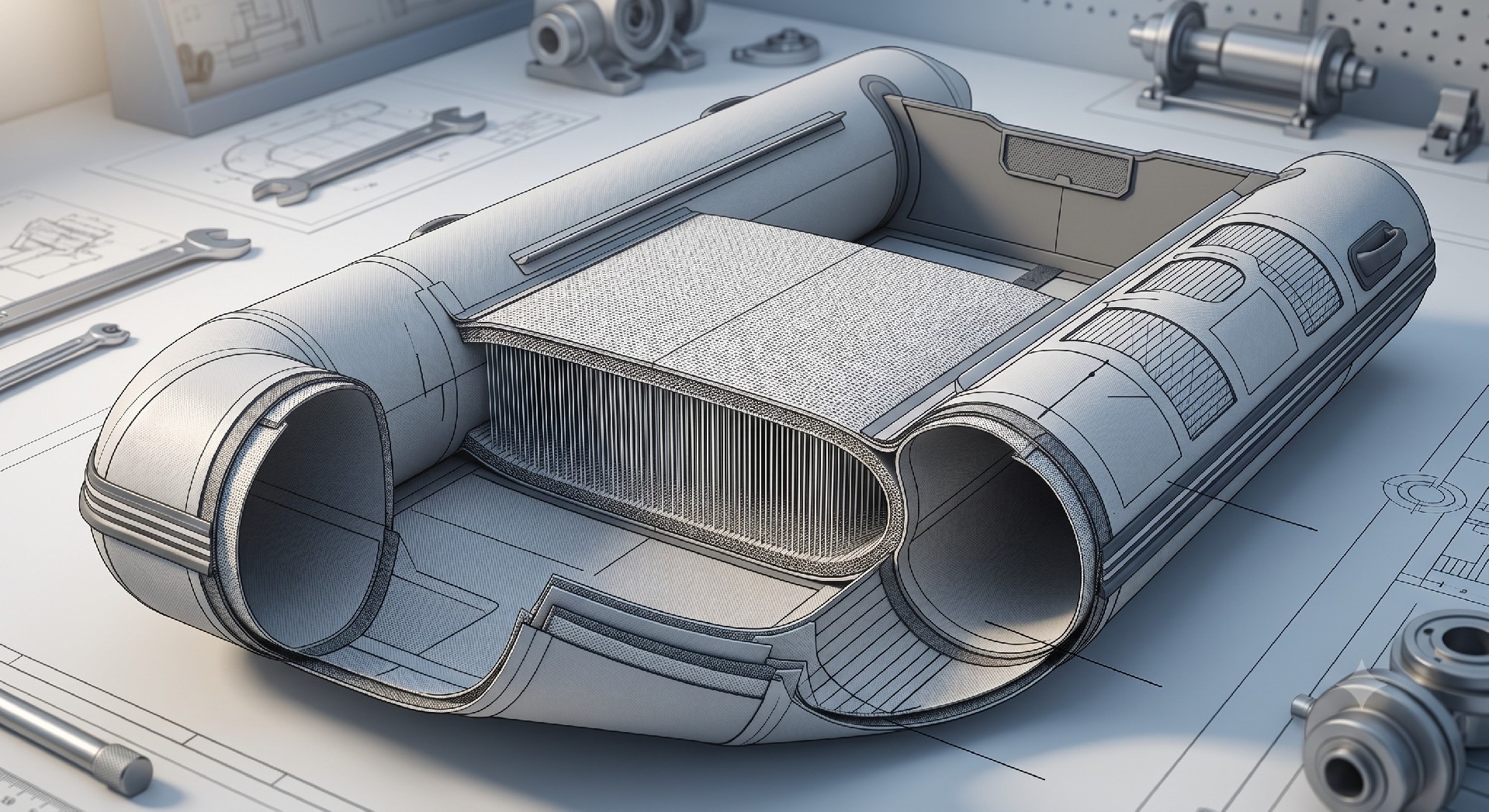
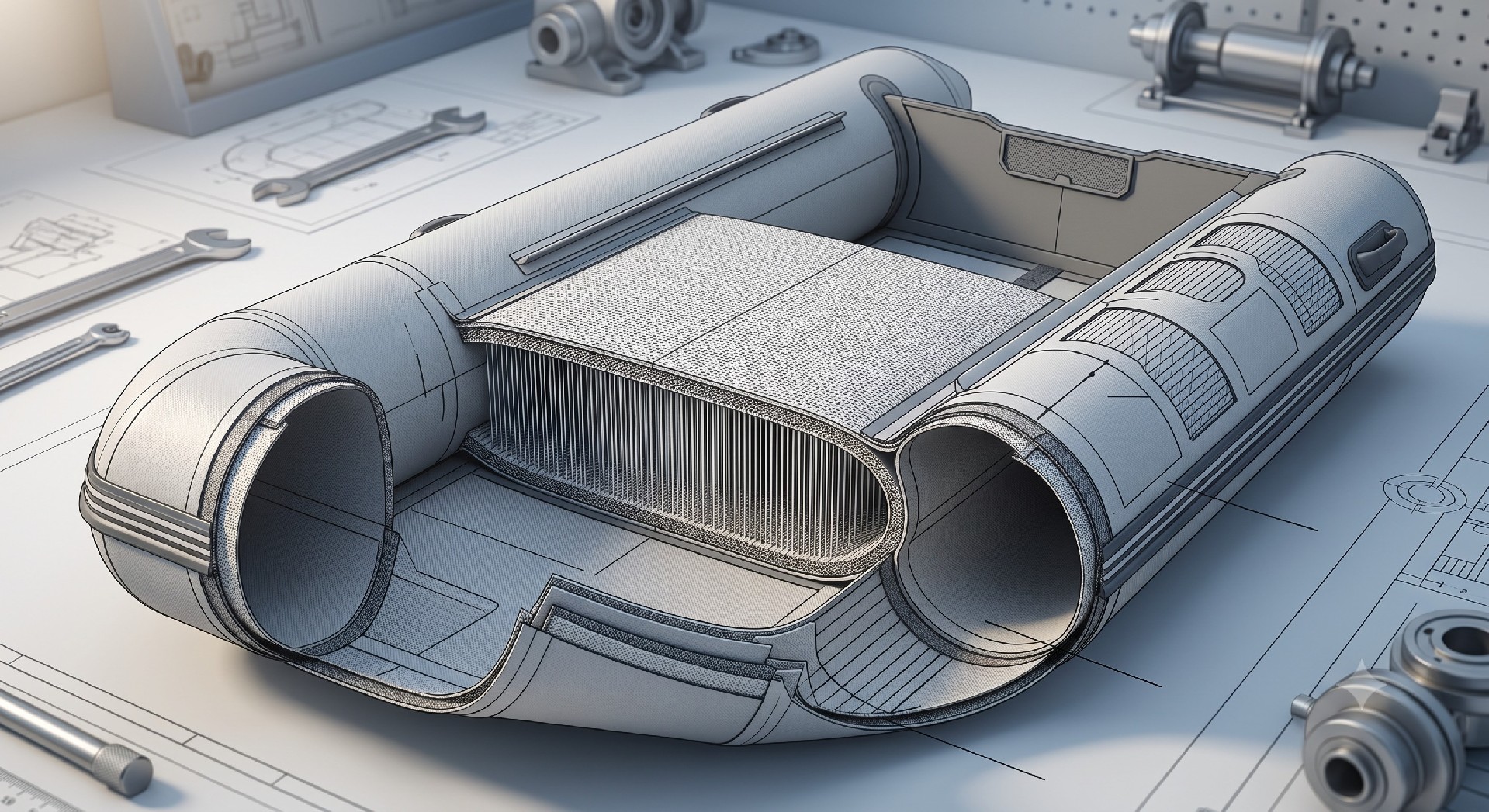
Leading manufacturers utilize a 3-ply laminate construction. This typically involves two outer layers of heavy-gauge PVC laminated to an inner layer of high-tenacity polyester mesh . This construction provides a synergy of properties: the outer PVC layers offer chemical and UV resistance, while the inner mesh provides the structural integrity and tear strength necessary to withstand impacts from submerged debris. Material thickness is a key spec; for extreme environments, a thickness of 0.9mm to 1.2mm is common.
UV Durability and Stabilization
Prolonged exposure to UV radiation degrades polymers, leading to cracking and loss of flexibility. High-strength PVC formulations incorporate UV stabilizers and inhibitors to mitigate this. A boat's UV durability is directly tied to its service life in commercial settings, where exposure is constant. Look for materials with a proven track record of resistance to UV degradation, often validated through accelerated aging tests per standards like ASTM G154.
Engineering for Impact: From Drop-Stitch to Seam Integrity
Beyond the base fabric, the boat's engineering determines its ability to maintain structural integrity under load and stress.
Drop-Stitch Core Physics for Rigidity
For high-performance inflatables, especially those used with outboard motors, the drop-stitch construction is revolutionary. This technology involves thousands of high-tenacity threads connecting the top and bottom fabric panels. When inflated to high pressures (often 10-15 PSI), these threads create a rigid, plank-like structure. This rigidity is crucial for planing and handling in rough conditions, preventing the boat from folding or flexing when striking debris. The compressive strength of the internal PVC foam core, as seen in marine construction, can exceed 2.8 MPa, ensuring a solid foundation .
Seam Technology: Welded vs. Glued
In a debris-laden environment, the seam is the most vulnerable point of failure. Heat-welded seams are vastly superior to glued seams for commercial applications. Welding uses high-frequency technology to fuse the PVC molecules together, creating a bond as strong as the material itself. This eliminates the risk of chemical degradation or delamination that plagues glued seams, providing a permanent, airtight seal that can withstand the flexing and impacts typical of rough water.
| Parameter | Commercial-Grade Specification |
|---|---|
| Material Thickness | 0.9mm - 1.2mm Reinforced PVC (3-Ply Laminate) |
| Drop-Stitch Floor Inflation | 10 - 15 PSI (High Rigidity for Planing) |
| Maximum Payload | e.g., 500 kg / 1100 lbs (Varies by Model) |
| Seam Type | High-Frequency Heat-Welded (Stronger than Base Material) |
| Buoyancy Chambers | Minimum of 3 Independent Air Chambers |
| Safety Standards | ISO 6185, CE Certified, REACH Compliant |
Safety and Compliance: Multi-Chamber Design and International Standards
Safety in extreme conditions is non-negotiable. Commercial vessels are designed with redundancies to ensure survival even after significant damage.
Multi-Chamber Safety Systems
A hallmark of a high-quality commercial inflatable is its multi-chamber design. This typically includes at least three or more independent air chambers within the hull . In the event of a catastrophic puncture to one chamber, the remaining chambers provide sufficient buoyancy to keep the vessel afloat and its occupants safe. This design is crucial for allowing operators to limp back to safety in debris-laden waters.
Compliance with Global Standards
Adherence to international standards is a clear indicator of quality and safety. For vessels used in commercial or public settings, certification against ISO 6185 is often a mandatory requirement. This standard specifies the minimum safety requirements for inflatable boats, including construction, buoyancy, and stability criteria. Furthermore, compliance with REACH regulations ensures that materials do not contain hazardous substances, protecting both operators and the environment.
Commercial Application and ROI Analysis
Investing in a high-strength PVC boat is a strategic decision that yields tangible returns.
Total Cost of Ownership (TCO)
While the initial purchase price of a commercial-grade inflatable may be higher, its Total Cost of Ownership is significantly lower compared to cheaper alternatives. Lower maintenance costs, reduced downtime due to repairs, and a longer operational lifespan (often exceeding 10-15 years with proper care) provide a superior ROI. Features like high-pressure valves, which can withstand high-frequency use, are critical for minimizing fleet downtime .
Portability and Fleet Management
Unlike hard-shell boats, these high-strength PVC vessels can be deflated, packed, and stored in a fraction of the space. This portability reduces long-term storage costs and allows for rapid deployment to remote or emergency locations. This is a key factor for rescue departments and adventure tour operators whose operational area may change with the seasons.
Conclusion
A high-strength PVC boat capable of handling debris-laden waters is a masterpiece of material science and engineering. Its resilience comes from a combination of reinforced PVC fabric, advanced heat-welded seams, rigid drop-stitch floors, and fail-safe multi-chamber designs. For B2B buyers, understanding these technical specifications is key to selecting a vessel that offers not just performance, but long-term value, safety, and compliance with global standards like ISO 6185. When deployed in extreme environments, this engineering is the difference between a successful mission and a costly failure.
